
A twelve year old boy has a chance encounter with a little girl at his great aunt’s home — literally a little girl.
Thus begins The Borrower Arrietty, Studio Ghibli’s gorgeous 2010 film. The title comes from the heroine’s name, Arrietty, and the nature of her people. She and her parents live underneath the floorboards of a house. The tiny family make do by “borrowing” from the human world, making forays every now and then into the human world for supplies ranging from sugar cubes to tissue paper.
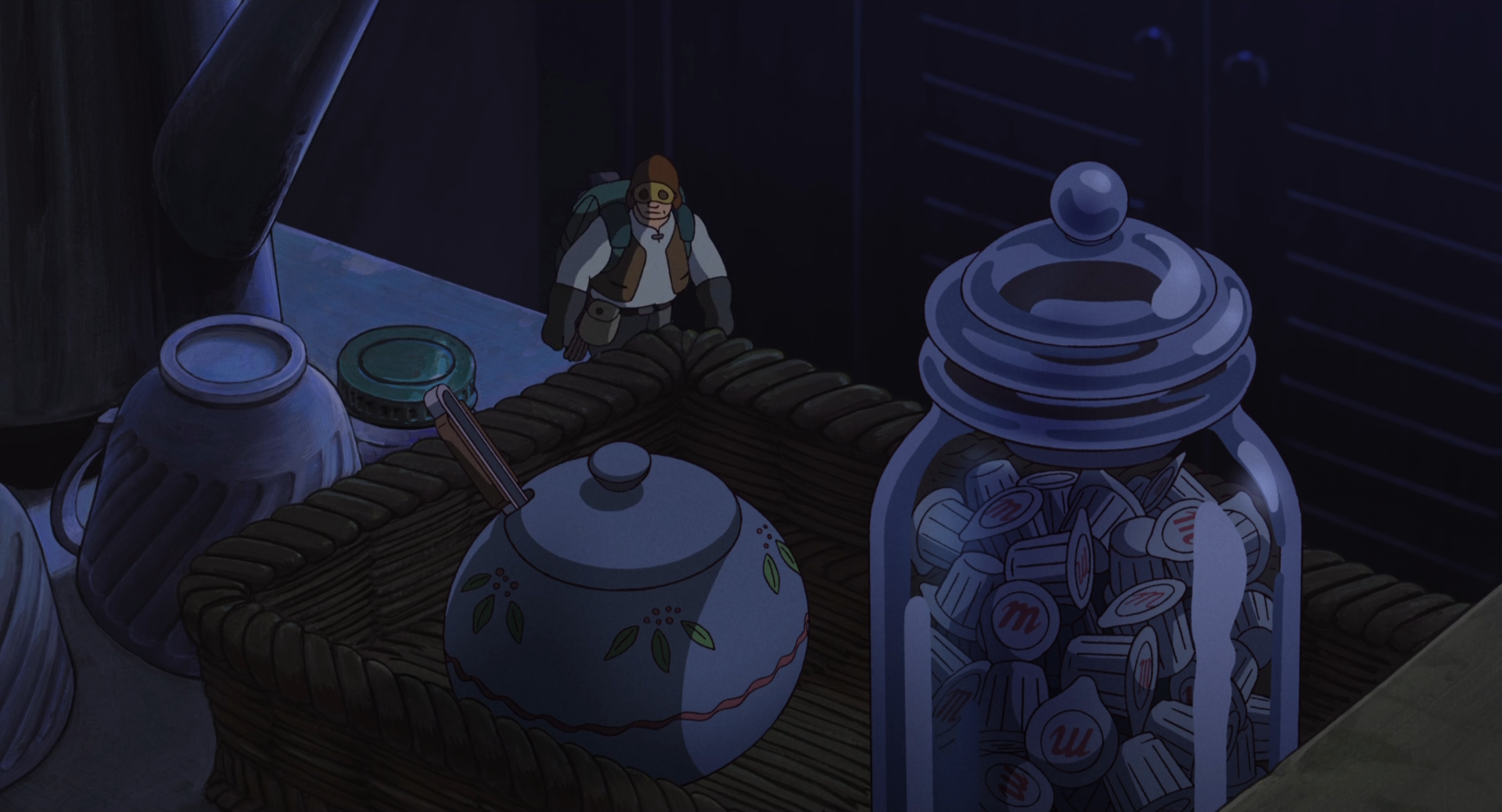
When Sho happens to spot Arrietty, however, her family decides that it is no longer safe to stay within their current residence. For whatever reason, the Borrowers feel that humans cannot be trusted. Sho attempts to curry their favor regardless, particularly Arrietta’s, but his actions only serve to arouse the suspicions of Haru, the house’s maid.
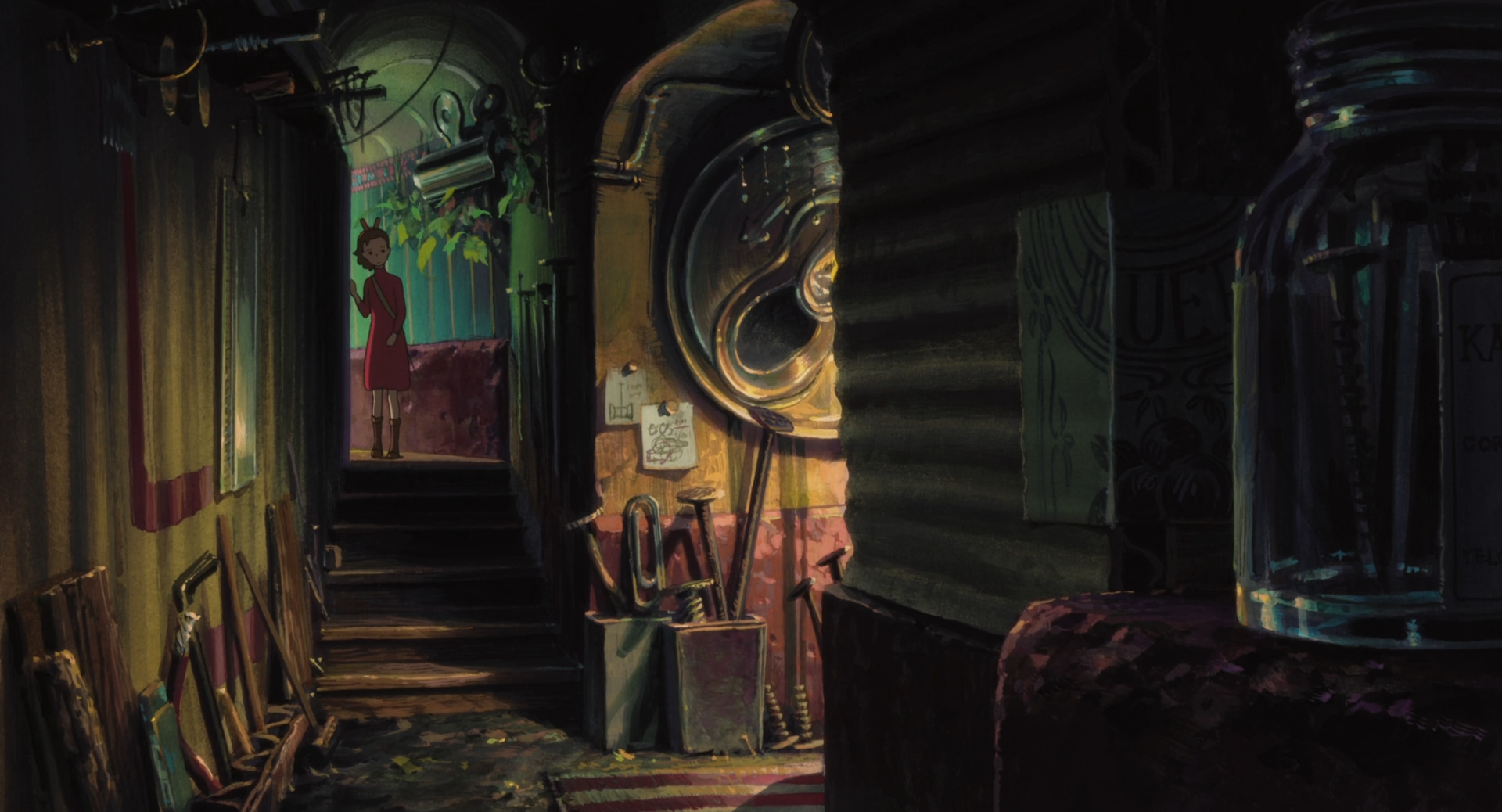
I won’t say much more about the plot at this point; the story is pretty straight-forward. When I first laid eyes on The Borrower Arrietty, I knew I would love the movie regardless of the story’s quality. The animation in the film is just stunningly gorgeous.


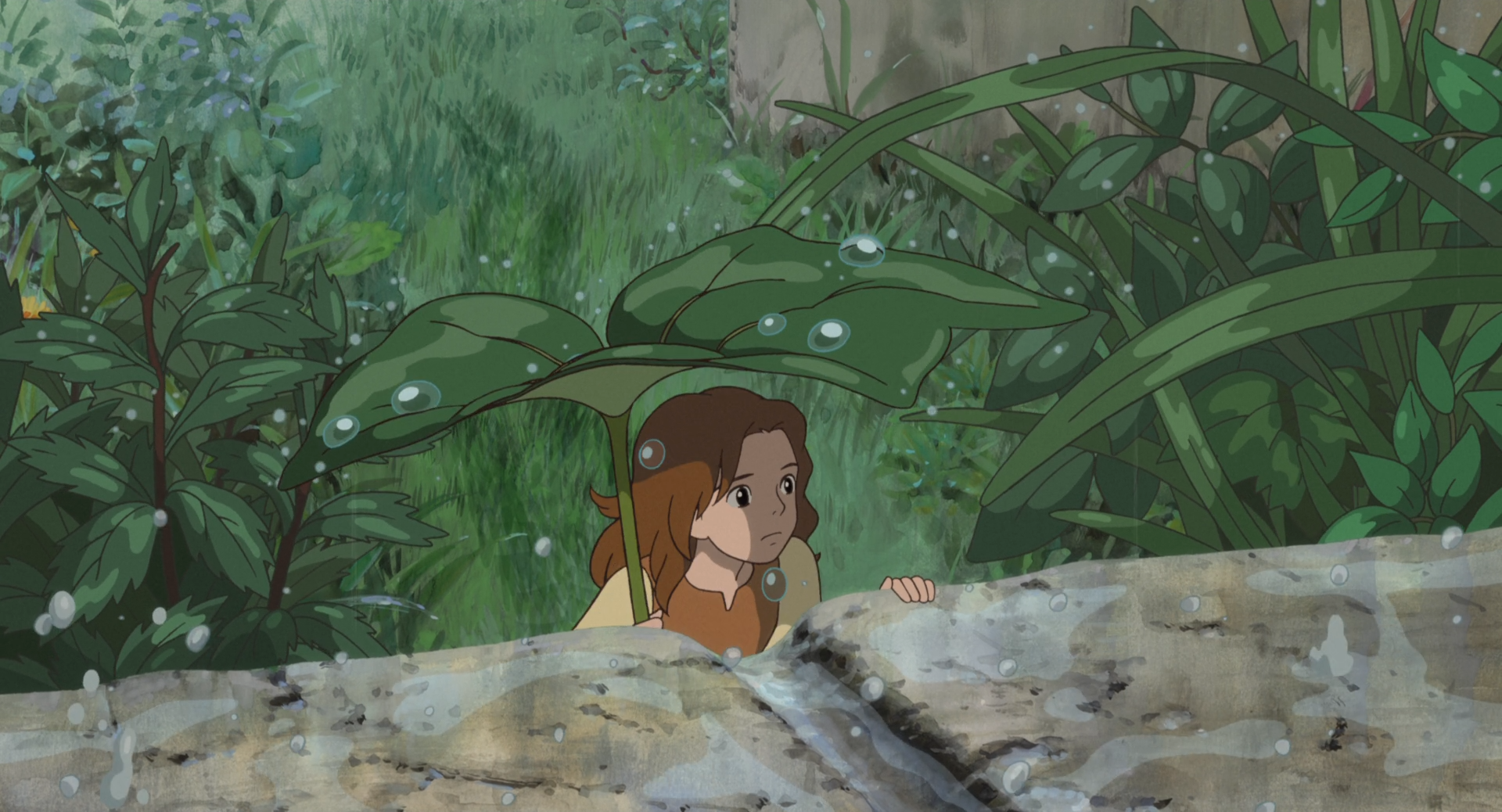
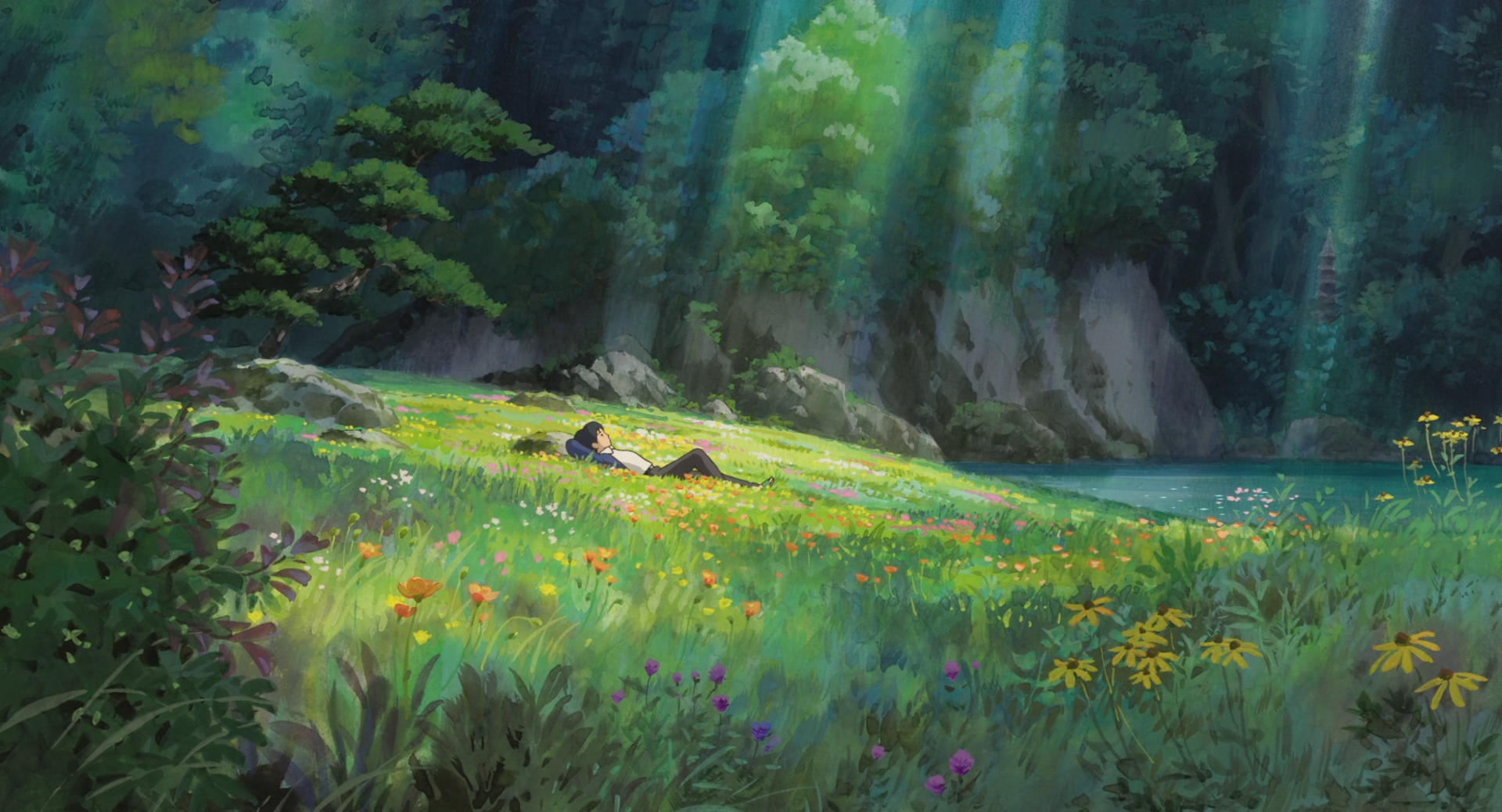

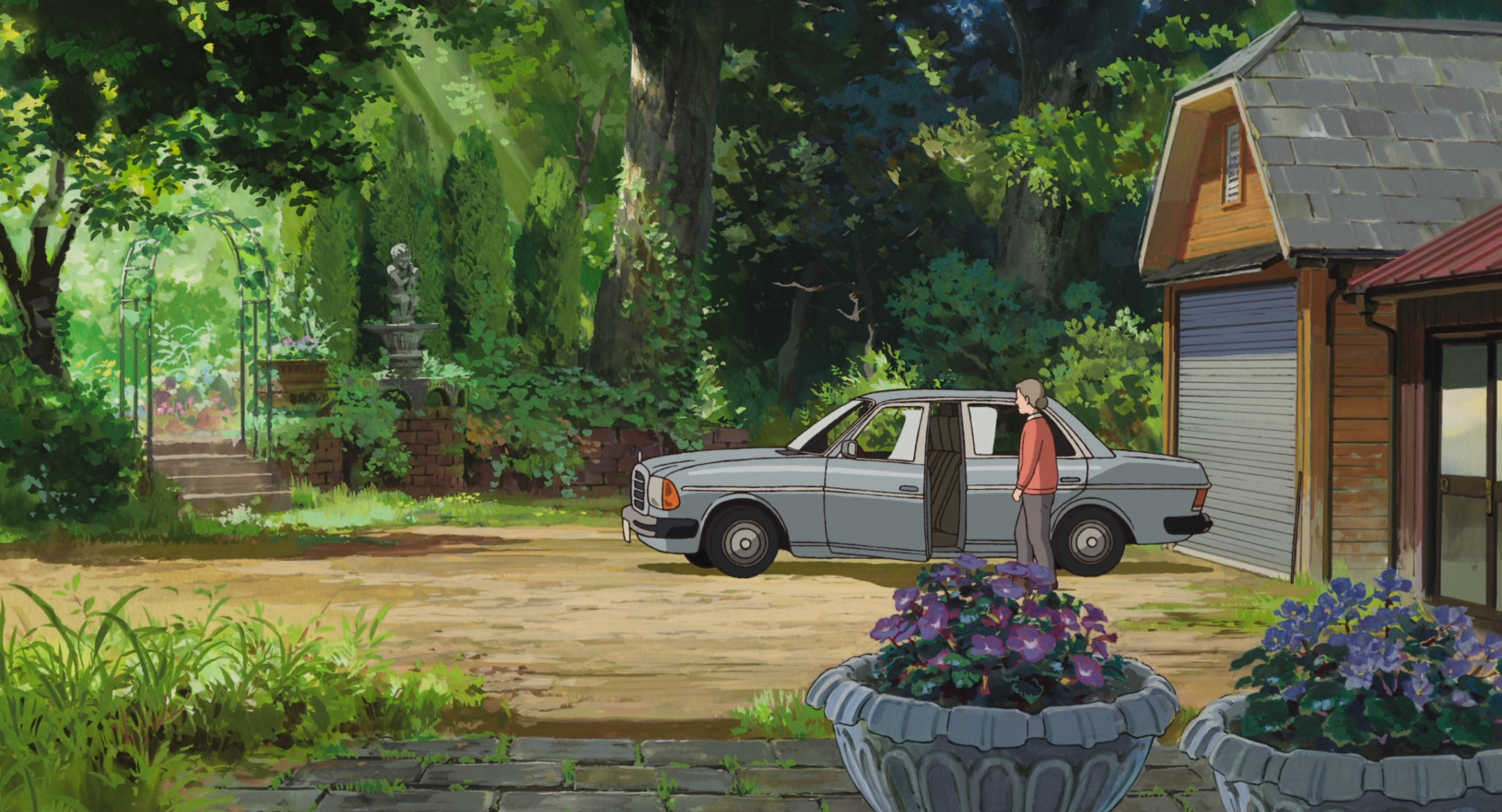
Every scene is rendered with such detail and vibrant colors that I can’t dislike the movie even if the “meat and potatoes” of the film, so to speak, disappoint. Unfortunately, they do disappoint.

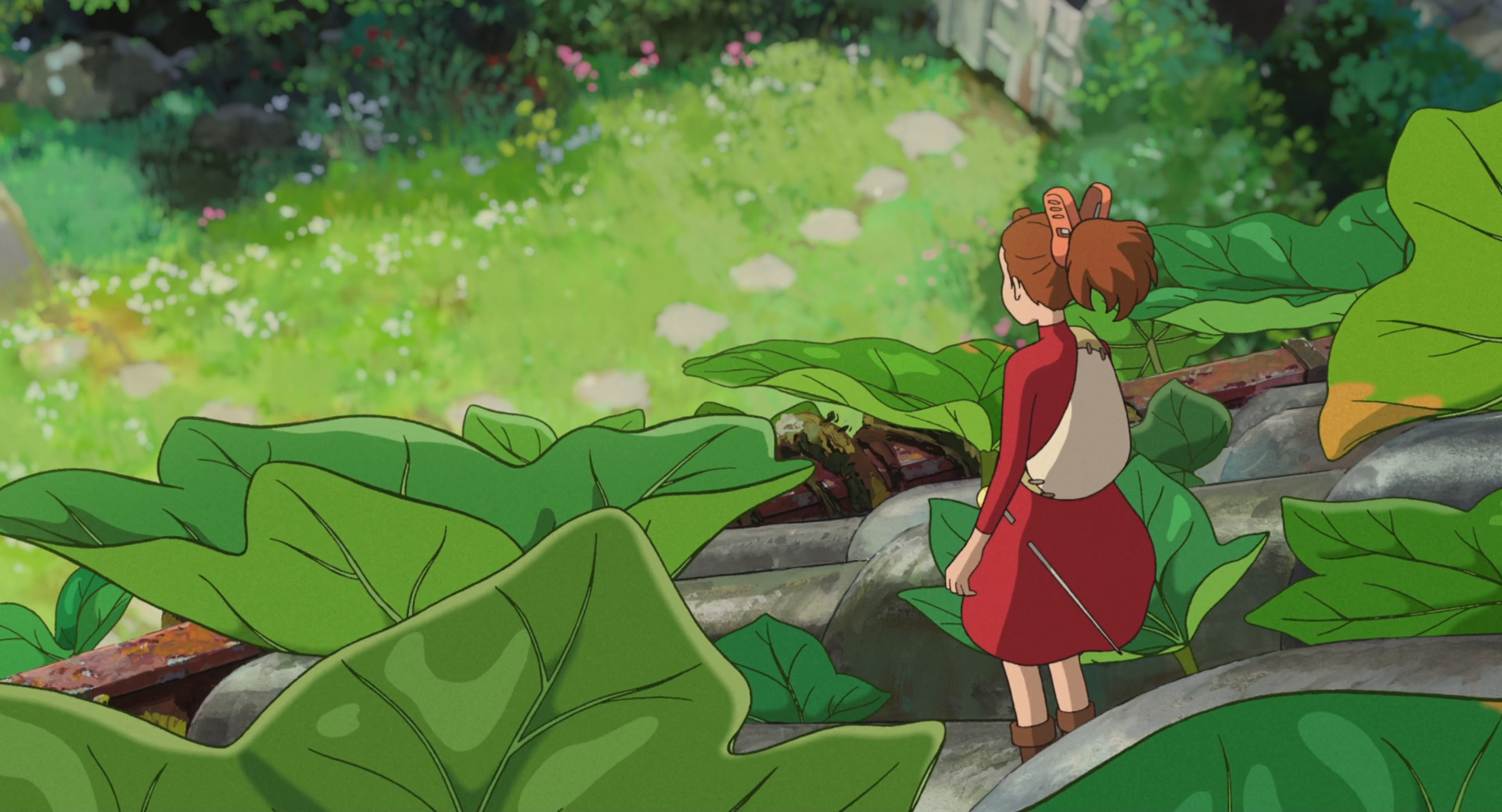
The first half of the movie is a ton of fun as we get to know the Borrowers and how they co-exist in the human world. It’s neat to see how various human “junk” becomes a part of the Borrowers’ home. Although we are really only seeing the world through a tinier perspective, the film nevertheless exudes adventure as we watch Arrietty scale verdant vines to battling her way through the slippery tiles of the windy rooftop.
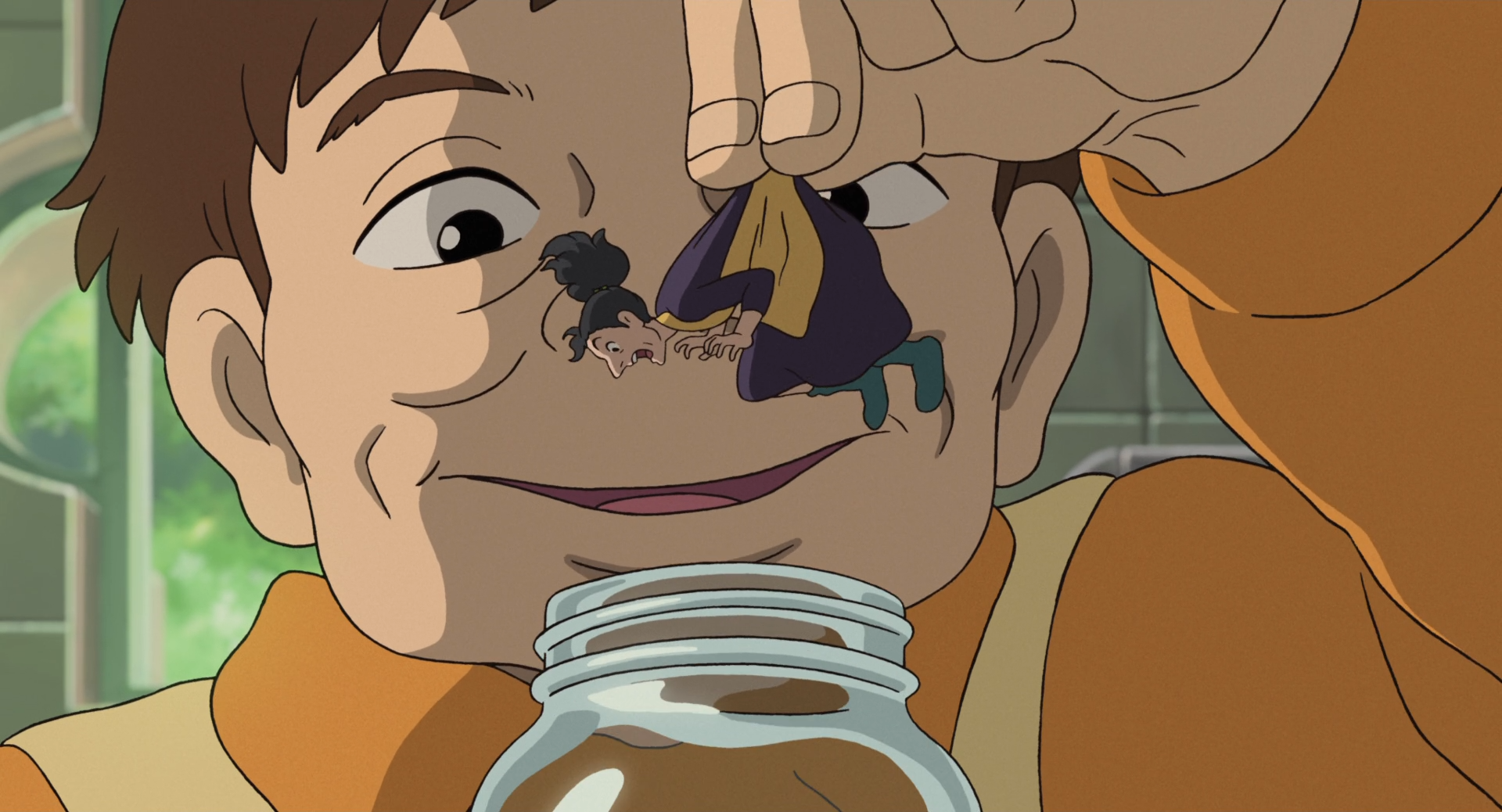
The second half of the movie, unfortunately, unfolds predictably. The Borrower Arrietty is only about ninety minutes long, but it is nevertheless compelled to have the standard plot where a villain threatens the existence of the “outsiders,” which, in this case, are the Borrowers. Haru is shoehorned into the villain role and, as a result, her motivations are paper-thin. She wants to capture the Borrowers, but it is never clear why. She seems cruelly giddy when she lays her hands on one of them. Haru is by no means a crafty, quick-witted villain, however, so when it comes time for Sho and her to engage in a battle of wits, it is without much tension.
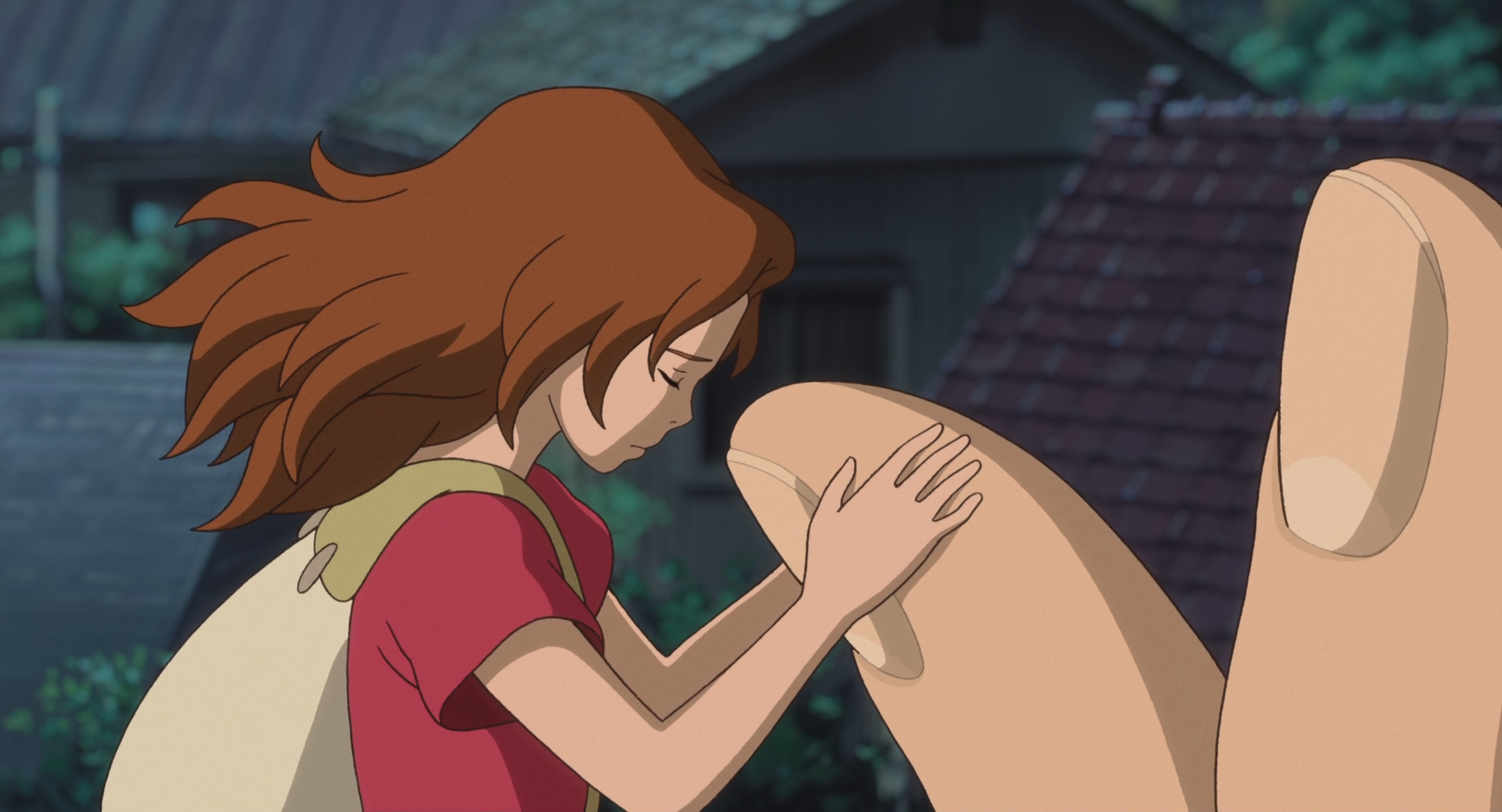
Her single-minded persecution of the Borrowers and Arrietty’s fight for survival inspire Sho, who is sick with a poor heart. By the end of the movie, he learns to embrace life. We find out that the Borrowers’ kind are not plentiful. They strive hard for their own survival in a world full of predators. The Borrowers are allegorical in a way.
I’d like to contrast Sho’s new found determination for survival in a beautifully-rendered world to the journey undertaken by the unnamed father and son in Cormac McCarthy’s The Road. McCarthy’s protagonists trudge through a dying, decaying post-apocalyptic reality in search of food and shelter. Along the way, they battle everything from the elements to roving bands of cannibals. The theme of survival is, therefore, strong in both stories, but what I find particularly fascinating is how they each tackle the problem similarly. Both stories rely heavily upon their settings to establish tone.

Early in The Road, the father stops to observe a burning forest in the distance. In a twisted world covered in ash, he’s somehow drawn to the natural disaster unfolding before him. Despite the apparent death and destruction rampant around him, there is a grace and splendor in the entropy of the dying world:
A forest fire was making its way along the tinderbox ridges above them, flaring and shimmering against the overcast like the northern lights. Cold as it was he stood there a long time. …it moved something in him long forgotten. … Remember.
In stark contrast to The Road, the world of The Borrower Arrietty couldn’t be more alive. It is in the details, however, that inspires Sho. Just before he and Arrietty could finally talk face to face, Sho was simply reading a book amidst nature. It’s a familiar scene of poets and writers as if they await inspiration from the world around them. When he and Arrietty share a conversation, she stands before him no different than the flowers besides her; he’s struck by her beauty.
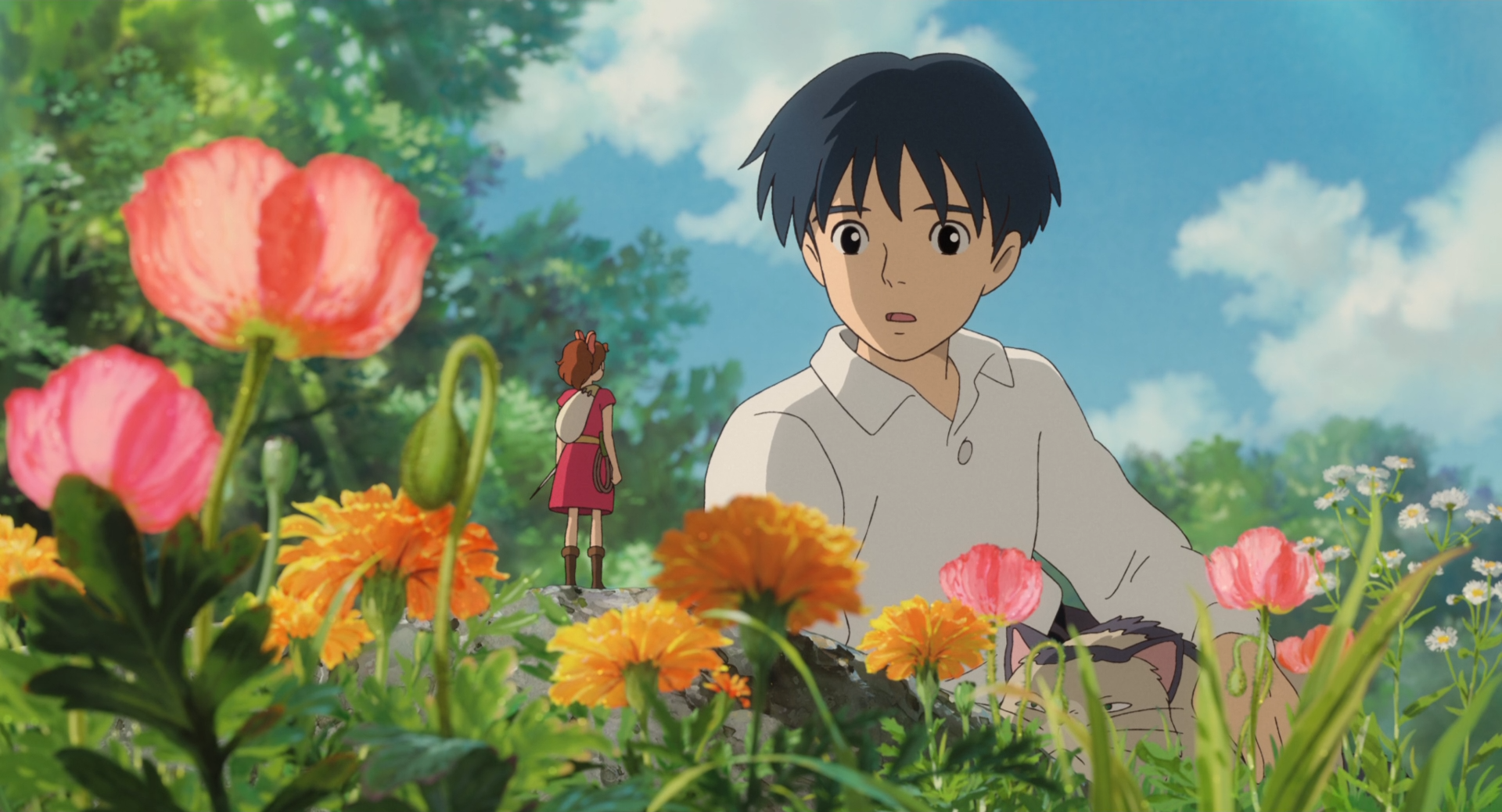
Arrietty and Sho then talk of survival. She tells him:
Borrowers aren’t meant to be seen. … We make do. We always have. You don’t know anything about us. We’re not going to die out that easily.
In essence, the Borrowers are not just a part of nature — they are nature. Sho’s recovery begins when he moves out of the bustling city to his great aunt’s idyllic home. It is only here, with a keen eye and an open mind, is Sho able to “see” the Borrowers and learn from them. Most people would never even entertain the thought of little people hiding in the meadows. To them, it’s all just a clump of grass. As such, in the splendor of a world bursting at the seams with life and color, Sho gains resolve for his own life. So if the littlest blade of grass can fight for survival — if even a lowly flower can bloom — Sho, too, can confront his own humanity with courage. Like The Road, nature is as much a character in The Borrower Arrietty as any other human characters, and likewise, nature imparts in its inhabitant a sense for survival.

I’m eager to see this movie. You know it’s a brand new director for Ghibli? Miyazaki was supervising but this dude is young (by Ghibli standards) and new, mostly doing key animation for previous Ghibli works.
Also out of curiosity did you ever read http://en.wikipedia.org/wiki/The_Borrowers in grade school? That book, Indian in the Cupboard, and Mouse and the Motorcycle were like the bread and butter of early grade school reading. Followed swiftly by Alien’s Ate My Homework and The Chronicles of Narnia cementing me firmly in the Sci-Fi/Fantasy realms.
Hm…. I didn’t read any of the books you listed. I’d list the stuff we had to read, but grade school is kinda vague. Which years are you referring to, specifically?
Hmmm for me I think it was between 1st and 3rd grade. Trying to do some higher math I think that puts it about 1991-1993. I know I read The Lion the Witch and the Wardrobe for the first time during 3rd grade. (we had a whole Narnia week with food, costumes, an animated and live-action version of the book, and a special reading by the teacher that was pajama optional; safe to say I will not be forgetting 3rd grade most likely ever) I think I read The Indian in the Cupboard slightly before that but it could have been in the same time frame. http://en.wikipedia.org/wiki/The_indian_in_the_cupboard It was adapted into a film I only vaguely remember. (Iriquois was a hard-ass word to pronounce back then) Mouse and the Motorcycle was the Beverly Cleary book for people who weren’t fans of Ramona Quimby.
Maybe my elementary school was atypical. We never read Narnia. The only notable literature I can remember from elementary school was Roald Dahl (Charlie and the Chocoloate Factory, James and the Giant Peach), some Judy Blume (Then Again, Maybe I Won’t), and the incredibly dull Little Women. Oh yes, one of my teachers would gather us into the dark lab room and read from the Scary Stories to Tell in the Dark series. That was my favorite.
There was a borrowers film on disney. The was lots of milk in it. Also there was the Littles. It looked like 80s anime to me. About Haru, I guess she’s like Gargamel with the smurfs. His purpose was a real headscratcher indeed.
I never saw the Disney Borrowers. I looked it up and it looked like your typical goofy Hollywood flick.
i have read The Road, but I’ve thought of comparing, or actually contrasting it with The Borrower Arrietty. It’s quite an interesting association…