
A soul gets a second chance at life, but must do so through Makoto, a young suicide victim. Why did Makoto commit suicide? Purapura, an enigmatic figure looking over the entire proceedings, claims that Makoto is guilty of a great sin — what was it? The soul must answer these questions before it can enter the reincarnation cycle.
Colorful, a 2010 animated film, thus starts off with a bang. Doesn’t it have a killer premise? Immediately, we are drawn into a mystery of sorts. Purapura offers the new Makoto clues, but the clues only serve to raise more questions. On the day of Makoto’s suicide, he discovered his high school crush entering a love hotel. Even worse, he discovered his mother leaving the same love hotel with a man who wasn’t his father. Even then, Purapura claims that Makoto committed a big sin. What exactly happened that day?

What begins to unfold over the course of the next two hours, however, was a great disappointment. The characterizations in the anime are quite bizarre. As Makoto’s relationship with his mother become increasingly strained, he often leaves the dinner table without either a word to either of his parents. They then just sit there and say nothing in response to their son’s blatant disrespect for them. At one point, Makoto’s mother openly weeps at the dinner table and everyone just eats in silence.
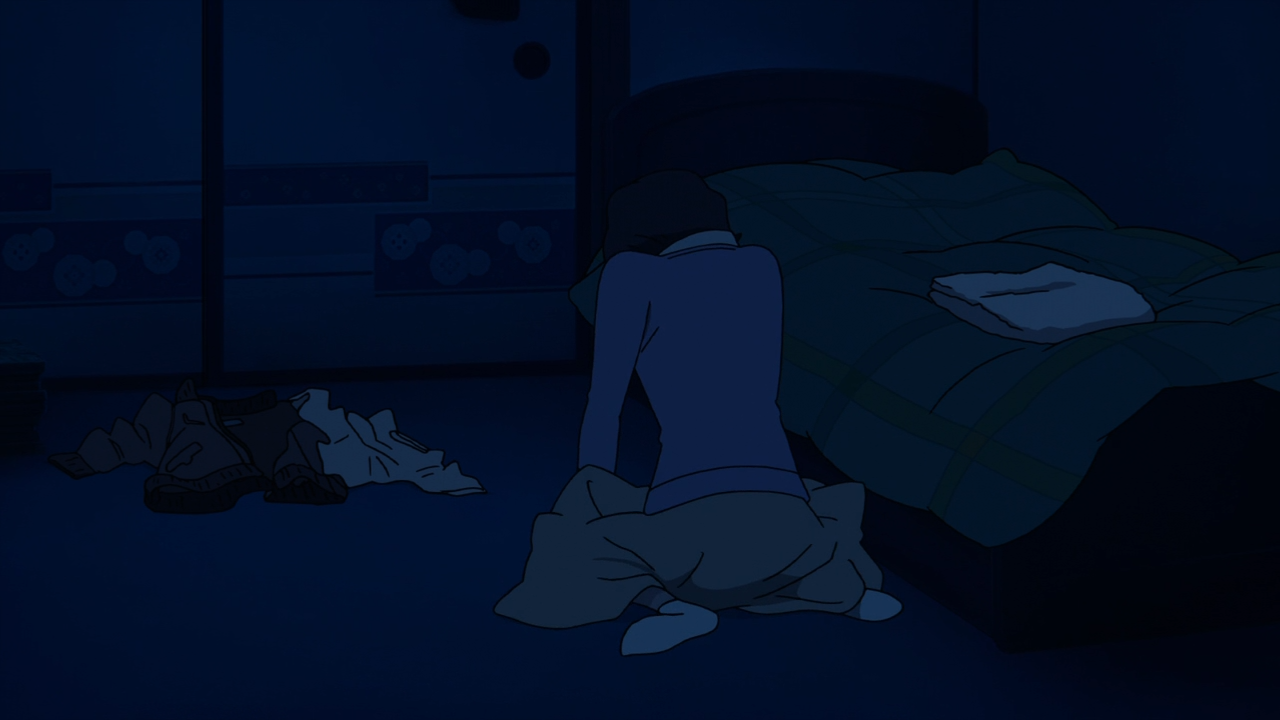
We also see Makoto’s mother carelessly spill gas in her depressive daze and we get the sense that this woman is at her limits. Might she even resort to suicide as her second son once did? It is thus bizarre that the conflict between her and Makoto is never directly resolved. Makoto’s father takes Makoto fishing near the end of the film and during the trip, he tells Makoto to give his mother a break. The entire family then discuss Makoto’s future over dinner and after a tearful breakdown by Makoto over how he wants to attend the same high school as his friend, the awkward family situation is never brought up again.
Do we ever explore Makoto’s mother’s motivations for cheating? No. How does the father feel? He must know that his wife is cheating. Why don’t we at least get to see Makoto “forgive” his mother? Better yet, he should be the one to apologize to her. Unfaithful or not, she is still his mother and the way he treats her is a disgrace. Unfortunately, the film doesn’t treat the mother as a real character. She’s just there as a target for Makoto’s displaced adolescent rage. She’s merely bearing the brunt of Hiroka’s actions.
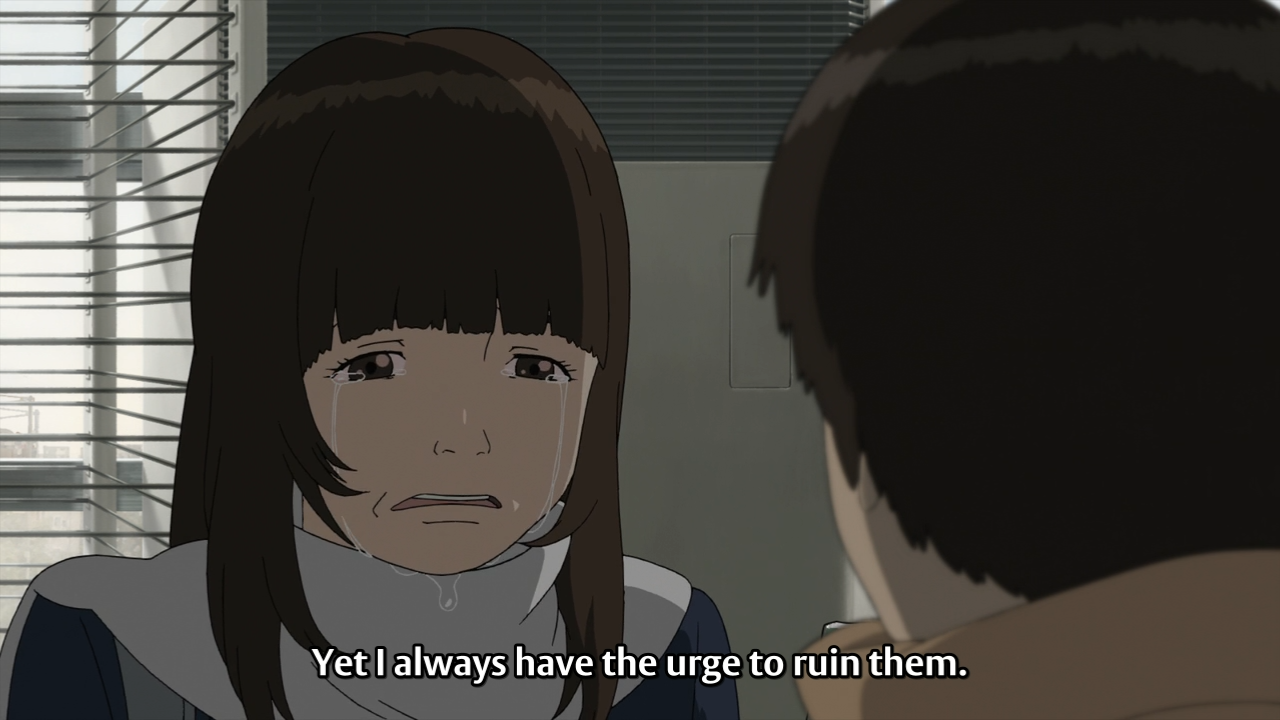
Likewise, Makoto’s crush, Hiroka, is a complex character who doesn’t quite get enough screen time. She’s not in the art club, but she feels compelled to stop by every day to offer advice to its members. She particularly takes an interest in Makoto and his painting. When Makoto confronts Hiroka over her participation in enjo kosai, she tells him that she only wants beautiful things and that’s why she sells her body to creepy salarymen.
Hiroka then disappears for nearly an hour of the film’s length. She only returns near the end of the movie in a convenient attempt to wrap up loose ends. It is here that Hiroka suddenly drops a major character revelation about herself: she has the strange urge to ruin beautiful things. Obviously, she’s referring to herself and enjo kosai. What would drive a young middle schooler to such self-loathing? Instead of a deeper exploration of Hiroka and like-minded young women, we get a tepid speech from Makoto about how Hiroka is not all that different from other people and we are all made of different colors. Yes, really.

Finally, there’s Shoko, a socially awkward classmate of Makoto. She has an even greater interest in Makoto than Hiroka. More importantly, she can tell that something in Makoto has changed. She often remarks that she doesn’t like the “new” Makoto. We get the sense that she really understood the old Makoto. When she comes to his home midway through the anime, Makoto nearly forces himself upon her until his mother interrupts them. Like Hiroka, she then disappears for the rest of the movie until it is her turn to wrap up loose ends. She suddenly reveals out of nowhere that Makoto was a great inspiration for her. Again, the character development is rushed and haphazard.
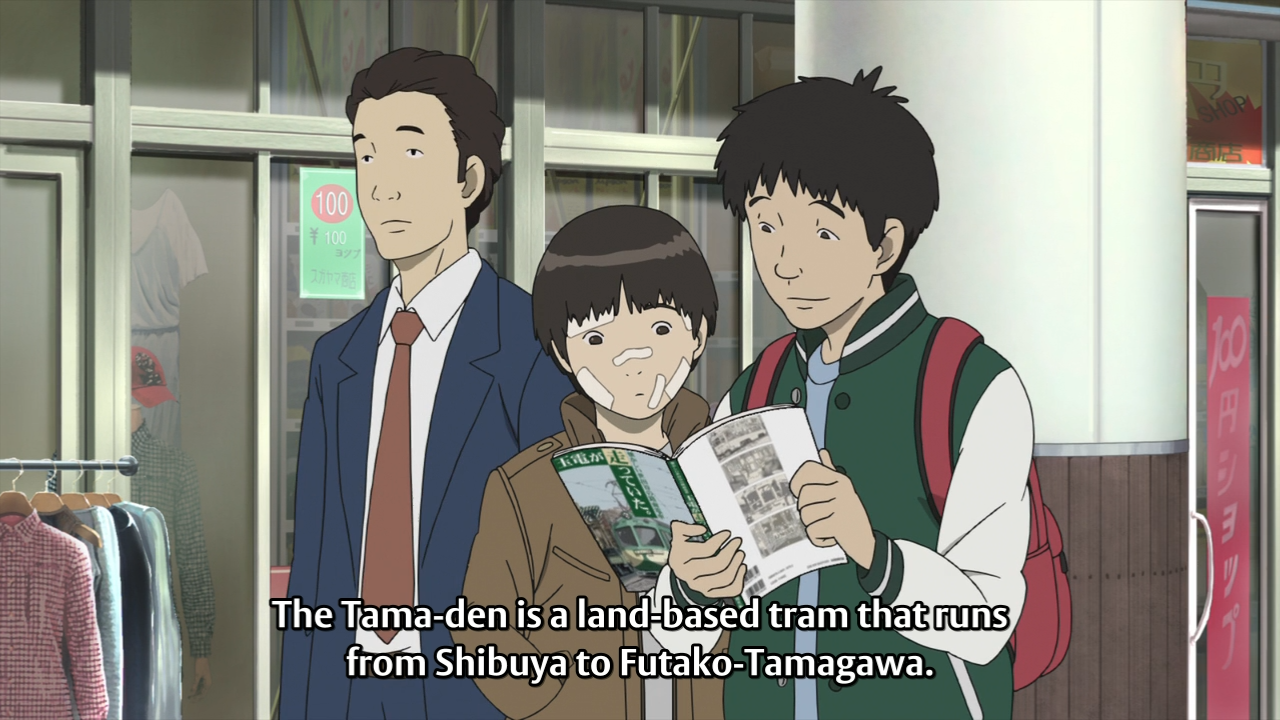
If the anime wasn’t busy exploring these female characters, what was it doing instead? Colorful spends much of its second act slowly developing a friendship between Makoto and Saotome. The old Makoto didn’t have friends, so it’s important to the new Makoto that Saotome has opened up to him. Unfortunately, their friendship is dull. They geek out about trains, they eat food together, buy shoes together, and even study together so they can get into the same high school. That’s really heart-warming and all, but it strikes me as particularly dull and selfish considering the presence of the three women in Makoto’s lives.
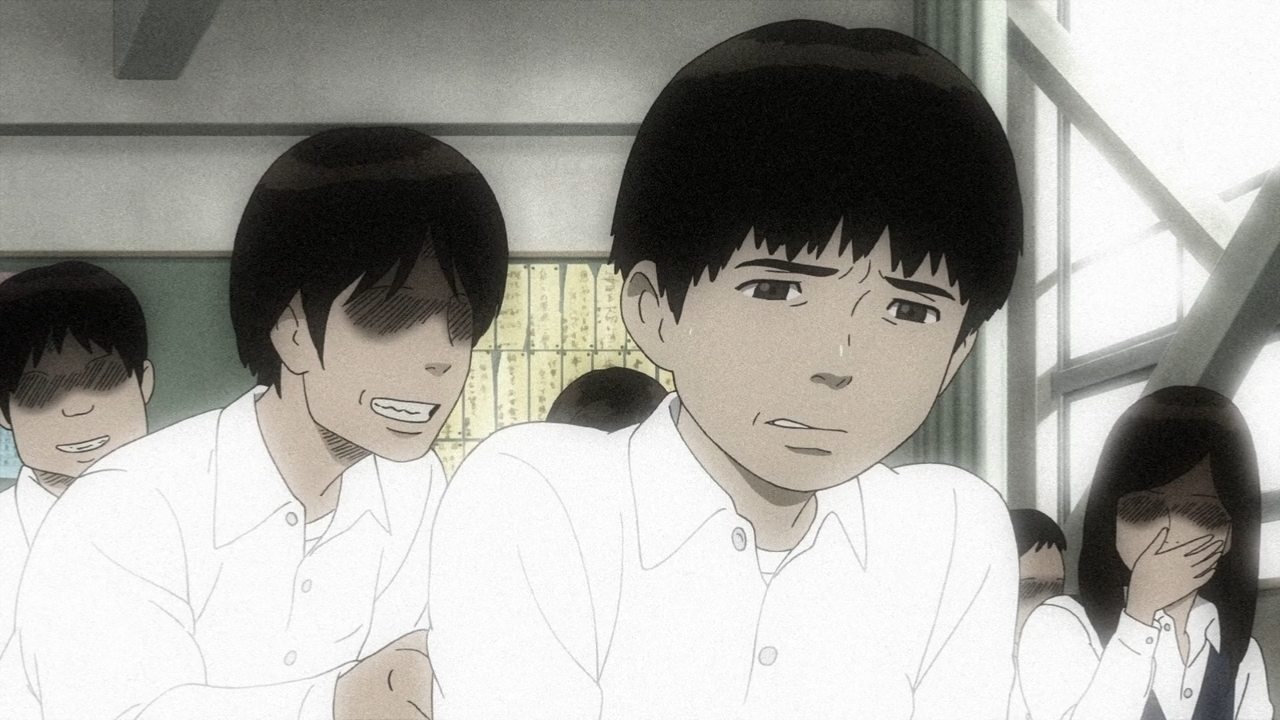
I realized at this point that the three females in the anime were far more interesting than Makoto ever was. This is in spite of the fact that Makoto is the subject of a great premise. Unfortunately, that great premise is ruined by the predictable fact that old Makoto is one and the same with new Makoto. The soul with a second chance at life is the same person as the young child who committed suicide. His quest isn’t credible because I fail to see how he has redeemed himself by the end of the film. All that new Makoto has done is make a friend, but it’s not clear why old Makoto couldn’t have befriended the same congenial Saotome. It then comes across as dumb luck that new Makoto, who is down in the dumps just like his former self, happened to befriend Saotome at all. If he was never wandering around the city like a petulant child, he would have never had the chance to meet Saotome randomly at the subway.
But think about it — if Makoto was busy helping Hiroka work out her issues, if Makoto was opening himself up to his mother and family, or getting to know Shoko who obviously respects him, he would have never had the time to become friends with Saotome. Makoto only gets to spend time with Saotome by ignoring everyone else in his life, especially his poor mother. By being the same person he was before he committed suicide, Makoto gets a second chance at life by pure, dumb luck. As a result, his journey doesn’t have any weight to it. I’m far more interested in the lives of the female characters than Makoto and I think that’s a major issue for the anime.

Colorful is a great looking anime, at least. The character animations aren’t stellar, but the backgrounds, like most films, tend to shine like the scene you see directly above this paragraph. There’s also a great scene where sunlight bathes Makoto’s mother and you can see the tiny dust particles float through the air. Unfortunately, I think the weakness of the story are far too glaring to redeem the movie.

I thought that your thoughts and comments were interesting. Keep up the good work!
“Makoto’s mother openly weeps at the dinner table and everyone just eats in silence.”
Its quite enjoyable to see whores suffer, since they rarely do in reality.
The biggest problem with this film is that it doesnt quite have a reason for existing. There is absolutely nothing here that wouldnt have worked much better as a live action, even despite the usually horrible performance of Japanese live actors, as is nearly always the case.
I’m speechless.
You are insufferable, really.
Very, very glad that I’m not the only one who felt that Makoto was way too brutal to his mother in this. You’re right – by the end of the movie, Makoto owed his mother an apology more than the other way around.
Colorful is getting rave reviews in the few places I’ve seen it, so it’s very interesting to read a more critical review of it here. A couple of your points of criticism I disagree with you on (I personally found the Makoto/Saotome friendship charming, in large part due to how different Saotome is from most anime characters), but I agree with you on most. The family dynamics in this movie really didn’t click with me much either, and felt overly awkward and a bit forced.
I also felt that the major female characters were much more interesting than Makoto himself.
All-told, great review. :)
I almost dozed off around all the train stuff. It’s hard to be really critical about it and I’m not really saying that I am. What it boils down to is taste here, and I just thought Saotome couldn’t be more boring.
Even though this movie was dull at times and the redemption theme was a little weak, I thought the family dynamics portrayed were very affecting. I couldn’t help but think of Tokyo Sonata while watching Colorful’s awkward family dinners. The tension and subtle drama of the Japanese nuclear family felt intensely similar. One scene in particular, Makoto and his father fishing, actually moved me a little – despite being aware of his wife’s infidelity, he still asks Makoto to forgive her. All part of his soul “training”, though it is a shame he never apologized to her directly.
I can see where you’re coming from with the comparison to Tokyo Sonata, but I just think Makoto was given too much rope in Colorful. I can’t imagine any parent acting like Makoto’s parents. No suggestion of therapy, no anger, nothing — it didn’t seem natural. When the father in Tokyo Sonata found out about the younger son’s secret piano lessons, he exploded. I don’t expect the parents in Colorful to do the same, but at least something The scene where the mother cries and no one said a word sticks out as a sore thumb to me. I get dysfunctional families, but that’s really kinda over the top.
Yeah, I agree Makoto was outright rude and disrespectful to his family in general. Perhaps their unnaturally complacent behavior was a poor attempt to “go back to how things were”, but of course, that didn’t happen here or in Tokyo Sonata. What’s strange is that his attempted suicide brought the family closer together, and more open and communicative towards each other, at least at the end.
It seemed like they only became communicative because the anime decided it was time to wrap up the story. Which is what I mean when it doesn’t feel like Makoto earned his redemption. His family problems just sorta cleared up — nevermind the fact that the mother’s infidelity remains an issue.
This film was way too preachy…