This “Usagi Drop” episode is for all the square pegs that can’t fit in society’s round holes. Interestingly, the episode answers a question it doesn’t pose until the final minutes of the anime. In a way, therefore, the anime is experienced both forward and backward. First, we take in the events of the episode, then after pondering Daikichi’s question, we retrace our steps to understand what Daikichi needs to do.

Daikichi discovers a message from his later grandfather, and within that letter, the grandfather tried his best to defend Masako. In distancing herself from Rin and her relatives, the old man believed Masako was trying her best to be a good mother in her own way, even if she wasn’t (and still isn’t) quite ready to be one. Nevertheless, Daikichi questions if anyone could really have a good reason to abandon a child.
When you put it like that, of course it sounds bad — asking why anyone would abandon a child is a bit of a loaded question. In a roundabout fashion, then, this episode tries to help Daikichi understand Masako’s position by illustrating the perspectives of the stigmatized. Hell, Daikichi belongs to this group and this is all the more reason he needs to understand and connect with Masako.


Look at the way the children questioned Rin at the start of the episode. Oh? You don’t have a mother and Daikichi isn’t your father? But everyone has a mother and father. That’s just the way the world works! When you put it like that, of course Rin’s situation sounds bad. These children just don’t see (and how can they) that Daikichi is the best possible parent for Rin at the moment. Would her life have been any better with her mother? Or in some foster family with both a mother and father? After seeing how Daikichi treats Rin, it’s hard not to answer no to both of these questions.
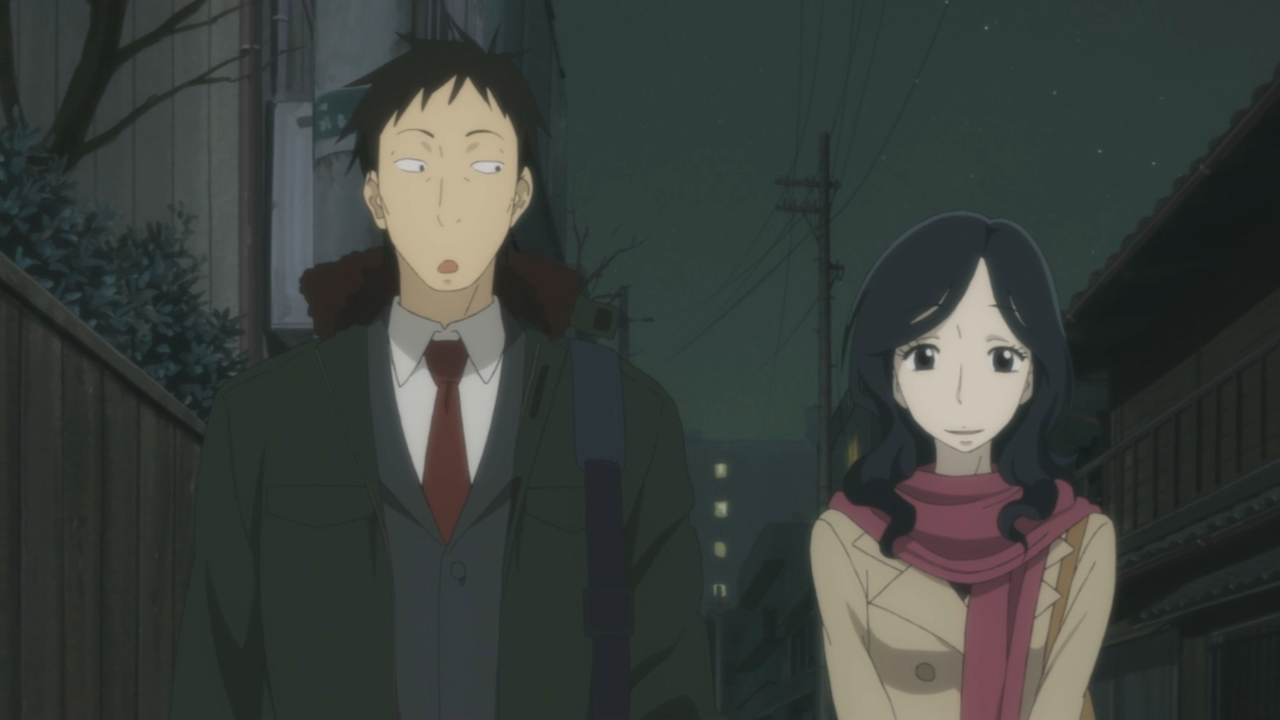
Yukari, a mother to one of Rin’s friends, is in a similar position. She is a divorcee and a single mother as a result. Rin nevertheless asks Daikichi if people like Yukari will be punished by God for ending a marriage. It’s not really the child’s fault for asking such a question; Rin’s simply reflecting the cultural values of the world she lives in (it’s somewhat troubling that Daikichi doesn’t correct Rin for asking such a question). People (in any country, to be honest) often look down on single parents like Yukari, but again, it sounds bad when we look at things from only a certain point of view. Maybe for both Yukari and her son’s sake, she had to leave her husband.
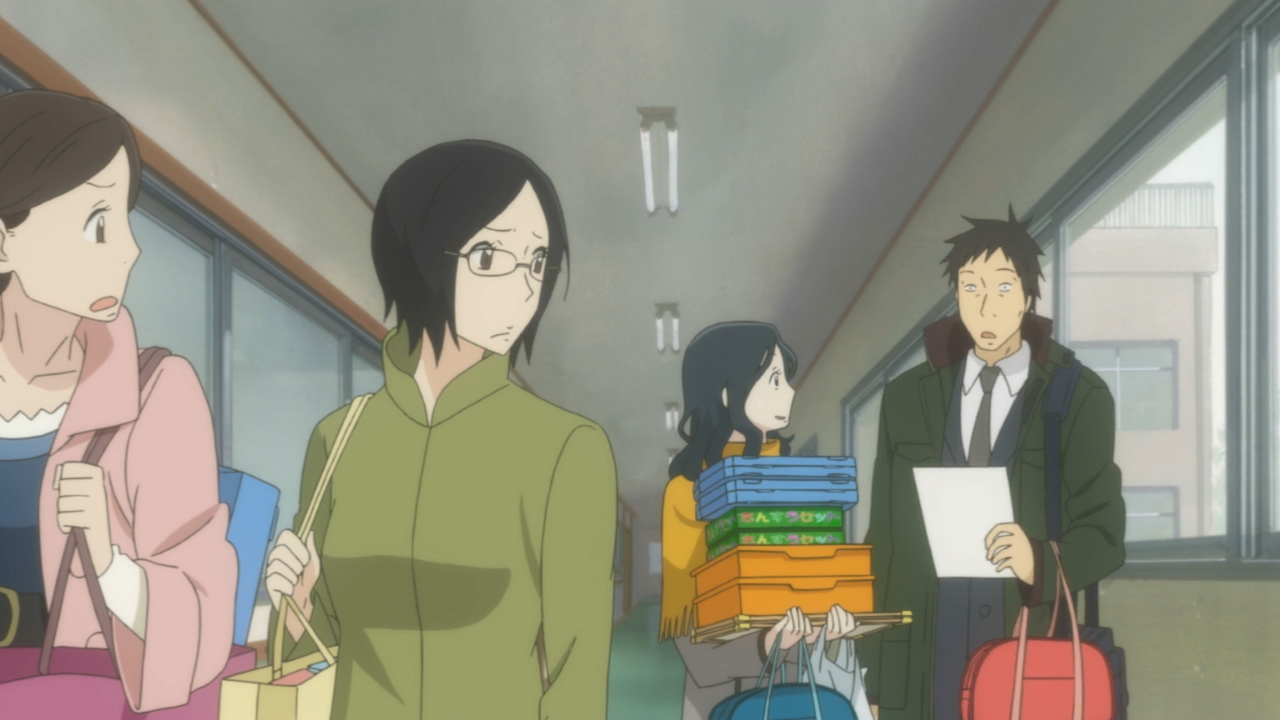
Finally, Daikichi is caught in between worlds. Some will look down on him for not having a wife or not knowing the ins and outs of parenting. Just look at the dirty looks some mothers shot Daikichi when they overheard him asking Yukari about things he “should” know. They don’t know, of course, that Daikichi isn’t even Rin’s real father and has only known the girl for three months.
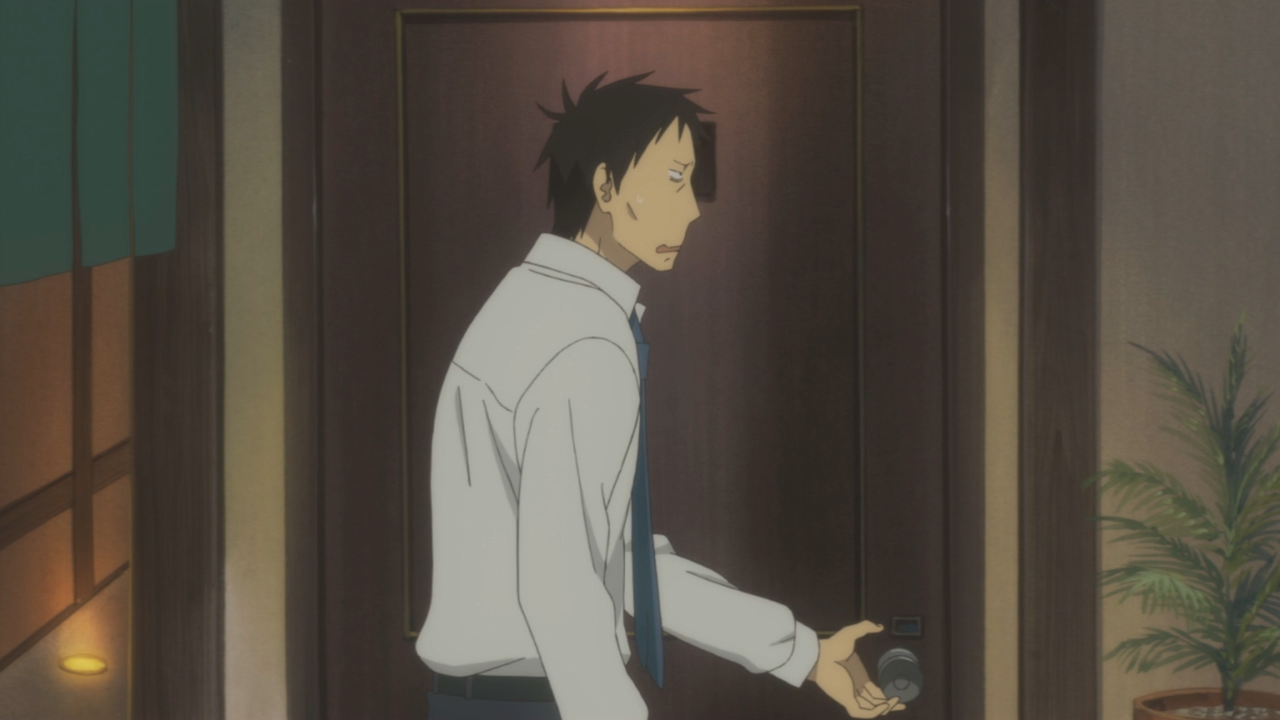
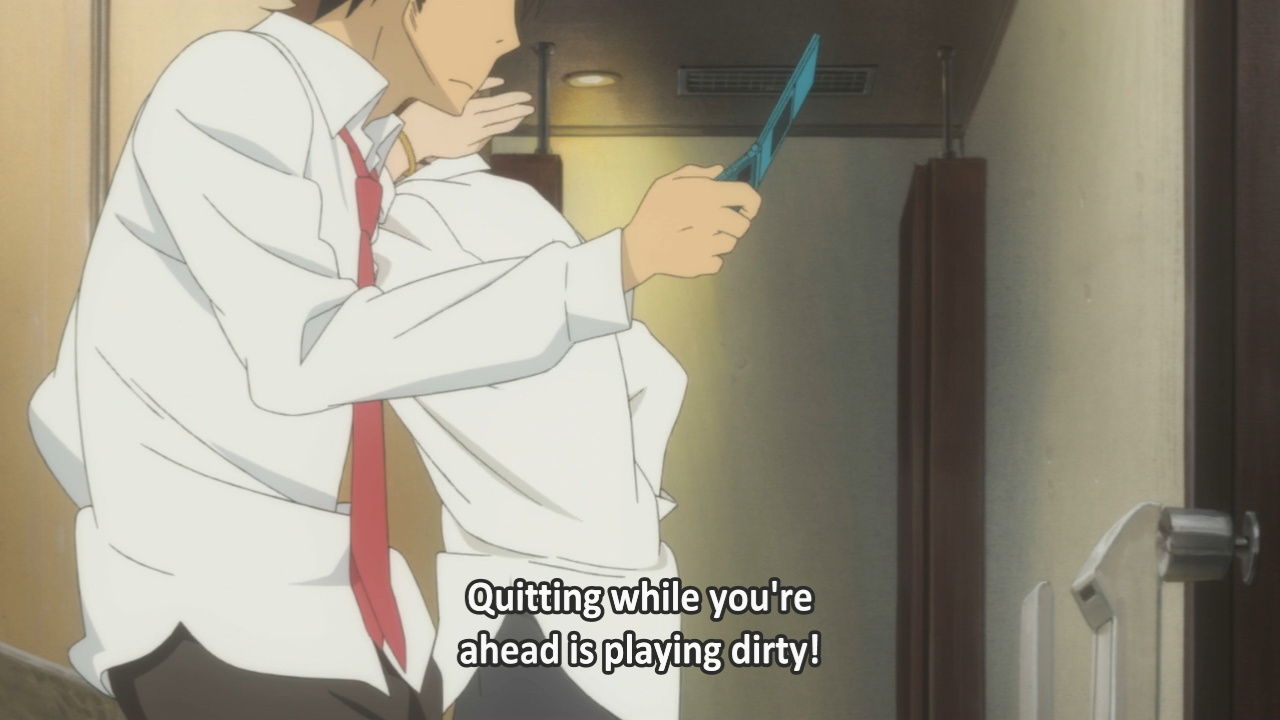
Daikichi also finds out that he no longer belongs in the working world either. At a drinking party, Daikichi overhears former co-workers badmouth him in the restroom. They think he’s just leaving the company high and dry. In an environment where the ideal is selfless devotion to a company, co-workers can’t understand why Daikichi would abandon his obligations. But, of course, it sounds bad when you put it that way. As viewers, we know exactly why Daikichi requested a lower position with lesser responsibilities within the company.
In an indirect way, the episode suggests that we connect with those in non-ideal situations. This way, we can understand that it’s not necessarily people’s fault for being square pegs — maybe society should have more than just round holes. At work, Daikichi has befriended Gotou, and from what we learned last week, she’s one of the people who gave Daikichi the strength to sacrifice his career for Rin’s sake. Whenever Daikichi goes to pick up Rin now, there’s that tiny chance he’ll run into Yukari, a single parent just like him. Likewise, Rin bonds with Kouki, Yukari’s son who understands what it’s like to have only one parent.
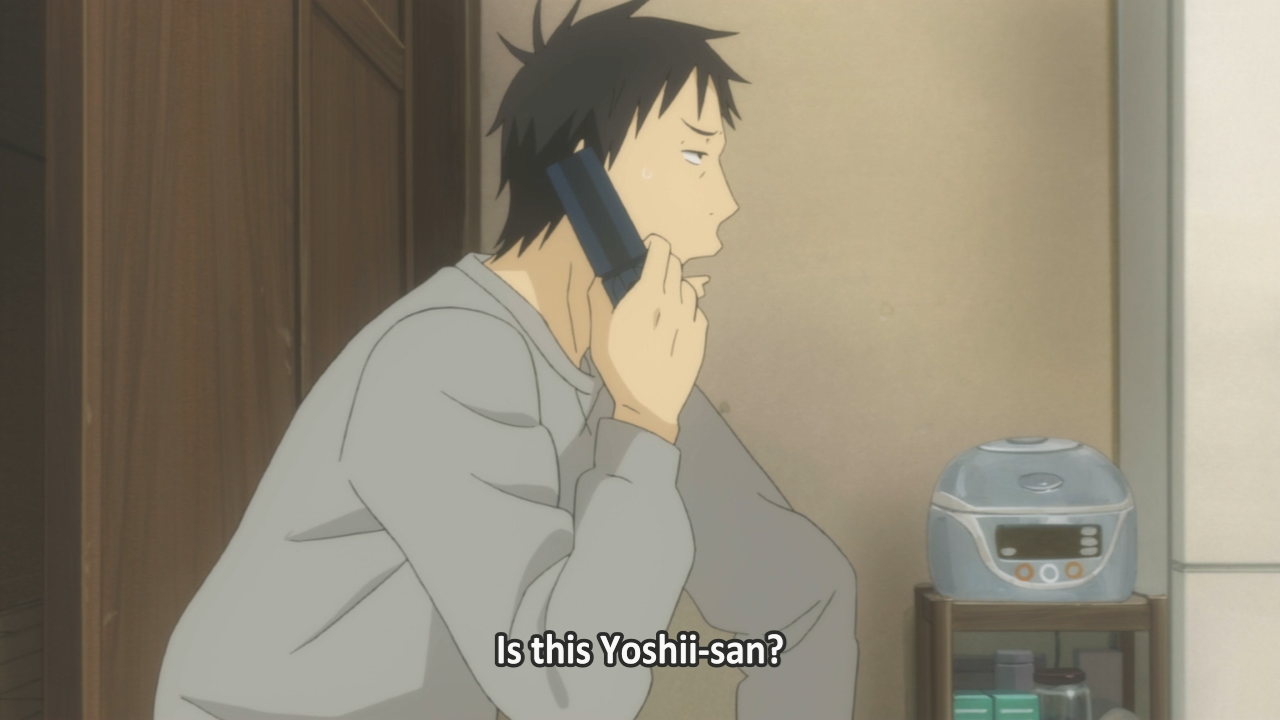
So when Daikichi stares at Masako’s number and wonders how she could possibly abandon her daughter, the proper thing to do is to connect with the woman similar to what he and Rin has done throughout this episode. No one’s condoning Masako’s actions, but at the same time, to treat her as an outcast and a horrible mother with no consideration whatsoever for her child is naive and irresponsible. It would also be quite similar to how some of Daikichi’s co-workers are now treating him. Outsiders like Daikichi, Rin, Yukari and, of course, Masako are not necessarily bad people; they might’ve just been dealt an unfortunate hand. We’d never know unless we take the steps to find out.

Feeling cheated on searching Masako, then spoil the truth for myself….
What?
This was a fun episode, and very lighthearted despite introducing some more potentially dubious morals: like the mother not being ‘mature’ enough. But the most welcome aspect here is Rin’s overdue characterization. It really felt like she arrived with this episode — not only as part of Daikichi’s life but also into the story.
I find it odd that Rin is already so maternal. All the younger kids seem to turn to her a lot then her comment after the drinking party (about some kid being really cute) just didn’t strike me as something a six year old would say. She got some more characterization this week, but something about Rin is just off to me. Strangely enough, I think she may be the anime’s weakest link at the moment.
Yoshii, I don’t know why – I can’t stop thinking about that damn dinosaur.
“Yoshi’s Story” was a bad game.