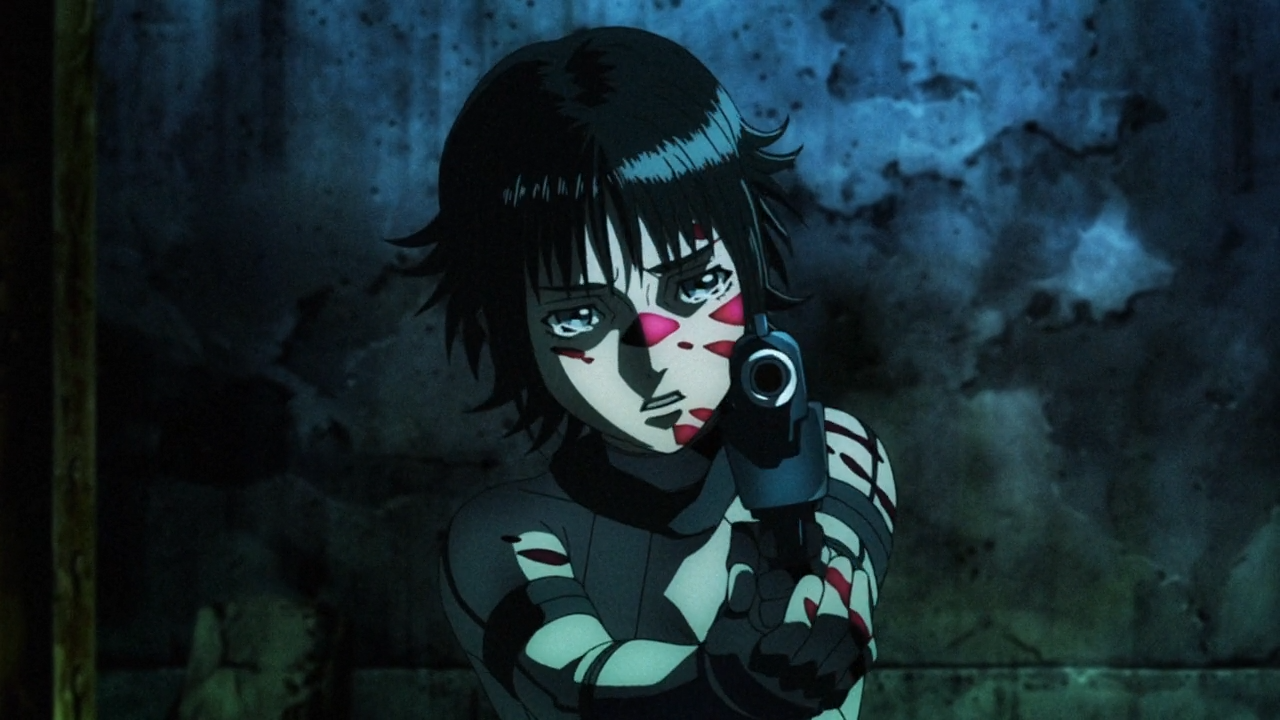
We all know what most of the audience is here for: gunfights featuring hot anime babes in skin-tight outfits. For a good two-thirds of the short movie, however, Mardock Scramble bogs itself down with the pretense that it cares whatsoever about certain women’s issues. These topics range from sexual exploitation to society’s “blame the victim” mentality. Unfortunately, the anime executes its social commentary with as much critical thought as I Spit on Your Grave. All I get is the lingering aftertaste of phallocracy, even if well-intentioned.
We follow a young former prostitute by the name of Balot. A session with a client gone wrong leaves her trapped in an exploding limousine, burnt and charred to a crisp. Luckily, two individuals, a mad scientist and a golden rat (no, really), are on the scene to rescue Balot from her predicament. They couldn’t save the poor girl’s human body so what’s the next best thing? They turn Balot into a super sexy cyborg with gunkata abilities. Of course, we all expect the new Balot to wreak vengeance on all the men who have wronged her, but don’t hold your breath as the next half hour tries to clumsily deal with “weightier” issues.
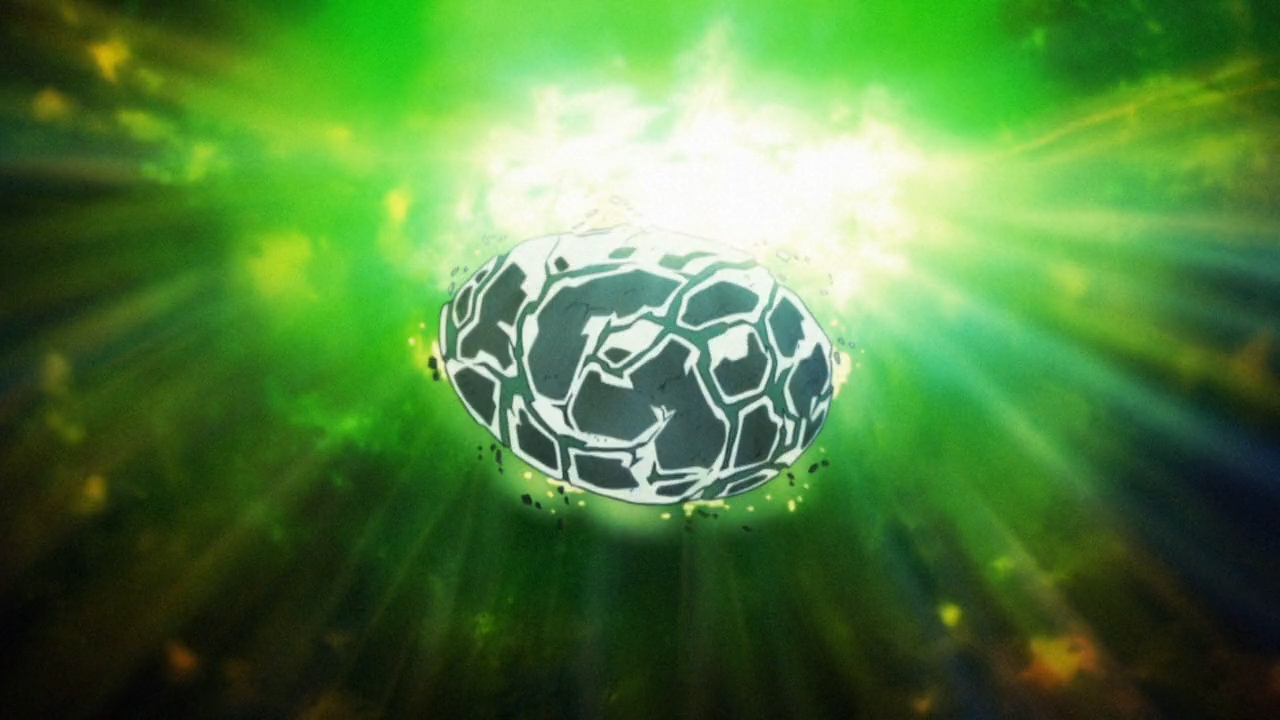
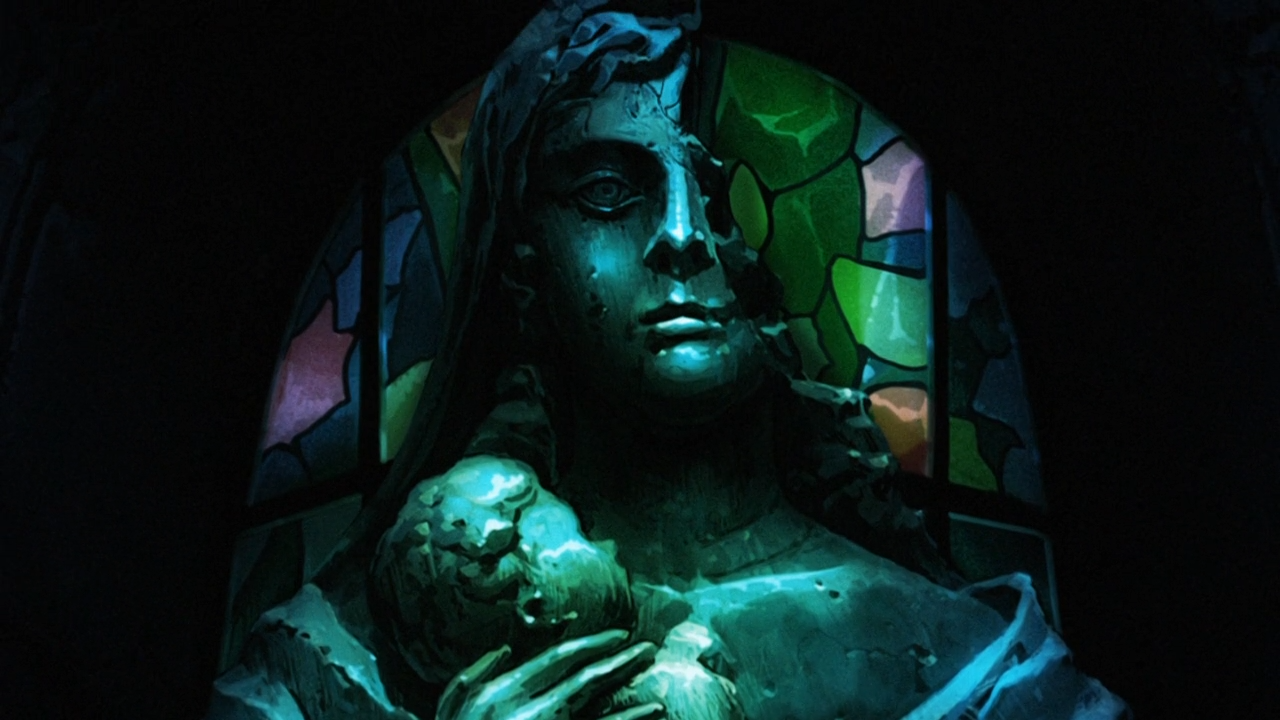
We, of course, wouldn’t be watching a cyberpunk-esque anime without a lurid transformation scene for Balot to undergo. Literally purified by fire, her old, sinful sex-having self is cleansed away. In this sequence, Balot can be seen floating in water, encased in an egg before her new self emerges from a proverbial womb. If you think this isn’t blatantly symbolic enough, the new Balot opens her eyes only to come face-to-face with a giant statue of the Virgin Mary bearing down upon her. To top things off, the mad scientist goes by the name of Dr. Easter. As a result, the virgin/whore dichotomy dooms the movie’s well-intentioned message right from the start.
For the next half hour, the anime attempts to wrestle with the girl’s conflicting issues of sex exploitation (sexploitation?), victimization, self-identity, etc. but the results are unconvincing when the camera constantly lingers on Balot’s nubile body as though we’re watching a pornographic movie. The accompanying sex scenes also betray the movie’s moralizing. How do I reconcile the movie’s explicit message that prostitution is dirty and wrong when every shot of fornication is filmed in a way as to titillate the viewers?

In the pivotal courtroom scene, a vulnerable Balot attempts to fight off society’s penchant to blame the victims of sexual crimes. The results here should be harrowing, but unfortunately, her backstory undermines the movie’s credibility. In the end, Mardock Scramble ends up fingering (no pun intended) Balot’s troubled childhood as the cause for her descent into prostitution. “Oh those poor sexhavers. They would’ve been such morally upright women if not for their daddy issues!”
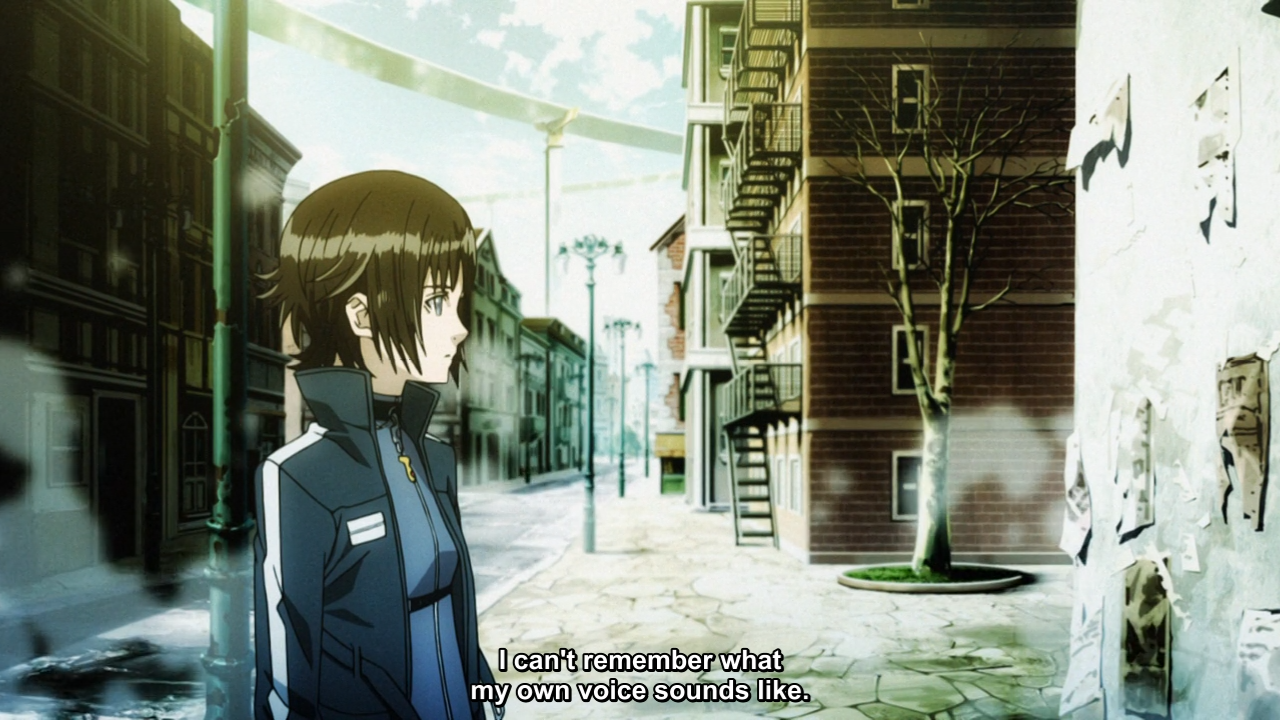
In essence, Balot goes from being some men’s tool for sex to other men’s tool for moral crusades. Of course, in saying this, I’m not attempting to draw equivolency between sexual abuse and what Balot’s saviors are attempting to do. My point is that Balot doesn’t really have a voice of her own. As soon as she undergoes her rebirth from whore to virgin, she becomes literally voiceless. Like a child, she lacks confidence with both her own voice and actions. Thankfully, a sentient, male rat is around to keep the immature Balot in check.

In a lot of these girl power movies, the victim will seize control of her own destiny and right the wrongs committed against her. Unfortunately, Balot remains helpless before and after her transformation. She’s absolutely useless without the golden rat’s help. The movie isn’t even coy about this either; Balot’s surrounded by evil men with massive “firepower.” Do I need to spell it out any further? Alright, Freud is right: the guns are penises. But Balot lacks a penis and as such, she is helpless. Luckily, her male companion allows her to turn him into a gun, a.k.a. a prosthetic penis, to fight off those dangerous, evil men. But I can just here the protestations now: “Blah blah blah, sometimes a gun is just gun.” My bad. It is silly of me to think a gun could mean anything else in a movie full of unwanted sexual penetration.
Balot’s child-like countenance is disturbingly contrasted with the anime’s propensity to dress Balot up in all sorts of tight, revealing outfits. The movie is none too coy about its metaphors. Shell is evil because he uses women then turns them into blue diamonds after he’s done with them. The band of nutjob assassins not only murder and torture women, they also collect female body parts as trophies. The message, then, is obvious: we shouldn’t objectify women! So why does the anime turn around and trump up Balot’s sexuality?
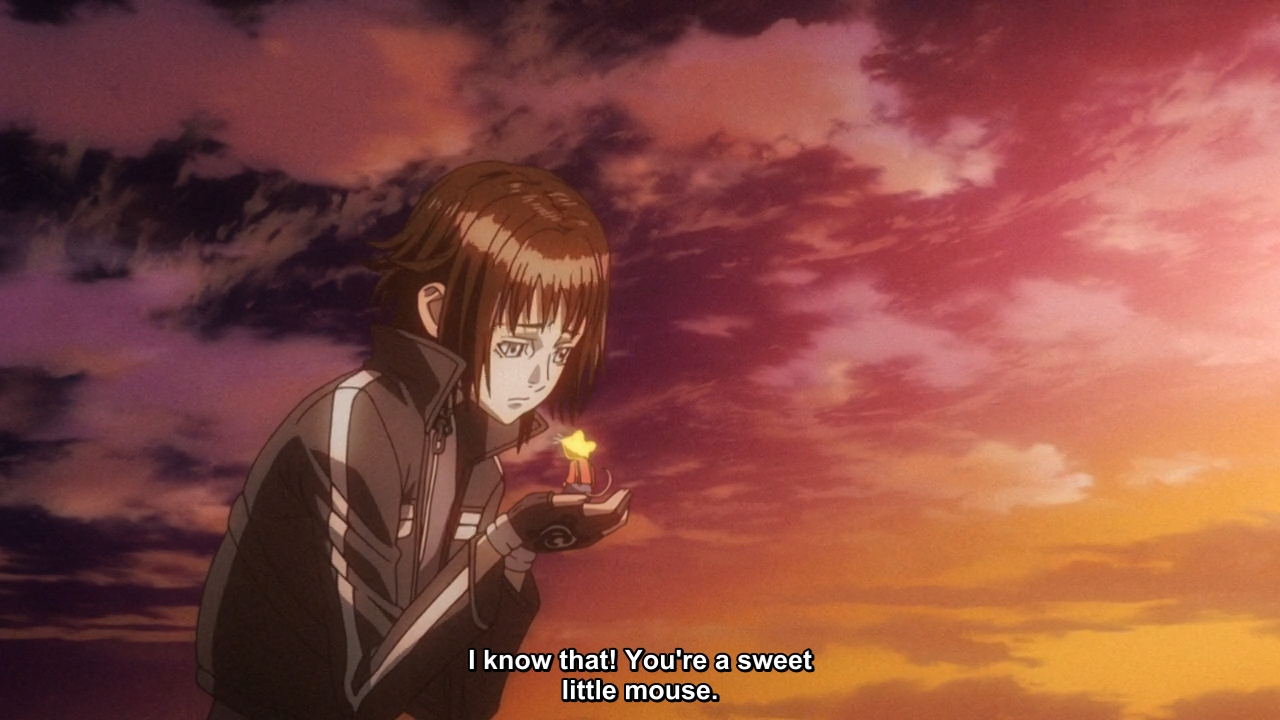
In the end, if you’re after a Kite-esque movie where an anime babe effortlessly murders people onscreen, just fast forward to Mardock Scramble‘s last fifteen minutes. Everything preceding the high-octane action scenes, however, is insultingly dumb and patronizing. I can’t help but feel as through the brilliant golden rat is the author’s self-insert character. I can also imagine him patting himself on the back for penning such a socially conscious story! Maybe that’s an unfair insinuation, but in any case, I’ll pass on whatever the sequels will have to offer.


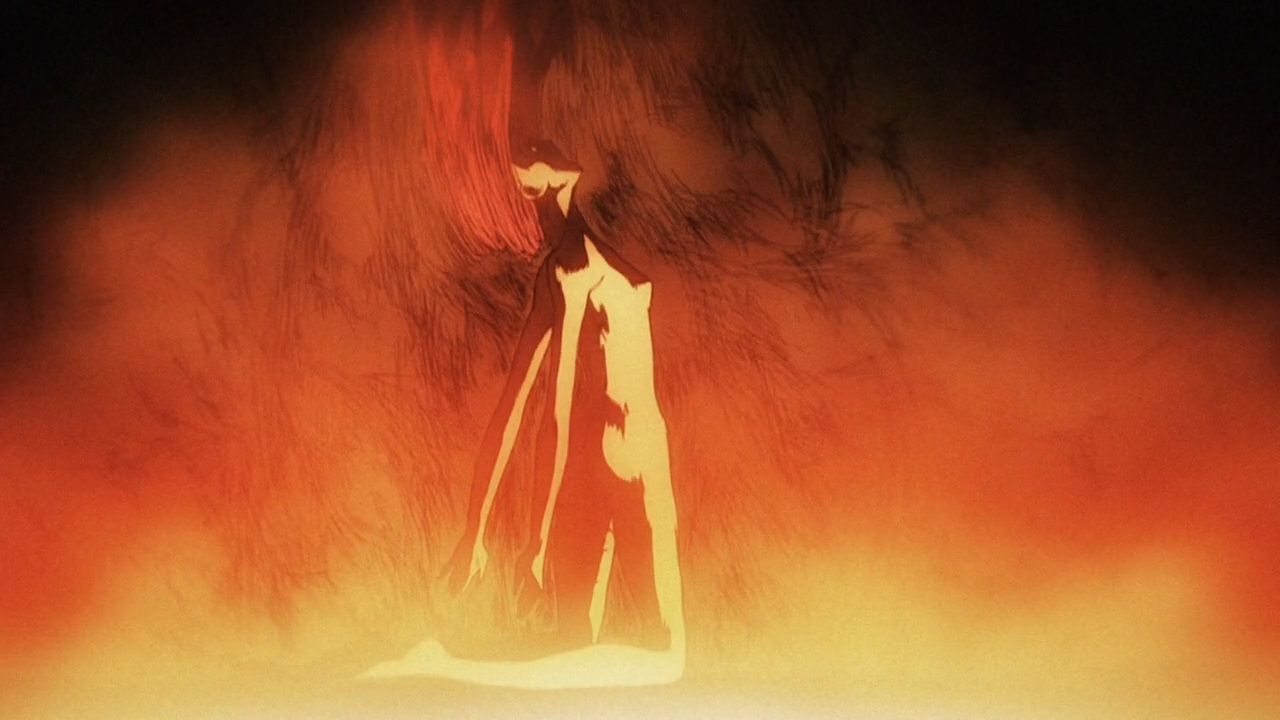





I know, its Ghost in the Shell with less brains, more violence and more nudity. I’m not disappointed, I never expected something deep or profound in the first place. I went to a burger joint, and they gave me a burger.
I recommend it, animation is really good and has some clever camera angles. Character design was especially good, the assassins are some of the most wrong people I have seen in anime, I almost spit coffee on my PC once Pike the Flesh was introduced.
But you only get a tiny slider. The rest of the meal tries too hard.
I completely agree with the review. I don’t mind chicks in skin tight outfits who gun down bad guys but trying to pretend it’s some kind of female empowerment is just stupid.
It reminded me of ‘Sucker Punch’ in that regard.
I think Zack Snyder gets more shit than he deserves, but I haven’t seen Sucker Punch so I can’t comment on this.
Gosh, E Minor, why can’t you be OBJECTIVE?! You should say that everything is just your OPINION, not a fact! And you’re reading too much into the movie!
No, but seriously, thanks for sharing, this is why I was so interested in hearing your opinion. For the most part, this wasn’t how I saw the movie at all, as someone who doesn’t think about these issues too much. Well, the suggestive outfits and camera shots were hard to miss, but since those are so prevalent in everything I didn’t pay it much mind (not to imply that this excuses it).
The main difference in how I first saw the movie was that I didn’t see Balot’s problem as prostitution and sex, but as taking part in and needing abusive relationships. Of course, now that you point it out, I can see the symbolism as well, but it didn’t strike me that way on the first watch. So I actually liked the fact that Balot didn’t have a sudden rebirth and fix all her problems: recovering from abuse is hard. She still seeks out an abusive relationship (now with the rat) and actually becomes the abuser herself. So I saw her daddy issues not as leading her to become a prostitute but to become her daddy.
Out of curiosity, are there any anime that you think do handle these kinds of issues well?
Sure, I’ve never disagreed with that.
The movie has to realize, however, that this is a delicate subject and the way the story handles it makes it seem as though Balot is powerless. Rather, men in power are the ones tugging her this way or another. Even if the rat is one of the “good guys,” you don’t want to craft any narrative where the heroine is just a tool. And when Balot does overtake the mouse — one of the few times she exerts control over her fate — it leads to something horrible. That’s a troubling implication.
I find it difficult to equate her father’s sexual abuse with her abuse of the golden rat.
I honestly can’t think of anything off the top of my head. The burrito I just had might be making me too sleepy to think properly though, so I may edit this comment later.
Should we consider the mouse a man in this context, however? He’s a mouse, so relative to Ballot his gender should be mostly irrelevant (though you could of course make the case that he’s written as a typical male). I personally think you could cast a female or androgynous-sounding voice actor for the same character and get the same result as before.
From the sounds of things, Oeufcocque was engineered from birth without ever being human, let alone a man. He even has a line where he explicitly states that if Balot expects him to suddenly turn into a male human, she’s sorely mistaken. Balot herself still lacks the drive and motivation required to actually carry any message of empowerment, but I disagree that the mouse is a male influence. I found him much more of an inhuman, alien one unable to properly relate to the issue because naturally he was of a totally different species and mentality.
As an aside, I enjoyed Balot’s lack of voice both from a characterization standpoint and because it was symbolic of how she lacked a “voice” (a means of representation) in the eye of the court, and had to go on trial using nothing but a crude machine only capable of responding to the immensely nuanced and complex questions with binary yes/no answers that could never hope to encompass the actual emotions and thoughts behind them. Apart from that, I just find it interesting to see a character who has to communicate through a means other than their voice. It’s always enjoyable to see how they bridge the gap and express themselves to others without relying on their ability to speak.
Not that Mardock Scramble is a shining example of this, but anime as a whole tends to have a lot of completely unnecessary talking and verbal chaff, so it’s also nice when something comes along and breaks the mold by limiting dialogue to only the most necessary phrases, or simply showing rather than telling.
I’m not so certain about this. As for the mouse’s gender, I don’t see how he could be seen as androgynous. Androgyny implies that there is evidence of both sexes in a single entity, not the absence of sexuality. In that case, there’s no hint of femininity whatsoever in Oeufcocque. There is, however, the impression that he is male, from his voice down to his paternalistic attitude toward the girl. The movie is very blatant in its symbolism. Objectifying women? Literally objectified as diamonds. If the movie had wanted to make the mouse appear androgynous, it would have done so in its consistently heavy-handed way.
I read this more along the lines of Oeufcocque being a bit of an autistic character. Imagine abused girl meets super-brilliant scientist. So when Balot thinks she can get a normal relationship out of the mouse, he tells her that she is surely mistaken. As for the mouse being alien, I don’t see it. The mouse is rather anthropomorphized. The anime doesn’t really try to make it seem as though that an intelligent mouse would have its own mouse-like idiosyncrasies, quirks or even its own language/manner of speaking. He acts just like any other human would, except with less emotion; in other words, he’s an autistic human in a cute, non-threatening package.
I feel as though it victimizes the girl more than necessary without any counteracting examples of strong powerful women who do not need to resort to violence, but I’ve spent most of the post trying to get at this conclusion. As such, I won’t belabor the point.
Just occurred to me when I read your entry on Penguindrum, that you missed the obvious similarity with Pinocchio.
Both are about a non-human character who have no moral compass, and rely on a small animal to provide it.
Who are you referring to in Penguindrum? I don’t see anyone who relies on an animal for morals. And why do you think Balot lacks morals as opposed to having skewed morals or the inability to act upon them? And what makes her non-human? She clearly has human feelings. Even if we go by the technical definition of humanity, she’s a cyborg, not an android.
I referring to how you compared the episode to a fairy tale.
I don’t know if Balot or Pinocchio can be said to be human, but given Balot’s upbringing it is no wonder she lacks a concept of right and wrong. Like Pinocchio’s conscience is in the form of a cricket, Balot’s is in the shape of a mouse.
Y’know, the original Pinocchio died a miserable, lonely death. The part of the story where he becomes a boy is added on later to make the tale more palatable to children. In any case, there are plenty of stories out there where a wise mentor will advise a younger, immature character. For Mardock Scramble to really resemble the children’s tale, Balot would have to undergo some sort of humanizing experience. Pinocchio, for instance, gives up all of his money to save his “mother,” the Blue Fairy. This selfless act allows him to become human. The anime would need an analogous scene; not literally similar, but something to really link the two stories thematically beyond “a character has a mentor to teach him or her right from wrong.” Since the anime isn’t finished, however, there’s really no way to tell at this point. Who knows — maybe you’re onto something, but I think it’s too early to say, and I’m not really interested seeing how the rest of Balot’s story will develop.
I actually enjoyed Mardock Scramble overall, and yes, the issues are muddled, but on the other hand, you’re applying a western veiw on a very eastern stance on this topic. As for the whore/virgin dichotomy, I say nay, that’s not the aim here, it’s more of a “How does a person rebuild their life when they themselves are broken, and society wants them to fail?” situation. Which is indeed what Dr. Easter and Oefcoque are trying to help Balot do, (More Oefcoque than the doctor, but the doctor’s got Balot’s best interests in mind) As for people who wanted this to be revenge based, maybe if Balot was OLDER this and hadn’t given up and accepted her lot in life the way she had. It’s almost BETTER in this case for Balot to come off as powerless, needing others (whether it be for support or further abuse), afterall, look what happened ONCE she tasted any form of power over another human being…she got drunk on it and went berserk, almost destroying Ofecoque in the process. Like she said in the manga adaptation as she blew Well-done to pieces, “So this is what it feels like to control someone, this is what it feels like. It feels…so good!” If anything, avoiding Balot becoming a blood-thirsty revenge-seeker is a blessing, not a curse. It keeps Balot much more human, vice the near god-like killing machines characters in similar animes seem to become. It proves that Balot is also capable of changing herself for the better, or the worse as her fight with the Bandersnatch company proved. And they themselves are an argument of broken people being given power, and going berserk with it.(The manga goes further into WHY the Bandersnatch Co. guys are how they are) As for the court scene? More or less how a system that wants to avoid a sticky situation works, you have to look at it from the view of victem, Balot. The world doesn’t care, and it doesn’t WANT to care. It’s not their problem, so why should they dirty their hands over someone who obvisously has no concern for themselves and no one cares about? The whole “It’s not my problem, I should leave it alone and stick to status quo” is a VERY Japanese stance, which is what Balot is fighting against. Which leads back to an earlier point that I had about looking at this with a western veiwpoint where the courts (usually, and more idealistically) for the victem, not against. Not saying the Japanese courts are as they appear in Mardock Scramble, Mardock City itself is a cesspool, corrupt to its core, and takes the japanse social stance of “Not my problem, not worth my time”
You’re drawing this western/eastern viewpoint dichotomy, but you haven’t really explained to me in any clear fashion why a western viewpoint, whatever this may be, is a flawed. I find Balot’s depiction sexist and paternalistic; why am I wrong?