It’s kinda hard to collect my thoughts on this. There are just so many things to talk about sometimes.
Living up to the name
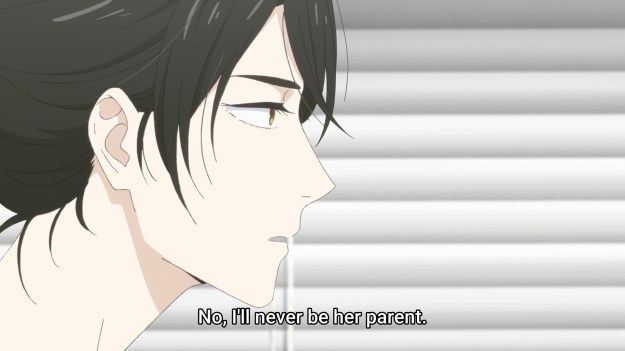
Asa doesn’t want to call Makio a parent, and Makio doesn’t see herself as one. After all, whether we like it or not, names and labels carry a certain weight to them. Asa’s mother writes about how Asa’s name was chosen with great care. Similarly, the word “mother” might not be a name, but it still has a lot of meaning attached to it. And by rejecting it, it shows that Makio doesn’t want to commit. She took Asa in because she felt she had to; she’d have more regrets if she didn’t. But it feels like she wants to have her cake and eat it too. Makio still acts like a mother even if she isn’t a mom, but if she isn’t performing her role perfectly, it’s okay. She’s counting down the days until Asa is independent and move out. This is a horrible thought for a mom to have, but it’s okay for her because she’s not a “mom.” This is where the hesitance comes from: if she adopts the label of “parent,” she has to be all-in.
Asa’s father didn’t want to get married, but he still wanted to raise a kid. He was fine with living together with a woman to raise said kid, but the marriage label bothered him. Being called a husband bothered him. I guess you could say that making it “official” meant he would have to fulfill certain expectations as a husband. For example, he would have to fulfill Asa’s mother’s emotional needs. On the other hand, if they never get married, he can shirk said responsibilities. He can contribute nothing to conversations, because hey, he’s not her husband! But that’s still obviously bullshit. Don’t become a parent if you’re going to be that selfish. Nevertheless, we can see how labels are once again so important. He rejected the husband label, because he wasn’t committed to Asa’s mother. Even though Asa insists that Makio isn’t her parent, I can’t help but wonder if it still stings when she hears her aunt reject the label.
What we see and don’t see
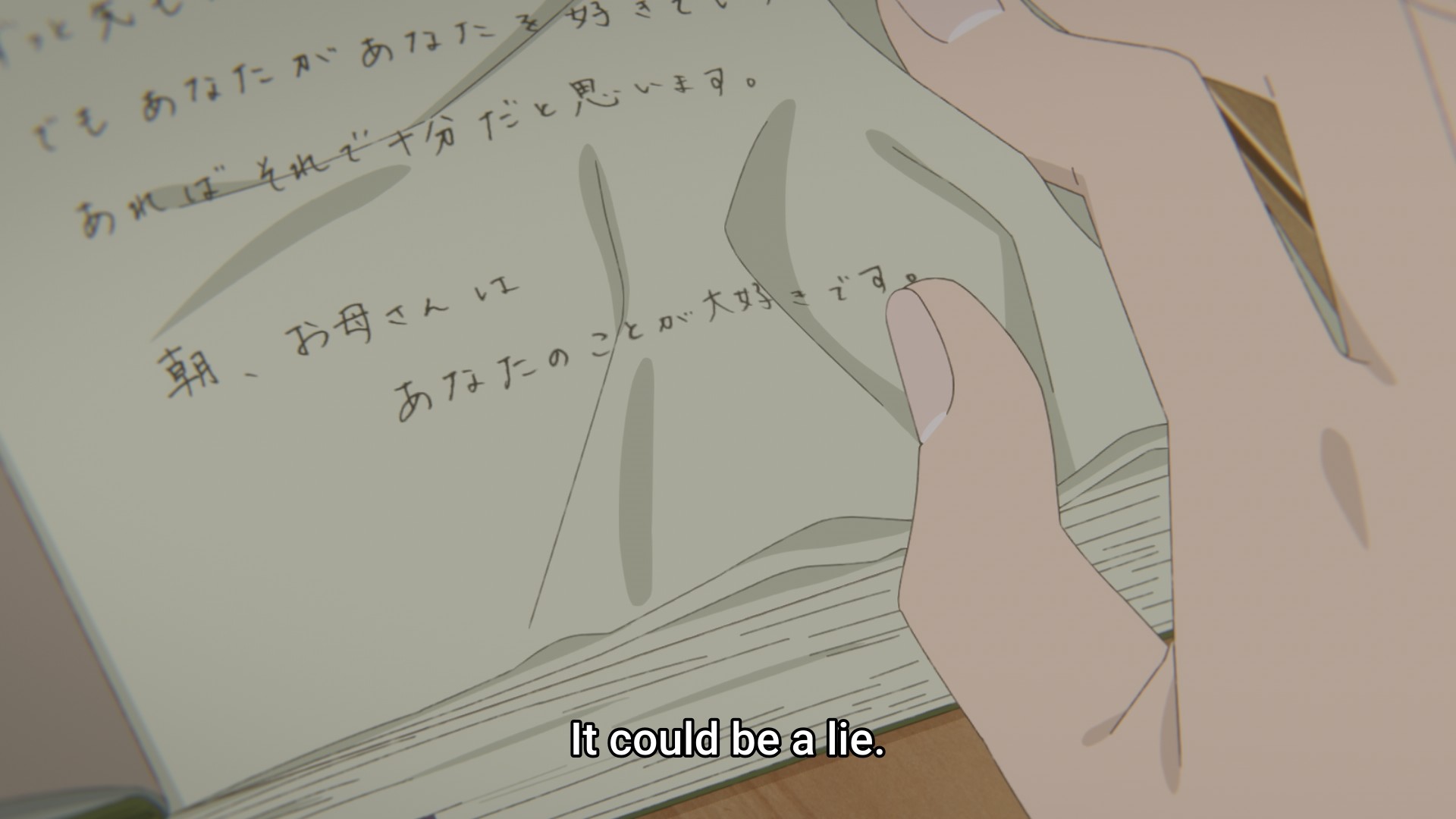
Makio says the following about her sister’s personal journal/letter — the one Asa is meant to read once she becomes a legal adult: “…she was never one to write. I can’t figure out what drove her to do so much of it.” Huh? Maybe ’cause she had things she wanted to say to Asa that she couldn’t say upfront? I dunno, I guess this doesn’t seem like much of a mystery to me. Certain thoughts are easier to convey through writing, and I’m sure Makio knows that. As an author, she has to. So I find it a bit odd that she would have this to say about her sister.
I kinda feel like Makio has one perception of her sister, and anything contrary to that perception automatically feels wrong. But people are not monoliths. People have so many sides to them that they only selectively reveal to others, even their closest friends or family members. There’s a certain image of me that I project to readers of this blog. You guys don’t even know the half of me. Likewise, I’m sure there’s a certain image Makio projects to her readers. And finally, Makio even admits that she doesn’t know her sister all that well. Her sister probably only wanted Makio to see her in a certain way. For Makio to thus make such definitive statements about her sister is a bit odd. I don’t think we can truly ever make definitive statements about anyone we know, because we don’t really know what we know. Asa’s mother “was never one to write” as far as Makio was aware. They were estranged, though. She couldn’t have been aware of much.
Well, Asa overhears the entire conversation between Makio and Shingo about her mother’s diary. Her mind then starts going to weird places. I don’t want to judge, because she’s a kid and she’s been grieving (even if she tells you she’s “good” now). But that’s a helluva thought to have. She also thinks both her mother and Makio have been hiding the journal from her. I don’t think that’s fair. Yes, the journal is like a letter to Asa, but again, it isn’t something she’s meant to have now. It’s a conversation that a mother wants to have with her daughter at a later point in time. I don’t think this counts as “hiding” or “insincerity.” But we think all sorts of stupid things, don’t we? It’s up to us to filter out the bad thoughts from the good ones.
Lately, however, Asa has been kinda selfish. Maybe justifiably so. There’s a void in her left by her parents’ sudden passing. So she takes and takes in order to fill that void. She’s nosy about Makio and Emiri’s love lives, for instance. Sometimes, we have to step back and ask ourselves what we’re giving to our loved ones in return for what they’ve given us. But that’s easier to say to an adult in normal circumstances. Again, I want to be understanding of Asa’s situation, but everyone has a limit. I can’t help but wonder when Asa starting hitting her loved ones’ limits. In retrospect, her many squabbles with her aunt might be warning signs.
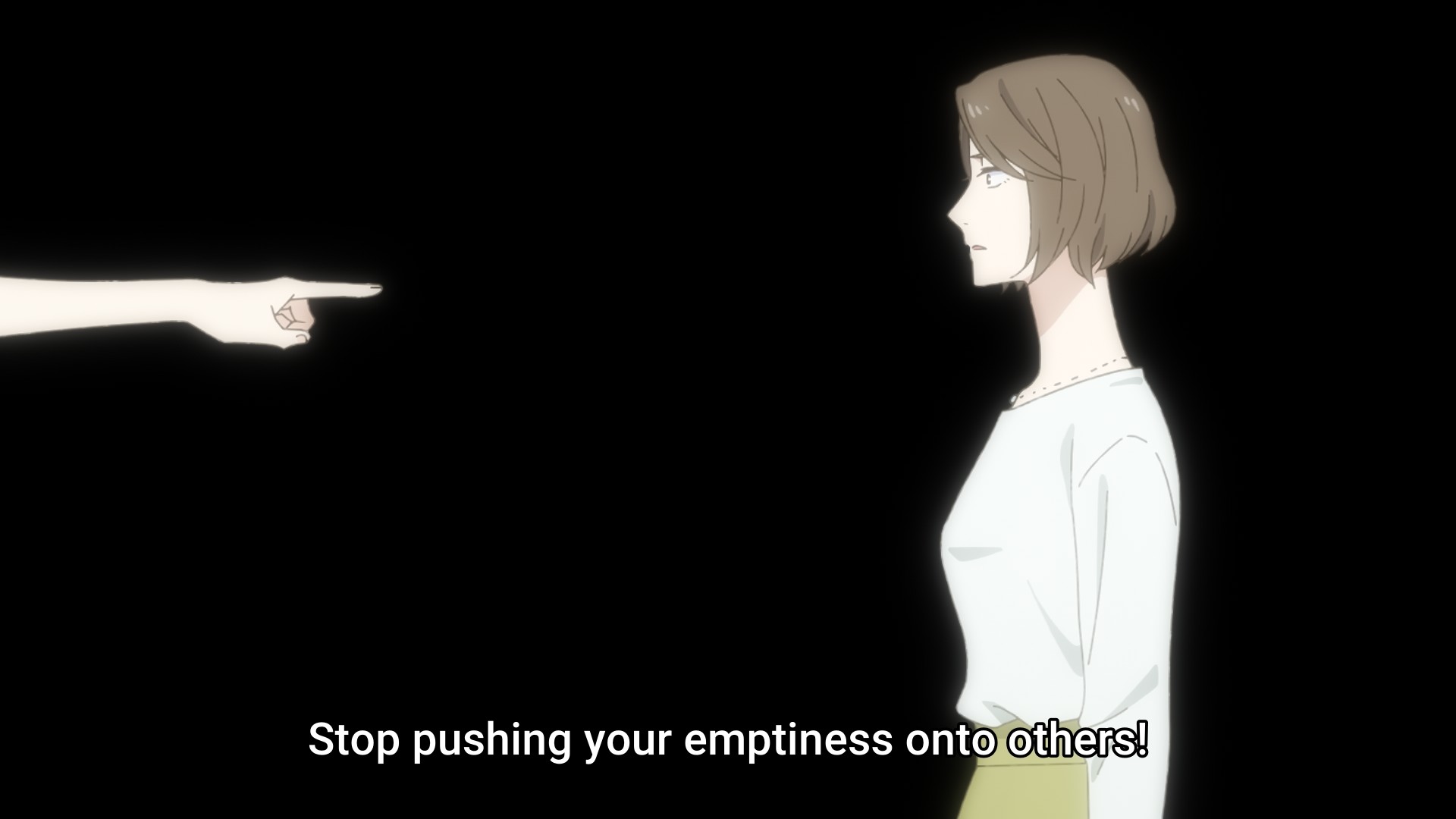
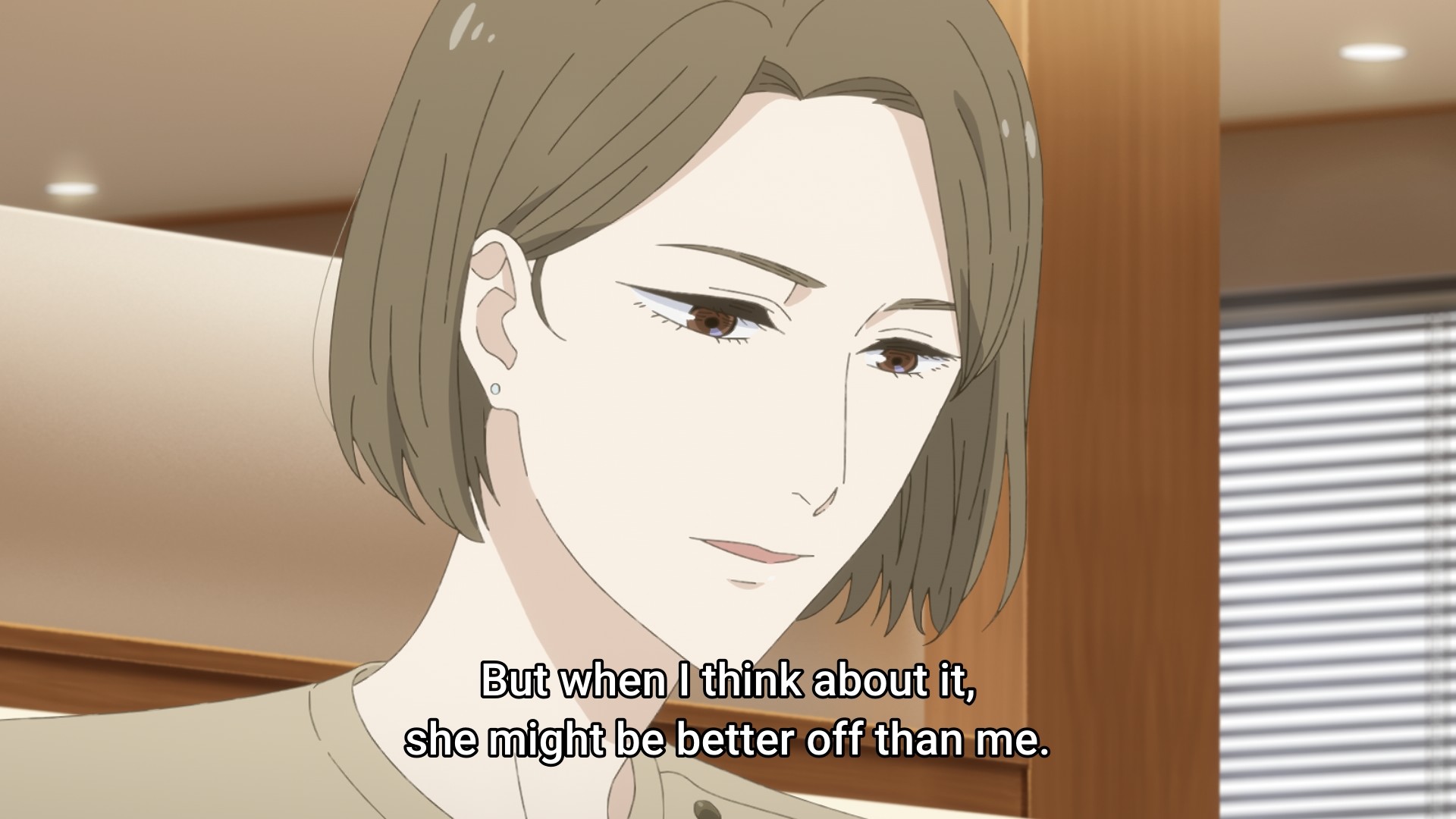
Asa’s mother struggled with being different. According to Emiri’s mother, Asa’s mother was also rather hard on herself. She so desperately wanted to fit in. She didn’t want to be the nail that stands out, so she projected her insecurities onto Makio. Then when she had her daughter, you could feel some of that same strictness coming out again, like telling Asa to say “okay” only once and not twice. Why does it matter? But she was never as harsh with Asa as she was with her sister. Asa’s mother wasn’t perfect with her, but maybe this was her form of growth and progress. Nevertheless, Asa seems to be taking a different conclusion as she reads her mother’s diary: “Lying at the bottom was a monstrous fear. The thought that perhaps… my mom never really loved me.”
At some point, Makio needs to open up to Asa about her relationship with Asa’s mother was so fraught. I don’t think Asa really understands her mother, because, again, we only see the sides of people they want us to see. Asa has read some of her mother’s journal, and this is creating a dissonance she isn’t equipped to resolve. She needs more information — information that Makio might be able to provide. But the problem is that Makio doesn’t really understand Asa’s mother either. She has her own dissonance to contend with. Ultimately, it’d be easier for Asa to push her mother away. If the woman never loved you, then it wouldn’t hurt for her to be dead. It wouldn’t hurt to yearn for a mother who never really cared about you. But I don’t think any of that is remotely true.
Stray thoughts & observations:
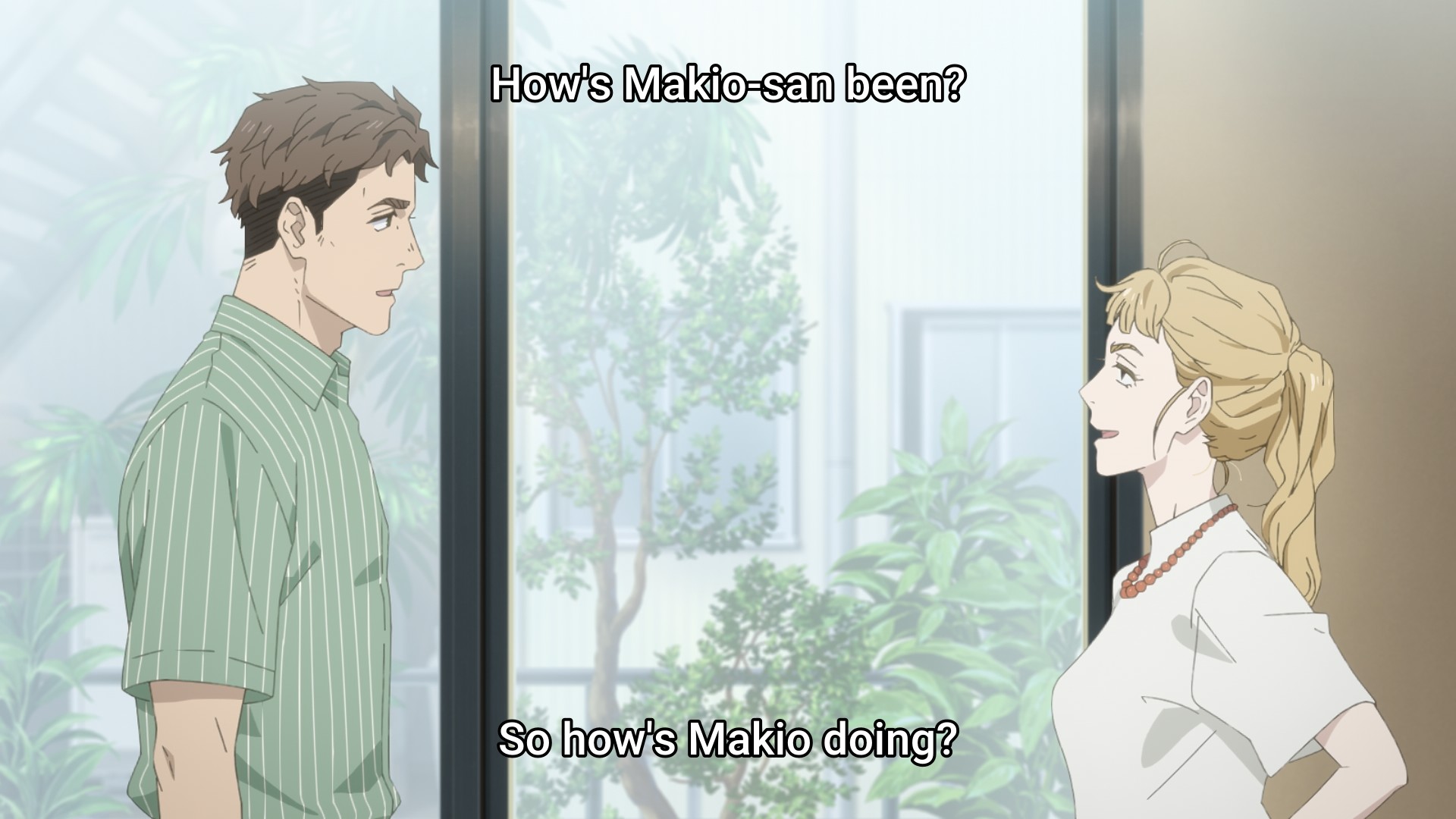
— The situationship meets up with the bestie. What’s on the docket? Makio, Makio, and more Makio. In all seriousness, Nana needs a job, and we all know how connections are ten times more important than anything else. Experience? Education? Qualifications? Forget about it. So Shingo’s here to help. It’s all about who you know, which kinda sucks for loners like me. But that’s life. Anyway, I joked earlier about Makio being the central topic, but it doesn’t take long before these two start talking about her.
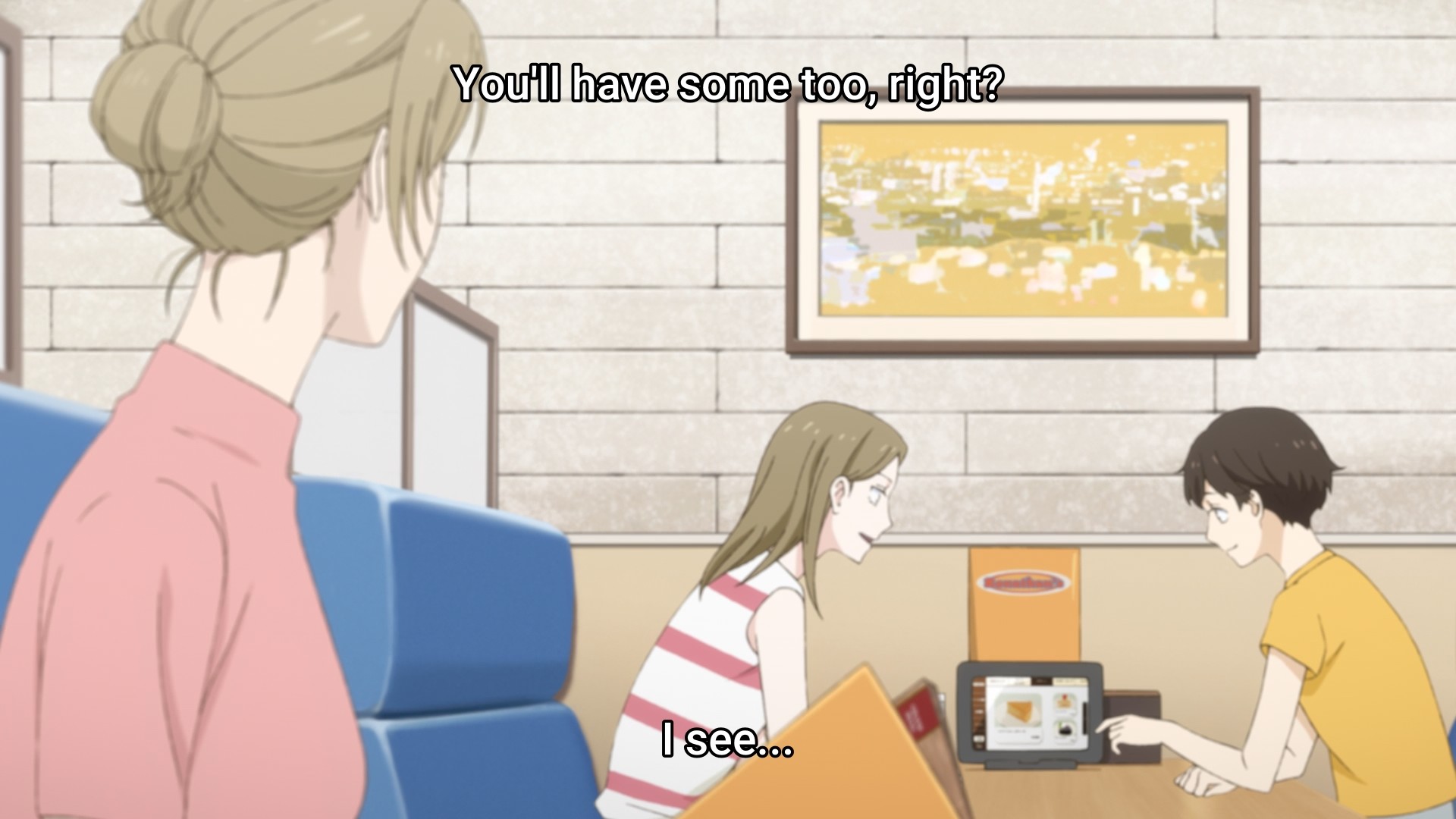
— I like how the “parents” are sitting in one banquette while the kids are off on their own. I only put “parents” in quotes, because I know Makio isn’t comfortable seeing herself as Asa’s mother.
— Nana says she’d never discuss romance with Makio, and I’m the same way with my friends. But I’m a private person in general. Sometimes, I’ll come across people talking about how it’s normal for best friends to discuss private details about their relationships, and I dunno… I feel like if you’re going to talk about your partner, I think you need their permission.
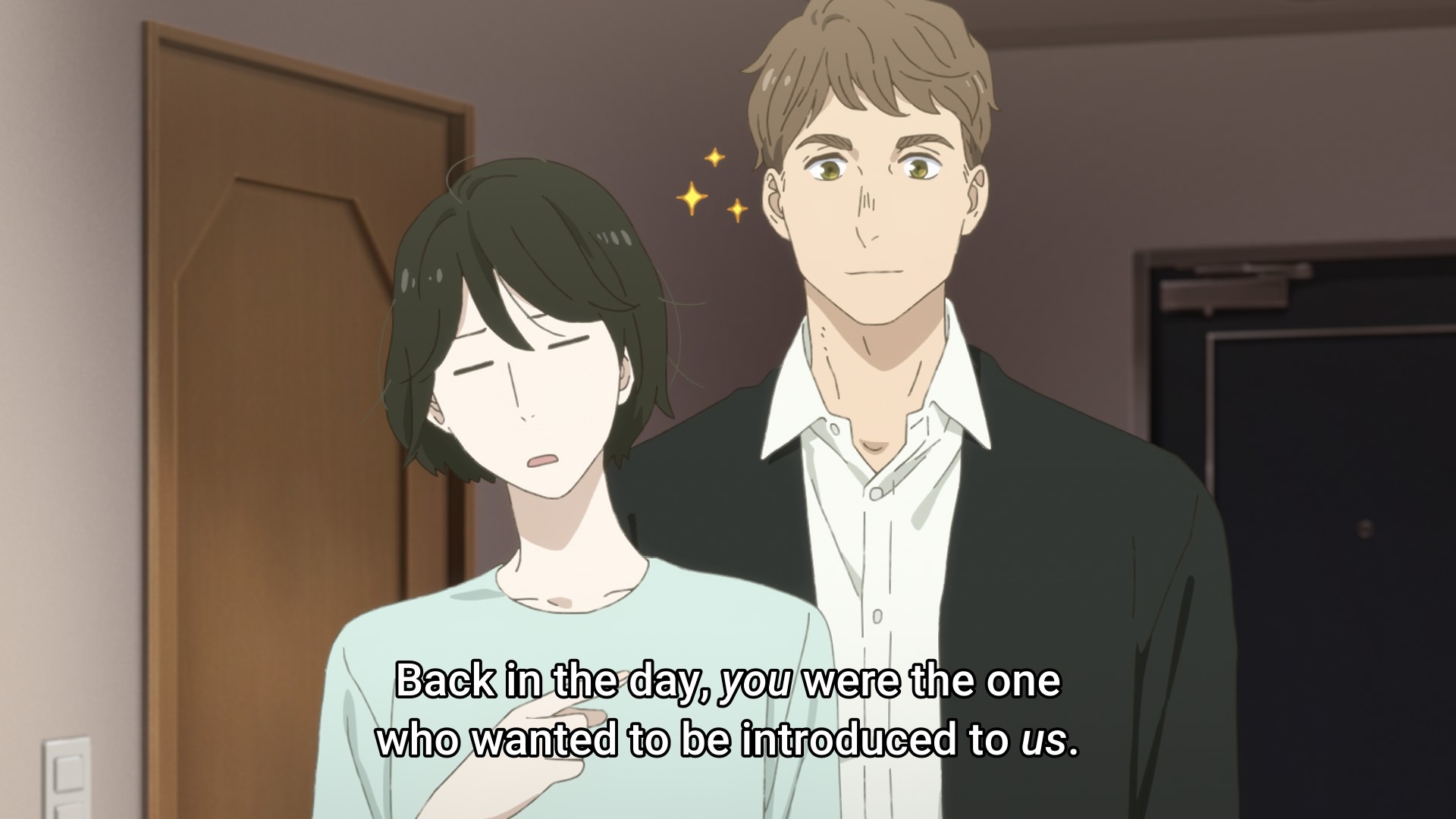
— Shingo seems like he’s eager to please. Also, there’s the sense that if you’re in with your girlfriend’s friends, then your relationship is a little more official. After all, it sounds like if he hadn’t insisted, he never would’ve met them. Makio doesn’t seem like the person who would initiate this sort of thing.
— Shingo also opens up about his bout of depression. I can’t say I’m comfortable talking about such things with my friends. Kinda feels like I’m burdening them with my troubles. “But that’s what friends are for!” Sure. But you never know if you’re close enough with someone to dump your problems on them. Or maybe that’s just me.
— Emiri openly suggests that maybe Makio is neurodivergent. I don’t disagree, but to just say it out loud in front of them is wild.
— But hey, at least Makio is coping with her forgetfulness by writing down little notes “in the cloud” to keep track of stuff.
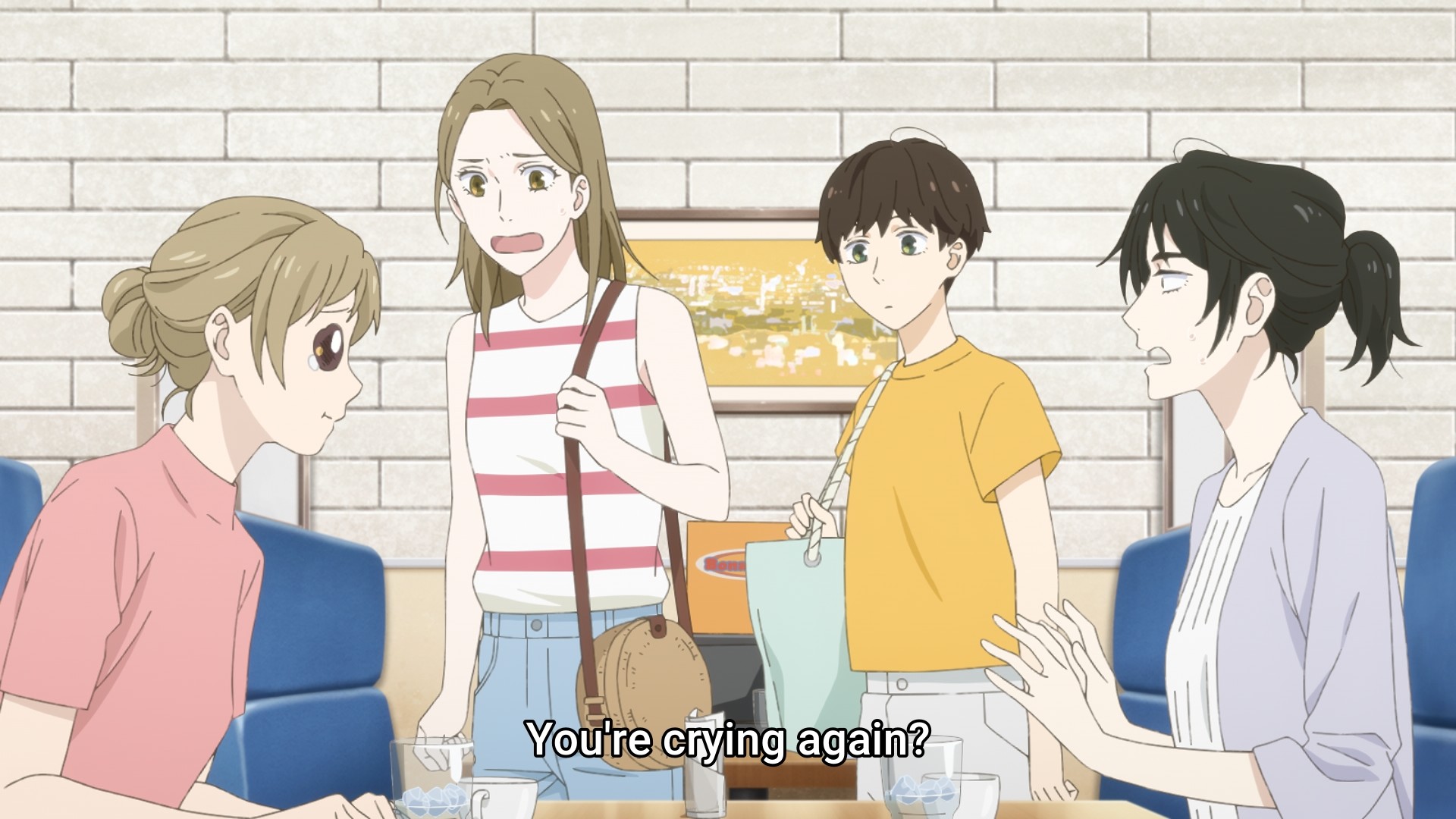
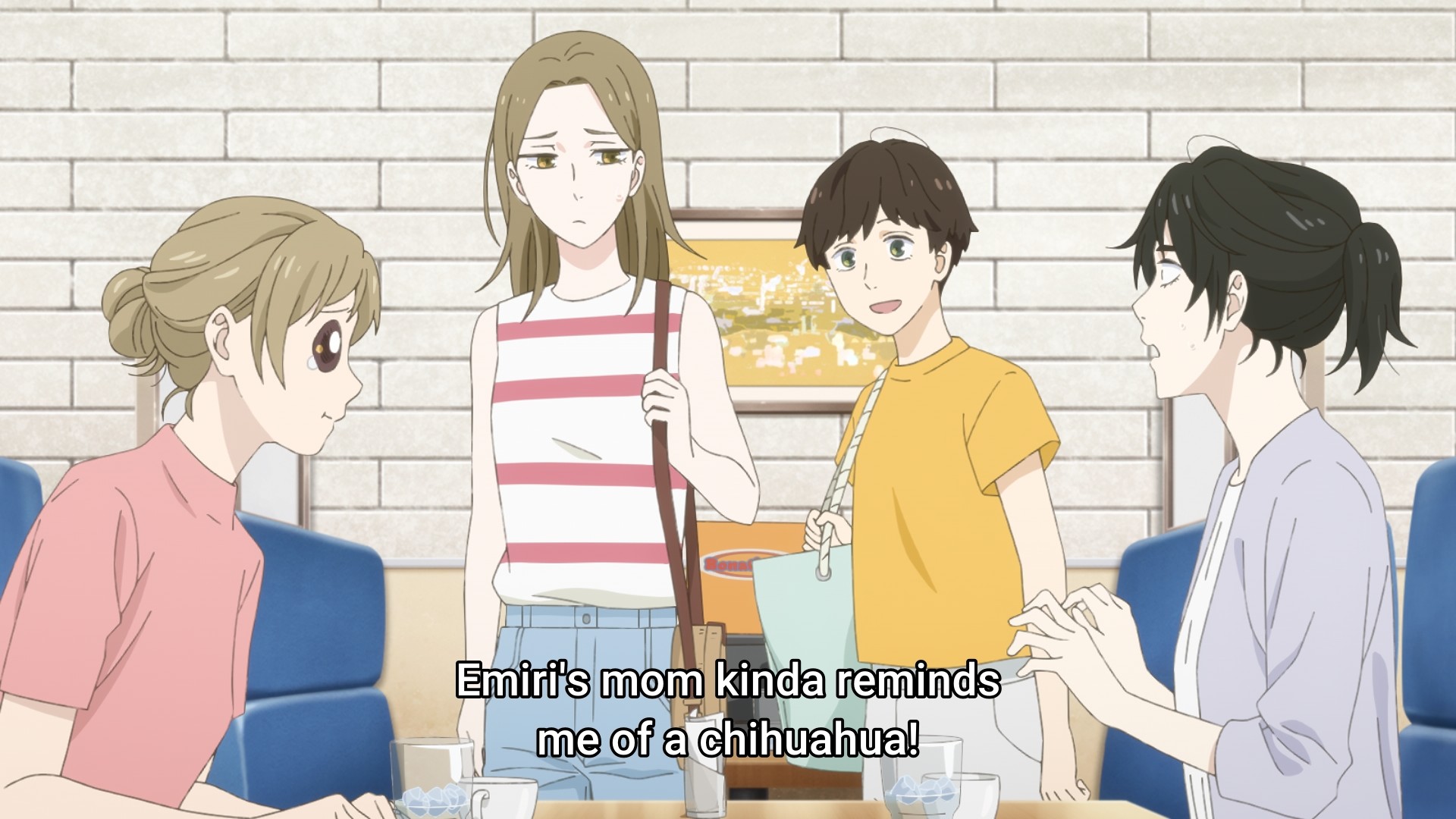
— Aw, there’s nothing wrong with Emiri’s mother easily tearing up. People feel what they feel.
— Kids can be kinda insensitive.
— Emiri’s mother admits that she has regrets about becoming a parent, but she also admits that she’d have regrets no matter what choices she makes. That’s one of those things people rarely say out loud though, isn’t it? People get so dramatic if they hear their parents say something like, “Oh, I wasn’t sure if I wanted to have you.” I mean, it’s a big fucking life decision. Of course people are going to have doubts about it. But some people take it like an insult. “I wasn’t planned! You didn’t really want me!” Jesus, take a chill pill.
— Huh, Asa hasn’t caught the hint that her friend is into girls. I swear, I thought Emiri opened up to her about this in a previous episode. It’s possible that Asa has blinders on, because she’s kinda wrapped up in her own situation. It’s a pretty big situation to be fair. But I can understand being kinda offended in Emiri’s shoes.
— Makio has a really strong reaction to the thought of reading a bento journal. She makes it seem like she’s intruding. Well, to be fair, it also contains insights into Shingo’s mother’s relationship with her son.
— Things we should say to the people we care about, but they might not understand us — they might not want to understand us. So we say nothing, because we want to avoid the ensuing argument.