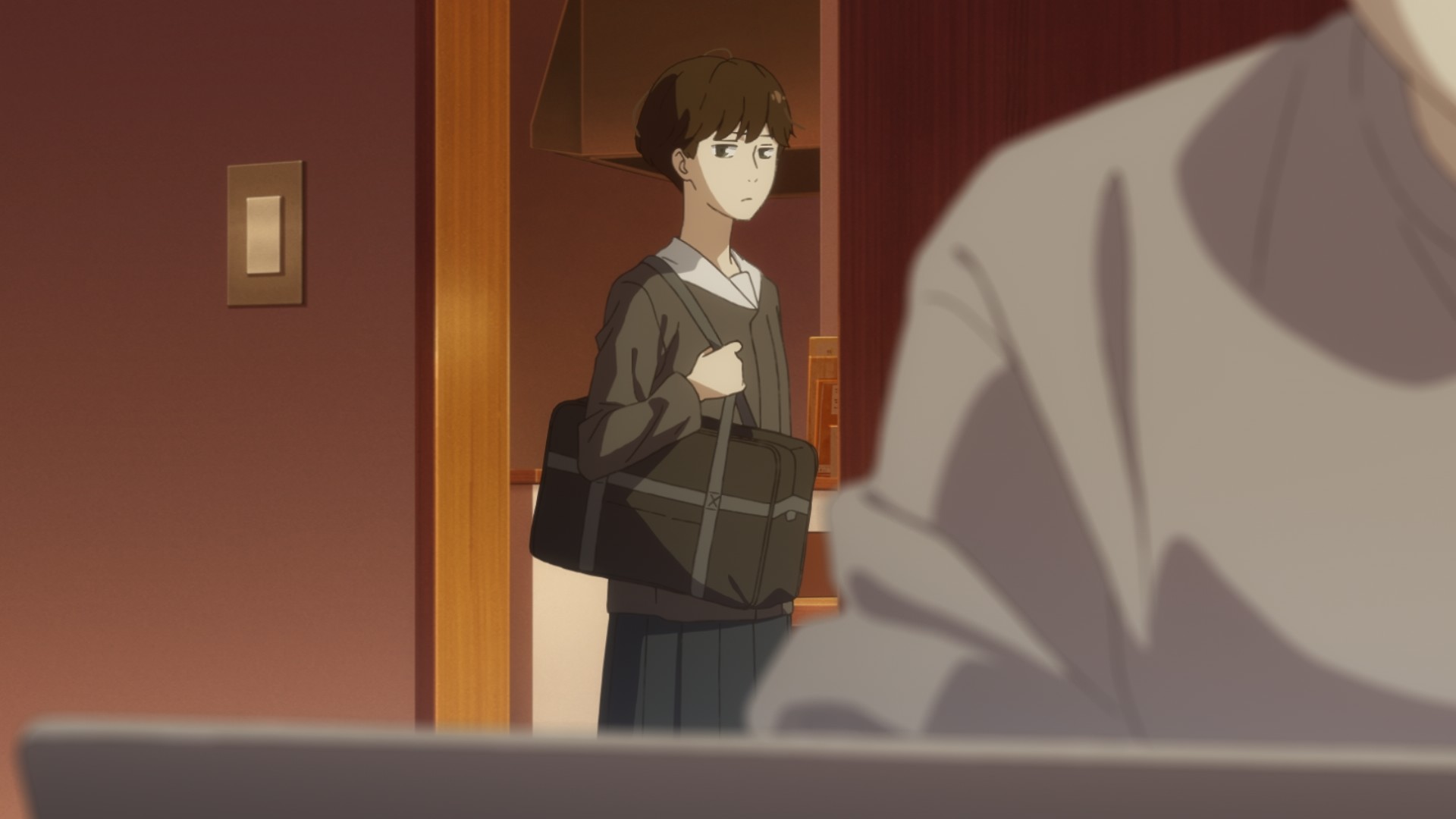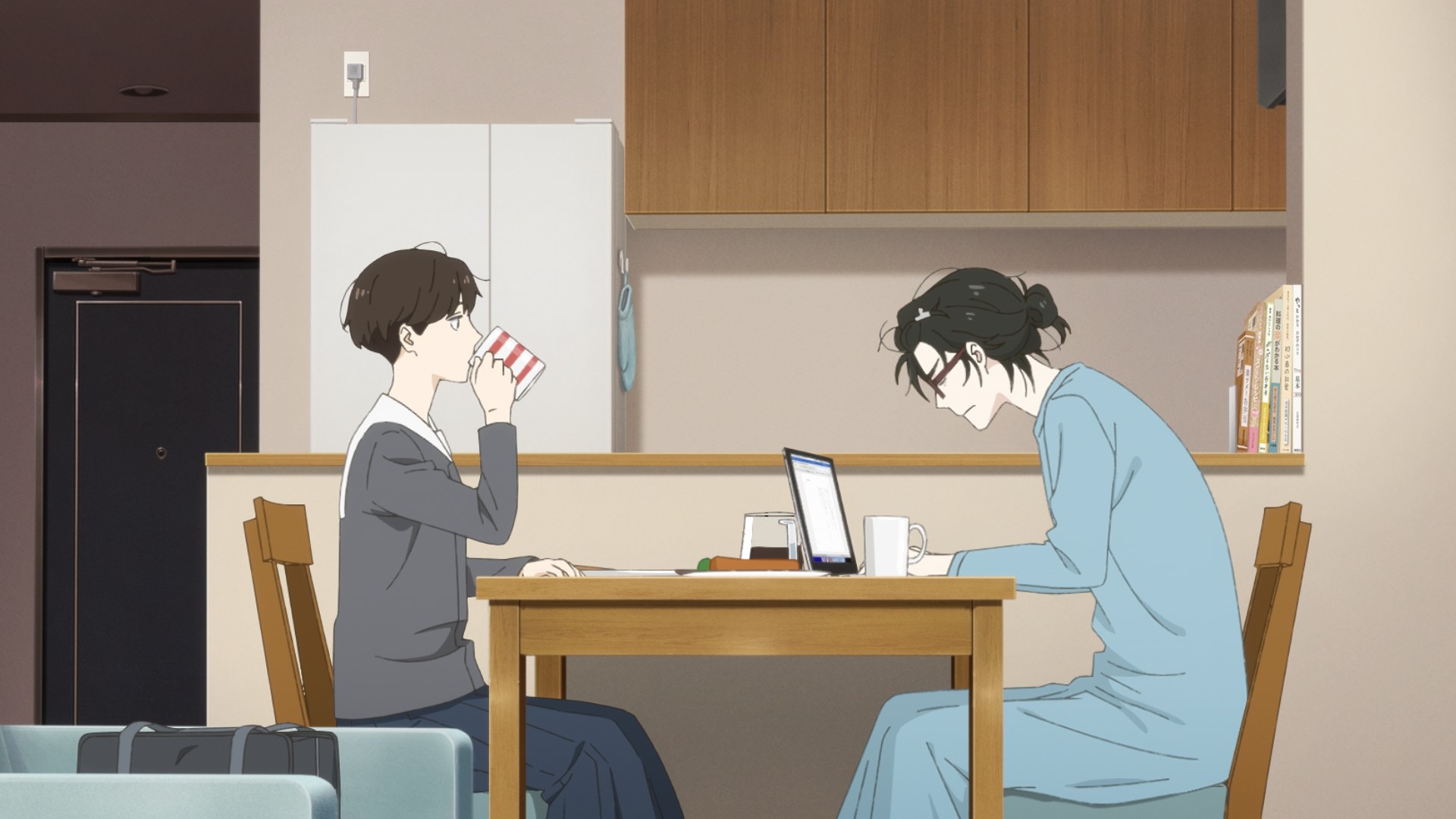
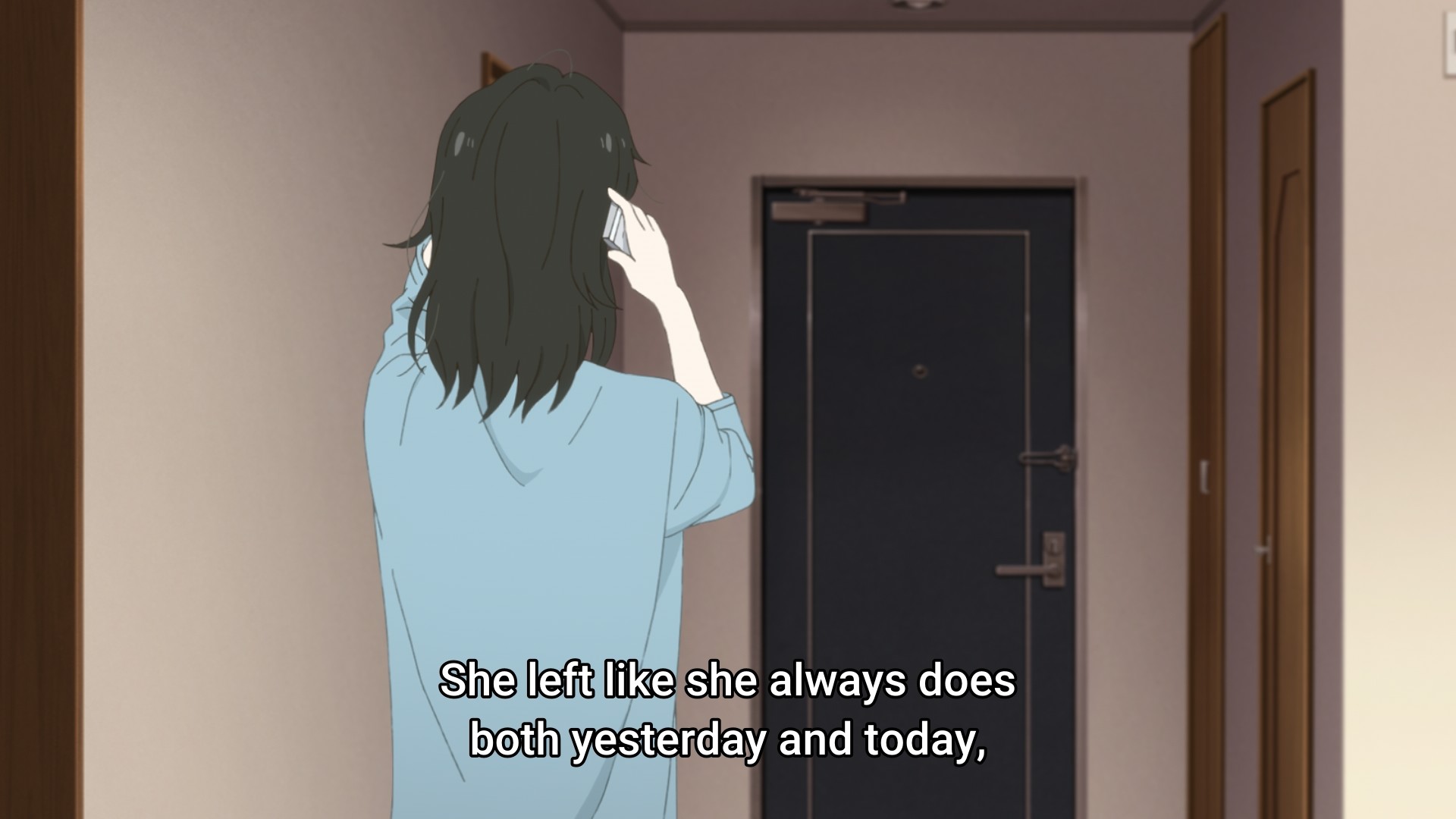
After everything that happened at the end of last week’s episode, Asa decides to go even further this week. And at such a precarious time, too. Her aunt has a deadline coming up, so she needs to focus. As a result, Makio starts neglecting her niece. She doesn’t say hi to Asa when the kid returns home from school. She doesn’t eat dinner with the girl either. How much can it hurt to just say hello? How much can it hurt to just share a 20-minute meal together? But a hello can turn into small talk, which can then turn into anything — a conversation, a full blown argument, debate, etc. Makio needs to keep her train of thought going, and we already know how she isn’t the most organized person on the planet. If her attention wavers even for just a moment, it might take her forever to get back on track. This excuse doesn’t really fly when you’re a parent, but as Makio has reminded us over and over, she’s simply Asa’s guardian and nothing more. The look Asa gives her aunt as the woman is pattering away at her laptop feels almost disdainful. She then does what a lot of teenagers in her position are wont to do: she starts acting up by skipping class. I mean, if she’s going to be invisible to the people around her, she might as well not fulfill her obligations, right?
It is difficult for me to know what to say about this situation. After all, Asa is just a kid. Not only is she still grieving, she’s also going through those emotionally fraught teenage years. I can’t even say I understand her, because I don’t. I’ve yet to lose my parents, so I have no clue what it must feel like to be in Asa’s shoes. There’s nothing rational about what she’s feeling right now because she ultimately pins all of the blame on her mother: “It’s ’cause you went and died.” Asa needs an outlet for her inner turmoil, and this is simply how it’s manifesting. The girl simply needs more care and attention.
On the other hand, the individualistic side of me wants to say that Makio didn’t have to do anything. She didn’t have to take Asa in, keep her fed, keep her clothed, make conversation with her, so on and so forth. Asa’s tantrum can seriously damage Makio’s career when the woman has done nothing but try to support her as best she can. Yes, Makio’s her aunt by blood, but does that mean you need to upend your life for a child you’ve never met until recently? But maybe we’re falling apart as a civilization because we keep arguing against helping each other out. We keep refusing to clean up the mess because we didn’t personally make it. Then again, none of the other relatives stepped up. Why are we holding Makio to a standard that no one else has to meet?
So y’see, I keep going back and forth between the two sides. It’s tempting to say, “Well, it’s nobody’s fault,” but that’s functionally useless. Okay, cool, it’s nobody’s fault, but we’re no closer to solving the situation. Others might draw a hard line in the sand and say, “We must always prioritize the best interest of the child.” Sure, I guess. This is a blanket statement that cuts through the various arguments on opposing sides. It gets the job done. It’s also easy to say when you’re not personally involved… like, y’know, those damn useless relatives.
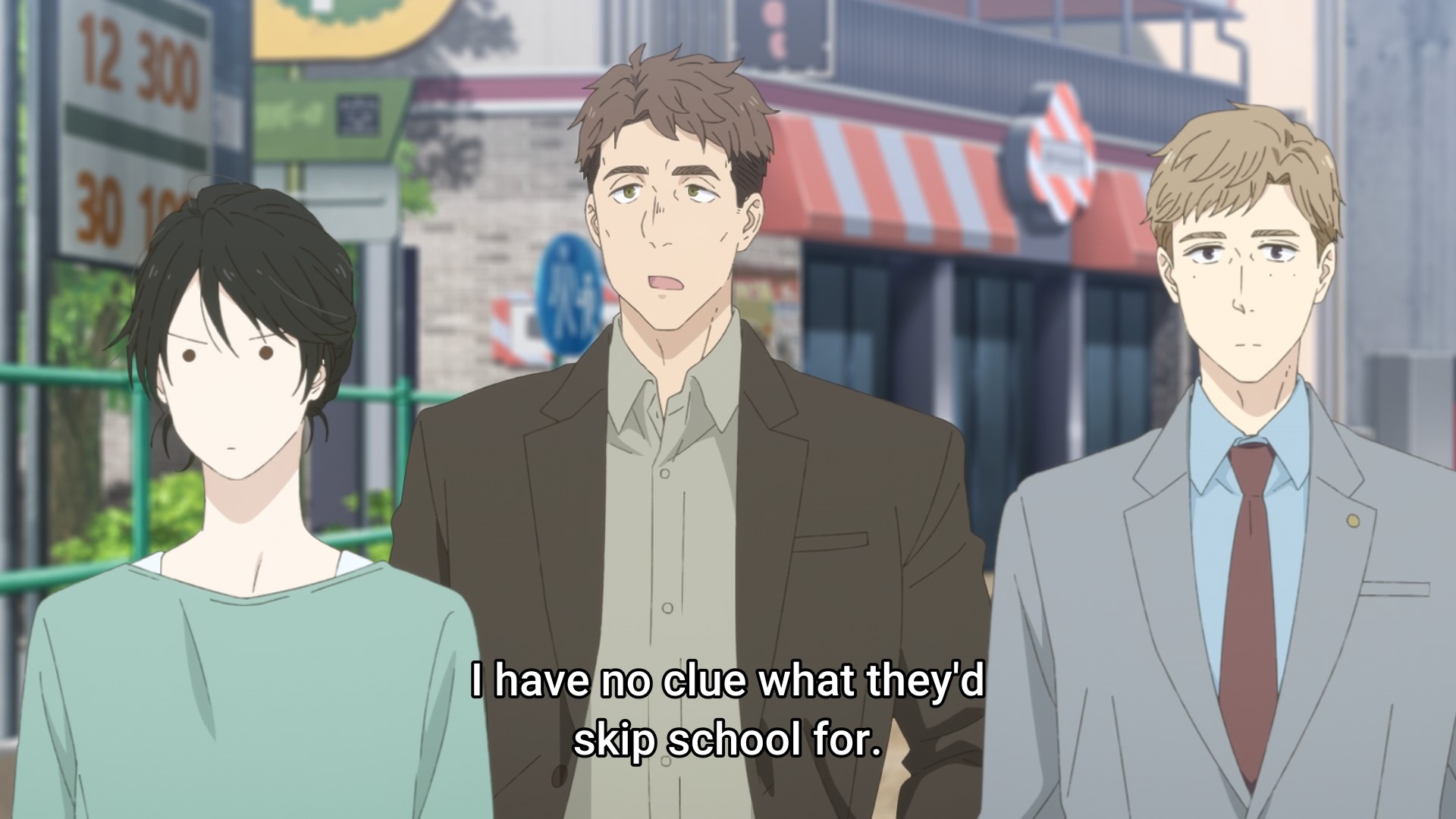
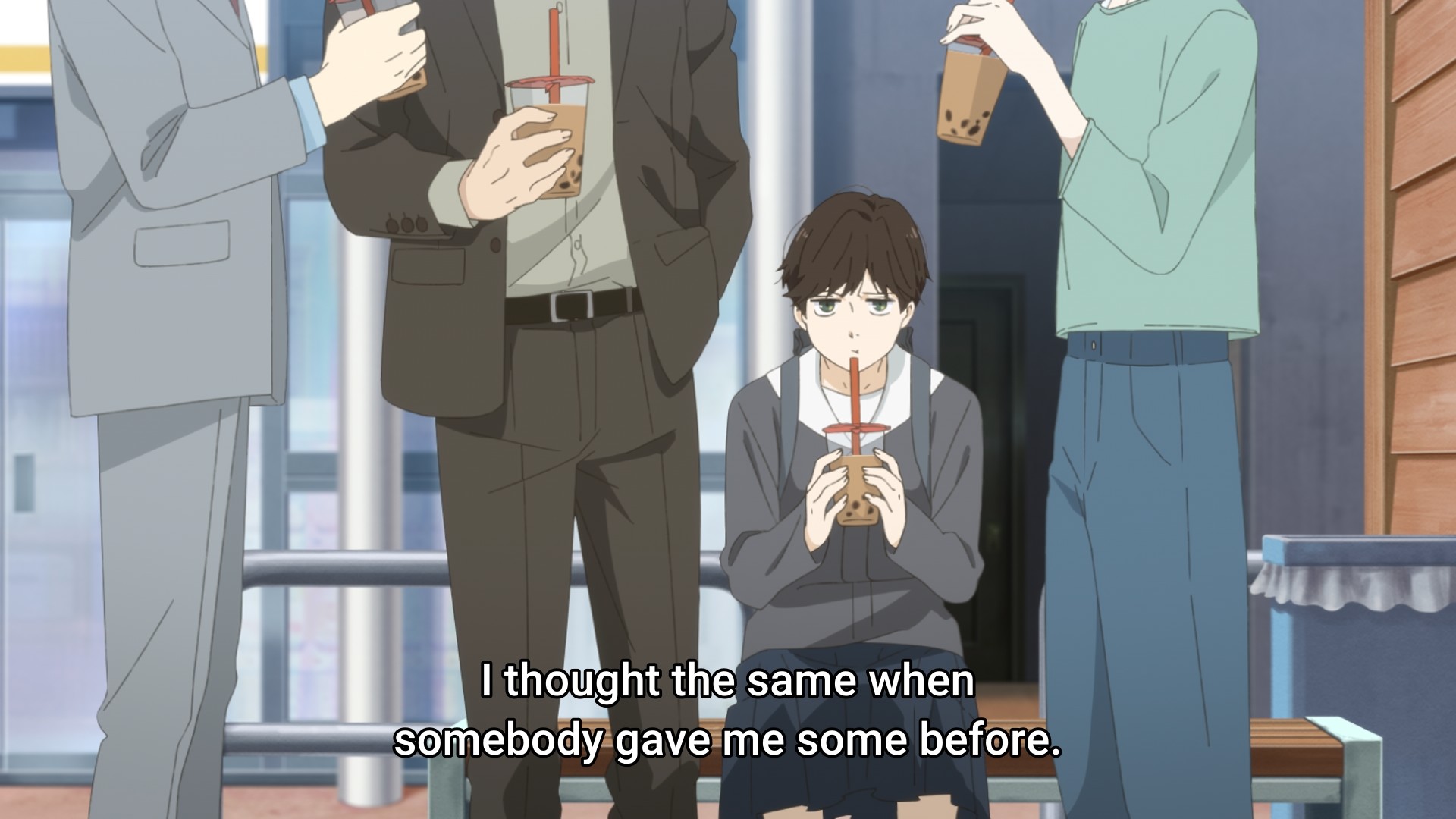
With help from Shingo and that lawyer guy, Makio eventually finds Asa drinking boba on a bench. Afterwards, when Asa sees the two men say their goodbyes to Makio, she bitterly remarks, “You sure have it nice, Makio-chan. You’ve got all these people who care about you.” She adds later, “…I know I don’t come first.” She doesn’t accept that they dropped everything in their day to find her. No, she’s convinced that they dropped everything in their day to help Makio. This was the moment that clicked for me; everything fell into place. Earlier in the episode, Asa was pissed that all of her friends have something positive going on with them, but she has nothing. So screw them, she thought. Yeah, life can be really unfair, but why lash out at your friends? They’re just trying to live their life. What did they ever do to you? Nothing. But that’s precisely the problem.
When Asa read her mother’s journal, her biggest fear was looking into the unknown only to realize that her mother never truly loved her in the first place. We all need to be reassured from time to time, even when we are being loved. That’s why people ask silly questions like “Would you love me if I was a worm?” No, they don’t actually want you to tell them that you would love them as a worm. They just want you to reassure them that you love them period. But Asa can’t get that reassurance from her mother anymore. That’s why her mother’s journal is a big, gaping void; it is an unknown that can ultimately reveal anything, including Asa’s biggest fears. She needs someone to simply be a mom and say, “Yes, I love you and I always will.” But nobody can step up to that plate. Makio has insisted over and over that she’s not a parent. She has never been shy about her stance either. Asa may have accepted this, but there was a harder pill to swallow: not only are her parents dead, they can never be replaced.
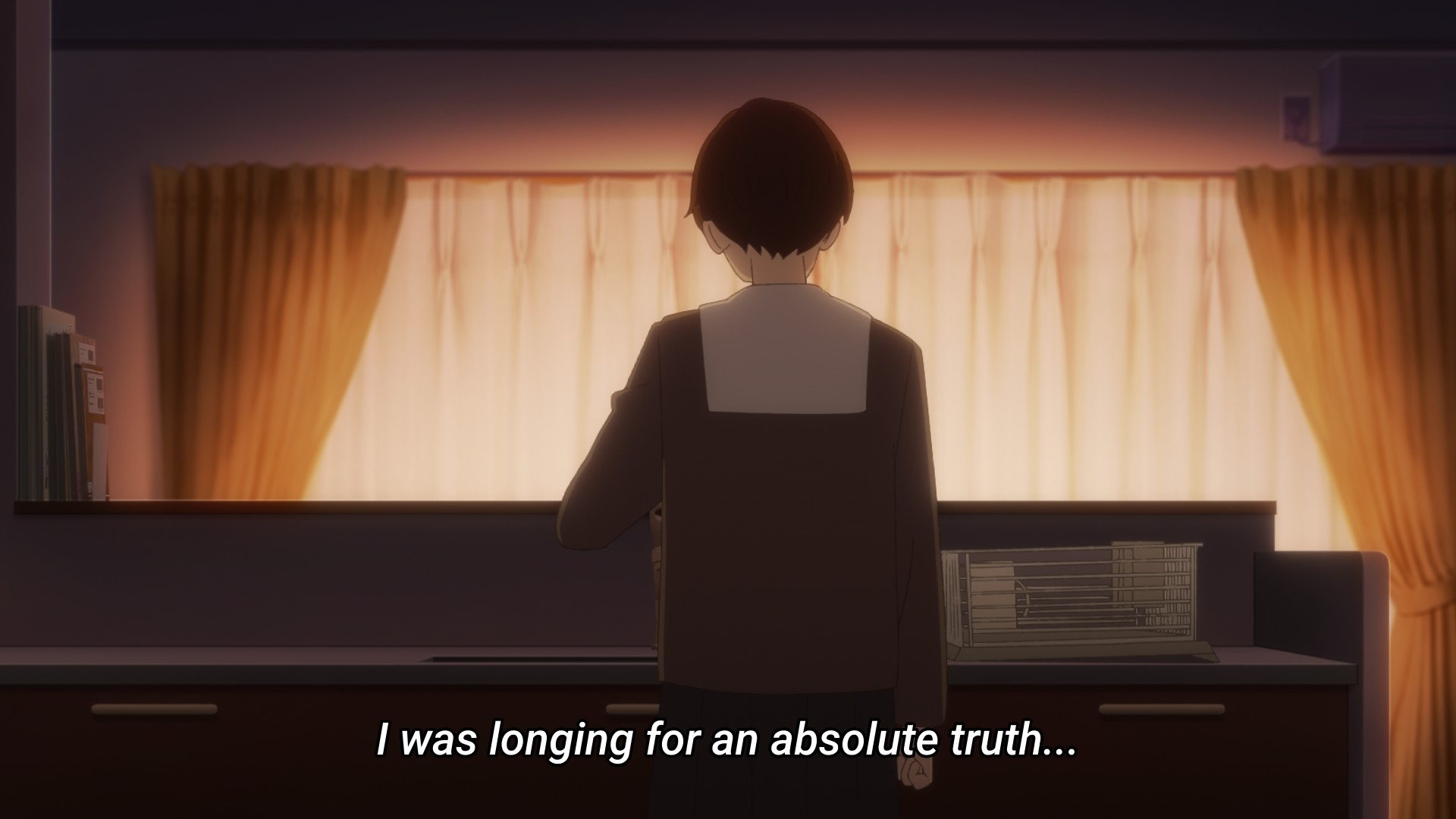
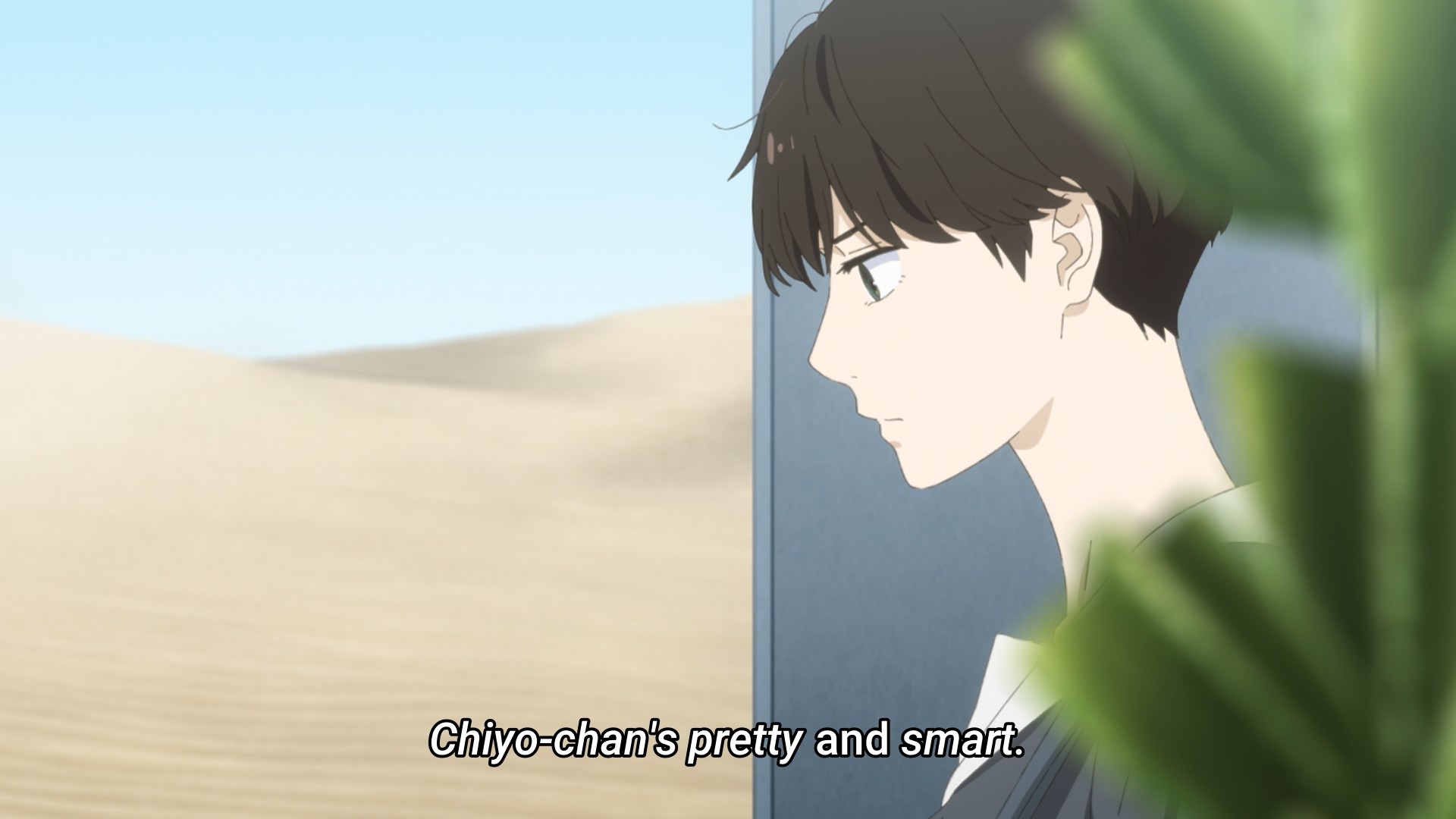
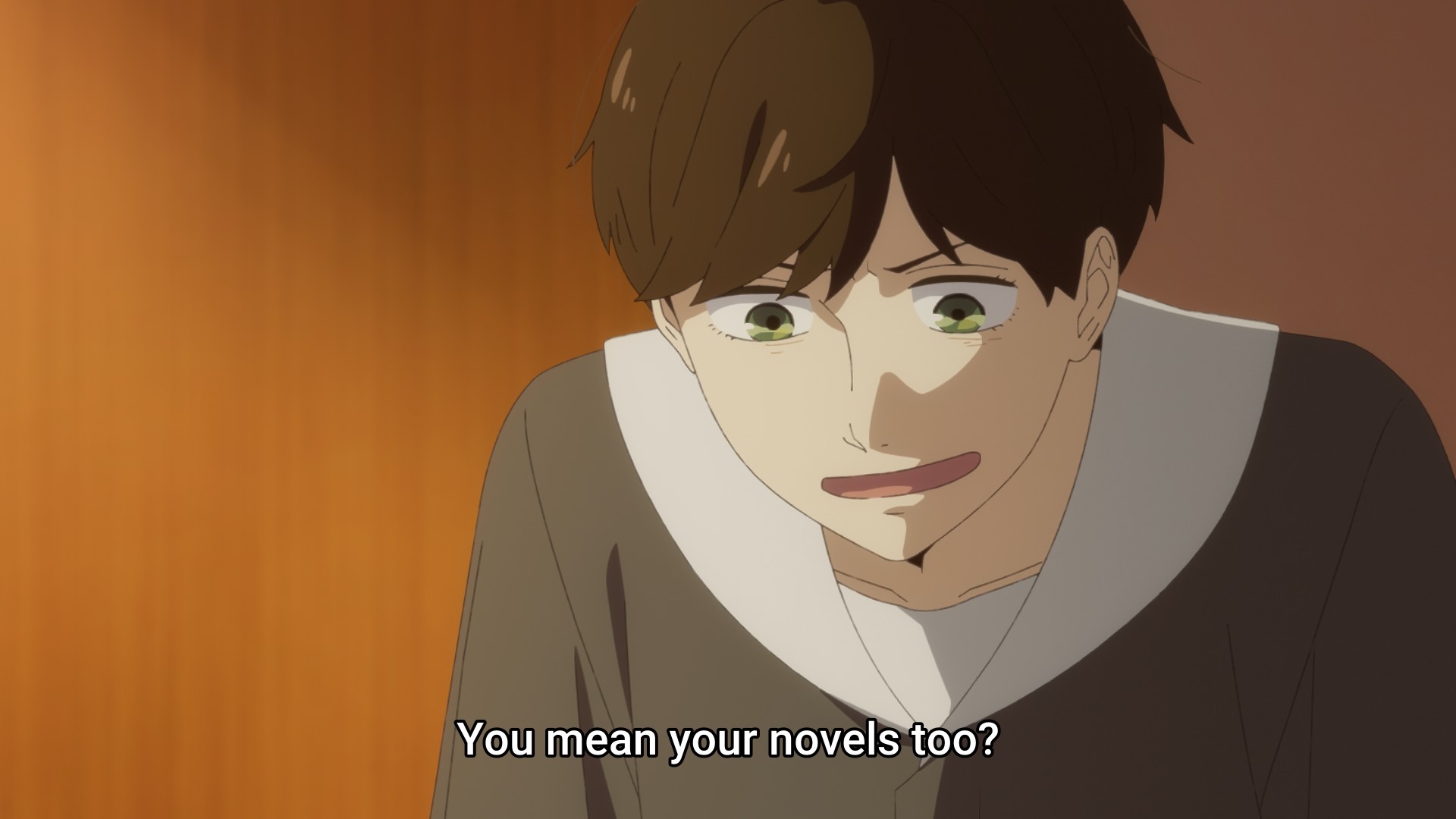
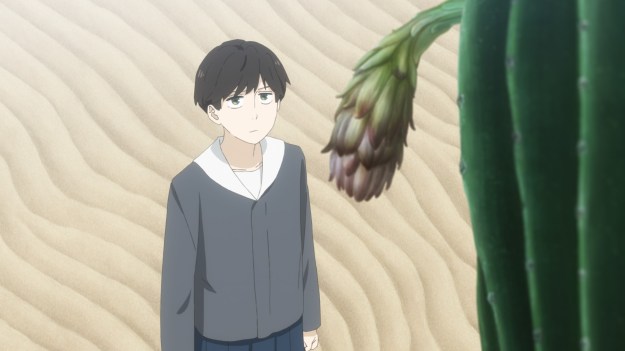
Later that night, Asa reads one of Makio’s novels. When the protagonist describes their intense sadness, Asa feels as though Makio should understand her. And if Makio should understand her, then she should also be able to give Asa what she desires most: a sweet-sounding lie disguised as an absolute truth. Tell me you know that my mom loved me. Or better yet, that you love me. Maybe the desert metaphor is more apt than we think. When Asa was skipping class earlier in the episode, we saw her environment change from the neighborhood to that all-too-familiar desert. She was putting herself back in that desert. This was all self-inflicted. At first, I thought she was taking every action she could to isolate herself from the people who care about her in order to punish them. But maybe she’s venturing into the desert because she’s looking for an illusion that no one wants to give her. But maybe because Makio understands precisely this sort of sadness is why she won’t lie — why she won’t pretend to know what she truly doesn’t know. Ultimately, Makio can’t and will never be Asa’s new mother. She can’t reassure her like her mother used to. She can only be there to support Asa as the kid works her way through her sadness on her own.
Stray thoughts & observations:
— They still have breakfast together in the morning, so that’s something at least.
— As I watch this situation unfold, it just confirms to me that I’m not fit to be a parent. I don’t think I’d have the patience for this. Makio’s first instinct is to scold Asa, and Shingo immediately tries to talk her down without adding fuel to the fire. He wants her to keep her cool. Last thing you want to do is to drive the runaway girl even further away. The lawyer guy ends up sounding the most reasonable out of the bunch: “It’s not rare for children to test the adults around them. So I think it’ll be good to show her that this many adults are concerned for her.” Again, it sounds good. It sounds healthy. But he doesn’t have to actually raise her. When this is all said and done, he can go back to being the distant observer. It’s easy to sound wise when you have no skin in the game, so to speak. Well… I’m back to waffling between two sides, aren’t I? In my opinion, it’s easier to just not be a parent, and I think this is a decision that many people in my generation have come to accept. Not only is being a parent increasingly unaffordable, a lot of us have had to come to terms that, yes, our parents may have tried their best, but oftentimes, their best wasn’t enough. And similarly, we probably can’t do much better. But that’s another discussion for another day…
— What’s the point of three adults looking for Asa together? Shouldn’t they split up or something?
— When Shingo recalls an event from his childhood, lawyer guy takes umbrage with how Shingo’s father once clicked his tongue in disapproval. Lawyer guy sounds like someone who has read a lot of textbooks, but has no real firsthand experience with the stuff he’s talking about. I’m not saying he’s wrong, but look, one anecdotal story isn’t a reason to launch into a tirade about someone’s parenting.
— Shingo’s probably good at making small talk. He just plays it off pretty well.
— Damn, they found Asa rather quickly. Welp, guess they didn’t need to split up after all. See, what do I know about children? Nothing. If you ever lose them, they’re always in the place you most suspect. Note to self: children are not keys.
— Again, Shingo reminds Makio to keep her cool. So the three adults decide to surround Asa on all sides and make her cringe with their small talk. Welp, that’s certainly a tactic I never would’ve come up with in a thousand years.
— Makio doesn’t give Asa a scolding even though it probably would’ve been very tempting to do so. Instead, she tries to help the girl come to an understanding from all angles. No, she wasn’t trying to hide the journal. Yes, she believes Asa was loved, but no one can speak for the dead. Everyone grieves differently, and Makio isn’t the sort to share her pain. And last but not least, from her experience, even writing a journal can take a lot of effort and care, which Asa shouldn’t dismiss out of hand. Asa responds with derisiveness. She has all this rage bottled up inside, and it needs an outlet. That’s what I initially want to say… but I also remember being in that position. Again, not that I know what it feels like to lose a parent, but to be in a position of anger where you just blurt things out in response. There is no thought behind your words. There is no premeditation. You’re just saying stuff because you can. So when Asa makes a jab at her aunt’s writing, I just have to remind myself that it’s a grieving kid going through some turbulent emotions — that I can’t always assign a motive to every word or action.