Have you seen this two parter OVA from Production IG? After a round of Psychic Detective Yakumo and Bakuman, I wanted to end the night on a better note. I’ve had Tokyo Marble Chocolate lying around for a while, but I never got around to really watching it till now. The synopsis on Wikipedia made me think it’d be a cute little story about a young romance, but the end result was anything but uplifting.
Well, I wouldn’t say the thing left me in despair, but I don’t see how I’m supposed to get anything affirming out of Tokyo Marble Chocolate. I’m not saying it’s a bad anime. Being a Production I.G. creation, it’s beautiful to look at. The artwork is decidedly shoujo in style, which I happen to have a soft spot for. Whether intentional or not, the short OVA was also thought-provoking.
In short, it’s about two unlucky lovers and their inability to form long-lasting relationships with the opposite sex. Chizuru, the heroine, is a little clumsy and Yuudai, the hero, is a bit of a coward. Despite their shortcomings, they meet each other (before the events of the anime) and fall in love.

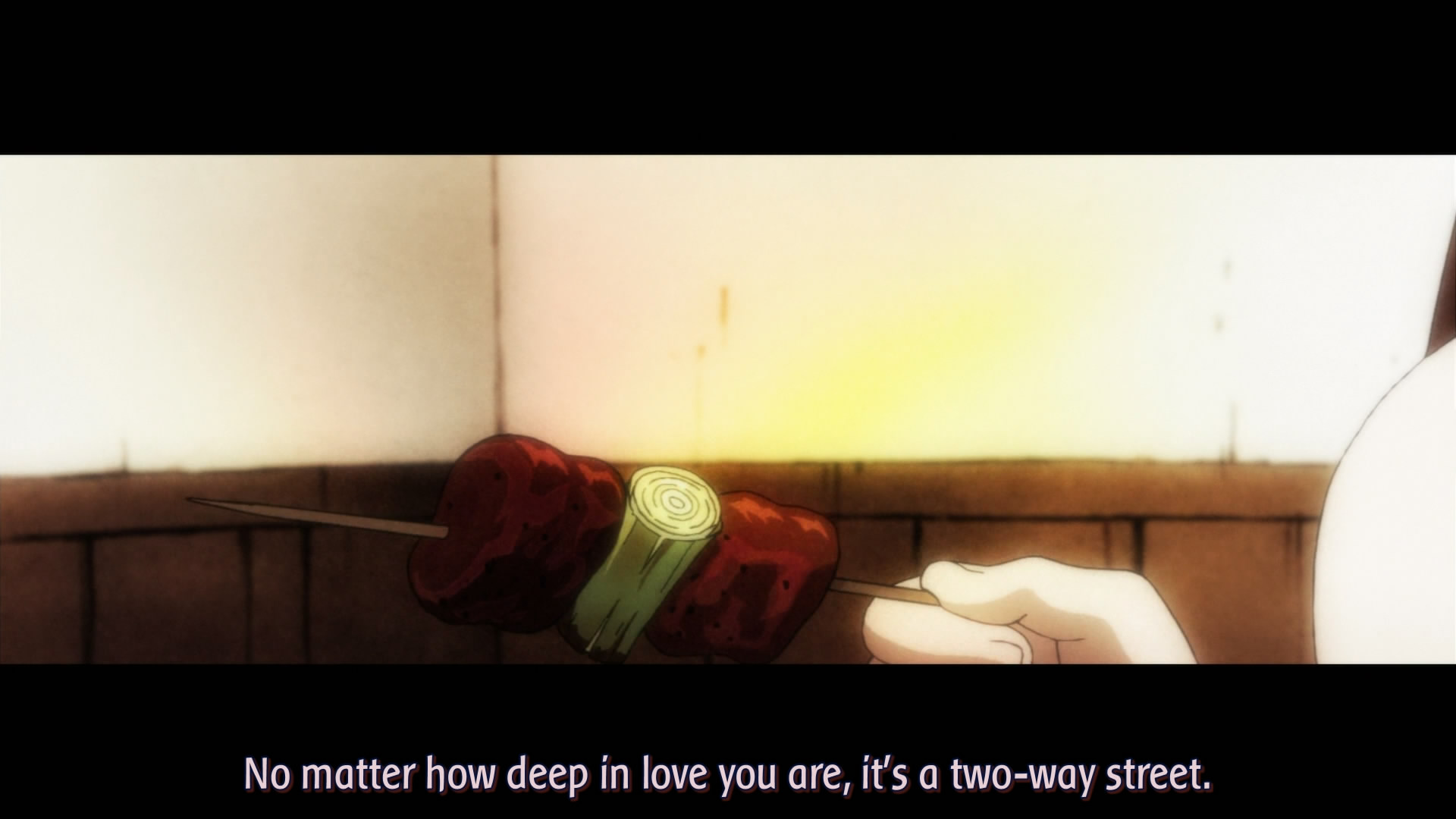
Yuudai, like most Japanese men in anime, finds it difficult to express his feelings. Although he does have earnest affections for his girlfriend, Chizuru is beginning to lose patience in the relationship. Recalling her friend’s advice that love is a two-way street, Chizuru begins to fear that it will never work out between her and Yuudai. As a result, she plans to break up with him.
Through a series of rather serendipitous events, the two find themselves in each other’s arms by the end of the anime’s plot. I guess we’re supposed to be happy that their relationship will endure, and I certainly don’t wish them any spite, but think about how it all came together.

Chizuru tells us, the audience, that she had confessed her love to her boyfriend several times already, but he has yet to return the favor. Did she ever directly express her frustrations to Yuudai about his inability to show signs of commitment? We’re not sure — we’re only told next that she plans to have one last memorable date with her boyfriend before breaking it off.
At one point in the plot, Yuudai goes to Chizuru’s place. While he’s standing outside, he happens to hear her talk about his lack of confidence and overall smarts to another. Yuudai immediately assumes she’s talking to another man when she’s really just chatting to a mini-donkey (yes, a donkey — I’ll get to it in a bit). Instead of knocking on his girlfriend’s door and resolving the misunderstanding immediately, Yuudai just leaves. His actions are somewhat believable here because he’s a self-confessed coward; he probably couldn’t summon up the courage to confront her there and then.
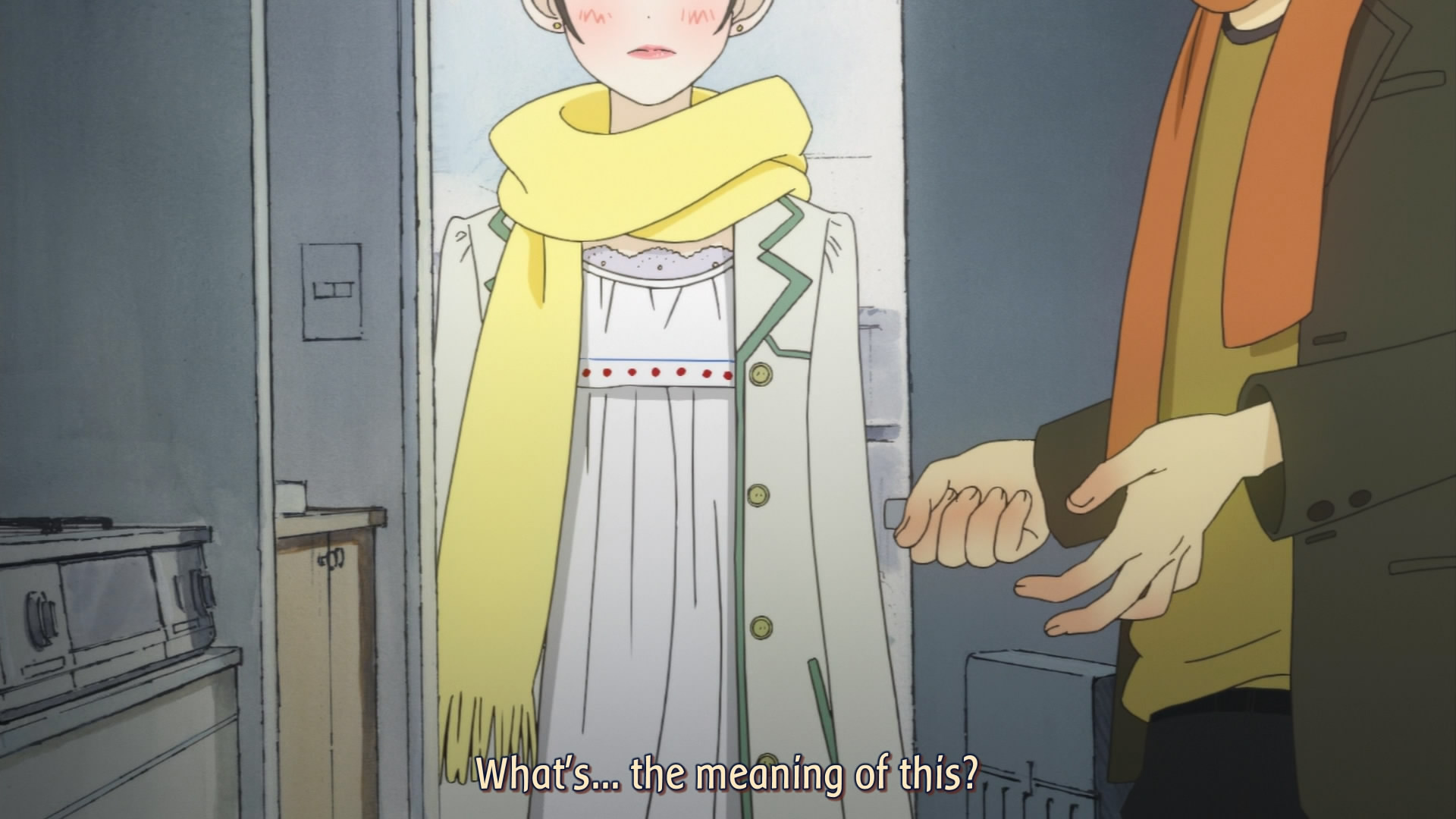
Later on in the plot, Chizuru goes to Yuudai’s place to apologize for running out on their date the previous day. She notices a woman in her underwear in Yuudai’s apartment. She naturally and justifiably asks Yuudai, “Who is she? What’s the meaning of this?”

Yuudai, knowing fully well that the girl in his apartment is merely a friend who needed a night to stay, doesn’t even make an effort to explain the situation. Instead, he passively accuses Chizuru of entertaining a man at her own place last night. This was something he was too afraid to do the night before, but standing before Chizuru now with a half-naked woman behind him, he is suddenly so brazen and insensitive.
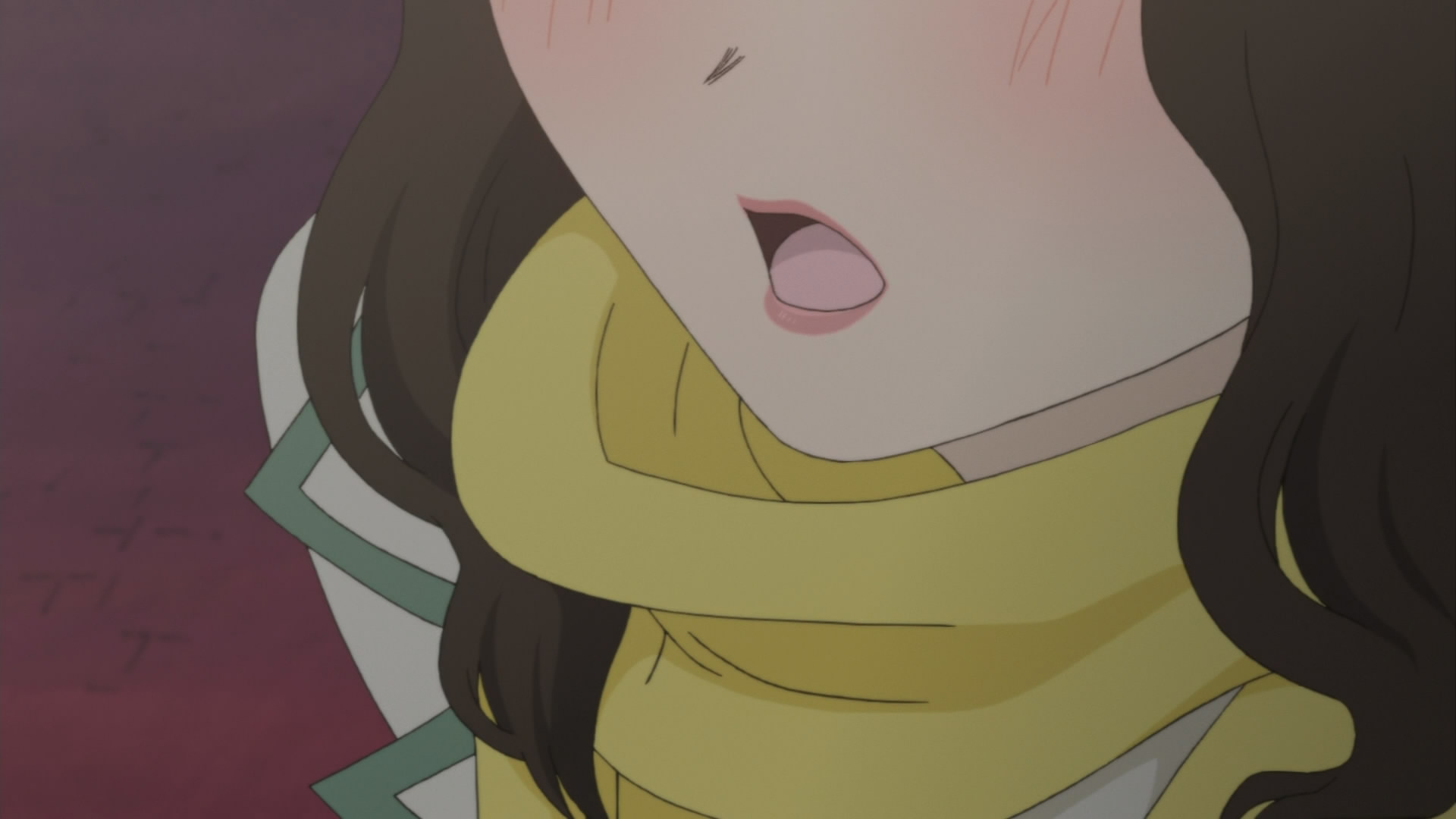
Near the end, atop Tokyo Tower, Chizuru mouths something to Yuudai. We don’t get to hear what she had to say — the audio cuts out here much like the ending to Lost in Translation. She leaves in tears, ignoring his phone calls. When we finally see his side of the story, we realize that he didn’t hear what she said either. The implications are troubling. She is not only unable to communicate her thoughts to him, but to the audience as well.

As for Yuudai, he wasn’t even listening to a thing she had to say. When Chizuru was trying to say whatever it was that she wanted to say, Yuudai was busy trying to pump up his own confidence so that he could confess his love to her. It’s admirable that he’s trying to overcome his fears and insecurities, but at what cost? He didn’t even bother to listen.
Sure, Chizuru tells us directly that Yuudai’s inability to confess his love is the problem, but is it the only problem? If no, we must then ask if it is even the bigger or biggest problem? The scene atop Tokyo Tower seems to suggest something else entirely: in relationships, couples are not only unable to express themselves in words, but they are unable to listen.
The inability of either party to communicate and receive each other’s feelings are serious and palpable problems put forth in the anime. What can we do when we are unable to express our sentiments to our loved ones? The anime never resolves this question and this is why it is unsatisfying and ultimately depressing. What finally brings our flawed lovers together in the end is not Chizuru and Yuudai suddenly learning or gaining the ability to communicate to one another. Their human efforts are necessary but not quite sufficient conditions for lasting love. They only come together thanks to a certain magical mini-donkey.
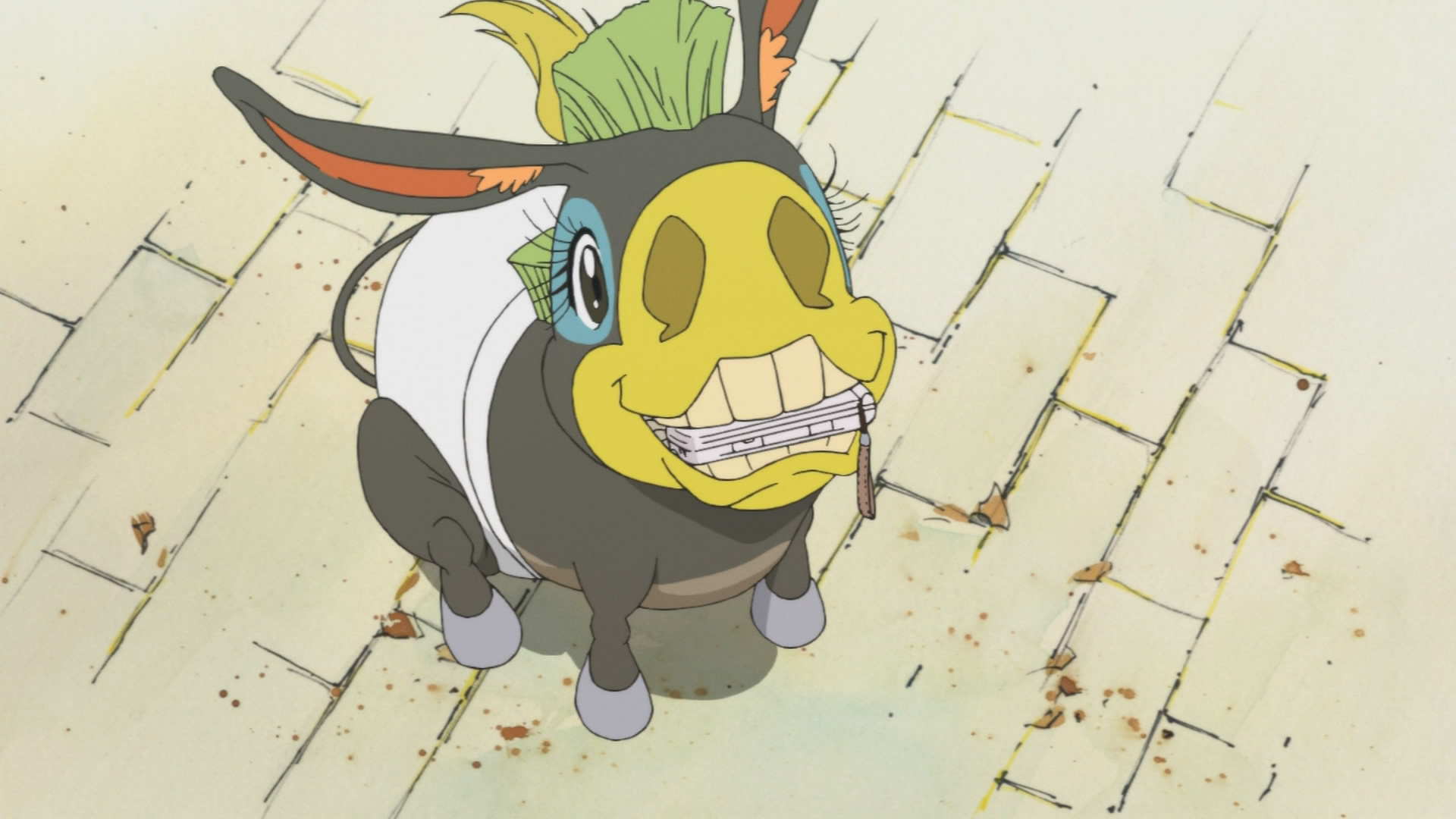
What is the mini-donkey? No one in the anime ever seems particularly nonplussed about seeing a psychedelic miniature donkey in diapers running about. In the end, the mini-donkey seems to be more keenly aware of either Chizuru’s or Yuudai’s feelings for each other than the couple themselves.
The mini-donkey gets itself in trouble atop Tokyo Tower, forcing Yuudai to make a daring rescue attempt. A balloon catches Chizuru’s eye at just the right time for her to look in the direction of the Tokyo Tower through a telescope and notice her boyfriend’s dangerous plight. She rushes out to Tokyo Tower immediately.

Even when this seemingly orchestrated charade didn’t bring the two lovers together for good, the mini-donkey runs off in the middle of the night, pulling Chizuru along until they get to a bridge. Who do they find there? Yuudai, of course. It’s all too convenient and set-up. Their relationship was doomed from the start due to deep and concerning mis-communication problems, but thanks to an unreal force possibly not of this world (the mini-donkey), Chizuru and Yuudai find each other.
And where does that leave the rest of us? None of us have mini-donkeys of our own to orchestrate our love lives. The ending reminds me of the ending in the film Eternal Sunshine of the Spotless Mind. In that movie, Joel and Clementine are also lovers with communication problems (among others). A painful breakup leads the two to literally erase the relationship from their memories, but this didn’t quite have the effect they intended. Instead of moving on with their lives, both Joel and Clementine meet again by chance and fall in love all over again.

The repeating nature of Eternal Sunshine’s ending seems to imply that Joel and Clementine are stuck in a cycle of love and hate. Just as they serendipitously fell in love for the second time, perhaps they will break up again (I think the original script for the movie spells out the fact that their relationship is doomed to fail). The problems that caused Joel and Clementine to break up in the first place were never resolved in the course of the movie and there’s little reason to think they will be after the movie ended. Similarly, the insecurities and issues pulling Chizuru and Yuudai apart in Tokyo Marble Chocolate were never really resolved either. They certainly do have a magical mini-donkey to depend on and it certainly seems as if Yuudai was trying by the end of the plot. But is that enough? Can their relationship honestly last?



I watched this before, and this really reminds me of Toradora. We have two totally opposite personalities (Ryuuji and Taiga) that, due to certain personal circumstances, were brought together. If we leave them alone as is, they wouldn’t have bonded into a serious relationship. However, as much as we acknowledge mini-donkeys as essential outside forces crucial into making a relationship happen, I think any other relevant individuals, like friends and relatives, can fill in the role as well. Kitamura, Kushieda and Kawashima was Ryuuji and Taiga’s mini-donkey, even helping them elope from their parents.
I guess relationships concerning youth will always be riddled with problems, and it will always be up to chance whether it will work out or not.
Yeah, but at least friends and families are real. Mini-donkey with a neon mohawk? Not so much.