
‘Gender roles’ is one of those terms people tend to have a kneejerk reaction to. Many, sad to say, will not even bother to continue reading as soon as they see those two words bound together. It’s unfortunate because I think it’s necessary to see why episodes like Tiger & Bunny‘s ninth might be disappointing to those outside of the show’s intended audience.
The episode isn’t all for naught as there are a couple interesting developments to glean from it, but the main thrust of the plot is, well, dumb.
Dragon Kid, a.k.a. Pao-lin, finally gets some screen time and the very first thing we learn about her is just how un-girlie she is (uses “boku” to refer to herself, has a deeper voice than most girls, etc.). First, a little context is necessary. The episode opens with Pao-lin chasing a criminal down an alley with Blue Rose close behind. The latter, after being shot at, kicks her feet up like how a stereotypical girlie woman might act. Dragon Kid seizes the momentary distraction to apprehend the criminal and thus all is well, right?

Unfortunately, Pao-lin’s agent doesn’t find her “eye-catching” enough. Pao-lin is told that she could be more popular if she showed more “charm.” When the subject is a young girl, words like “eye-catching” and “charm” tend to be codewords for femininity. At this point in the episode, I see two obvious routes for Pao-lin’s character to develop: either 1) Pao-lin proves that it doesn’t matter how she acts, she’s comfortable in her own skin and it’s what she does that’s ultimately important or 2) the anime finds some way to make her conform to gender roles.
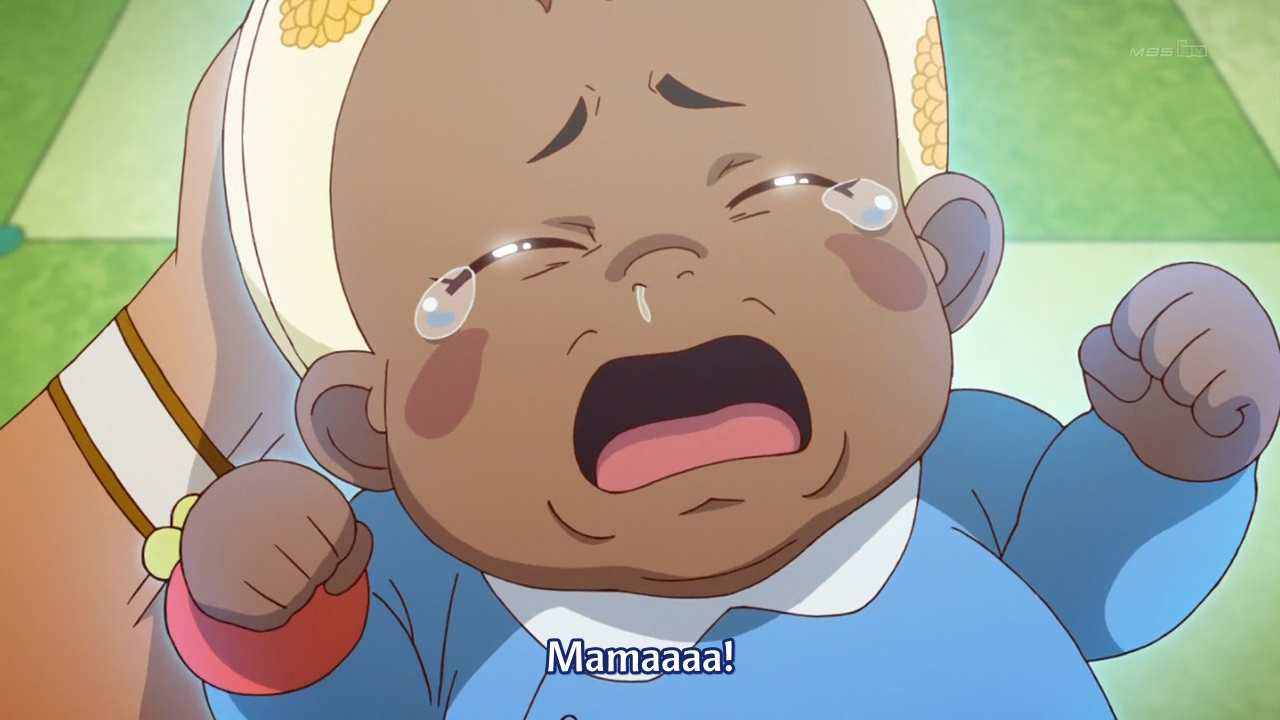
Enter baby — just six minutes into the episode and we know exactly where this going. The baby is the child of the city’s mayor who has been called away on very official business. The baby also happens to be a NEXT with telekinetic powers so when it cries, objects around the room fly up into the air and glasses break. All the male heroes try to comfort the baby, but golly, none of them can get the job done. Blue Rose, for whatever reason, is in a catatonic state but we obviously need a woman’s touch. Guess who saves the day!

By the end of the episode, Pao-lin feels a little sad when the parents return for the baby, blushes when Tiger calls her out on it, starts wearing her parents’ hairpin, and giggles when Tiger calls her cute and pats her head. How lame.
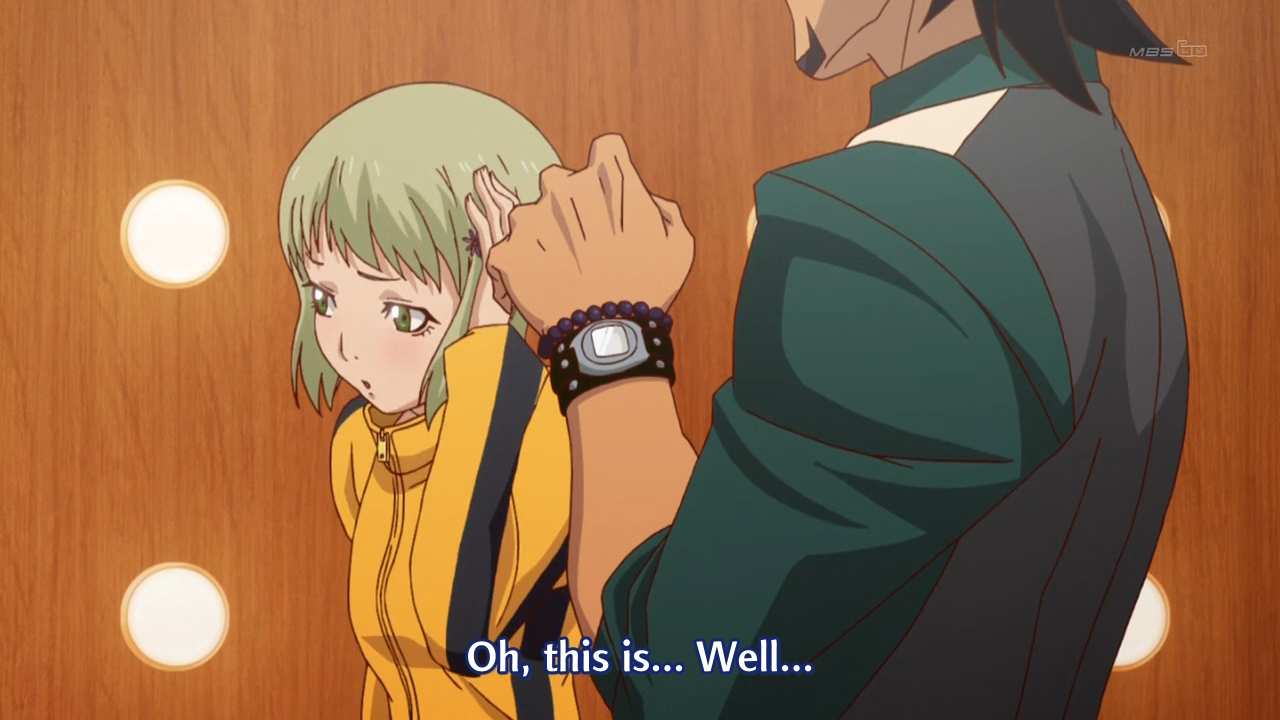
I can hear all the objections. Yes, it’s natural for her to miss the baby because, hey, she may have formed an attachment to the child while guarding him. Wearing her hairpin, by itself, doesn’t say much either; maybe Pao-lin finally understands what it feels like to be a parent after playing a surrogate one for the baby. To understand why this episode bothers me so much, however, look at the big picture:

• Pao-lin is a tomboy who is told that she needs to be more feminine.
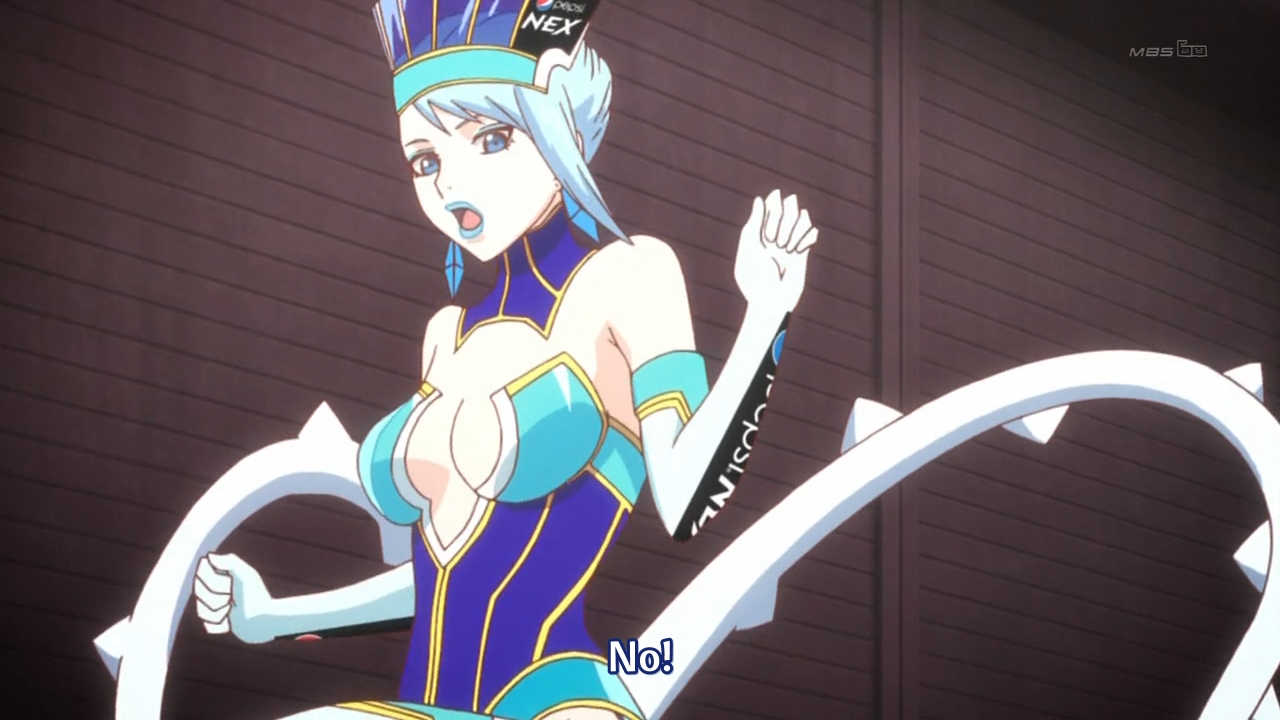
• Blue Rose, as mentioned, screams and moves like a stereotypical girlie girl when shot at, not at all befitting a tough superhero.
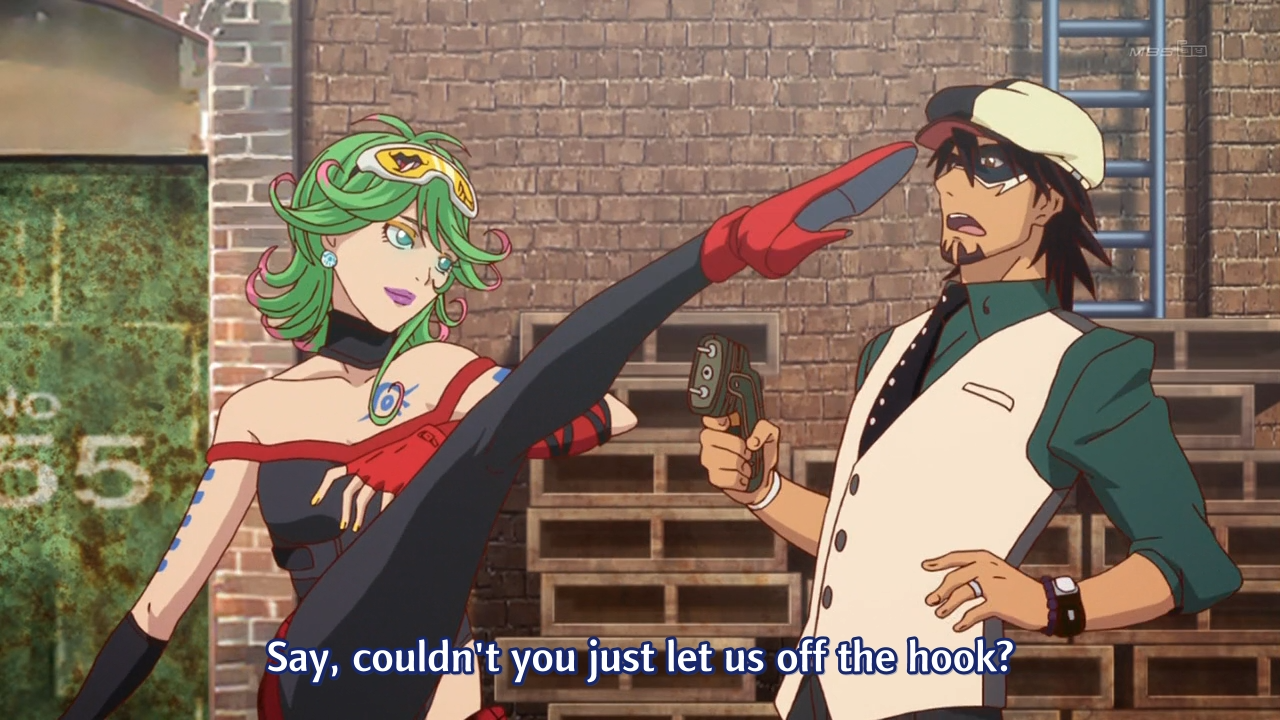
• The villains of the week are female serial kidnappers with the ability to sniff out money (c’mon!), lies and danger. They wear skimpy outfits and try to flirt their way out of trouble.
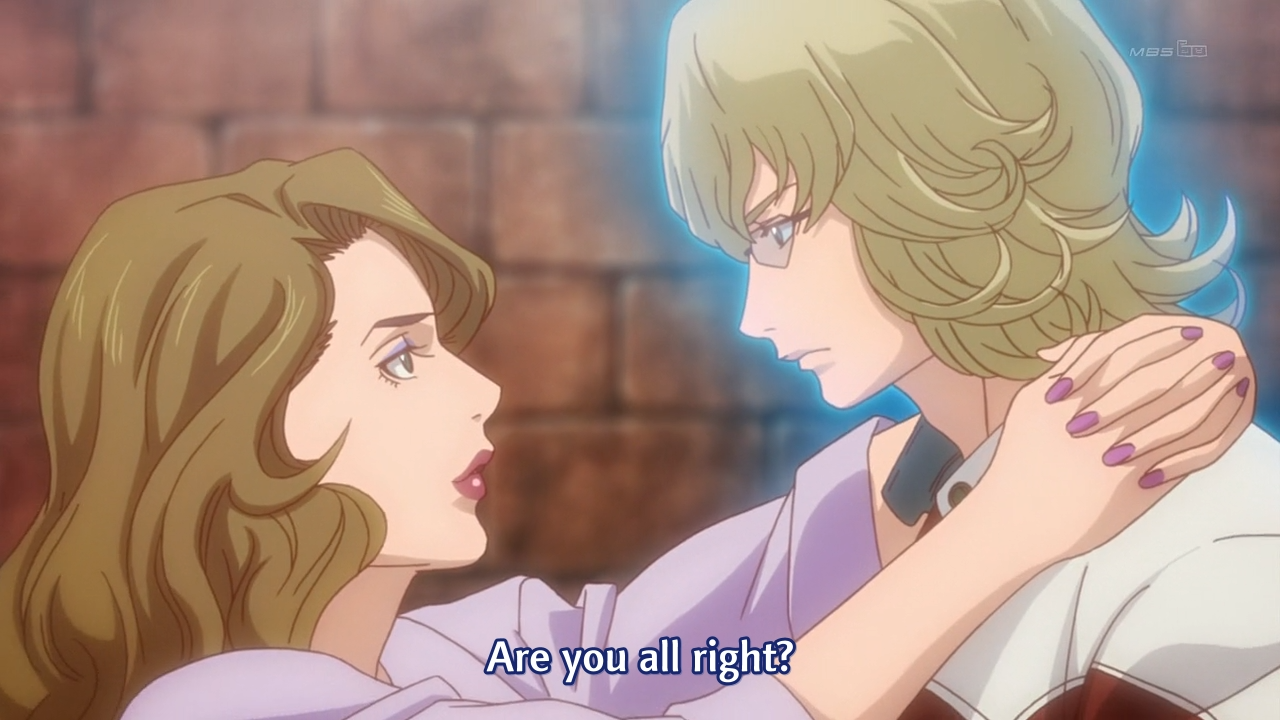
• Agnes, in the middle of a rescue mission, stares breathlessly at Barnaby as he gallantly catches her in mid-air.
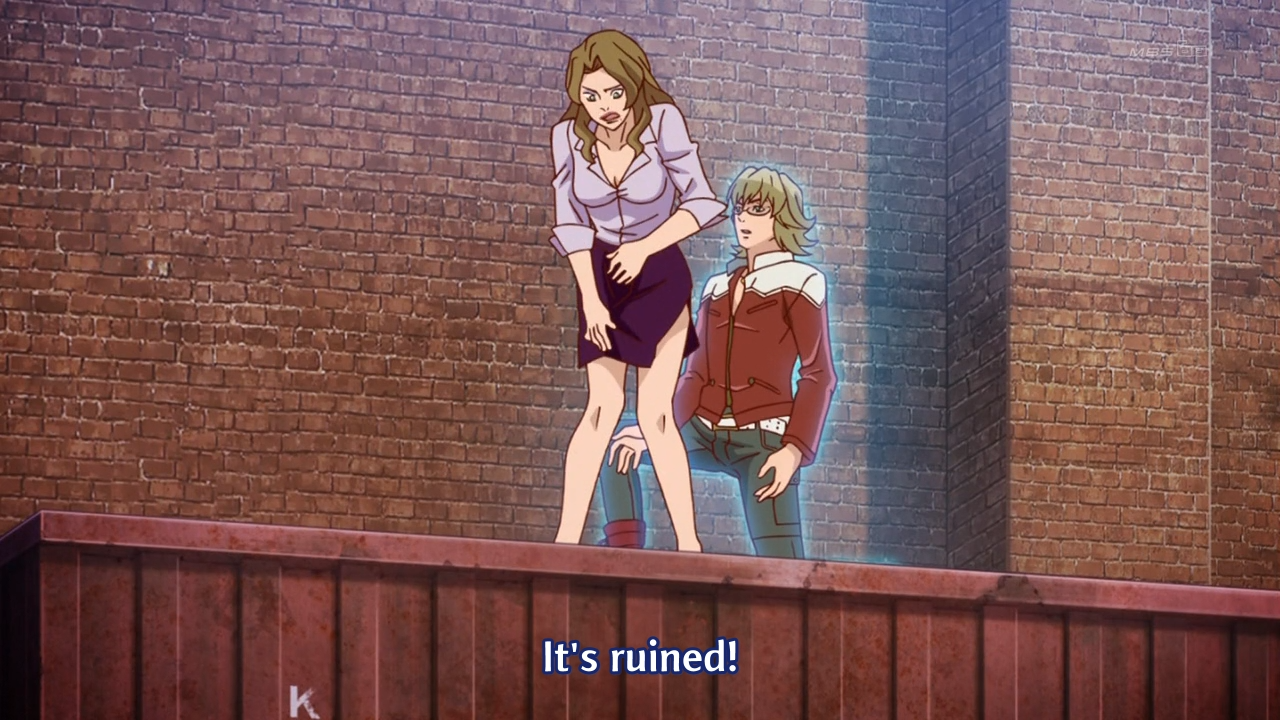
Of course, what snaps her out of it is the fact that a piece of her clothing (I’m not clear here what she’s complaining about but she hikes up her skirt a tiny bit) got ruined by the criminals. She then tells Barnaby that he totally better catch them! Weren’t we already going to totally catch them for kidnapping the mayor’s baby in the first place?
Simply connect the dots. This all adds up to an episode that I wouldn’t be surprised to see in the 1980s, but in 2011? Just disappointing. And I don’t want to hear some psuedo-science bullshit about how women should act and dress a certain way to be normal and healthy in society.

In this very same episode, Barnaby softens up to Tiger. They’ve become closer partners as Barnaby reveals to Tiger just how much vengeance has consumed his life. This is a touching, emotional moment — it might be a common trope, but it isn’t also stereotypically sexist. Why can’t the same be said about anything involving the female characters on the show?

To be honest I was expecting much worse from the Pao-lin development (e.g. Blue Rose takes her out shopping so she can put on a dress and find her “true self” or something) so I didn’t mind this episode too much. As I understood it she only decided to wear the hairpin after realising the message behind it, and it seems like she doesn’t intend to give up on her tomboyish ways. But yeah, I agree that T&B isn’t groundbreaking stuff when it comes to gender roles…
(Btw did you see the interview comments from the character designer saying he originally was against having a ‘sexy’ girl hero and Blue Rose was much more covered up, but was forced to change her during production and as a small bit of defiance he gave her padded boobs rather than actual big boobs. Lol.)
Yeah, it could always be a lot worse, but the episode bugs me nonetheless. And like I said above, Pao-lin’s overt intentions to wear the hairpin suggests a better appreciation of parenthood, but the entirety of the episode casts an unfavorable shadow over the scene in my opinion. Overall, I’ve enjoyed the show which is why these flaws are ever the more grating.
Nah, I haven’t seen that interview, but what you just told me doesn’t sound very surprising.
Exactly. We’ve grown used to this in standard/substandard anime, but a show like Tiger & Bunny is all about adding realism to unrealistic premises with added character development and complexity. So it’s a big, big letdown.
Or just, very simply, the fact that out of seven heroes (I think its seven?), not a single one is an adult woman. Both our female heroes are minors, none of our male heroes are. Lame.
And the one adult woman is a non-superhero career woman who often eschews safety for her success, because career women are wild and willing to sacrifice anything to get their way!
I think you misinterpreted this episode pretty badly.
First of all, I saw Agnes reaction to Barnaby rescuing her as a subversive scene, and I’m surprised you didn’t get that. This is a classic trope scene setup, especially in superhero stories, where the superheroic “knight in shining armor” saves the “damsel in distress” and she swoons over him as an result (or, in anime, acts tellingly tsundere). Just think of Superman rescuing Lois Lane, and what I’m saying here should be crystal clear.
Agnes subverts that by showing how not all women will swoon over rescuers like that, and while the rescued individual will be thankful in the moment, that may well be it. The arguably sexist fantasy scene is hence subverted, somewhat comically.
Also, even as you look at the elements of the big picture, you don’t get it right, imo.
What this episode does is showcase several different female character types, and use them to compare and contrast them with each other:
You have the catty villainous kidnappers who are like your stereotypical 80s bad girls.
You have Agnes, the career-driven and pragmatic boss.
You have Blue Rose, the “girlie girl” heroine.
And you have Pao-lin, the courageous kickass tomboy heroine.
Which of these four female character types did the best in this episode?
Pao-lin did. Of all the female character types in this list, she is (and remains) the most tomboyish. Of all the female character types in this list, she is one of the two least traditionally feminine (the other being Agnes, of course).
The point of this episode is not to say that it’s bad for girls to be tomboys, or that girls should be more like Blue Rose. Not at all.
But what the episode is saying is that a girl can be a tomboy without totally denying her feminine side. That they can be courageous, strong, and effective, but still not deny the gender that they are. There’s a happy medium between flaunting your gender (Blue Rose) and denying it entirely. There’s a happy medium between the two extremes that you raise in your false dichotomy over “where this episode could go”.
Disagree on all your counts.
I have no idea why you think Agnes didn’t swoon. You mean it’s natural for all people to stare into the eyes of their rescuers for seconds before getting on their feet and getting back into action? It’s natural for a tough-minded career woman to stare slack-jawed at her blond savior? Sorry, that’s not subversive at all.
I have no idea what you mean by “doing best?” Blue Rose isn’t even in the picture except at the start of the episode. Agnes isn’t even a superhero. The other girls are supervillains. There was no competition to “do best.” Pao-lin could not have saved herself either if not for a baby.
This assumes that it’s wrong to deny femininity just because your sex happens to be female. Why? If she wants to act like a tomboy, so what? “Happy” in “happy medium” assumes that there’s a right way to act. Again, why? You act as if the extremes are wrong.
I don’t believe there’s a right way for a person to act. I don’t believe that anyone should conform to any gender. If she wants to be a girlie girl, so be it. If she wants to be a tomboy, again, so be it. My quibble is the anime telling a tomboy character that she isn’t girlie enough. It’s not like this is subtext — the anime directly tells us at the start of the episode that it doesn’t think she’s girlie enough, and lo and behold, she is girlier by the end of it all.
Agnes was startled and thankful in the moment, as any person in her situation would realistically be. She “looked into his eyes” because they happened to be at eye level, after she confirmed the identity of her rescuer.
But the key is what came after, imo. What came after is that she quickly composed herself, and didn’t become a Barnaby fangirl or act like a blushing and/or obviously lying tsundere. Instead she became upset over the appearance of her skirt.
As for “doing best”, I mean “Which of these characters came off as the best type of female character”?
The answer is clearly Pao-lin, and she’s the most tomboyish of them all. This is good cause to take cheer over the presentation of a very well-rounded and strong female character.
Instead, though, you act all annoyed over a mere self-marketing suggestion in a show that features the crash commercialization of superheroes as a recurring plot point and character design element. I respectfully think that you lost sight of the broader context of the anime here. What we’re seeing with Pao-lin here is no different than what we’ve seen with the rest of the superhero cast – how they are all told to look a certain way for the cameras. Barnaby’s sex appeal is played up no less than Pao-lin’s is.
Now, I don’t see anything wrong with Pao-lin acting as a tomboy, but I also don’t see anything wrong with her also recognizing her feminine side.
Keep in mind that, possibly unlike yourself, I do not believe that gender is entirely a social construct.
Ah, yes, she broke out of her spell by acting more stereotypically feminine. Unless, of course, it’s suddenly natural to worry about your clothes during a dangerous situation and not after the fact.
And you’re comparing the winner to a superhero who wasn’t even present, a side character, and supervillains. Even if there was a competition in the anime, as you claim, it is a biased competition.
No one’s talking about sex appeal. We’re talking about gender roles. Regardless, the broader context does not invalidate everything else. The events can signify, as you say, the broader context and, as I claim, gendered implications all within a single episode. People are treating it as a complete coincidence that Pao-lin is, at first, admonished for not being feminine enough and by the end of the episode, becomes more feminine.
Neither do I as long as she does so naturally — if she chooses to have a feminine side. I don’t think this occurred within the context of the anime.
You could have just said this from the start and saved us all the trouble. Clearly, I’m not here to rehash Gender Studies 101 nor is anyone else likely interested in such a lecture. We can just end this debate now.
Yeah, I also think you misunderstood Pao-lin’s story. It wasn’t about femininity or being a tomboy, it was about Pao-lin learning to appreciate her parents’ gift and the feeling behind it. She wasn’t willing to wear the gift because she thought it was just a stupid hairclip and her guardian and her parents just wanted to make her look cute. But after the kidnapping incident plus her interactions with Daddy Kotetsu she realized the true meaning behind the hairclip so she decided to wear it after all.
So it looks cute on her. So she looks a bit more girlie. So what. As Ryan R said above, it’s not like her tomboyness or badassness is automatically invalidated just because she decided to wear a gift hairclip (only because she realized the preciousness the feelings behind it). (And for that matter, I really don’t understand why people start complaining whenever a tomboy does something that’s ever so slightly feminine. It doesn’t automatically turn her into a damsel in distress!)
Also, you said Blue Rose’s behavior is not fitting a tough superhero… well, the thing is, Blue Rose is not exactly a tough superhero. She said pretty clearly that she originally accepted the job because the company promised to sponsor her singing career. And while she has developed an affinity for superhero-ing, her costume is still designed for maximum sex appeal not blocking bullets, plus it has high heels which are not exactly fit for combat. Is it a surprise she doesn’t like to jump around and be shot at?
You say this as if there’s only one story to tell. There’s a story the anime wants to tell you, and there’s the story being told indirectly. It doesn’t have to be conscious. Few people are overtly sexist nowadays. Few people beat their chests and yell at women to be more girlie. I’m talking about a pattern — consistent signs that show a biased tendency towards one mode of behavior over another.
Again, I asked for people to look at the big picture. Instead, you refuted the examples while completely isolating them from one another. Think about it — if you look at a picture of objects, and one object is yellow, you chalk it up to random chance. When objects consistently appear yellow, however, do you still just look at each object piece by piece and chalk it up to random chance or do you link everything together?
And I love how both you and Ryan R don’t even address the fact that the very start of the episode, which serves to establish the direction of the entire plot, directly tells us that Pao-lin isn’t girlie enough.
Look, I agree with you on the covert sexism, but I think you’re reading things into this episode that are simply not there. This story would’ve worked the same way if Pao-lin was a boy (except instead of a flower hairclip the gift would’ve been something very embarrassing that he wouldn’t wear because it makes him look uncool – pretty much the same thing as far as Pao-lin’s personality is concerned).
And I AM looking at the overall picture. You’re saying the shows presents a sexist message just because the story involves a tomboy who ends up in a traditionally feminine situation, starts wearing a hairclip, gets told she’s cute and it’s presented as a good thing. I’M saying this is a greatly simplified and biased look at what happens in the episode and because of this you’re reaching a mistaken conclusion.
Also – at the start of the episode it’s Pao-lin’s guardian who tells her she’s not feminine enough and that she should at least wear the hairclip. It’s presented as a rather callous affair: the guardian is worried that Pao-lin is not popular and successful enough because she’s not feminine. And that’s exactly why Pao-lin doesn’t want to wear the hairclip in the first place, because she she doesn’t care about that, she doesn’t want to look cute and doesn’t like others trying to make her look girly. Once she looks beyond “but the hairclip makes me look girly/uncool” and realizes that there’s more to it than that she puts it on. Maybe to you this is a message of “girls need to look girly” but I don’t see how that hairclip is a symbol of her repressing her tomboyishness. It’s not like there wasn’t anything about her that’s usually coded as feminine (she was the first to coo at the baby, for a start).
(Also, you ignore the end of the episode where Kotetsu calls his daughter to ask about the hairclip he gave her. You can’t pretend it has no relation to Pao-lin’s theme.)
I don’t know why you keep thinking that I’m denying your interpretation of the events. Yes, I know the story is about Pao-lin’s acceptance of the hairpin and thus her parents’ feelings, but I’m making the argument that the same story also has other implications — implications that I do not agree with. A single story can convey two different meanings at the same time. You can stop telling me the literal interpretation of the plot because I’m not even denying it. I even mentioned it in the post above:
I also think you misunderstood this episode. It on the contrary broke the gender roles. A woman can be saved by a man without desperately falling in love with him. In any other anime, the scene of Agnes in Barnaby’s arms would have been a romantic one. She totally broke that cliche with her reaction. When you think about it, it was the same in the episode with the bomb in the elevator: Tiger’s ‘I’ll protect you’ had strictly no ‘romantic’ effect on her. It is the first time I see in anime a woman not turning into a weak emotional creature facing those kind of words said by a man in his ‘hero’ mode. That’s so refreshing.
Same for Paolin. She didn’t decided to become ‘feminine’ AT ALL. The hairpin isn’t about feminity, it is about concessions towards others, you sometimes need to do in your life. And also, understanding. Seeing that Kotetsu thinks as a father that the accessory carries someone’s affection, then hearing similar thing confronted to the thief, convinced her that the hairpin isn’t about being ‘feminine’. It a bound between her and her parents who are so far away from her.
You won’t see her wear a dress from next episode. Only that hairpin her parents gave her.
So she didn’t exactly fall in love with him. So what? She stared breathlessly into his eyes. Far from refreshing.
Textual interpretation doesn’t have to conform to mathematical rules of identity. Just because A represents B and B =/= C doesn’t mean that A can’t also represent C. And yet you guys accuse me of reductionism. I have no idea why everyone keeps bringing up the surface interpretation of the hairpin as if I didn’t already mention it.
The best thing about the episode was Sky High ): HE SHOULD’VE KEPT THE BABY!!11
Jokes aside!
I don’t think that after this episode Pao-Lin will get girlier :) I personally think this episode is more about parents, but, about the tomboy issue, well, it’s interesting!
I didn’t like the villains this time(I usually like evil men/women like that…), their presence made the episode much more dull and boring, AND ALSO there was teh girliness issue.
Maybe all those girly characters, including Blue Rose and Agnes, acted really stupidly girly to contrast with Pao-Lin’s tomboyish-ness, and that their girliness not meant to tell Pao-Lin to become girlier because “OMG UR A GIRL U HAV 2 B GIRLY!!!”, but just to…well, show that there are other kind of girls other than the girly, foxy ones?
I dunno!It felt like that to me, I think Pao-Lin filled more the “child” role than the “OMG GUUUURL!!” one.
In the end, I didn’t like the villains and how they interacted with the plot(they felt stupid and filler-ish), I liked Pao-Lin’s story(yay parents!), but I also felt like she should’ve deserved something better! I mean, Blue Rose got an amazing episode(well I liked it…), but Pao-Lin’s got ruined by stupidity(it’s the villains, and Agnes).
PS:I’m not new to the blog, I’ve been lurking for some time…
Yeah, the episode felt like another “we need to slow down on Barnaby’s storyline” move. They would have been much better served moving this episode a little earlier and devoting more time to fleshing out Pao-lin’s plot rather than shoehorning in Barnaby’s revenge arc into it.
Girly issues aside, I’m willing to bet we won’t see much of Pao-lin again. Blue Rose herself hasn’t really had much of a role since her episode.
Well, I just hope the other heroes get enough screen time to appreciate them not just for their cool/good looks!I also hope
they can become part of crucial moments in the story line!
I mean, I’m a little tired of Barnaby already…
“This all adds up to an episode that I wouldn’t be surprised to see in the 1980s, but in 2011? Just disappointing.”
Ha! ha ha! Disappointed that Japan is full of sexism. HIRARIOUS. What are you expecting? Gender equality? Because that would be one of the most delusional ideas of reality I’ve ever heard. What the hell have you been watching for the past decade?
Calm down, skippy.
Wish all these people who claimed it was a coincidence and Pao-Lin won’t get girlier ate their words when the saw the season finale. Those of us who noticed the message in THIS episode wouldn’t have been at all surprised to see that she does, indeed get a girlie makeover at the end of the series. It amazes me how stubbornly people deny any correlation between the little bits of sexism, or ‘traditional values about gender’ if you will, and instead pretend it’s all an accident, or even worse, the OPPOSITE of the message it’s sending. Maybe they just can’t accept the idea that an anime they like might contain messages like that, so they justify it like mad. I love the anime, but I’m still going to point out the bits that disappoint me.
If Pao-Lin gets a make over, why don’t they tell Fire Emblem to be more masculine and man him up at the end of the show? And have him LIKE it? Of course not. He’s allowed to be himself and no one questions his gender identity. I don’t think I’ve yet seen a single female character who is allowed to keep her non-conformist gender identity.
Actually pretty sure Nathan is a demigirl, based on all the evidence I’ve read so far. Gotta be careful that our feminism is trans inclusive, here, and that we don’t leave out DMAB trans people.
You know, that got me thinking. The fact that a man is allowed to be feminine, but the reverse not allowed, shows that it isn’t entirely deliberate sexism at play here but a typical naivete about gender that we often see in anime (and in Japanese society, I live here so I’ve experienced it plenty. Not that it doesn’t happen in other countries too).
People have this strong belief that no woman who chooses to be masculine (or androgynous for that matter) really /wants/ to be that way, she’s just ‘suppressing her femininity’ out of shyness or embarrassment. It’s like they think every girl is a princess waiting to burst out. True, some tomboys get sick of the social pressure to conform, and think the only way to attract men is to become more feminine, and conform out of that desire. That’s where they might get some pleasure out of having a make over. But in a case like that it isn’t because they had an innate desire to be feminine, or identify as feminine, they just want to be accepted and considered attractive, so much that they compromise their own gender identity because that identity is not acceptable to society. It’s sad.
From experience as a tomboy I know that it’s not my femininity that needs to be suppressed – it’s my masculinity! I have to try really hard to be feminine, lol. My natural self is what they want to suppress.
Good say.
I might ask you though, in the media, which portrayed the tough tomboy role positively without being forced to femininity by the others (and maybe themselves)?
You’re just preaching to the choir. What can I say? The gay boom mostly emphasized gay men rather than homosexual women and there’s a sense that women should be protected and coddled, i.e. we can’t be as vicious. I think a large part of the anime’s willingness to poke fun at Fire Emblem is that he’s a male. You’ll notice that all those physical comedy shows on Japanese TV involve men and only men hurting themselves, burning their feet, getting humped by dogs, etc. Whenever a women does participate, she gets to sit on a chair in a tiny bikini and have her breasts bounce thousands of times.
Still, it’s not a completely lost cause though. The Takarazuka Revue’s legacy continues to live on to this day. There are also movies (which you’ve probably seen) like Kamikaze Girls with a positive portrayal of less than traditional femininity. To the best of my memory, I don’t think the movie was ever judgmental about either personality types, but if I’m wrong, someone can feel free to enlighten me. Anyway, for whatever reason, these same stories don’t often make it to mainstream anime, but anime is anime. I’m not trying to excuse the culture, but anime really doesn’t speak for Japan as a whole.
As I am watching this show through and haven’t gotten to this episode yet but I keep having to stop because of the fucking creepy way Blue Rose is treated, I really appreciate you talking about this. The people I’ve seen reviewing the show on tumblr have zero critique of it (maybe there are better posts about it, but none I’ve seen) and call it queer friendly – I can see Nathan, who seems more like a transfeminine nonbinary person / transgender woman / demigirl to me, being portrayed as a predatory gay (and being received by fandom as a cis gay, deep deep sighing). Barnaby and Tiger I admit I don’t care as much about as the side characters, but the girls’ treatment is unquestionably misogynistic even in the first episode, so I have no idea why the fans who recced this show didn’t bother to point any of it out. Unless it’s just that people enjoy being oblivious when they like something, maybe.
For a show that feels, and touts itself as, subversive, so far T&B has lampshaded damaging gender roles without actually bothering to subvert them. Tiger’s daughter has no personality and is presented as either an obstacle or a physical representation of Tiger’s inability as a parent. Ditto the wife, with Tiger’s feels prioritized. I don’t see why Sky High can’t be a woman, that would be pretty awesome and would make up for the “two underage girls as the sole female representation” problem.
Don’t get me wrong, I like Blue Rose a lot, but she deserves better, and I haven’t seen much of Pao-Lin so far, but am not encouraged by this review. :[ I appreciate the warning.