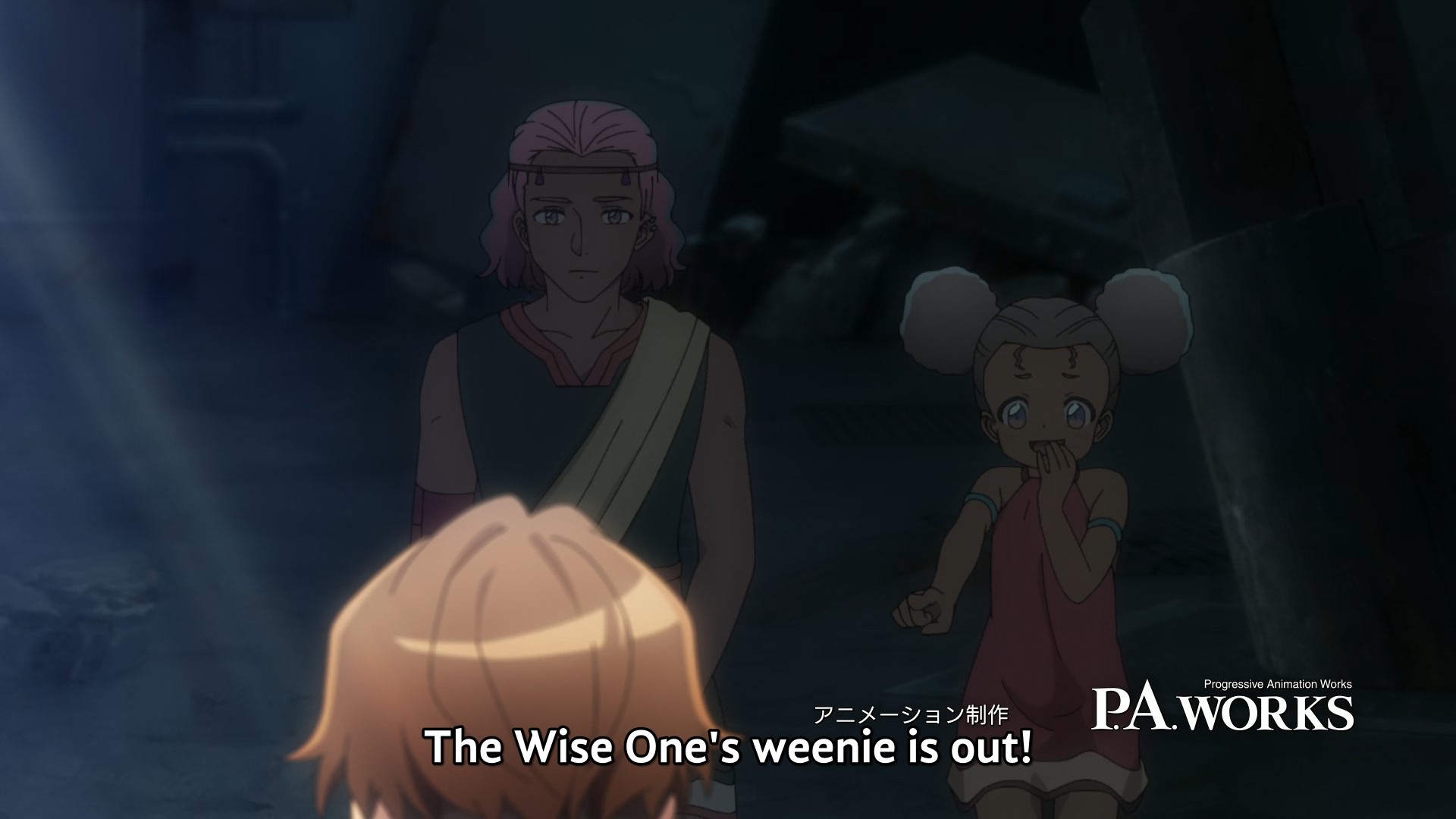
Someone has been waiting for Akira to wake up as we see a mysterious hooded girl observing Akira from afar. She’s likely an android tasked with watching over him, but she doesn’t introduce herself just quite yet. Instead, a pair of villagers — a father and daughter duo — quickly find Akira and take him back to their village when he collapses. Wia and his daughter Idhi seem rather deferential, referring to to our protagonist as the Wise One. Hell, they practically worship him. Initially, I figured that it would totally make sense for the villagers to speak a language that Akira can’t understand. After all, we don’t know how much time has passed. But all of a sudden, Akira an converse with the villagers without a single issue. How? Why? Was knowledge of their language somehow ingrained in him when he was sleeping inside that medical capsule?
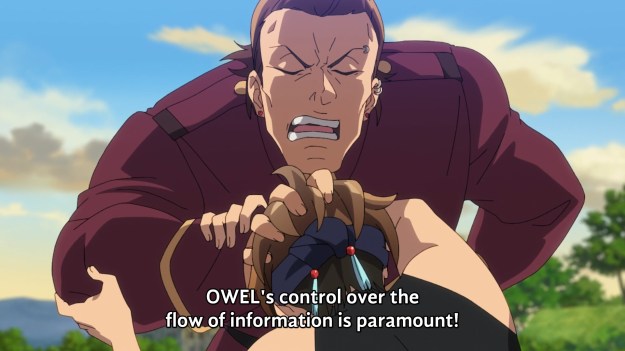
When Akira finally gets a chance to have an extended conversation with more villagers around dinner, we learn that something called OWEL runs the world now. Whatever it is supposed to be or represent, a lot of the villagers credit the organization with achieving world peace. But this doesn’t come without a cost: nations are pretty much extinct as people only live in small settlements. Furthermore, OWEL is very strict about the villagers being in possession of “relics” from the past. Some of the villagers are naturally afraid that Akira might count as a “relic,” so they argue in favor of reporting Akira’s existence to OWEL. World peace is great and all, but people still live in and amongst ruins. OWEL wants to keep technology down to a certain level, which is a common trope in science fiction stories. Akira later visits a school with books, but none of them contain any information that might shed light on the world’s current situation and state of affairs. Akira can’t help but wonder if there’s a bit of censorship going on. You can’t exactly let people find out that the world used to be technologically advanced if you’re trying to keep them down.
There’s this idea that mankind will naturally gravitate towards conflict and violence if we yearn for more than our humble roots. Is that a fair assessment? I mean, I dunno, it’s all rather speculatory. Personally, this idea feels a bit Luddite-ish, which is perhaps par for the course when talking about AI and androids. I mean, can technology like video games lead to conflicts? Or air conditioning? Or refrigeration? Or plumbing? That’s the problem when you apply a blanket statement like “technology will lead to war.” It saves us time, but we end up losing so much in the process. Why do I have to live without those luxuries just because something as divisive as AI might lead to a world war?
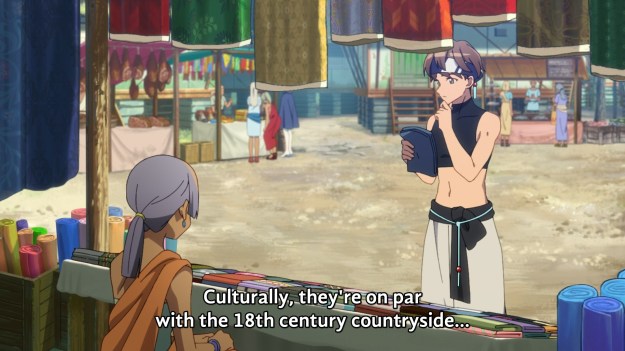
Of course, there’s always that age-old question: if humans can be happy living humbly like this, then why yearn for more? None of these villagers seem unhappy with their simple, idyllic life. But there’s a reason why we invented things like refrigeration and plumbing. Those technology does lead to happier, healthier lives. Again, it’s the problem with making blanket statements. Yeah, sure, some technology are troublesome. Social media has pretty much wrecked our mental health. But to decry all technology is at best lazy and at worst willfully harmful.
Anyway, I dunno if there’s a village chief, but Taberina, someone akin to the wife of the man who rescued Akira, eventually takes charge of the conversation and settles the debate. She’s decided to let Akira get his bearings before they concern themselves with OWEL. That’s nice of her to protect him, but it does seem risky. He’s a stranger, after all. Granted, at the moment, we don’t know what it means for OWEL to make an example of anyone who defies them, but would you be willing to put your family and neighbors at risk for a stranger? I don’t think I would.
Naturally, not everyone agrees with Taberina’s decision. The guy who voices his opposition secretly sneaks out and reports Akira to OWEL the following day, so an important-looking official by the name of Commissioner Caniss and a bunch of soldiers quickly show up to the village. At first, I thought there was a chance that OWEL might be something like an AI that has concluded that humanity’s biggest threat is itself. It won’t go as far as AM in “I Have No Mouth, and I Must Scream,” but it’ll certainly keep humanity down to prevent complete and utter destruction. But if OWEL’s just gonna be an organization comprised of people like you or me… eh. At this point, it wouldn’t surprise me if OWEL ends up being remnants of Towa’s opposition in the past.
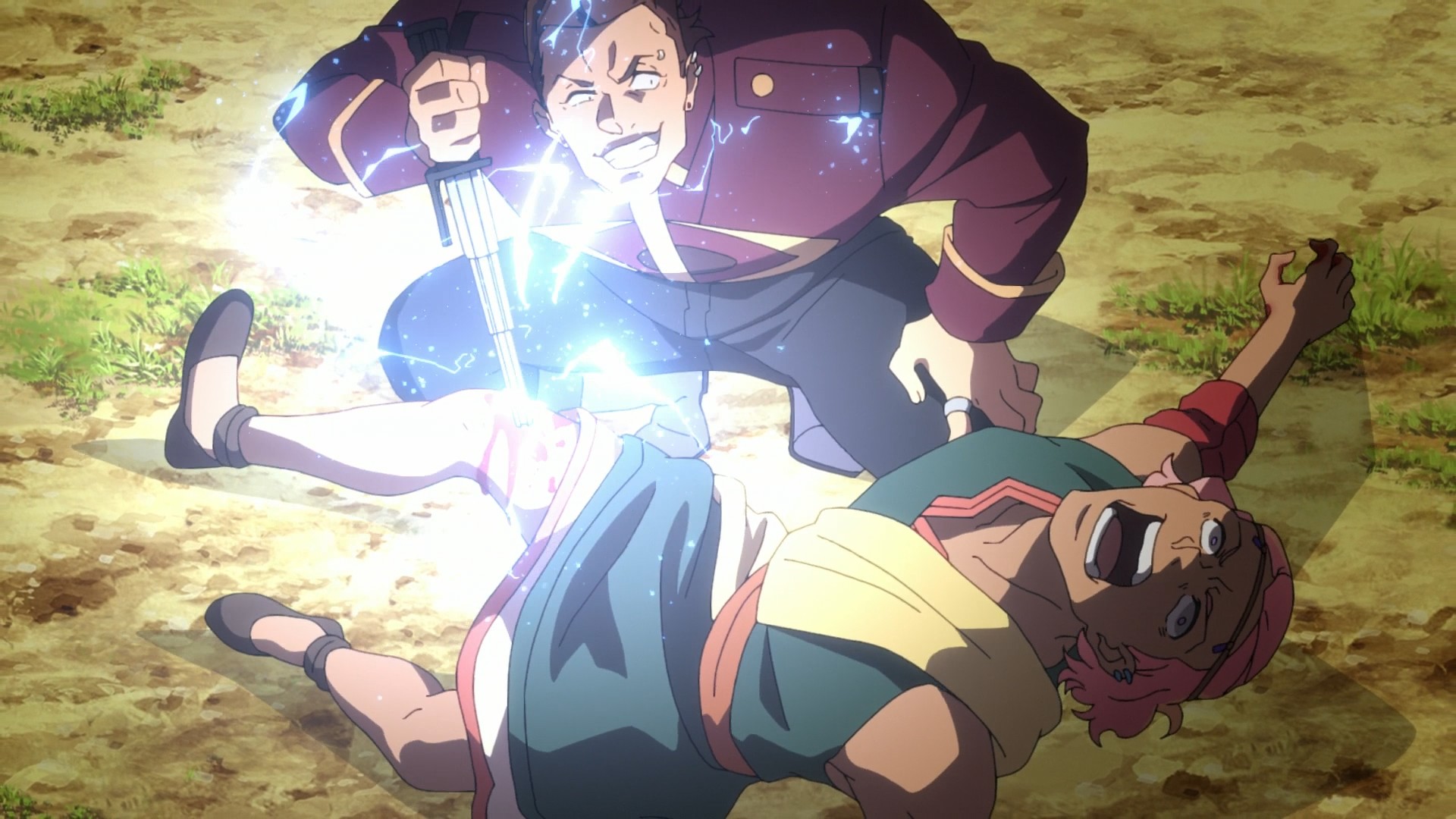
Caniss detains Akira, but he intends to take advantage of our protagonist’s knowledge in order to climb the ranks within his organization. So it isn’t really about keeping technology levels down in order to prevent conflict and warfare. Instead, it’s just outright fascism. The masses are easier to control if they can’t have modern technology. Furthermore, Caniss almost exudes Gaston from Beauty and the Beast energy. But that’s somewhat unfair; Gaston was never this evil. Personally, I’m not a big fan of his characterization. He’s very over-the-top in his mannerisms, especially when he cackles with glee while torturing Wia. It’s cartoon villainy (I’m aware we’re watching a cartoon). Contrast this with a moment that comes shortly afterwards: the commissioner commands his soldiers to return to the village and completely wipe everyone out. It’s funny how this sort of unrepentant evil is more realistic to me than the guy sticking his tongue out like a mad horse.
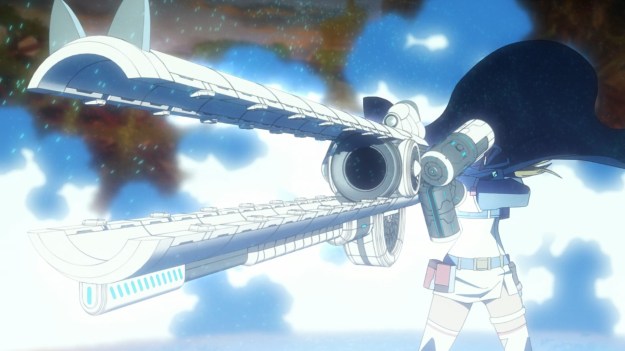
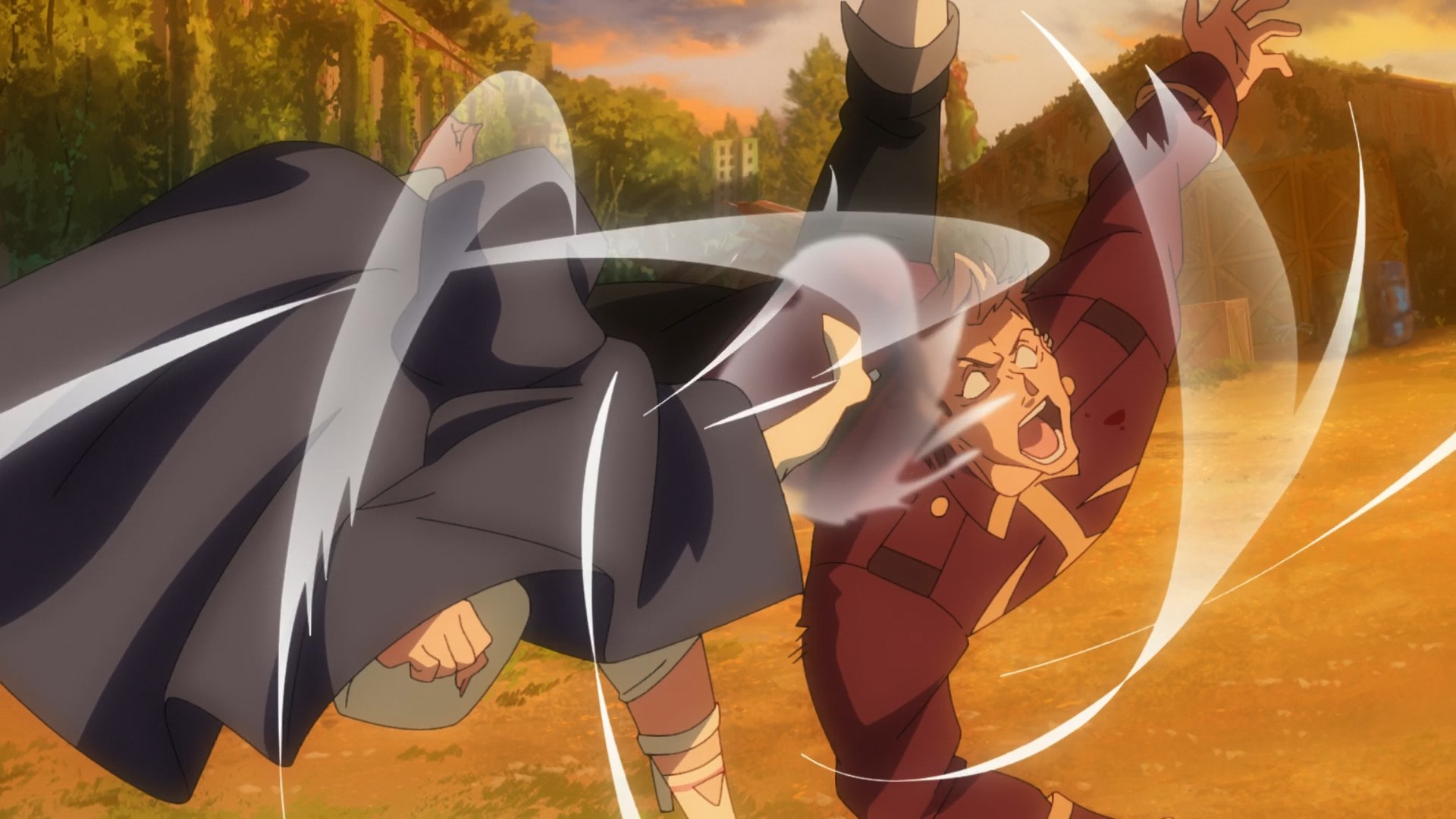
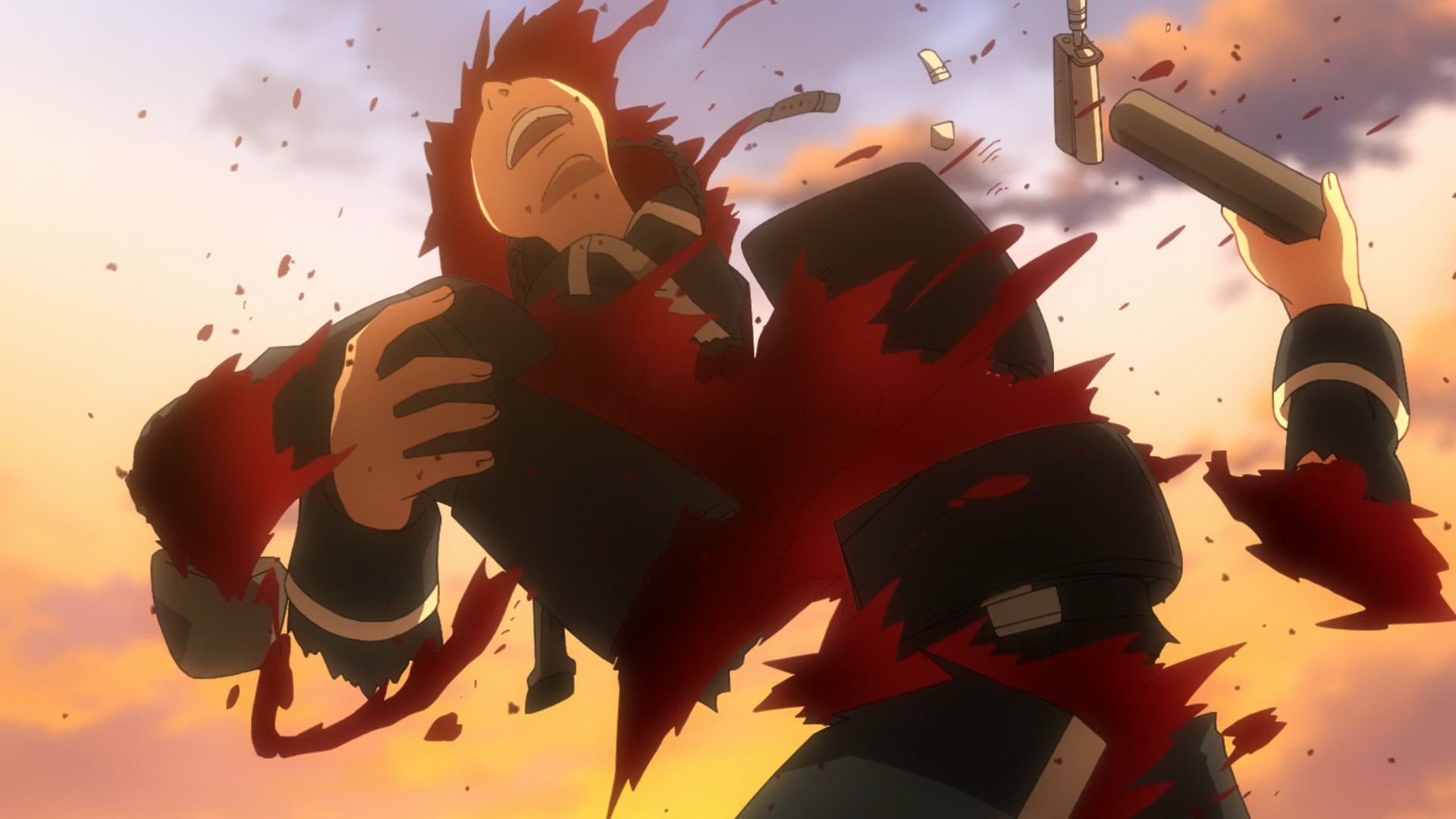
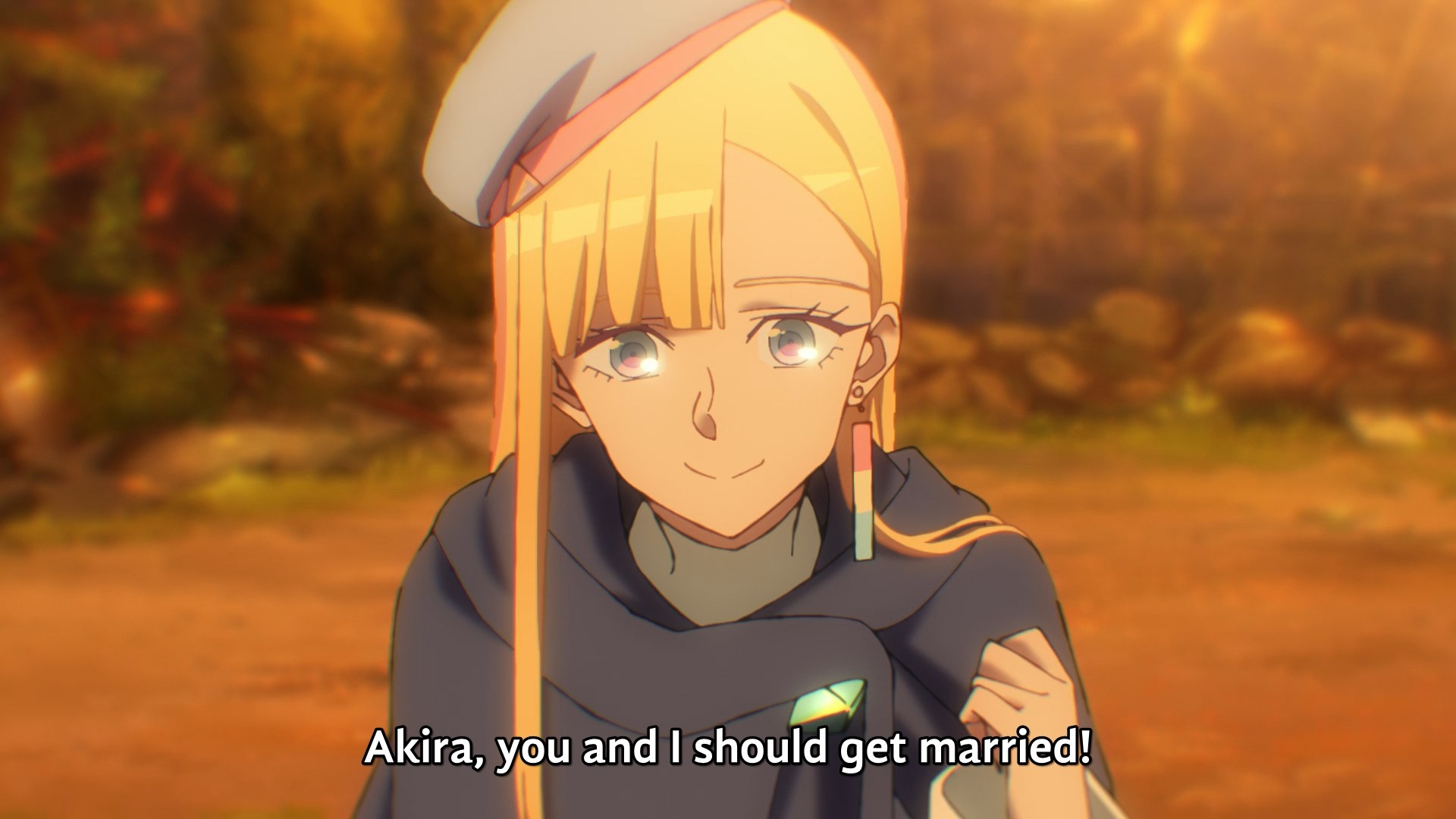
Of course, this is where the hooded girl comes in and saves the day. She easily breaks Akira out of his prison with something akin to a lightsaber. Initially, she just beats Caniss up instead of outright killing him. I was afraid she wouldn’t put him down for good. Yeah, yeah, violence is bad, but you gotta draw the line somewhere. I think murdering an entire village is a pretty damn good line. Don’t you hate it when people try to take the moral high ground against fascism though? What I do have a problem with, however, is the level of violence on display here. Again, I’m good with putting them down, but do we need to revel in it? And yet the girl won’t outright save Akira, Wia, and Idhi just quite yet. Rather, she needs our protagonist to agree to hear her out first. Not exactly altruistic, are we? When Akira finally gets the chance to speak to her, he quickly discovers that she’s a dead ringer for Towa, but don’t get it twisted because her name is Yugure. And that condition for saving the trio? She wants to get married. Basically, Towa is long dead, but her legacy, perhaps her memories, and certainly her love continue to live on within this android. But to a bewildered Akira who still remembers his love as if it was just yesterday, the thought of marrying an android — even if it looks like Towa — might feel like betrayal.
So what now? Surely, OWEL will notice that one of their comissioners and a handful of soldiers have gone missing. I doubt the organization will take it lying down. Aren’t the villagers still in danger? The preview for next week’s episode hints at Akira meeting even more beautiful androids, and I’m a bit concerned about that.
Stray thoughts & observations:
- Technically, it’s the first episode. In my mind, it feels like the second episode.
- Seeing your former home in ruins must be a trip. Sadly, that’s not something reserved for fantasy and fantasy only.
- So are the villagers’ culture and customs based on anything we know in real life? Like maybe what they’re wearing is similar to an indigenous culture in Japan? Or is this just all made up for this show?
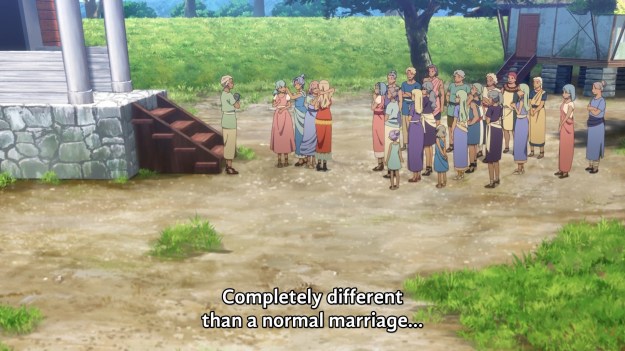
- On his tour of the village with Idhi, Akira comes across a celebratory event that looks very much like a marriage. But rather than limit themselves to just two people, the villagers create unions that are comprised of any gender and any number of people… to a certain point. Apparently, OWEL cracks down on unions that are too large. At that point, I suppose the union would just become an organization, and that poses a threat. Plus, off the top of my head, I can remember large families end up being rather cultish. Nevertheless, the unions are referred to as an “ehlsea,” which sounds oddly familiar to our protagonist: Akira recalls talking to her about something known as the “LC Project.” Whatever it is, I’m not a fan of polygamy (correction: polyamory). But hey, what consenting adults want to do behind closed doors is none of my business.
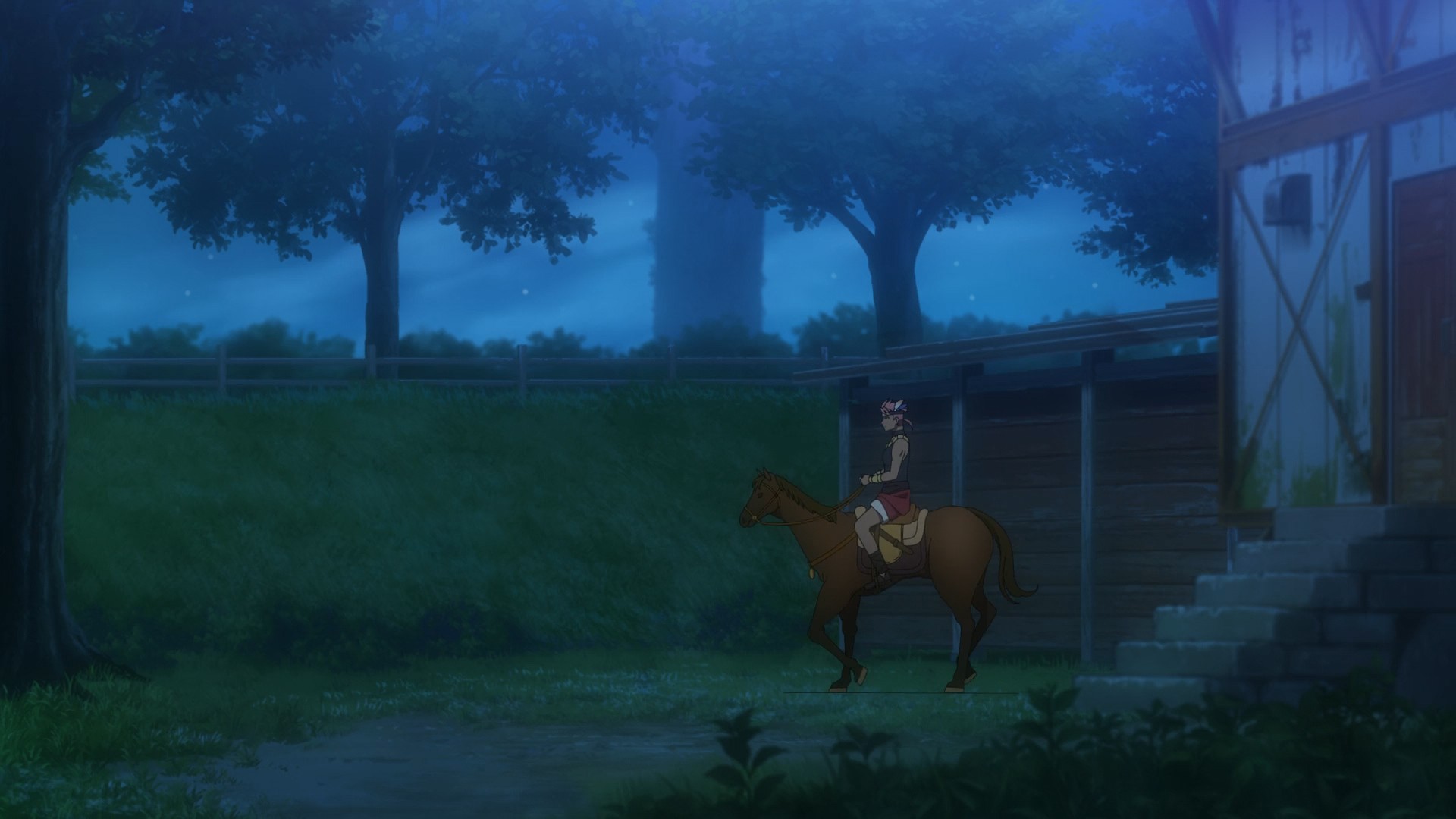
- Huh, so they do get some form of technology. I know Akira is smart and has tinkered with machines and robots, but it’s a bit unbelievable that he can just take one glance at any machine and quickly come up with a diagnosis.
- Huh, so it’s okay to have trains, stun batons, guns, that machine Akira fixed up, but they gotta stick with horse-drawn carriages? How does OWEL decide what technology is and isn’t okay?
- Yep, censorship. And the commissioner doesn’t hesitate to resort to violence. Idhi was right.
- I hope the jackass that reported Akira to OWEL gets what’s coming to him. At the very least, kick him out of the ehlsea.









Based of your screenshots I like the character designs enough that I could give this show a go. It has interesting elements to it as well.
Just a side note, Polygamy is usually one person woth multiple spouses, which can be quite exploitative compared to Polyamory, which is more broad and describes any non monogamous relationship.
You’re right, they’re two distinct concepts. I’m still not a fan of either of them.