
Asa used to watch musicians perform on TV, and her mother would tease her about possibly liking one of the guys onstage. The girl insists, however, that it’s the song she likes, not not any of the performers. Maybe she’s embarrassed, maybe she’s not. Maybe she just actually likes the music. But this is something parents seem to do a lot. My parents were the same way. I guess it’s fun for them or something. And because they provide for you, or because they’re higher up on the family hierarchy, they feel like this should give them carte blanche to do a little “harmless” teasing every now and again. I dunno, I think it’s shitty to make someone uncomfortable for your own amusement. Yeah, the kid will get over it, but that’s not a good argument in and of itself.
Asa then has a memory of her mom telling her that she can be whoever or whatever she wants to be. That’s a nice sentiment… in a vacuum. But Minori didn’t extend her sister the same grace. She clearly had opinions on how Makio should live her life, and she didn’t hesitate to share them. It makes you wonder, then, if she felt as though she had the same right to “tease” Makio, i.e. “Ah, I’m the older sister, so she should just take it.” Then at some point, it wasn’t just teasing anymore. The jokes became judgments. So fast forward to the future, now with her own child, Minori probably realized that she had gone too far. She probably realized that if she kept making those remarks with Asa, she would estrange herself from her daughter the same way she did with her sister. Some realizations are better late than never, I suppose.
Makio and Asa are still in a sort of limbo where they haven’t fully mapped out what their relationship should be. It doesn’t help that memories and dreams of her mother are haunting Asa, waking her up with tears in her eyes. Obviously, she misses her mother. But Makio isn’t her mother. They might look similar — maybe even act similarly — but the mother-child bond just isn’t there. But then what is she to Asa? The girl asks if she could color her hair. She’s trying to test her boundaries like any teen her age would. But Makio doesn’t think Asa needs her permission. In other words, Asa has no boundaries to test.
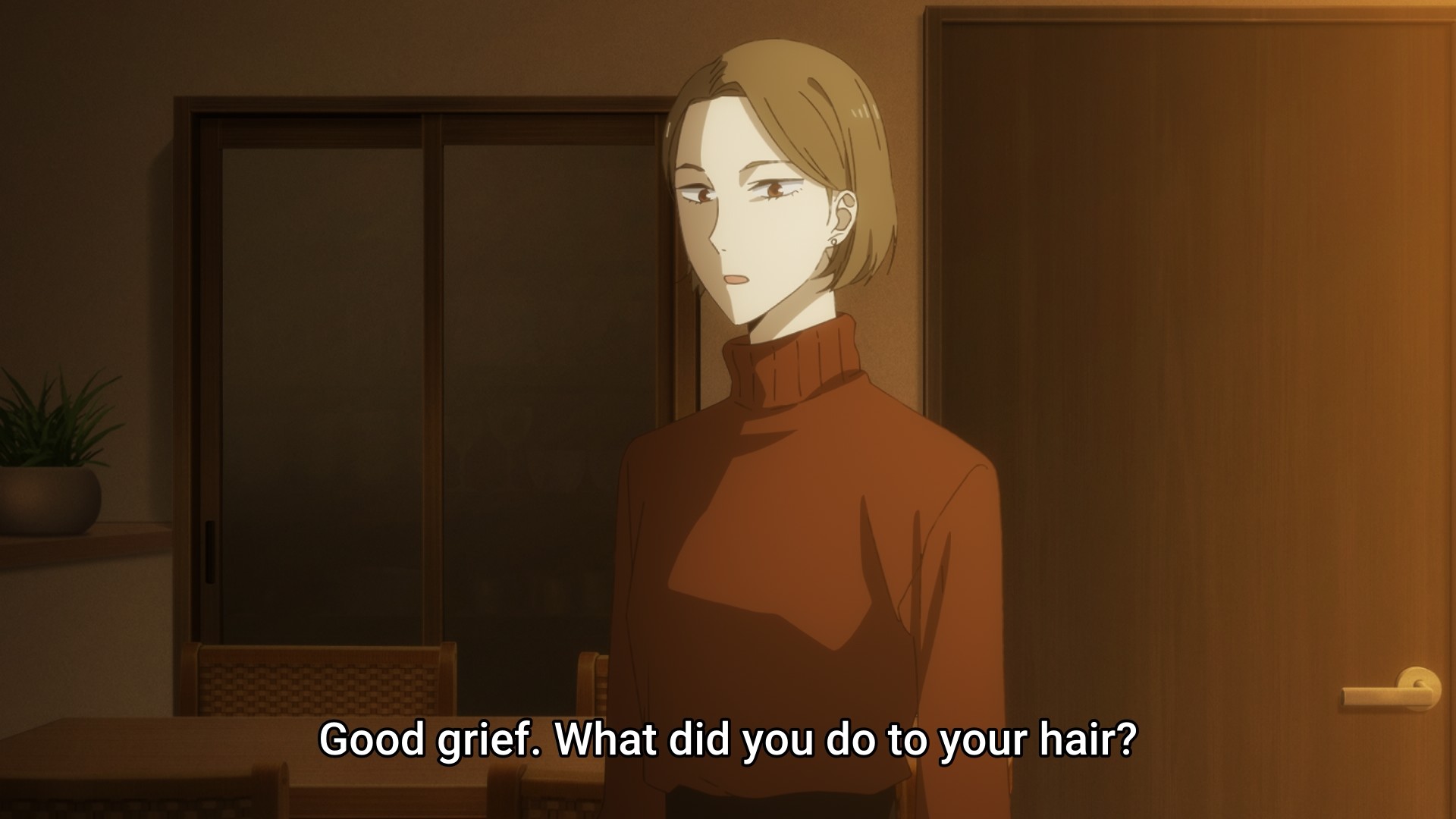
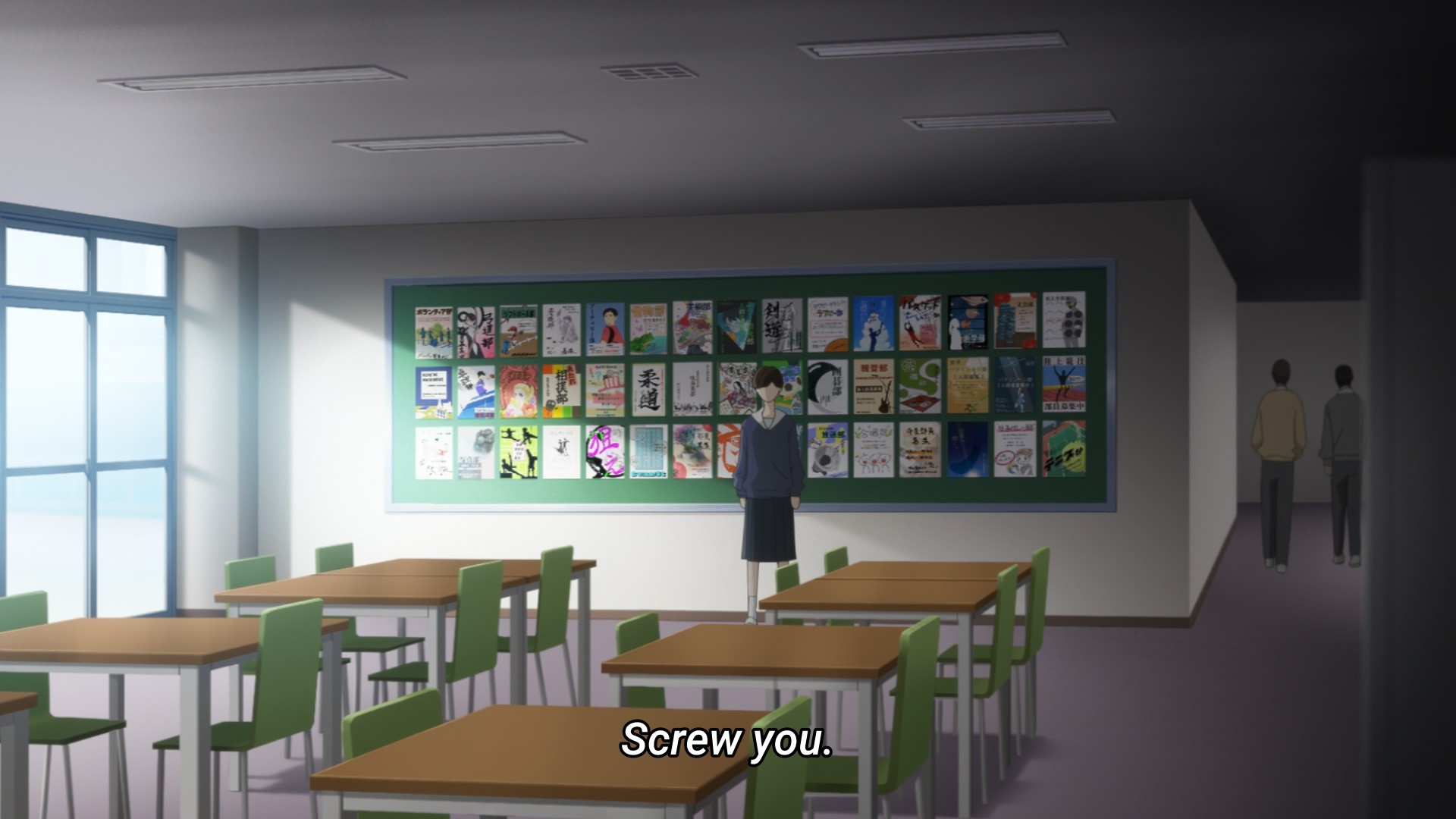
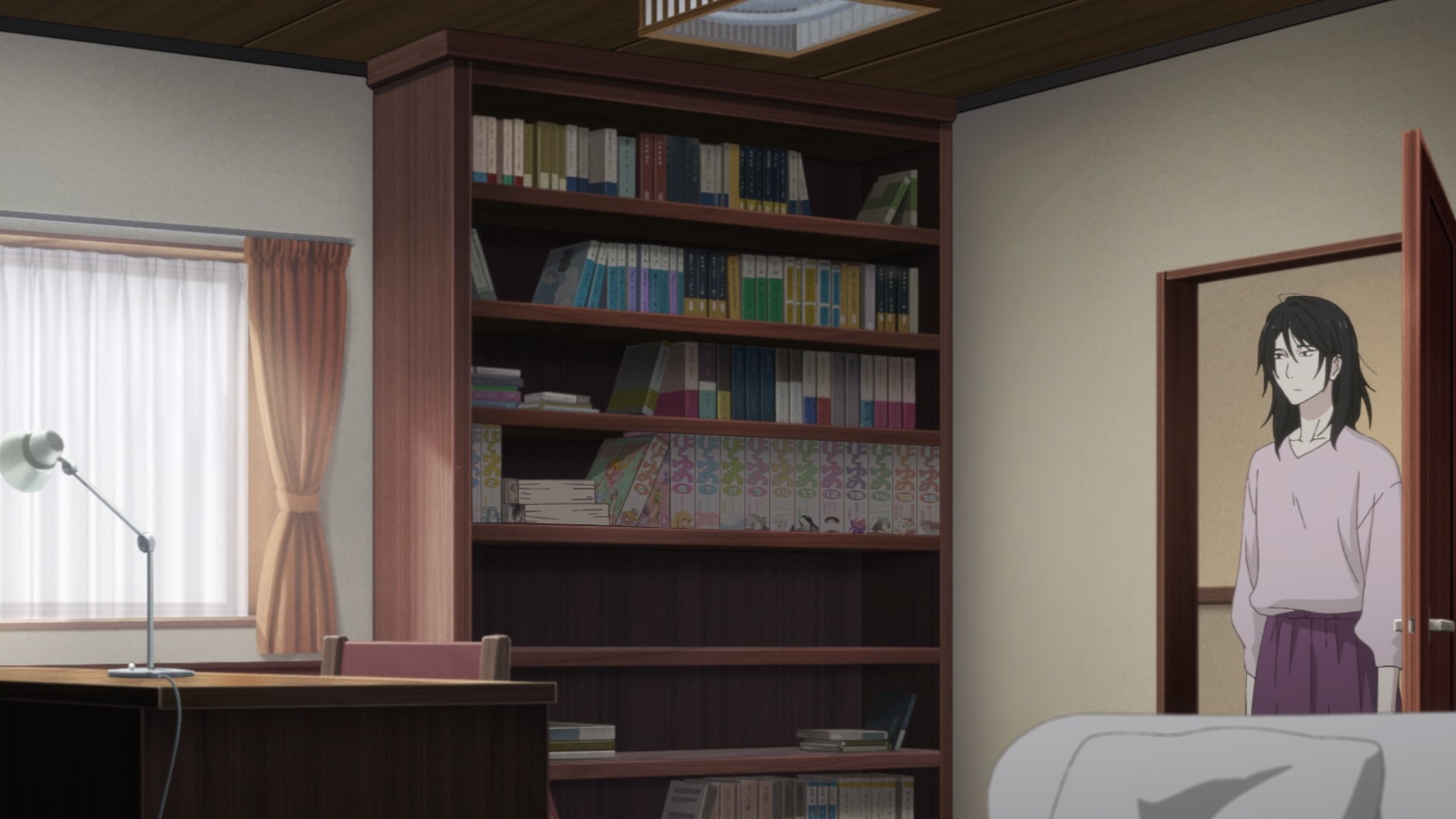
When Asa was ever caught between choices, her mother would step in and make the decision for her. It helped that her mother was very opinionated, for all the good and the bad. There’s no one to fill this role anymore. Asa is keenly aware of this loss as time goes by. We don’t just create our own identity in a vacuum. We identify ourselves by establishing a standard, then deviating from said standard. Who is she? Her mother’s child. But her mother isn’t around anymore. So who is she now? Unfortunately, there’s no one for Asa to rebel against except the figments of her imagination. Here, we see her confronting her mother’s personal library. Other times, she would see her mother whenever she looks at her aunt. She’s trying to search for a new standard. Where else can she redirect her teen angst? There’s a danger here of her potentially lashing out at others in anger. In fact, we’ve seen this pattern before.
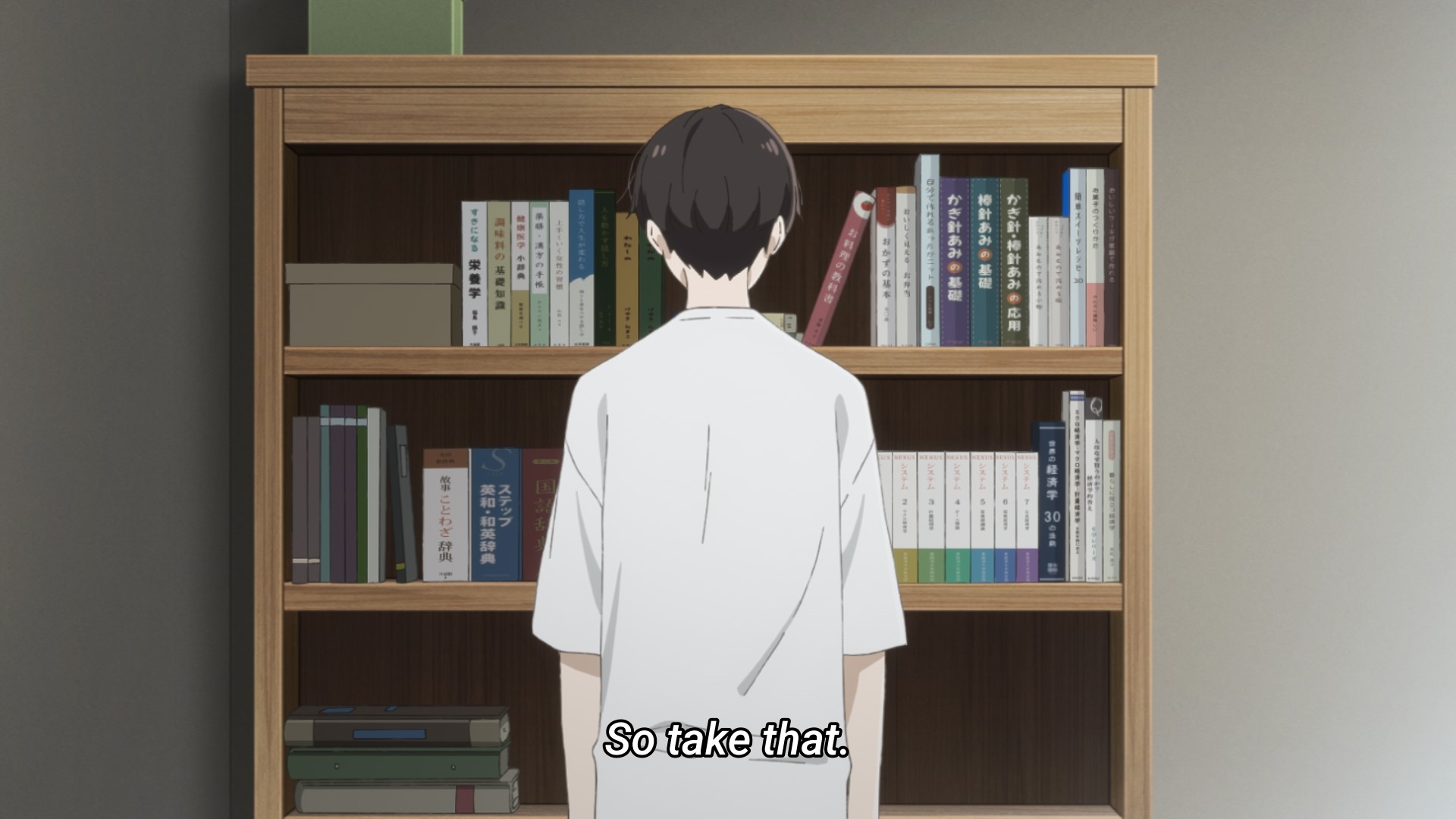
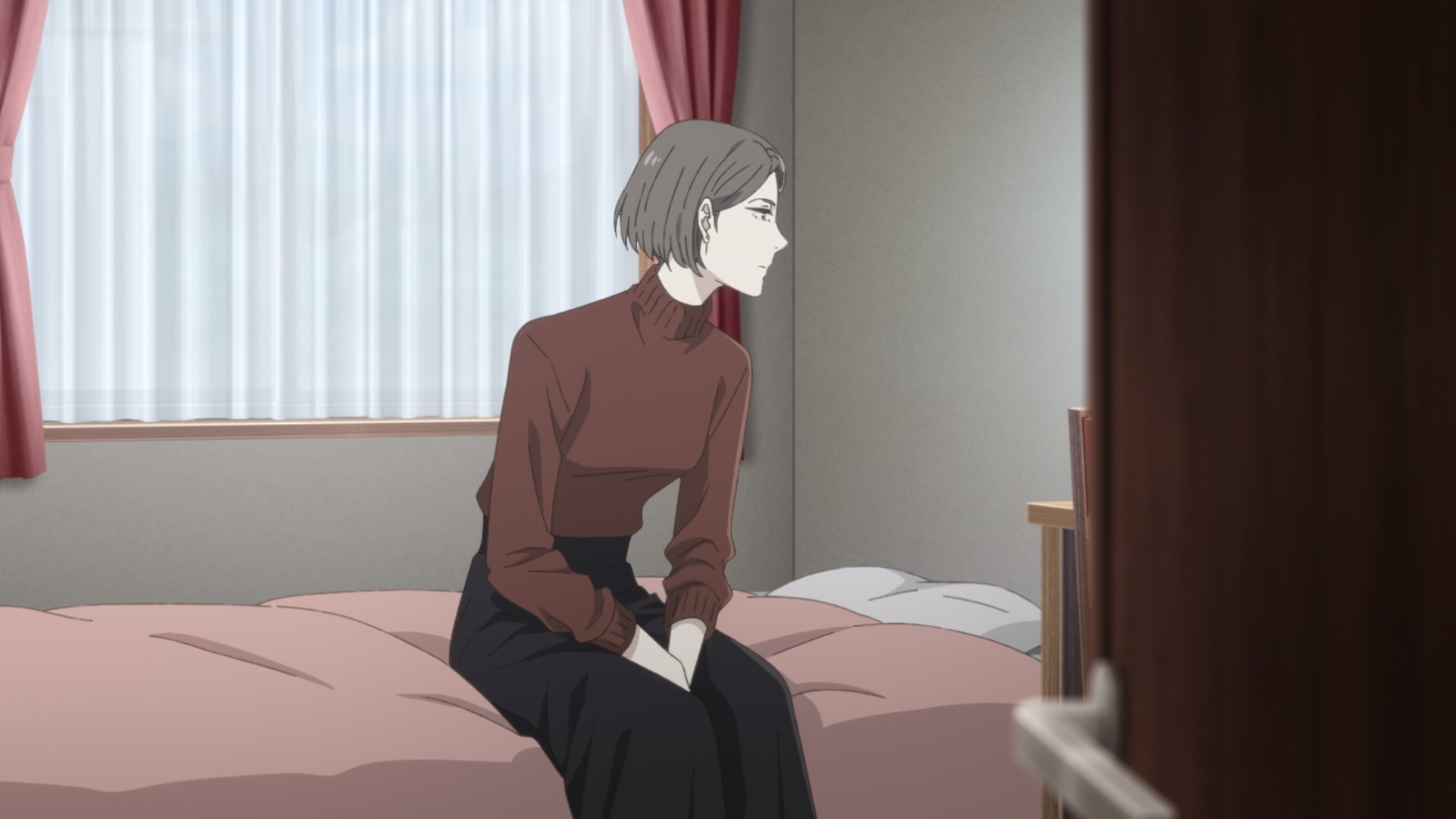
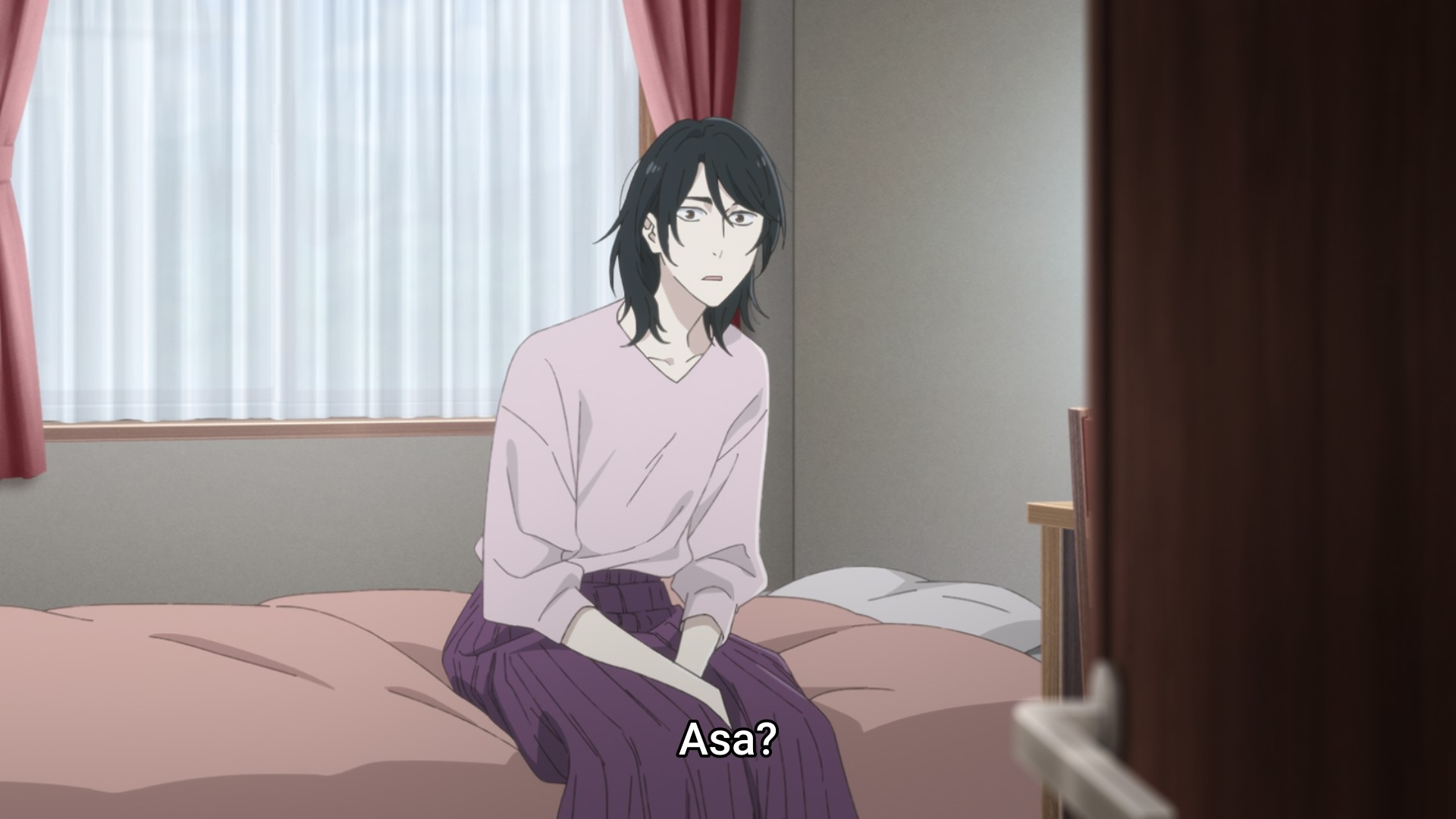
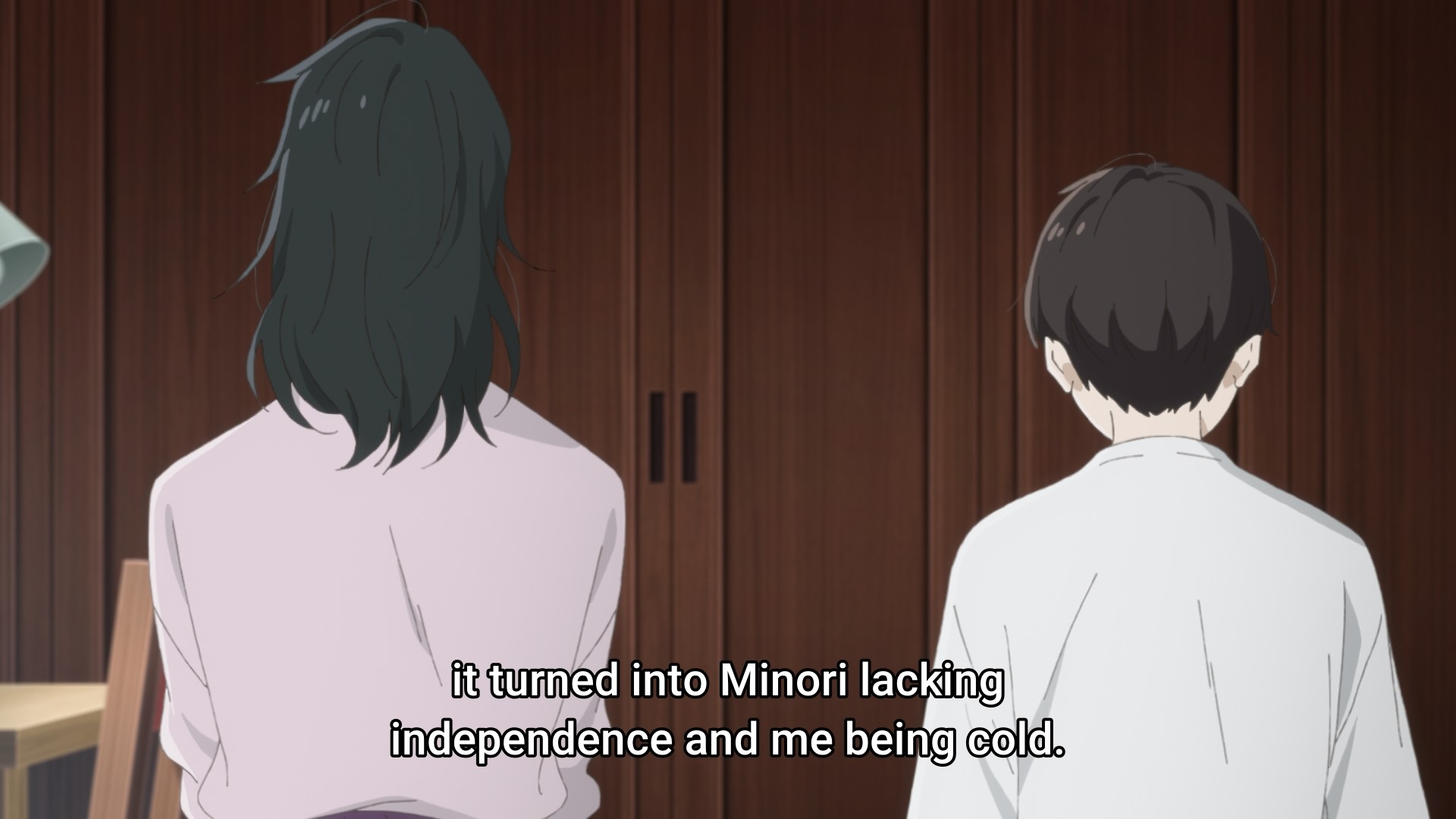
When Makio pays her mother a visit, the return home floods her with old memories. But not every memory is unpleasant, especially the earliest ones. It seems as though Makio and Minori used to be close. But once they became teenagers, something changed. They started to separate. Again, this is when kids start trying to carve out their own identity. And maybe in an attempt to find herself, Minori was much like Asa in that she found herself unable to lean on her mother.
Makio doesn’t open up about her sister, but she doesn’t hesitate when it comes to her mother. She calls the old woman “dull and snide.” She reveals how her father’s death had impacted her mother for the worse. Regardless of how she feels, I do like that she’s at least sharing more of herself with Asa. Maybe Makio feels as though Minori turning on her was the bigger betrayal, so she still isn’t ready to have that conversation with Asa. It would get too personal, and as such, what she has to share might impact how Asa sees her own mother permanently. At the very least, Makio wants her niece to continue seeing Minori as a loving, caring figure.
But to loop this back to the original topic of teen rebellion, I think Minori realized, consciously or subconsciously, that she couldn’t really rebel against her mother who was already struggling to cope with the loss of a loved one. The old woman became overly critical of her daughters. Lacking that foundation, Minori turned elsewhere. She set her standard against her sister instead. She was the older sibling, though, so rebelling didn’t make sense. Nevertheless, she needed a standard to deviate from, so she chose Makio’s niche and interests. She derided Makio in order to differentiate herself. She found the need to judge someone who wasn’t like her. And because she’s her mother’s daughter, she inherited that same penchant for passive aggressiveness.
Someone keeps calling Makio, but she won’t pick up because it’s an unknown number. I’d do the same. If it’s so urgent, then leave a message. As it turns out, it is urgent; some guy — an attorney, in fact — drops by the apartment to discuss details about the guardianship. Again, why didn’t he just leave a message? I don’t understand people sometimes. Well, the lawyer suddenly informs Makio that someone withdrew 300,000 yen from Asa’s parents’ estate. He doesn’t even give her room to even react before he starts grilling her. He assumed she had stolen the money. I mean, way to jump to conclusions. Why? Because she was dodging your calls? C’mon, man. I don’t understand people sometimes.
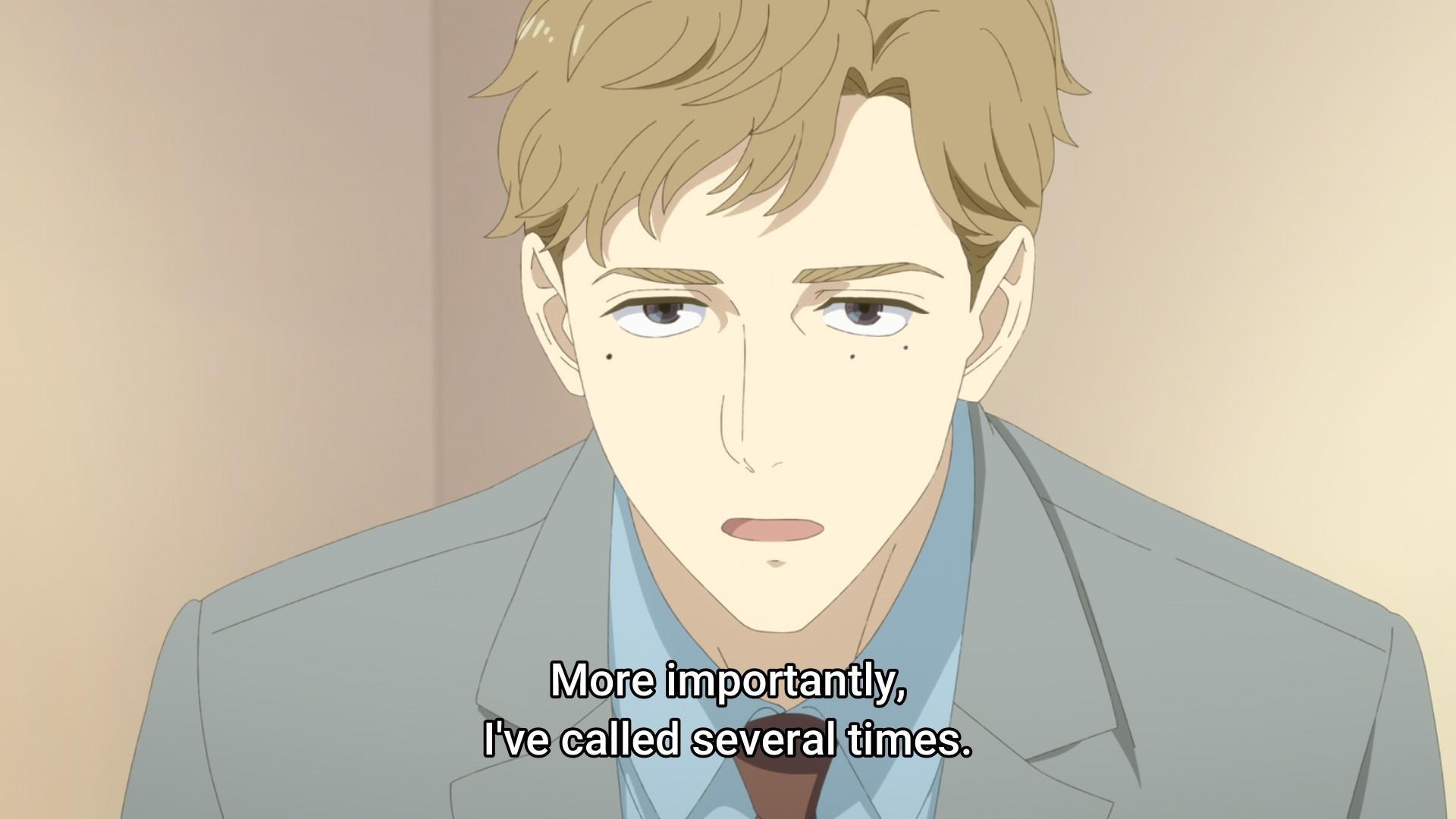
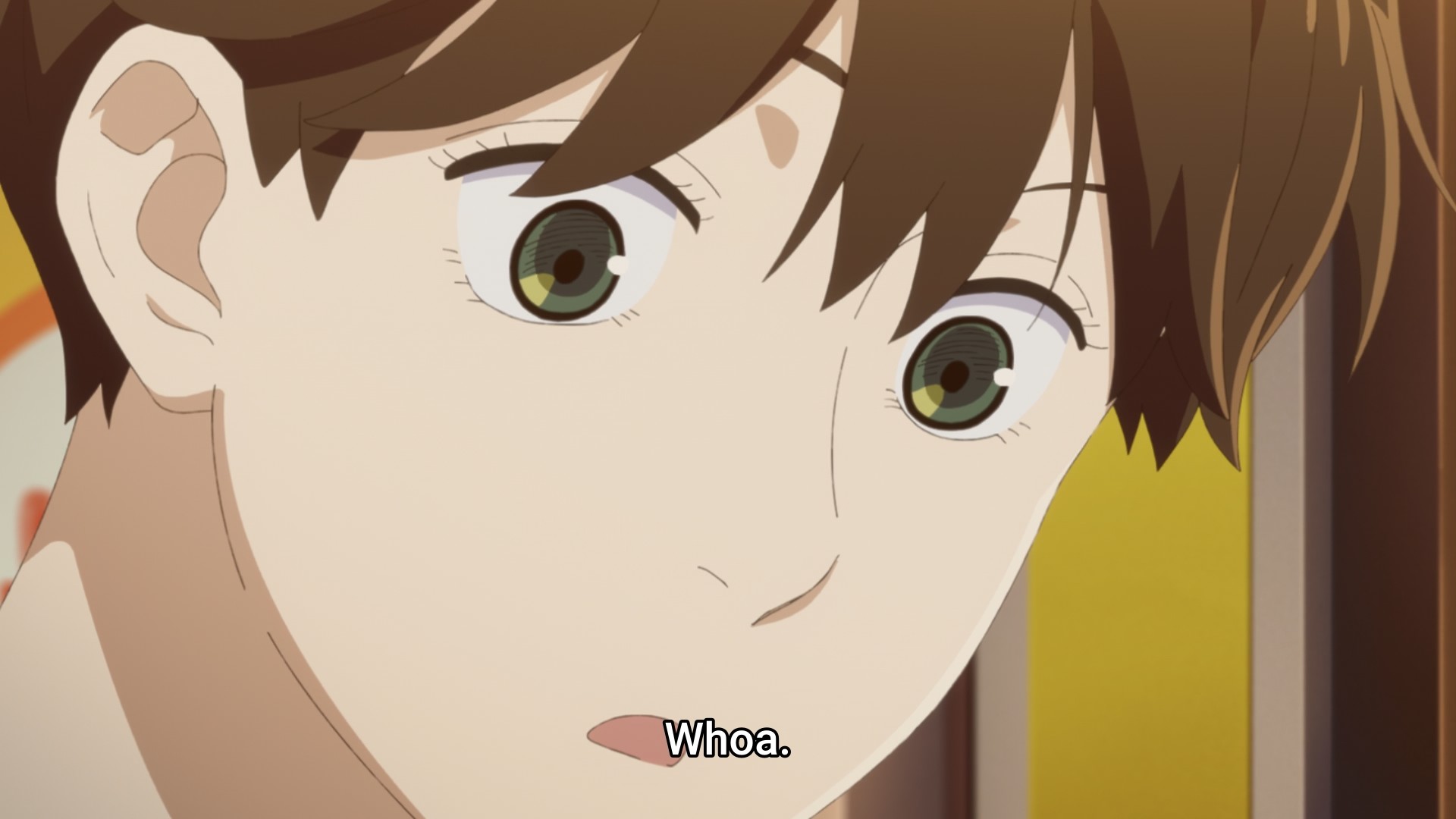
Seeing her aunt get grilled in front of her, Asa confesses to taking the money to buy a laptop. Even though Makio never prevented her from doing anything, she thought her aunt wouldn’t approve of her making music. Y’know, much like her mother would. It’s a complicated mess. She clearly misses her mother, and Makio can’t and won’t even try to serve as a replacement. But if Asa treats Makio as if the woman was her mother, i.e. expressing the same disapproval, then she can feel normal again. She can feel like the typical teenager who defies their parents’ wishes. Maybe this is why Asa has been going through this week’s episode with a chip on her shoulder. Even if Asa can’t articulate her frustrations, it’s clear that she just wants to feel like a stereotypical teenager. And normalcy at her age is teen rebellion. It’s stealing money to fulfill your dreams against your parents’ wishes.
It’s an interesting contrast, because at the same age, Makio probably wished she could have her family’s approval. She probably wished her family would support her niche and interests. She carved out her own identity, and her sister mocked her for it. But the end of the day, it’s clear that Asa needs a wall. Sometimes to lean on, sometimes to push away. She doesn’t technically need her aunt’s permission to pursue music either as an interest or perhaps even a career, but it wouldn’t hurt to let her ask for permission anyway.
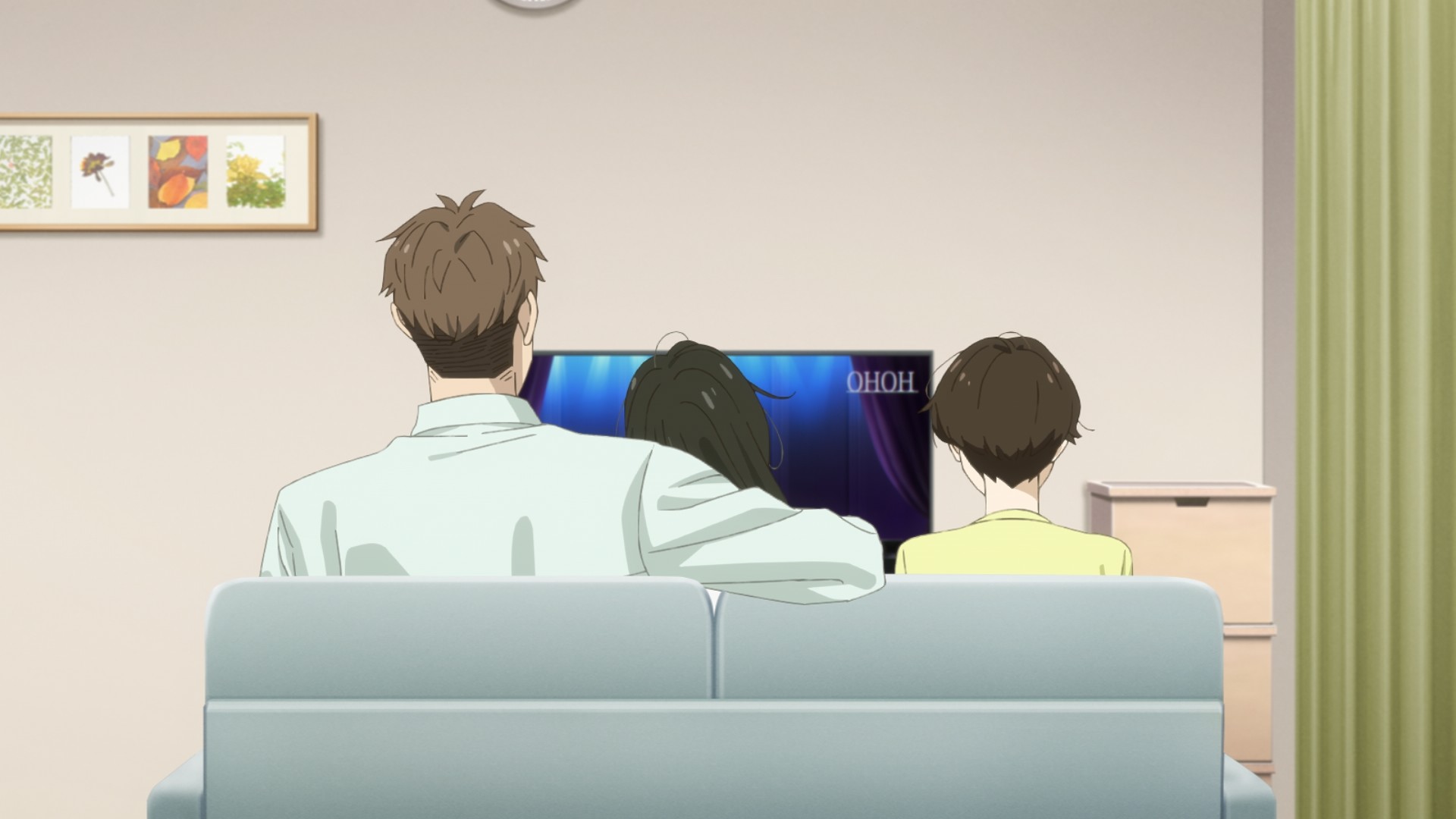
Later that day, Kasamachi drops by with dinner (oysters, apparently) and a shoulder for Makio to lean on. In fact, he pulls her in aggressively. I guess when you deal with someone like her, you gotta take the initiative. Hm, they’re more than friends, but not quite lovers. Asa soon joins them when her favorite band is on TV. Likewise, these three are more than strangers, but not quite a family.
Stray thoughts & observations:
- Weird how this is the second anime this week where a girl has been tasked with buying toilet paper for the house.
- I never joined a school club in either middle or high school. Then again, I had band practice for three out of my four high school years, which didn’t leave me much time for anything else.
- Are afterschool clubs a more important in Japanese schools than American ones? It feels like it. Nobody here really cares if you joined one or not. Oh, someone might say it’s good for college applications, but you’re never pressured to find a club.
- Oof, we finally get to see the accident. Yeah, that’s bad. Even if you could recover the bodies, you wouldn’t want to look at them. At least it probably didn’t hurt?
- Looks like Asa and Emiri have each found new friend groups. It doesn’t mean Asa has been replaced, but we only have so many hours in the day. Our time is finite — our energy is finite — so everyone’s slice of the pie gets a little smaller and smaller.
- I think I’d react the same way if anyone I knew in real life was a writer. It just seems so daunting, y’know? The most I’ve ever written was fifty something pages for a thesis in grad school. Not quite a dissertation. I never got that far. Nevertheless, I can’t imagine writing an entire novel. I just couldn’t do it. I’m not that organized. Nor would I ever have that much story to tell.
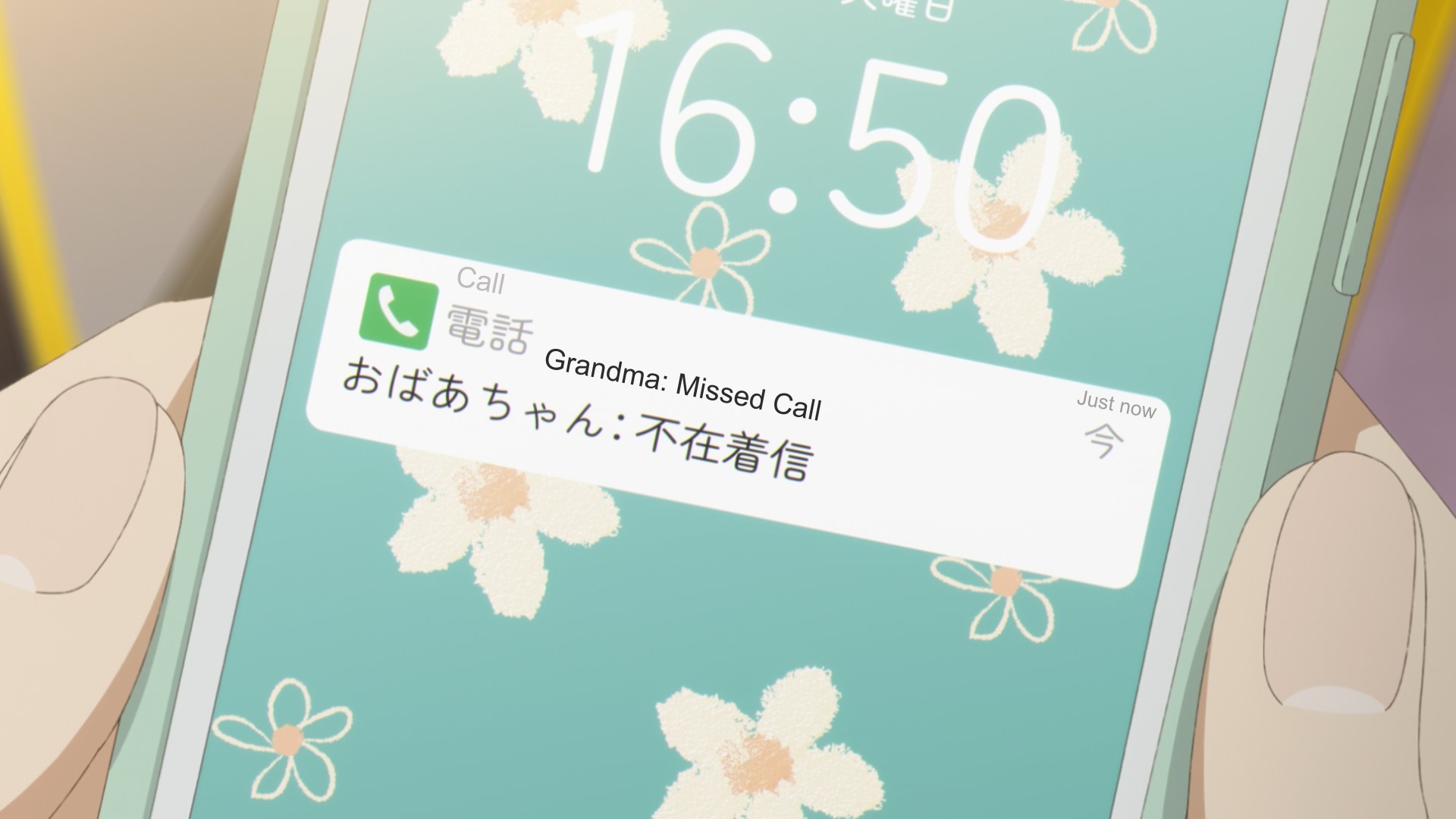
- Grandma’s calling?! Now? After all this time?
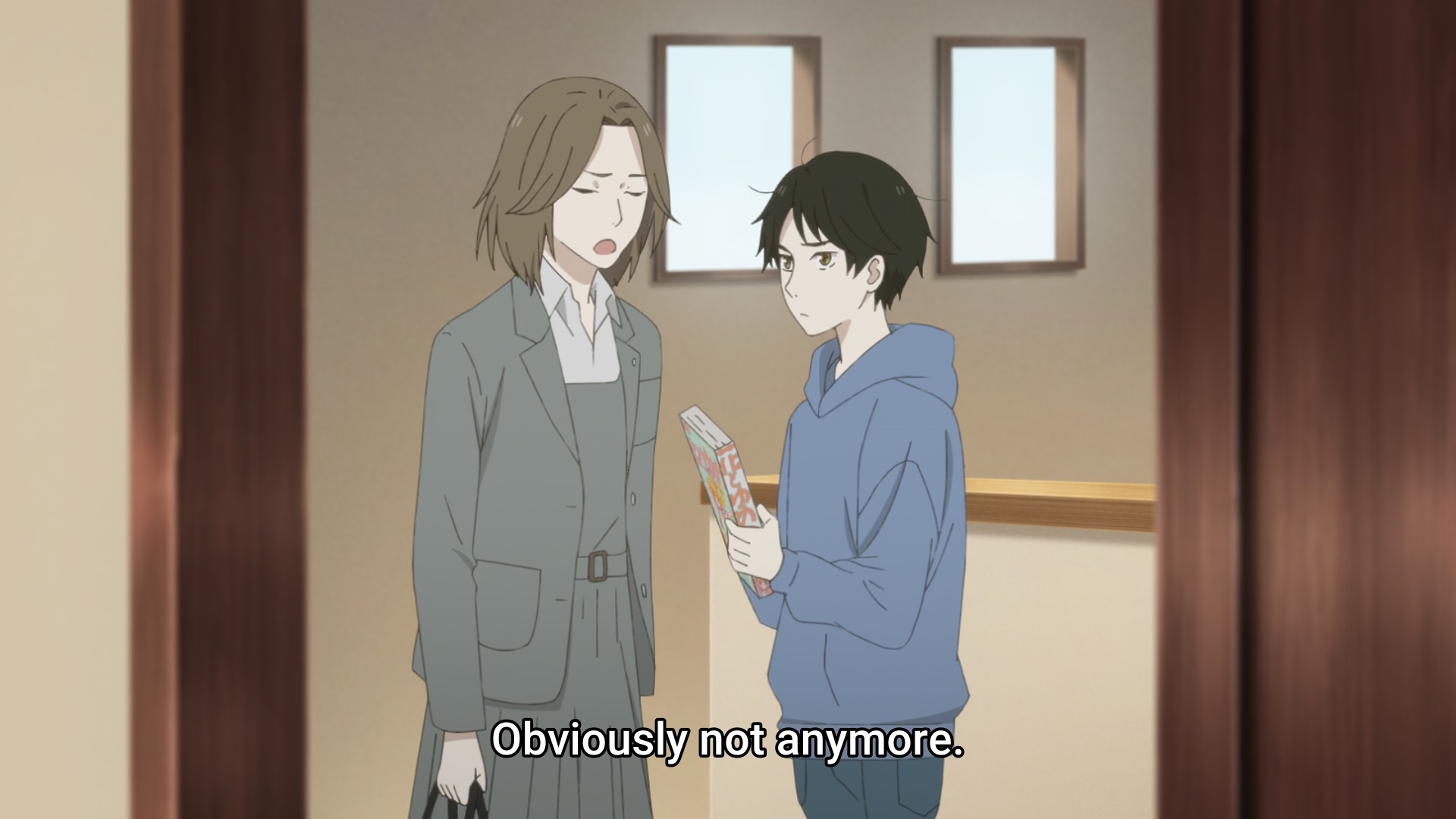
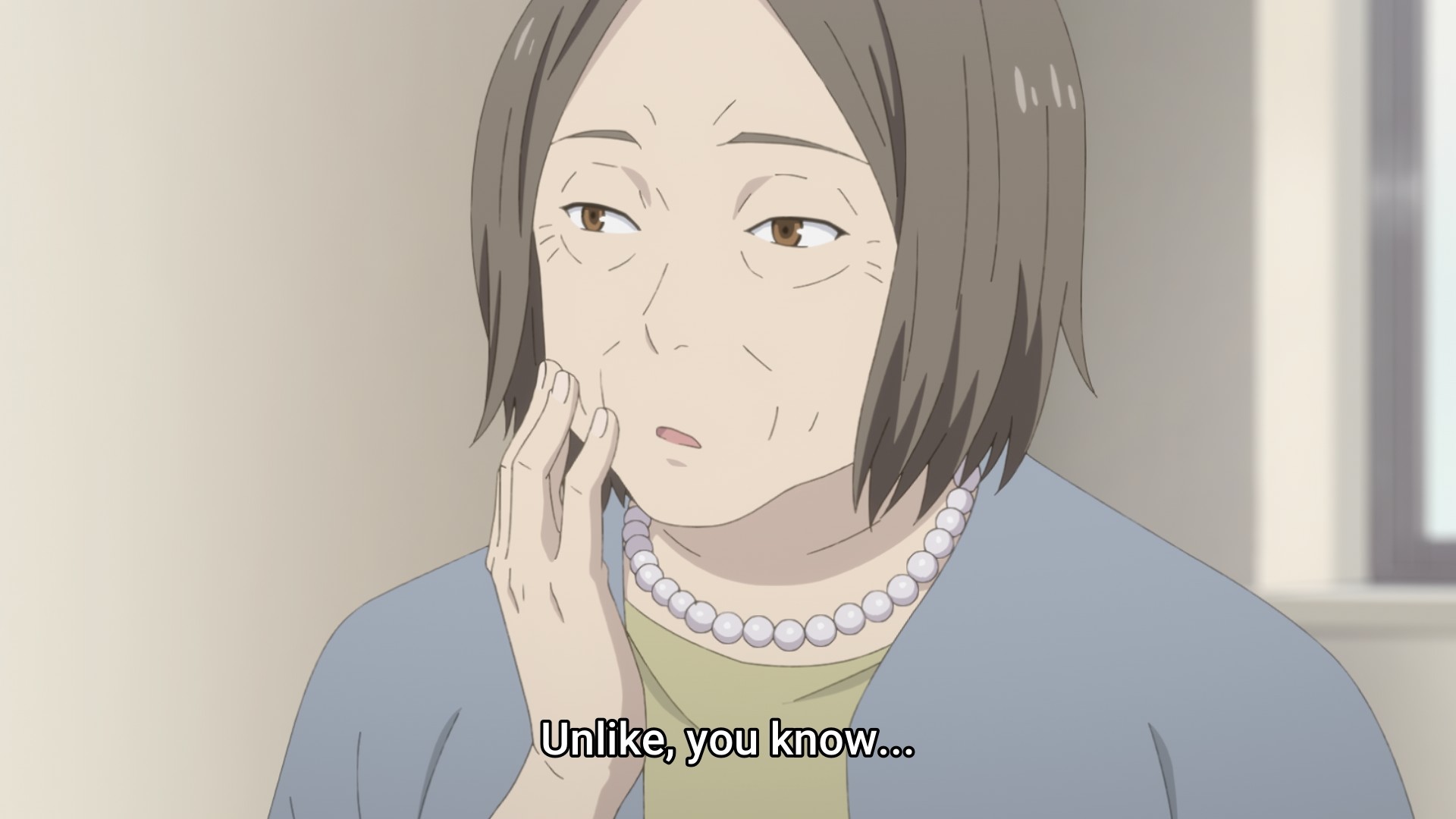
- Why is granny grilling Makio over whether or not she’s been taking good care of Asa? At least she’s doing it. I mean, where has granny been? Yeah, yeah, granny’s old, so normally, she should be allowed to enjoy her golden years. But nothing about this tragedy is normal. Everyone should’ve stepped up, so I think Asa’s extended family sucks for pretty much abandoning the kid. One fucking check-in after all this time doesn’t count for much in my book.
- Sure, Makio is cold to her own mother. At the same time, the old woman goes, “Don’t be like her.” Yeah, don’t be like the one adult who was willing to assume responsibility and raise kid on a short notice. The nerve of these people…
- Makio opens the door to her old room, and it looks clean. It looks like nothing has been disturbed except, of course, dust hasn’t been allowed to linger. So I know what someone might say, i.e. “Oh, her mother never reached out to her, but she still cares in her own way.” But whatever, man. Talk about the bare minimum.
- C’mon, don’t talk about one of your kids as if they were the problem child, especially to your grandkid. It’s so inappropriate. And again, Makio is sacrificing so much right now to care for Asa. It feels ungrateful for granny to suddenly talk about her behind her back like this. It’s like when people start ragging on their partners in the middle of a conversation. I don’t need to know this shit. Go find some other outlet for your petty barbs. Like, I dunno, a therapist maybe?
- Makio extends an olive branch and says she would be willing to lend an ear if her mother needs it. Maybe her mother’s intentions are kind, but she says, “I doubt someone who’s barely hanging on herself has the capacity to her anyone else’s struggles.” I’ll add that she said this with a smile. It’s not that she’s wrong. And I know she’s trying to say she doesn’t want to overburden her daughter. Just dumping Asa onto Makio is bad enough. Nevertheless, her remark is unnecessary. If you don’t plan on leaning on your daughter, why say anything at all? Just say thank you. I don’t know, I don’t understand people sometimes.
- This post is late because I had to do my monthly grocery shopping. I know nobody cares, but I hate when I miss a deadline (even if it’s self-imposed). Sigh, another 200 bucks down the drain.

I like that the attorney is relatively new at the job as it explains both why he made that mistake due to lack of experience, but also indicates it might be common for guardians to misuse funds if he has already encountered that. Or maybe he really did just make assumptions. Gives me something to think about anyway
I suppose. Putting myself in his shoes, however, I just would’ve probed for more answers before being accusatory.