
Ugh, I was going to cover this show in the “Everything else” series of posts, but I wrote a lot here… so fine, I’ll do a couple dedicated posts over the next few weeks. I’ll re-evaluate later if I want to keep this level of effort up. Alright, picking up where the story last left off…
Shira tells Sitara not to give up on life. After all, Prince Tolui’s wife desires Euclid’s Elements, but it’s doubtful that she can read it. As such, someone as clever as Sitara can use this to her advantage. Y’know, position yourself as a scholar and do a little social climbin’. And thus, the seeds of revenge have been planted. And what a lonesome plan it is, because Sitara doesn’t regard Shira as an ally either. Sure, he was following orders that day when her mother died, but that’s not much of a credible defense as others wrapped in history’s weave can attest. So for now, Sitara will play along with Shira because they mutually benefit from each other’s company. Someone needs to teach her the language, after all. But once his usefulness runs out, I wonder what she’ll do to him.
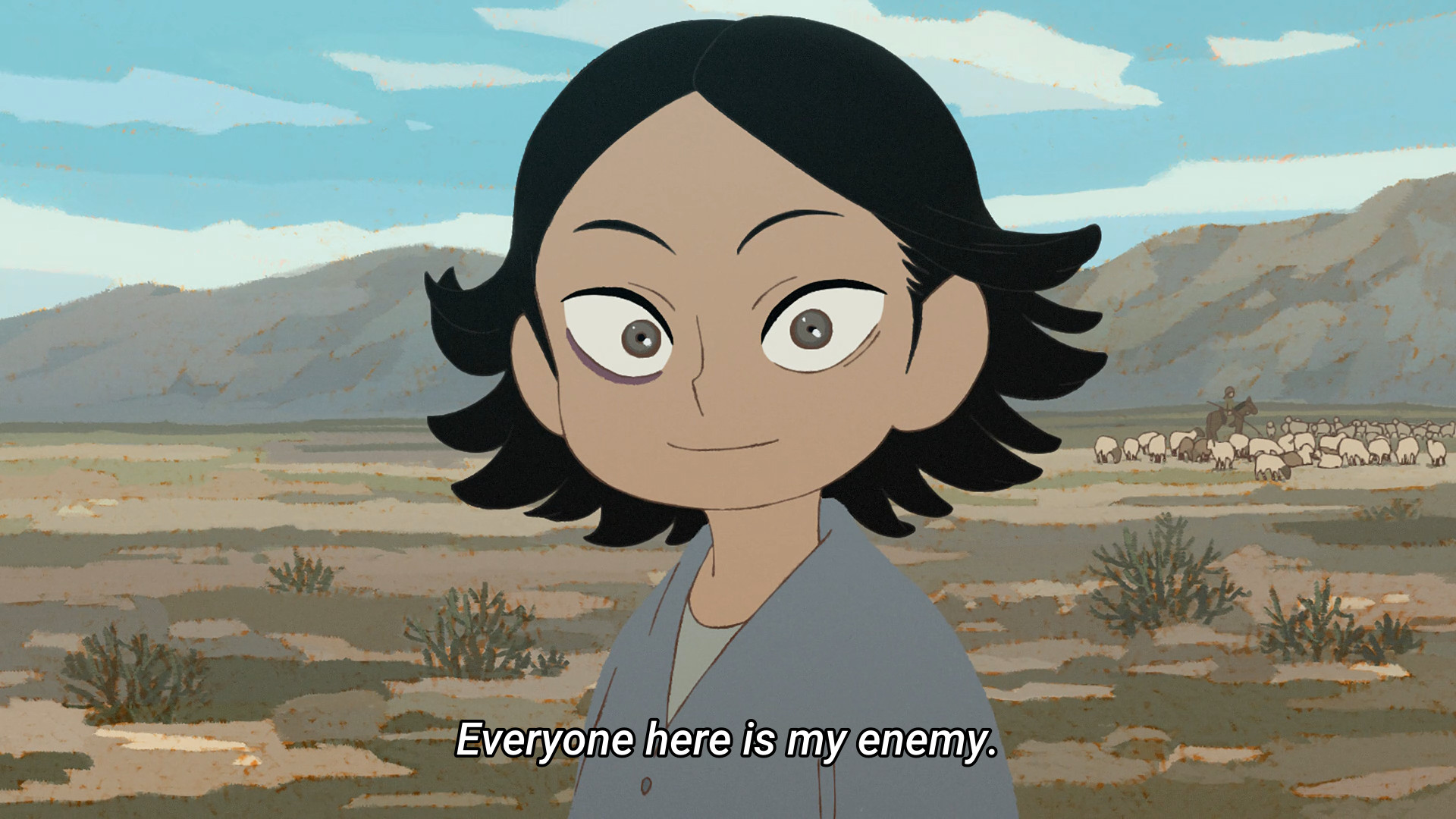

I just find the whole thing with the book a little funny. If you don’t have a clue what Euclid’s Elements is, or even who Euclid was, the name of the book might make it sound very mysterious and profound. And I suppose it is profound… if you cared about mathematics (which we arguably should). At the same time, however, the Elements really is just a textbook. It doesn’t contain the meaning of life — unless, again, your life is math.
In order to fool her future masters, Shira recommends that Sitara take on a more dignified name. I guess Sitara is a slave’s name? How can you tell? I guess I’ll just have to take the story at its word. In any case, she is now known to the Mongols as Fatima. If we’re just going by the pronunciation alone, I think Sitara sounds prettier. But eh, what do I know?
From here, Sitara uses her cleverness to observe the Mongols and decipher their way of life. For example, she realizes the trick to how the Mongols can approximate the time of day, then quickly disregards them as savages. Harsh, but they did murder her mother. We also briefly glimpse a bitter woman who does not love her husband, one of the princes. You can already tell that she and Sitara will develop some sort of kinship as the series develops. Don’t need to hit the history books for that. Nevertheless, they won’t encounter each other just yet.

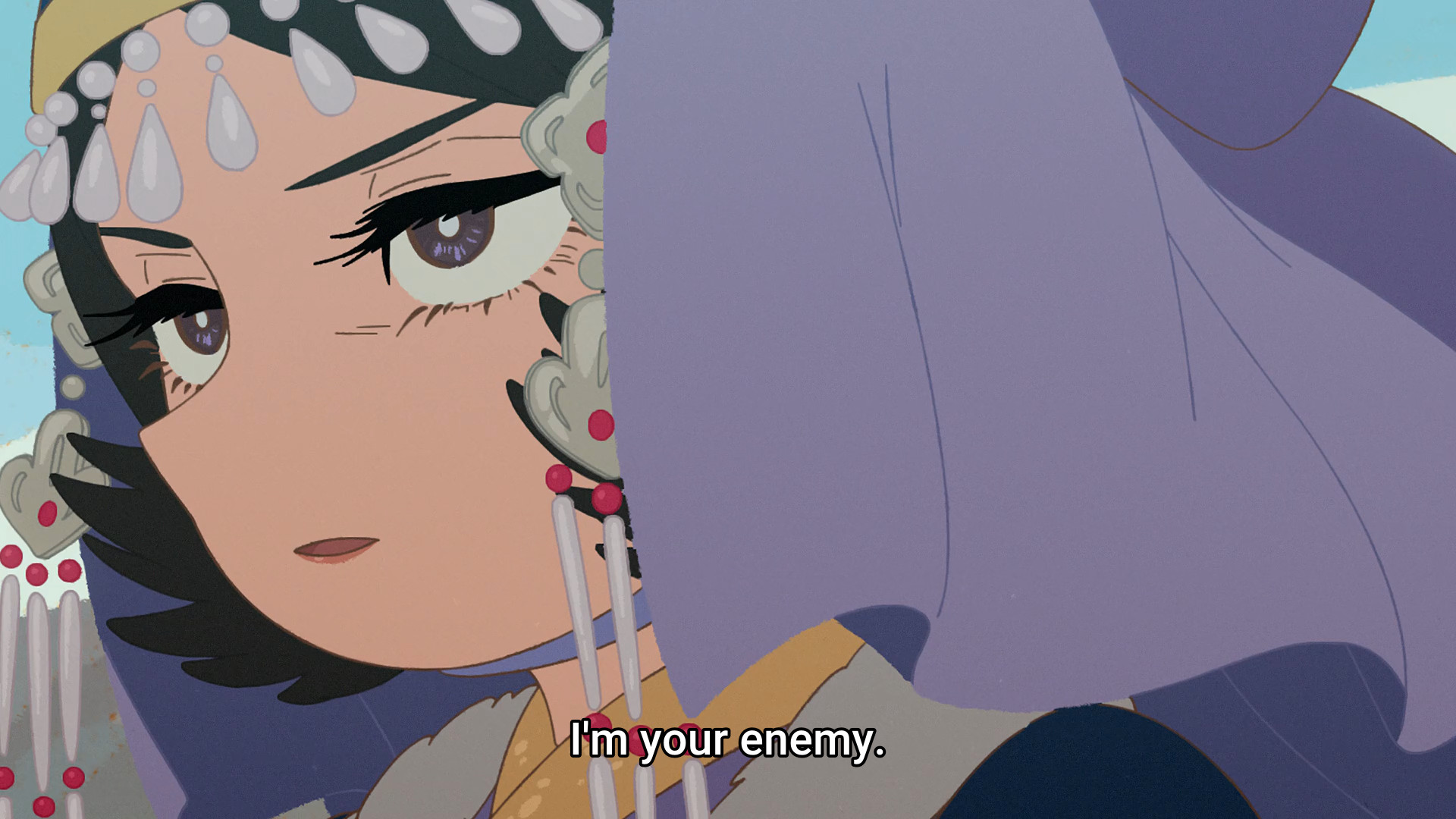
Instead, Sitara meets a supposed immortal (just a really old man), and they discuss how the eclipse looks different to people depending on where they are. It’s almost as if the world is round. Afterwards, Sitara has a chat with an Uyghur merchant that leaves her wondering what she can possibly accomplish on her own. That doubt, however, is quickly dispelled when she finally meets the woman whom she is meant to serve — the woman who is now in possession of Euclid’s Elements. Guys, it’s just a textbook…


Of course, I say this last bit with tongue firmly planted in cheek. Her mother died over this book, so the content is irrelevant. At the same time, however, there is something bitterly funny about a book on geometry setting forth a story full of bloodshed and betrayal.
One stray thought:
— A nitpick I have with this show’s artstyle is that the adults can often look like children or vice versa. These are the princes, so I suppose they’re not super old like the bearded soldiers with bags under their eyes. Nevertheless, I can’t really tell how old the princes are supposed to be.
