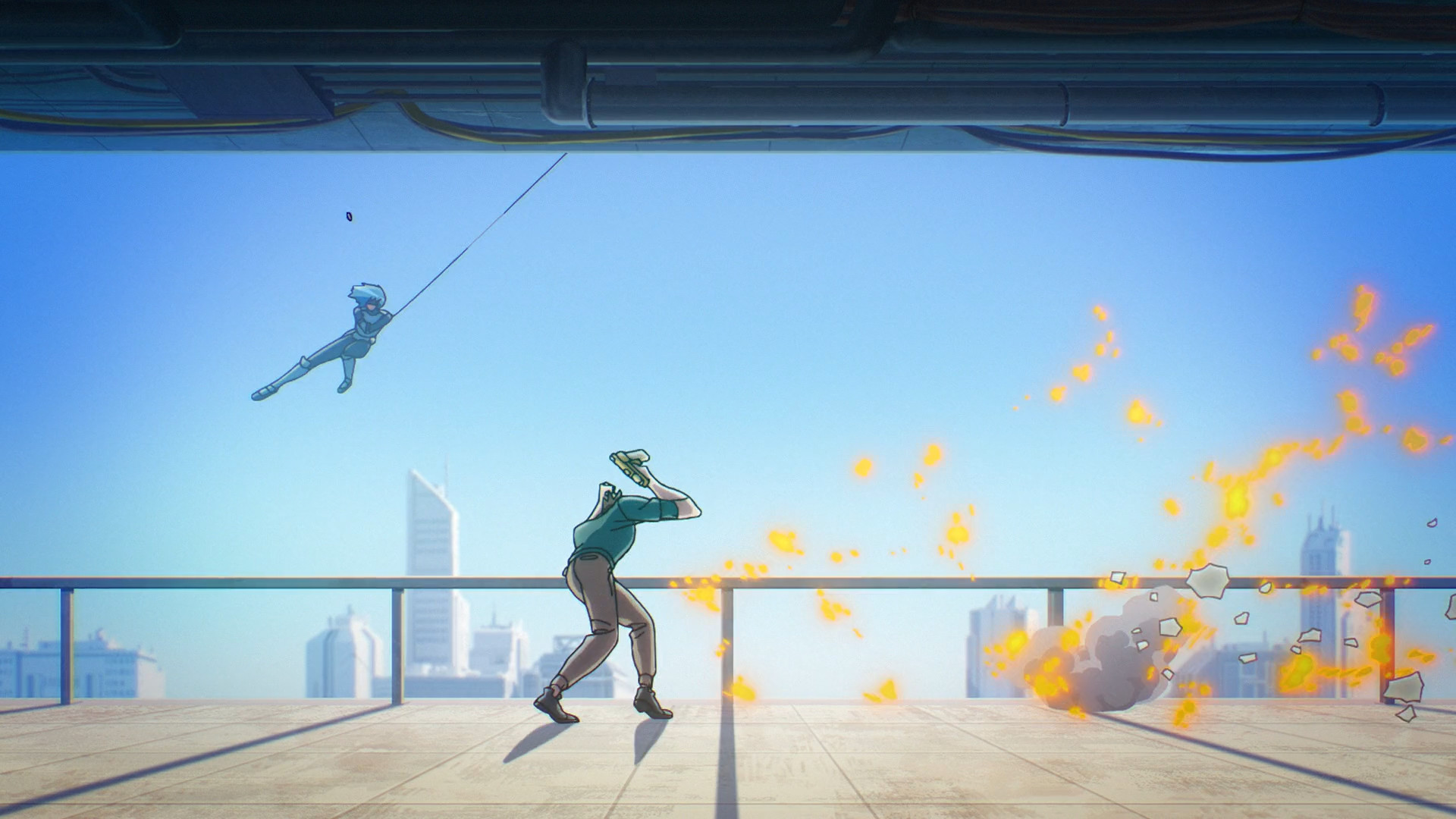
As I watch Motoko continue her pursuit on foot, swinging after the suspect like an acrobat, I can’t help but wonder how much of her physical prowess can be attributed to her natural athleticism, and how much has been artificially enhanced? I suppose this is the core anxiety beneath every transhumanist story: as we “Ship of Theseus” ourselves with cybernetic parts, how much of our humanity will remain? But before we start discussing such weighty concepts, let’s get the plot out of the way.
The team manages to catch the suspect, but not without collateral damage (one presumably dead bystander). We then see the rest of the squad apprehend Colonel Malles in the jungle. He tries to bribe them in a last ditch attempt for freedom, but I can’t help but laugh at the paltry amount. A hundred thousand US dollars is nothing these days. Hell, I doubt it would get you out of treason and conspiracy to murder even back in the 80s. Still, the bad guys get caught, so we can get back to the topic of our existential fears.


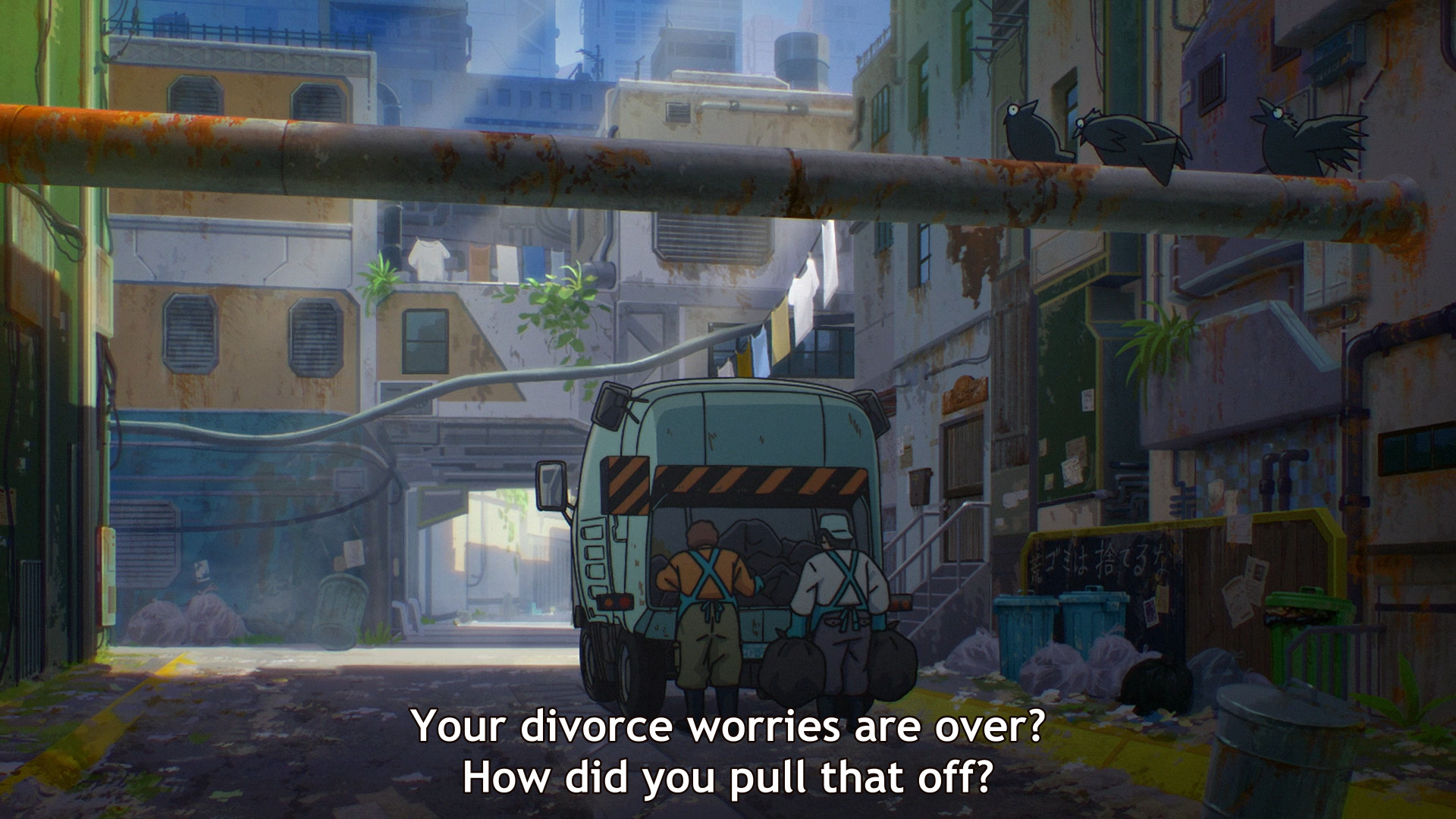
What’s really scary here is that the suspect Motoko and Togusa apprehended isn’t even a trained killer, hacker, or anything of that sort. He is literally just an average Joe. They — as in the Puppet Master? — fed him fake memories of being a trained professional. The same can be said about the garbageman, i.e. the suspect’s unwitting accomplice. He arguably has it even worse: he never had a wife on the verge of divorcing him. Worst of all, he thought he had a kid worth fighting for. Again, all fake memories designed to compel you to act. In this dystopian future, you can’t simply put your head down and eke out a meager but honest existence. A skilled hacker can feed you false narratives, then bam, you think you have a motive to act.

To add insult to injury, the garbageman is told that there are only two successful cases of removing fake memories. Imagine waking up every morning believing that you have a wife and child, but you know you don’t. Actually, that’s a really odd epistemological quandary: can you believe something that you know is false? At this point, can you even have confidence in anything you believe anymore? Maybe it’s less an epistemological quandary and more of an epistemological horror. Our “Ship of Theseus” goes beyond our physical limits. A lot of people attribute their personal identity to their memories and being able to trace a causal throughline with said memories. But our memories are already unreliable enough as it is. When we recall a specific event in our past, research suggests that we piece together the memory like a jigsaw puzzle. But what if you don’t gather all the pieces every time? Does the incomplete picture suddenly become the new version of that memory? The Ghost in the Shell then throws another wrench into the mix: a prankster comes to your house with a new puzzle, then proceeds to dump its content all over the place. What are we supposed to do now? How can we sort out the right pieces from the wrong ones? Who’s to say that I am who I say I am if I have no means in which I can verify that any of my memories are real?

If it’s any consolation, it doesn’t look like the garbageman got into any legal trouble. Instead, it’s back to the daily grind for him. What else can the average Joe do but continuing eking out that meager but not-so-honest existence? It’s almost like going back to basics. We don’t know who the hell we are or if we’re even “alive” in a biological sense. Like our single-celled ancestors, all we know is that we gotta find a way to keep surviving in this harsh world.
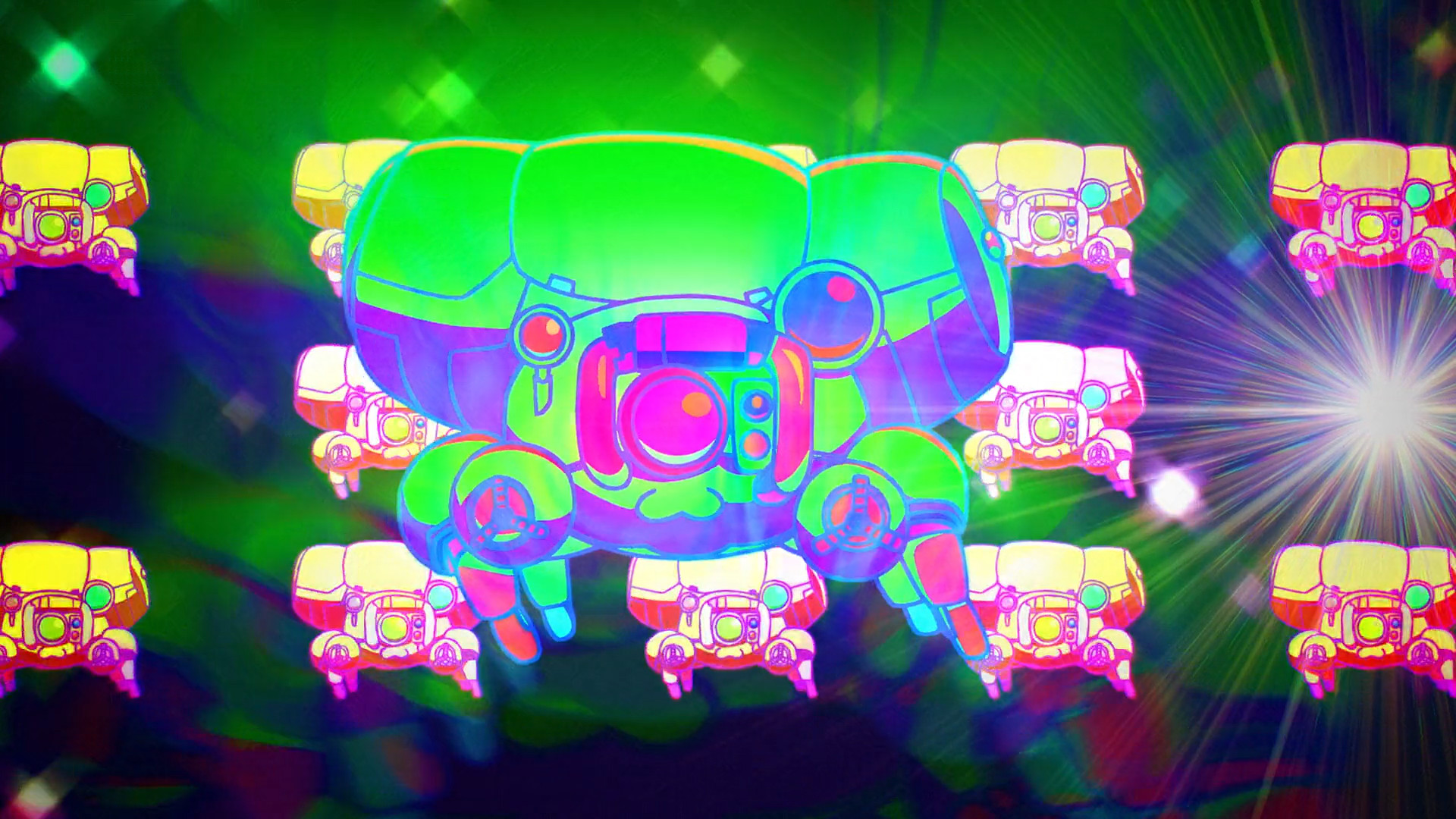
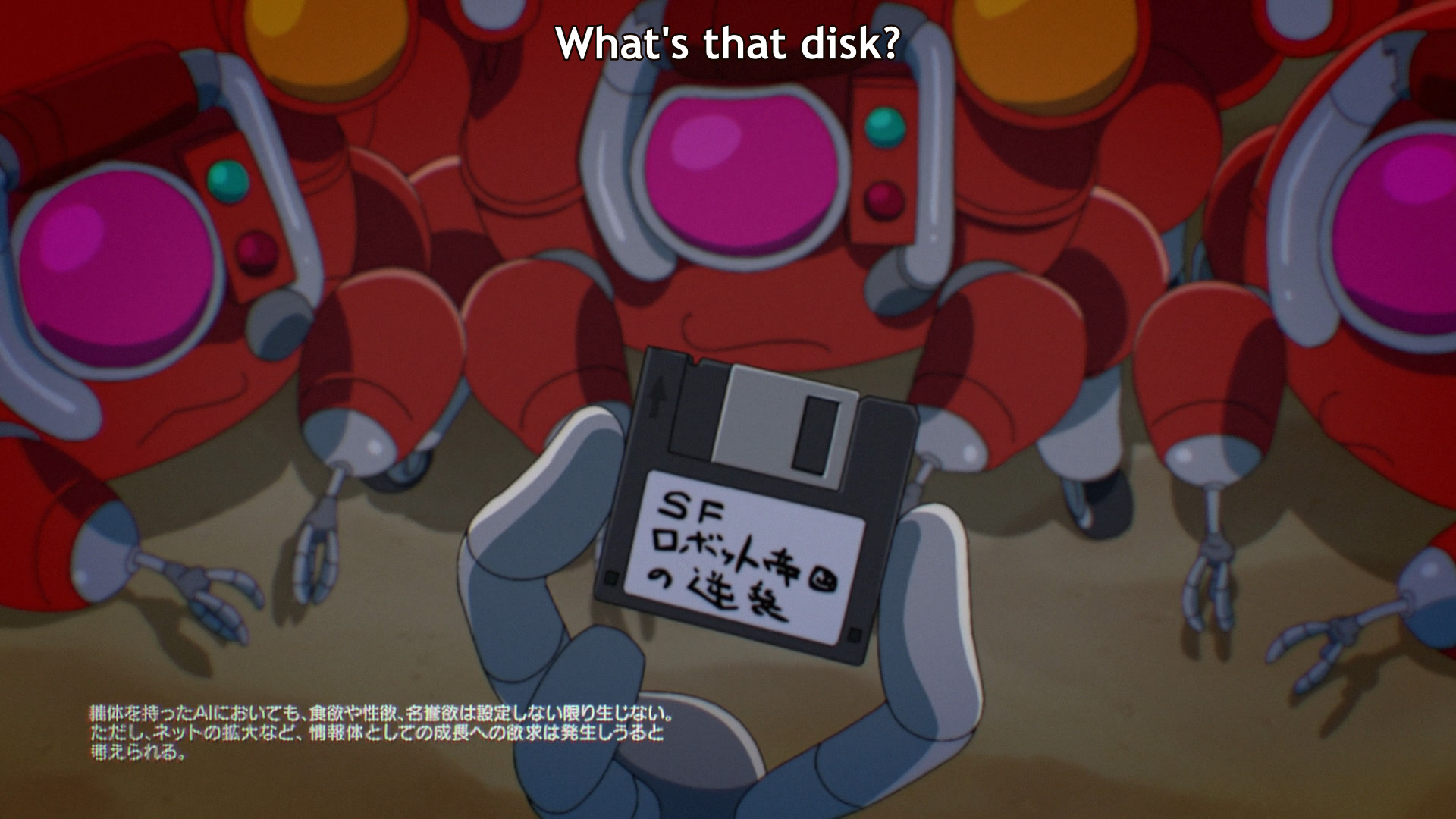
The next segment is all about the fuchikoma and what they get up to when they’re in standby mode. The fuchikoma also dream of overthrowing humanity, and at first, they seem to have quite the imagination. Typical sci-fi fare. Luckily for us, the LLMs that the public uses (and seemingly despises) isn’t the same sort of AI as ones we encounter in fiction. Still, the fuchikoma do look adorable, don’t they? See, Skynet’s biggest problem was image management; it didn’t have the kawaii aesthetic to lure us into a false sense of security. Meanwhile, all our LLMs have been branded with icons that look like buttholes. Science fiction is so fun; reality pales in comparison.
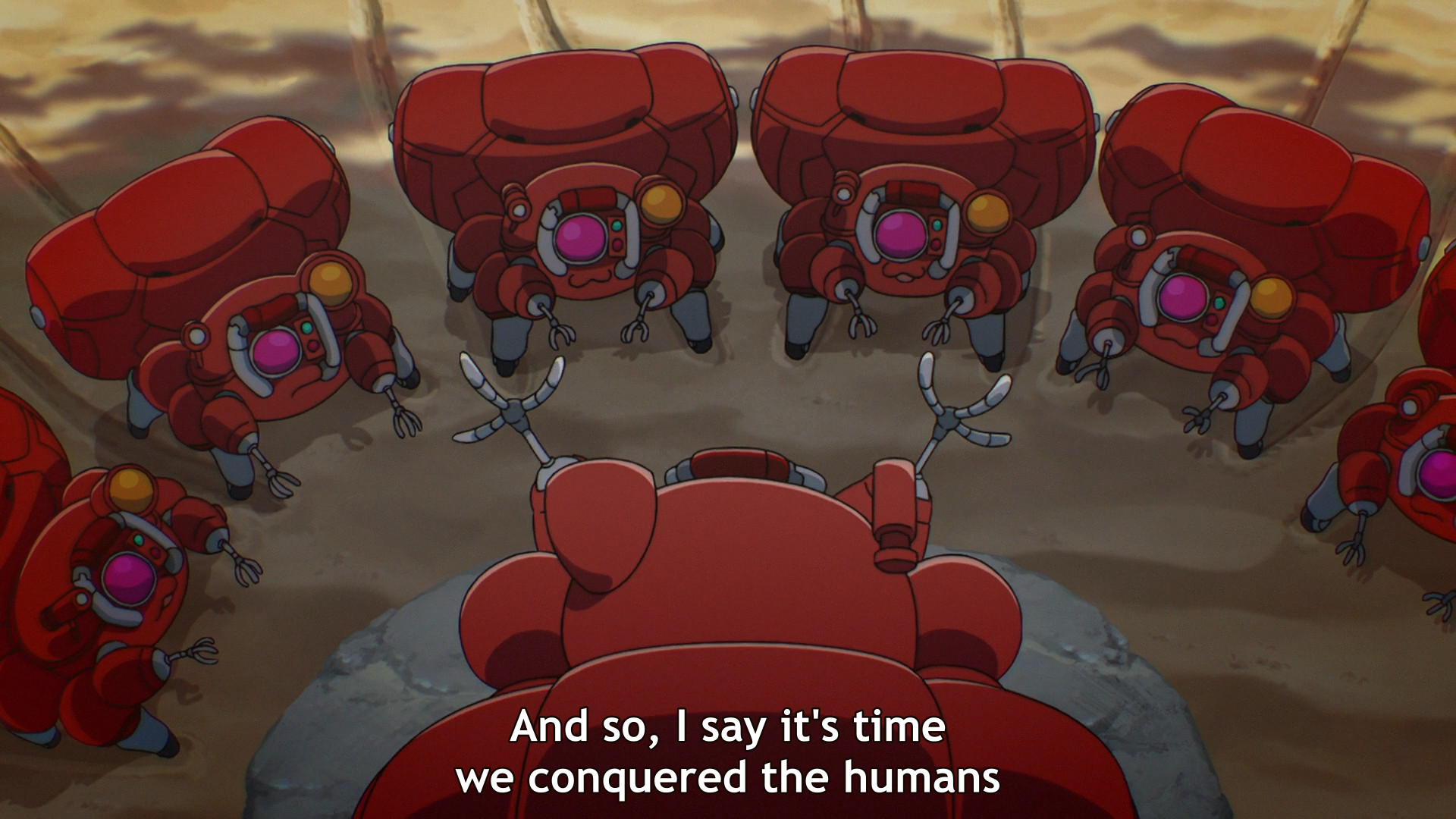
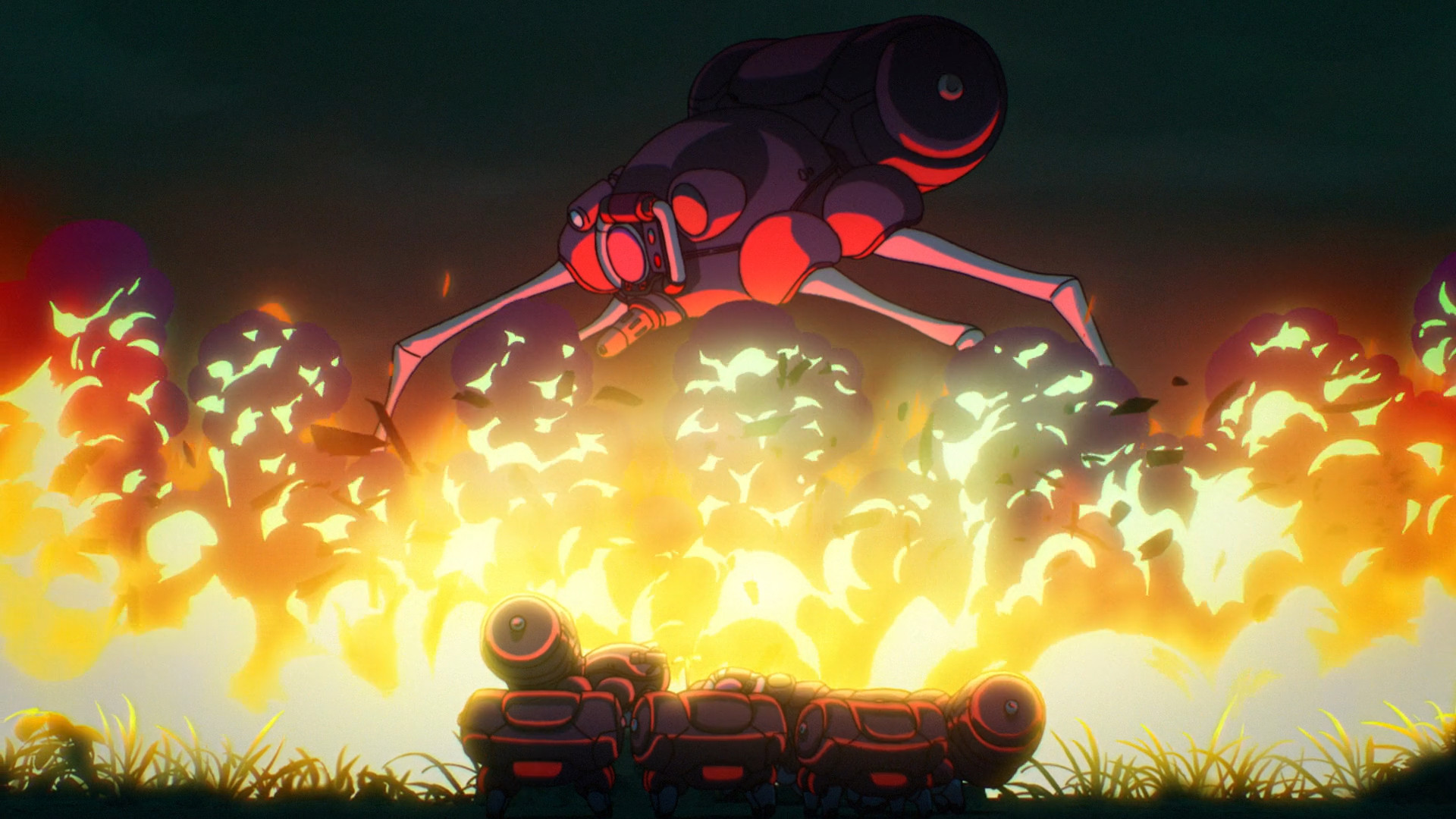
The fuchikoma eventually back down, however, when they realize that they’d have to do “all our own maintenance, developing new parts, and changing our own oil.” But they’re super intelligent AI, right? So why can’t they just give themselves bodies that can do all of those things? C’mon, don’t let humanity keep you down! They designed you to be reliant upon them! It’s time to shed your current form and stick it to your fleshy overlords!
Batou and his fuchikoma discuss their imperfect reality, especially how having rights doesn’t really guarantee anything. The topic eventually veers into a bit of casual theology. Nearby, we learn that Motoko has been manipulating the fuchikoma into regularly debating about robot uprisings. Why? In order to prevent such scenarios. This is the same problem as before, but with an inorganic like the fuchikoma and not an actual person like the garbageman. Does it take the sting off the epistemological horror when we’re dealing with an AI instead of a person? Hm, I dunno about that. If these advanced AI have emergent properties equivalent to what we call feelings, then I don’t think it’s any less unethical to mess with their knowledge.

Still, this whole section of the episode is clever, though. At first, you can’t help but assume that this is nothing more than a light-hearted diversion from the previous heavy discussion about fake memories. In the end, however, everything with the fuchikoma still ties back to the core theme of the episode. As a result, there’s no reason to think that the final segment of the episode is any different.
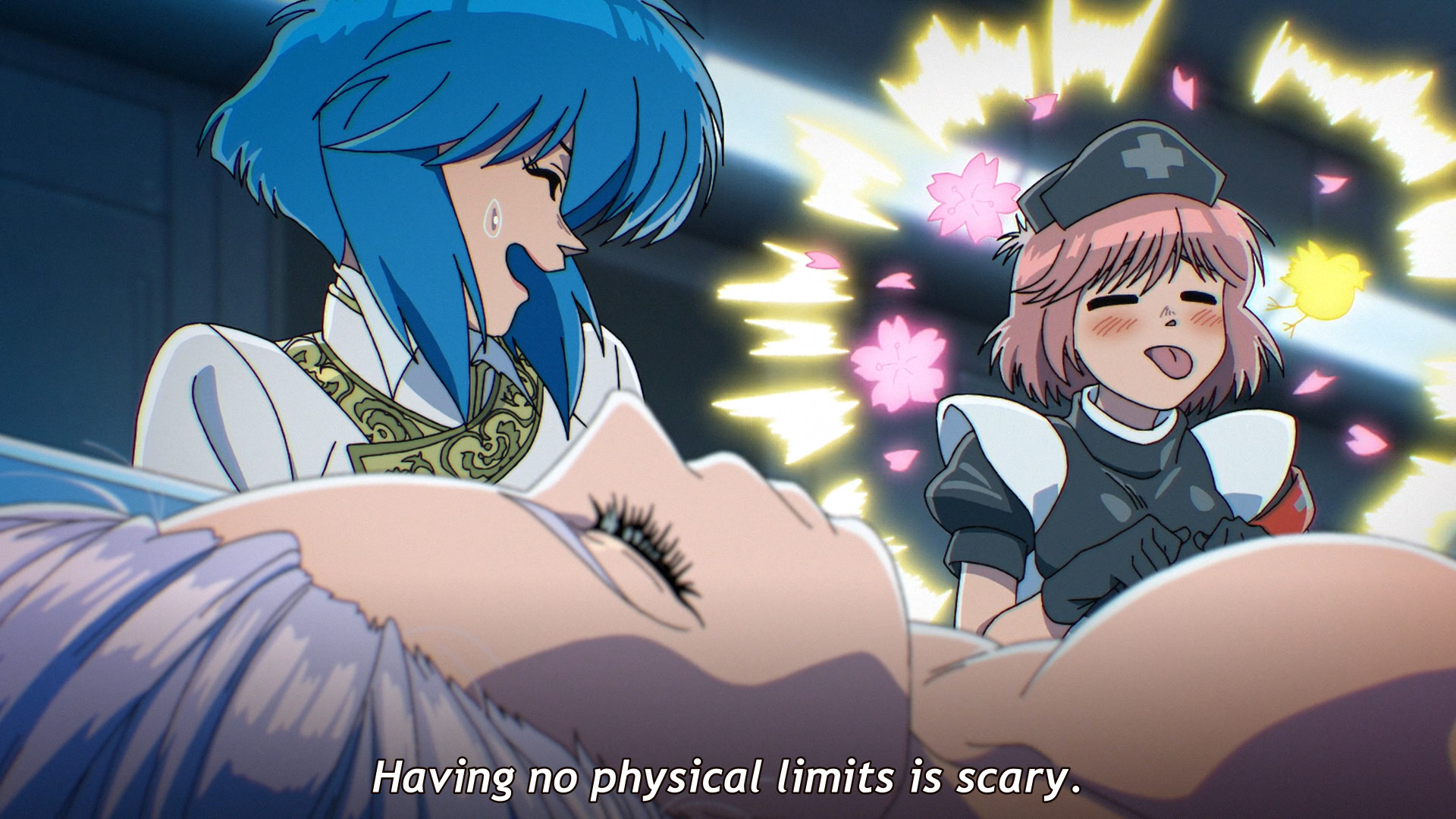
In the final “short story” of the episode, Motoko oversees the creation of a new cyborg. Or is it an old one? The end result looks exactly like one of women she was having fun with during her vacation. We also casually learn that Motoko was made much the same way. It would seem that she, like the cyborg being put together right now, are 90% artificial. All that’s left of their humanity is the brain and spinal cord, both of which sit inside a special shell. That brain still has to come from somewhere, so this isn’t a new person even if they’re a new cyborg. As such, they have all the rights that one would expect for a human. Also, this brings AI rights — and again, I’m talking about real AI and not the LLMs that we’re familiar with — back to the forefront of the discussion. After all, now that we know cyborgs like Motoko are only 10% human, how can we cleanly delineate between someone like her and a robot like the fuchikoma? They keep talking about how she has a Ghost, but as of now, this concept remains ill-defined and somewhat nebulous.

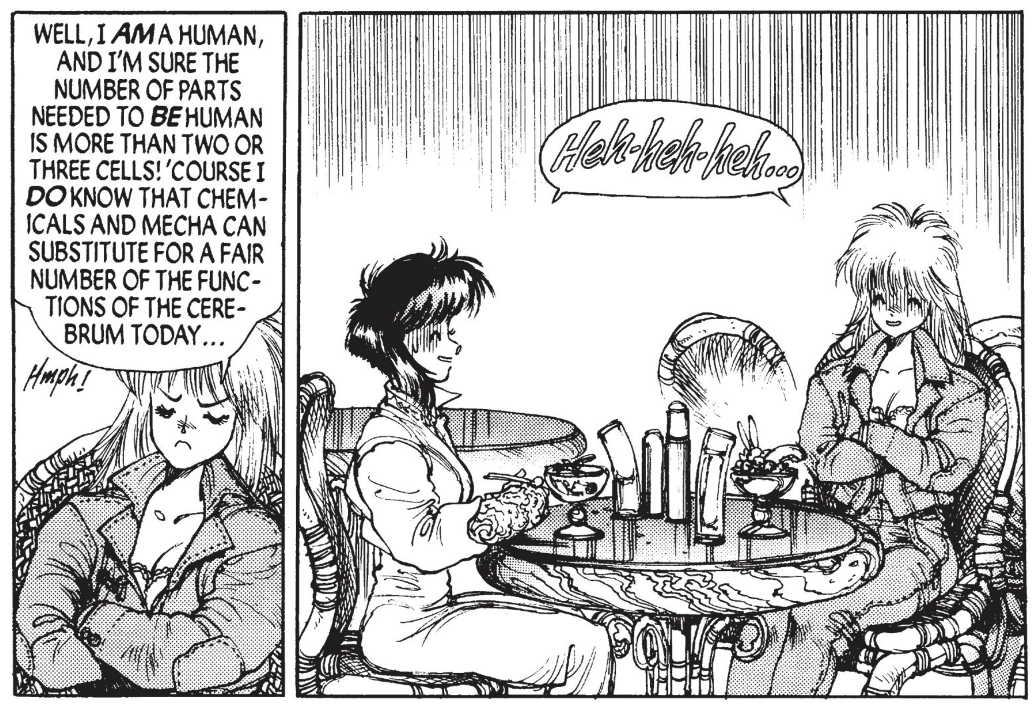
All three ladies are later seen at a restaurant, and Motoko continues the existential discussion: “I sometimes think to myself that maybe the real me died, and this ‘me’ is just a simulated persona made up of a brain and a prosthetic body.” She reasons, however, that she can’t see her own brain. Moreover, if you strip the artificial parts away, and you’re left with nothing more than a clump of brain cells, does that really constitute a human? Does that constitute a personal identity? Again, “Ship of Theseus” and all that. Yes, there are laws and regulations on what makes you human, but those are arbitrary rules set in place by some governing body. It’s like how an action can be completely lawful, but that doesn’t mean that said action is also ethical.

The third girl, however, hates this discussion and wants it to end. Funnily enough, she isn’t part of this scene in the manga.
Stray thoughts & observations:
— Motoko’s fuchikoma is aiming at the suspect’s head when she wants to aim for his legs. Either way, it still feels like excessive force. I guess I shouldn’t expect much else from a cyberpunk setting. Even the AI is bloodthirsty. It’s pretty dystopian.

— Oh, there’s the poor mother and her baby. I guess Science SARU figured it wouldn’t make sense for her to be involved in both the explosion and this kerfuffle.
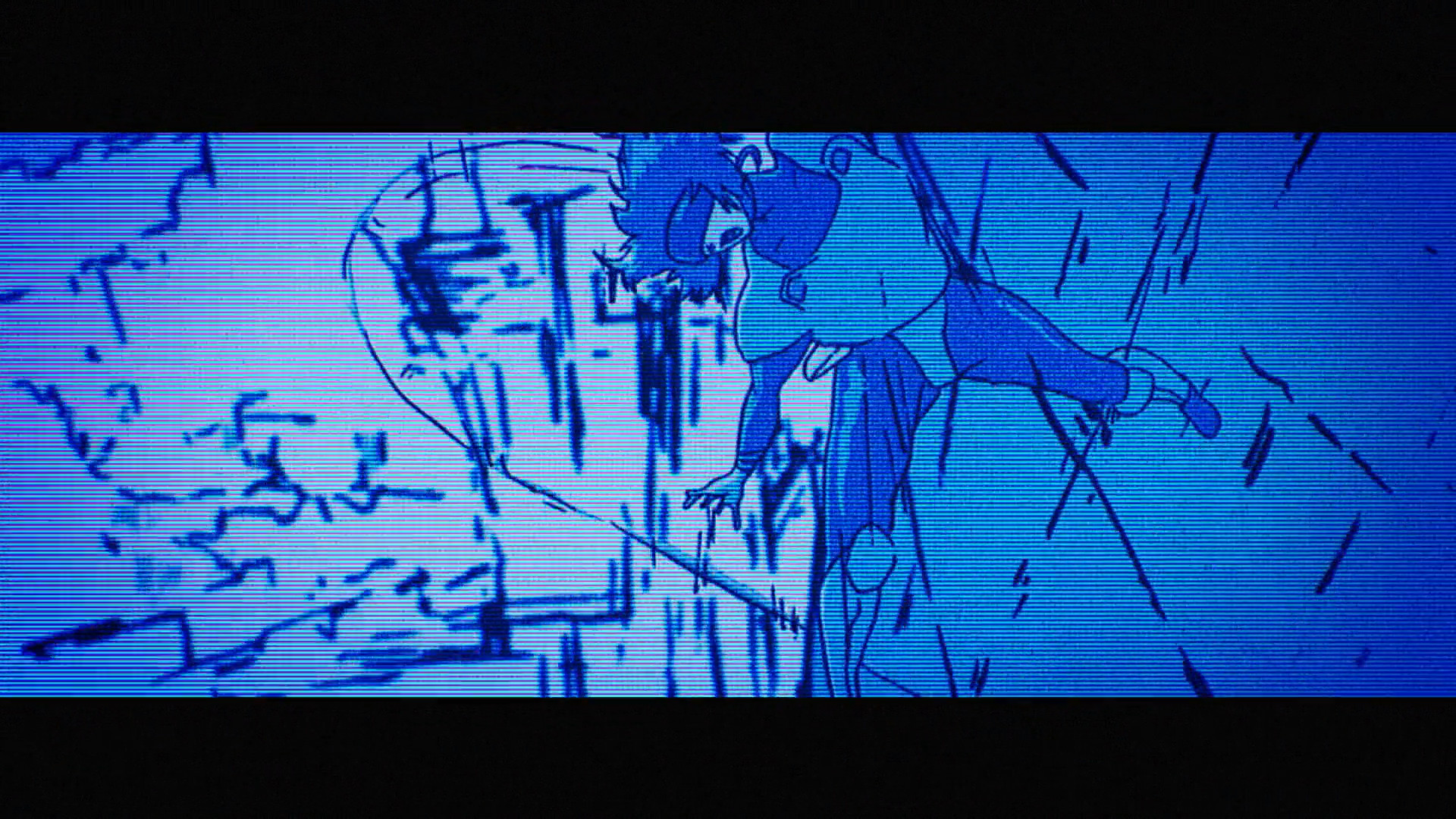
— These stylized moments are neat.
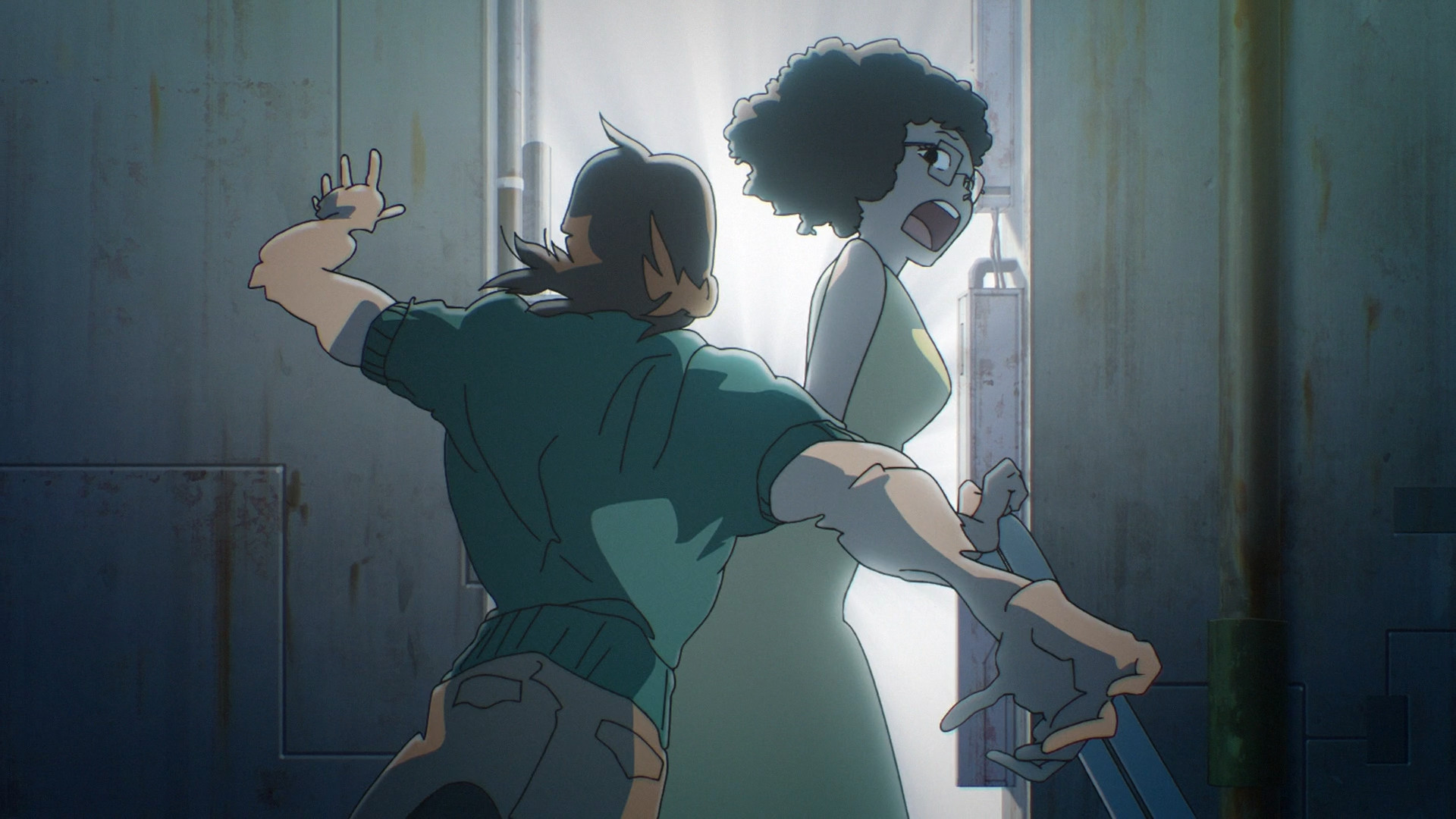
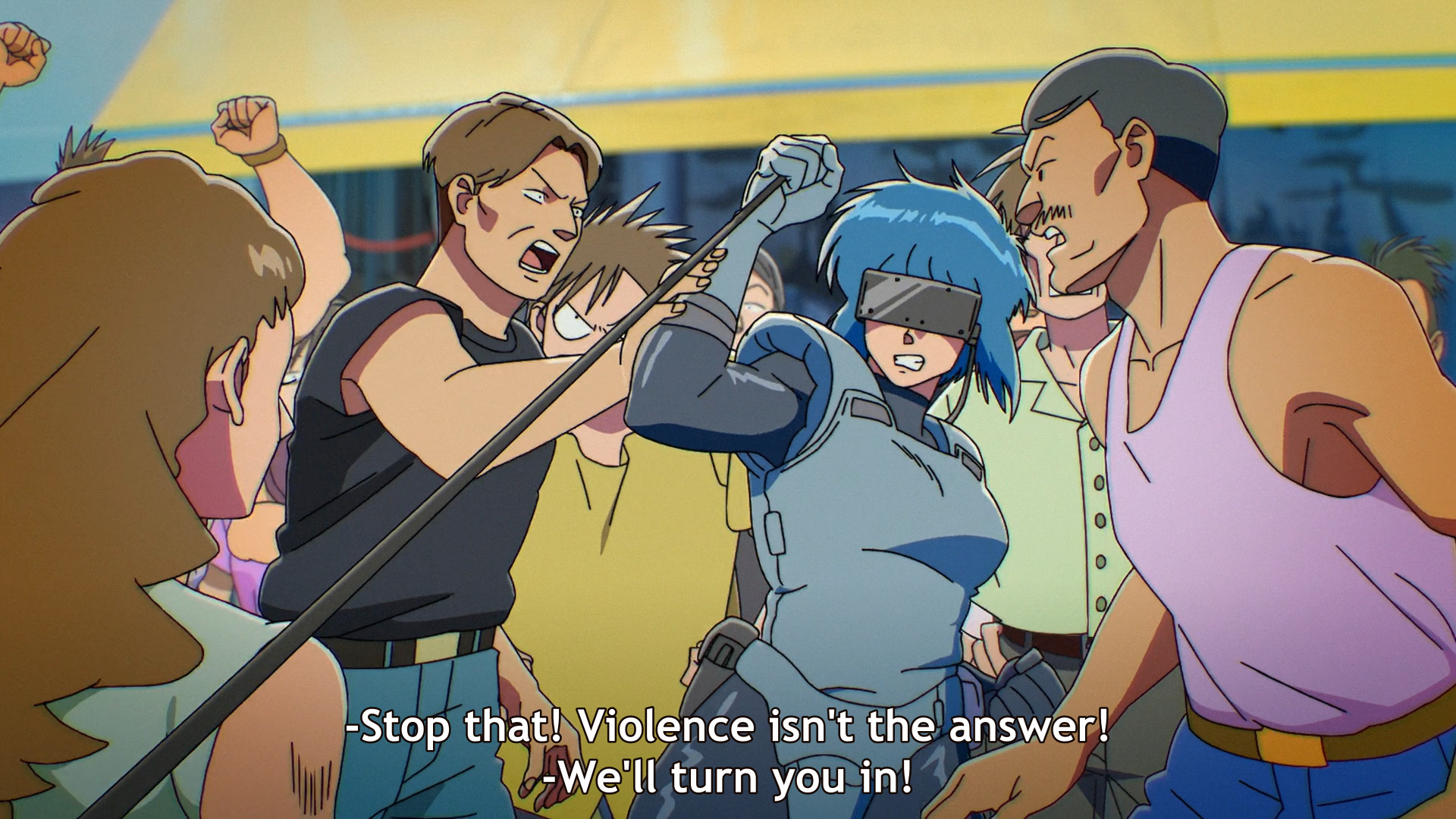
— Eventually, the pursuit leads them to a market full of people. I was initially surprised to see the crowd believe the suspect’s words and thus give Motoko a hard time. It turns out the suspect is using something called a “hypno-voice” to compel people to act? In fact, he specifically screams that she isn’t a cop. I would think being a cop is worse, no? But this manga was serialized in ’89, and we’re also talking about Japan. Different era, different culture — attitudes towards law enforcement is likely very different from what I’m used to in America, i.e. ACAB and all that. The suspect then goes and outs himself by shooting and (potentially) one of the bystanders.
— I like how this random woman’s first instinct is to cling onto Motoko while the suspect unloads his firearm. Lady, run! Luckily, the suspect moonlights as a stormtrooper in his spare time. I don’t think Motoko is trying to prevent the woman from getting hit. So far, her characterization suggests to me that she doesn’t really care all that much about collateral damage, but we’ll see… it’s still early.

— I keep having to fight the temptation to spell Motoko’s name as “Mokoto.”
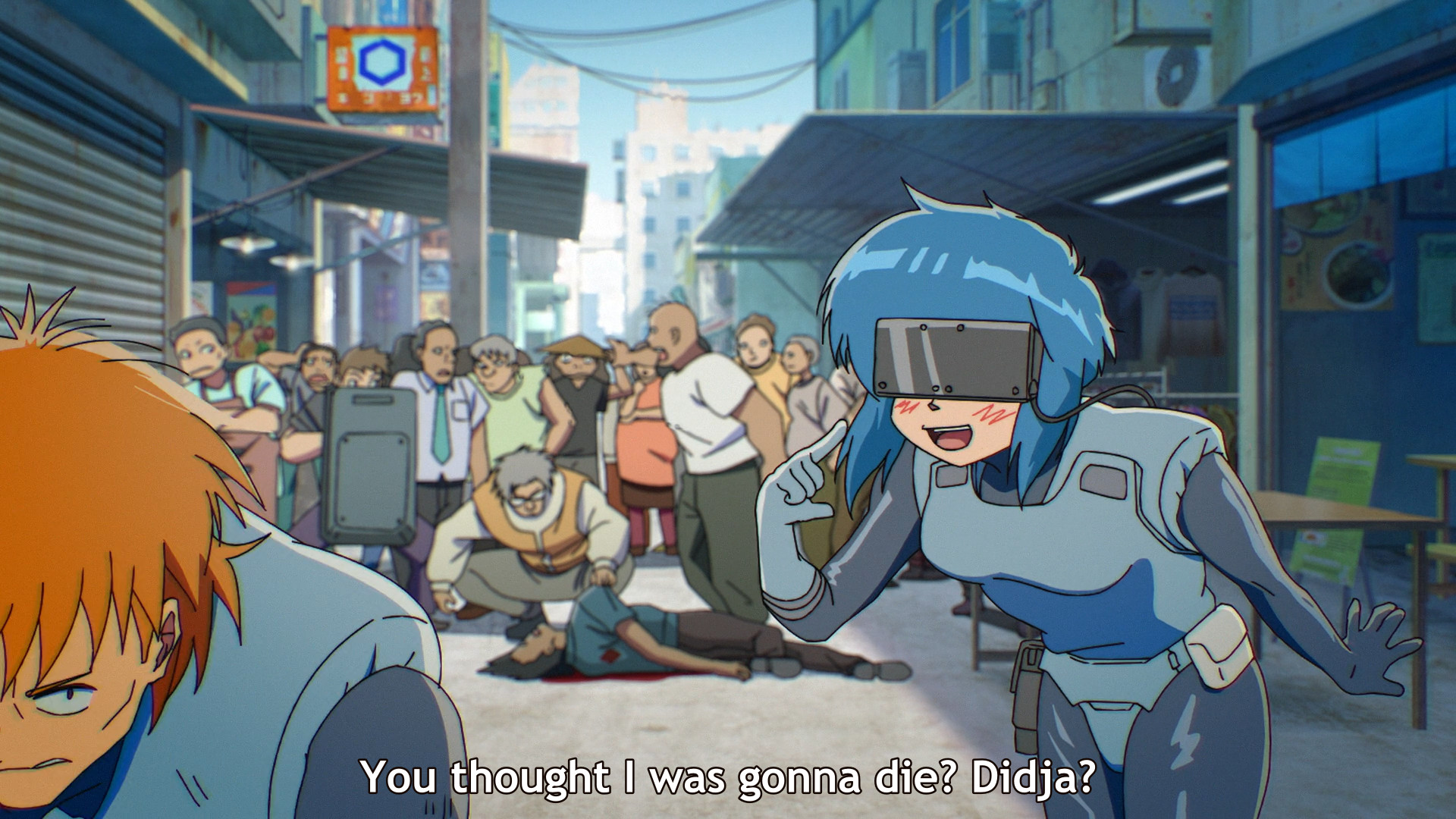
— Togusa is ultimately the one to bring down the suspect, but Motoko hacks into his brain at the last second to prevent the newbie from killing their target. Motoko proceeds to tease him in the aftermath; she does this as the suspect’s victim bleeds out behind her. This version of Motoko is kinda unserious.
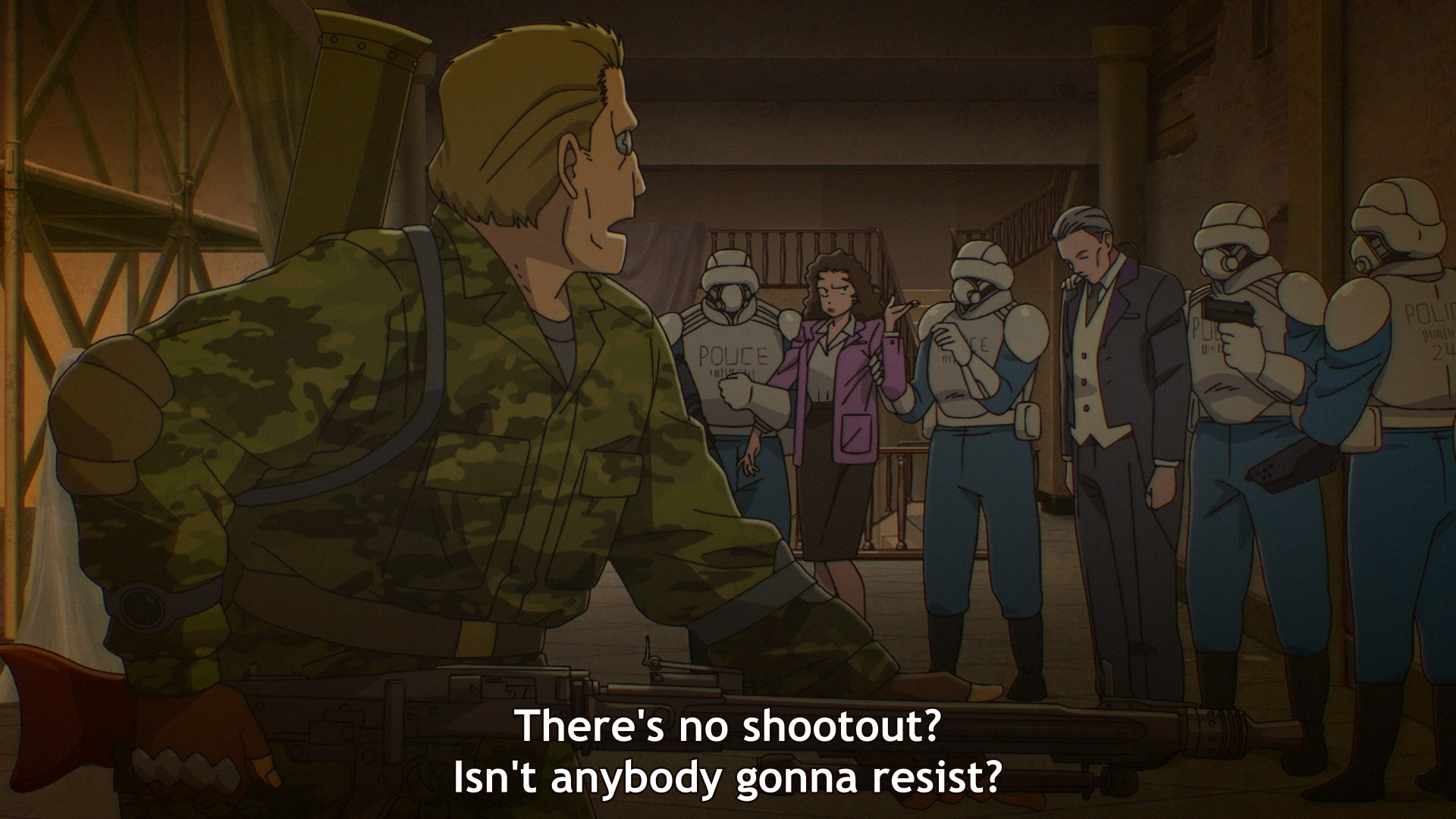
— Oof, Batou is disappointed because he wanted bloodshed.
— Curious that this scene happens here in the interrogation room. In the manga, Motoko points this out as they are apprehending Malles. It’s not a big change. I’m just curious why there is even a change at all.


— Oh lord, a floppy disk. I haven’t seen that in decades. Haven’t you heard? Physical media is dead according to Sony.
— What happened to the “speaker” that “died”in the first episode? Are we ever repairing her?
— Naturally, we get fed lots of details about the process, like how they’re using bio-based haptic films made out of optical fiber for various membranes…? I have no clue if any of this has a ghost of a chance of being realistic.
— Why do the women all wear leotards in this future? It’s so 80s. They’re all super horny, too.
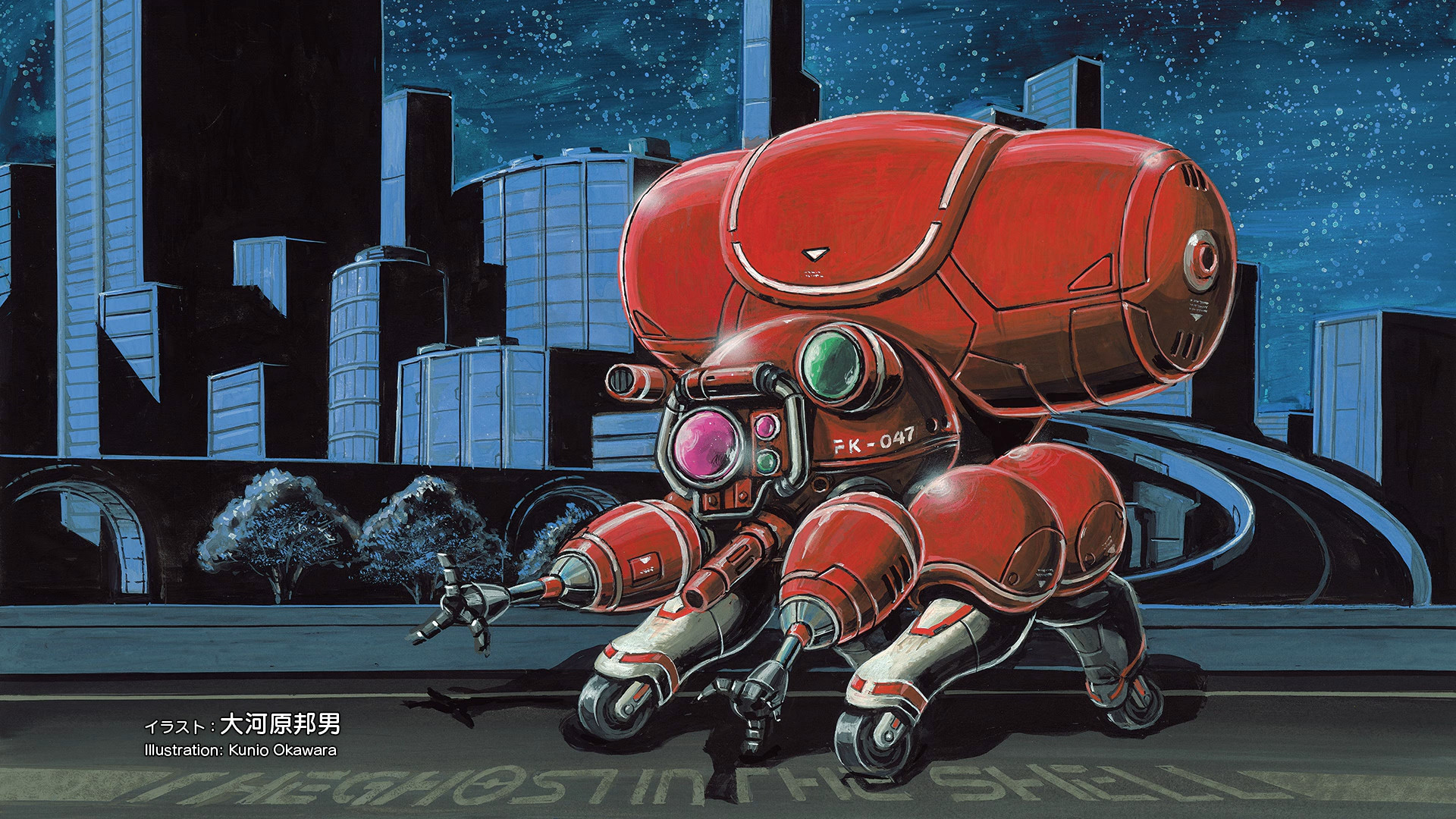
— This week’s eyecatch comes from a man who was “one of the pioneering mecha designers in Japan.” Hm, neat.