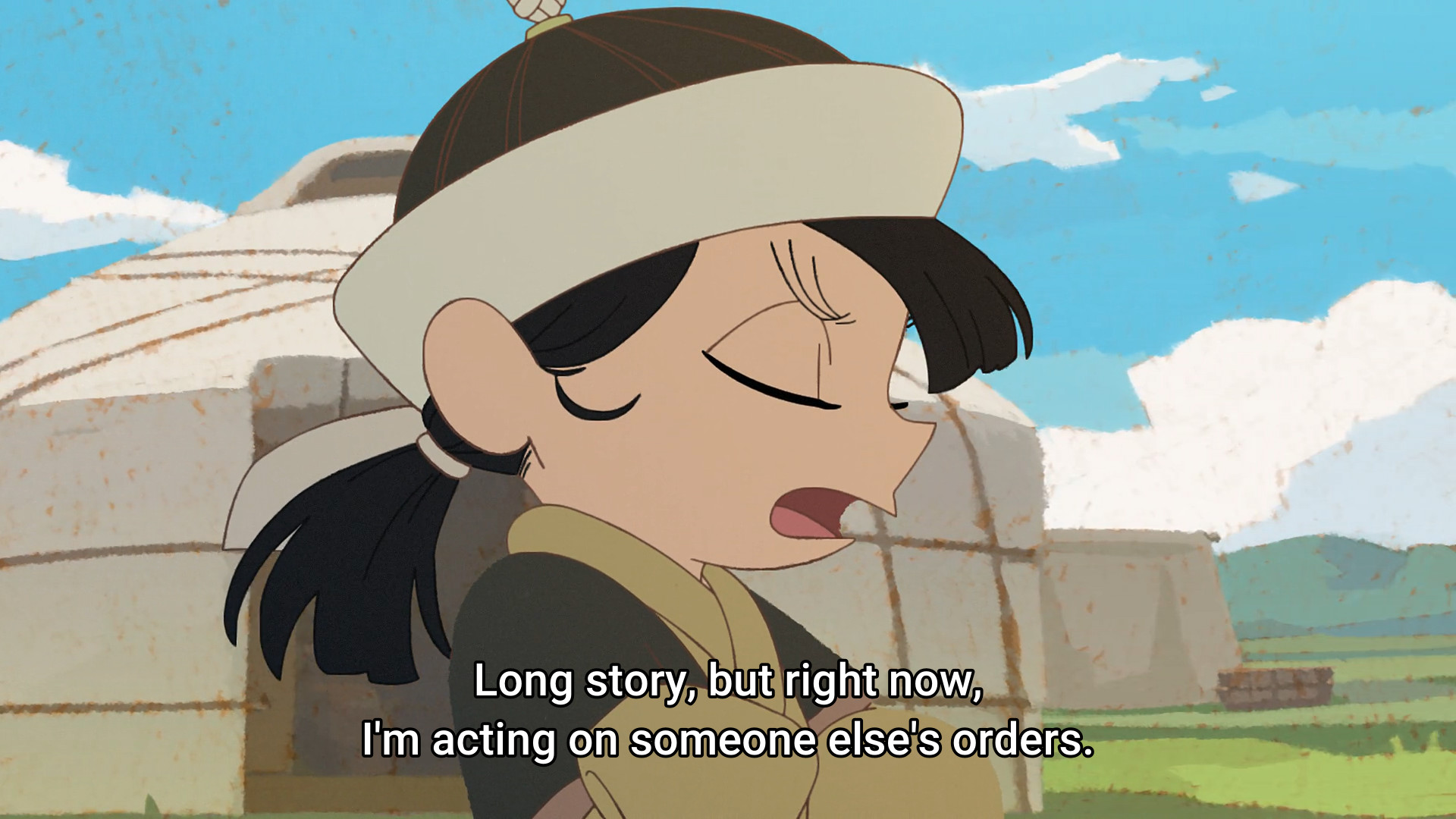
Sitara desires justice for her family, but should it come at all cost? But to explore that question further, we need to set the stage. The Mongols hold a meeting to “discuss matters of future policy.” Ogedei wants to take a different tack from what they normally do; he wants to build a capital. Naturally, this comes as a shock to everyone in attendance. The Mongols are nomadic people, after all. Not only that, they’ve long made a name for themselves through military exploits. But instead of subjugation through force, Ogedei would rather do so through wealth.
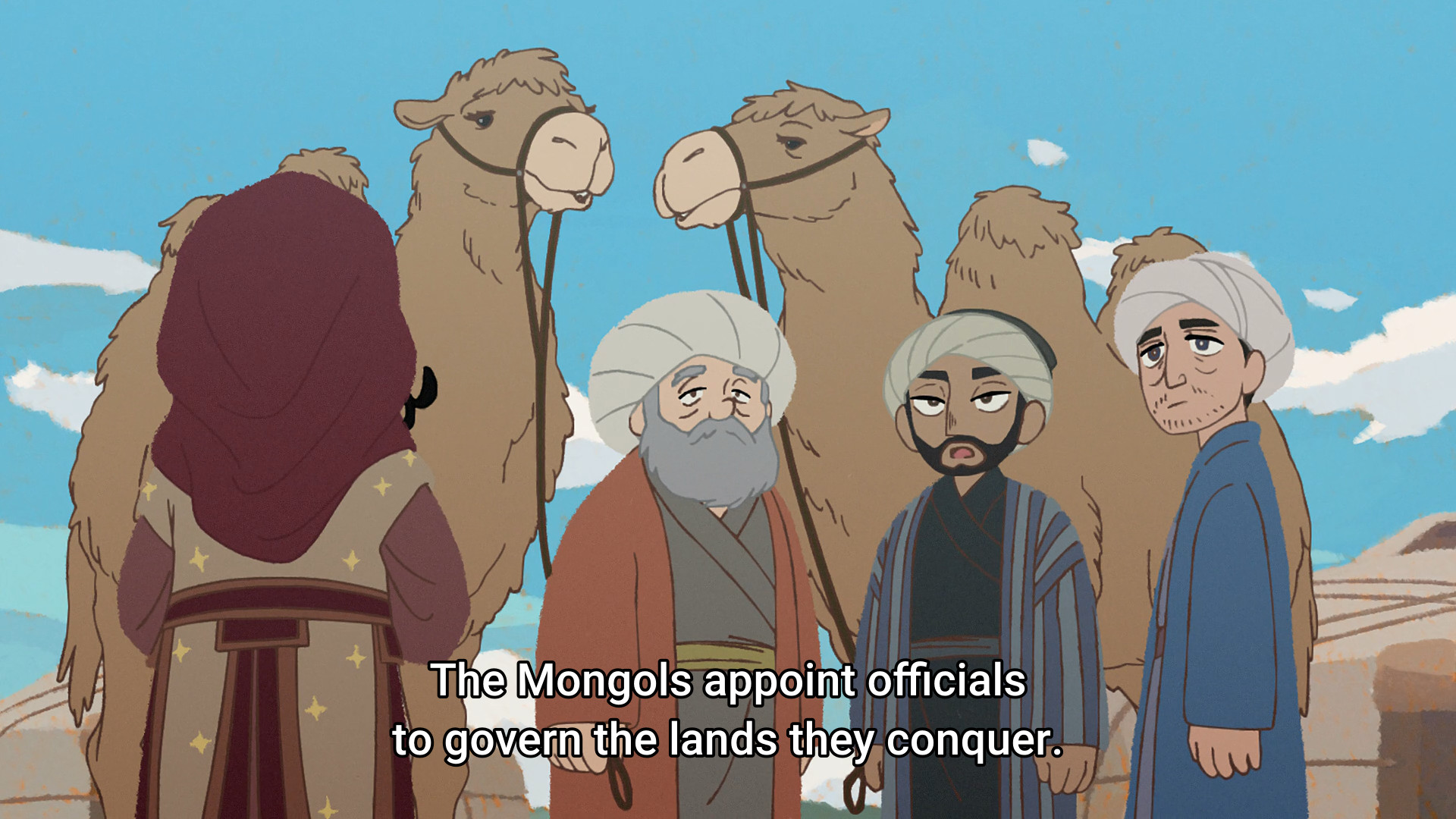
Near the end of the episode, we see a merchant from Khorasan pay tribute to the Great Kha’an by offering up a pair of exquisite earrings. Nevermind the fact that said earrings once belonged to Moge, one of Ogedei’s many wives. What actually matters is how the merchant and others like him are more than willing to bend the knee to a conqueror — their conqueror — just for a bit of coin — a reality that comes to Sitara’s great shock. Yes, the Mongols killed so many people in their campaigns, but they’ve also made it safer for merchants and traders to travel across the vast continent. By no means am I implying that this is a fair trade. My point is, winning wars is just the start. You keep a chokehold on the masses by exploiting their greed, and perhaps this is what Ogedei aims to achieve with his great capital.

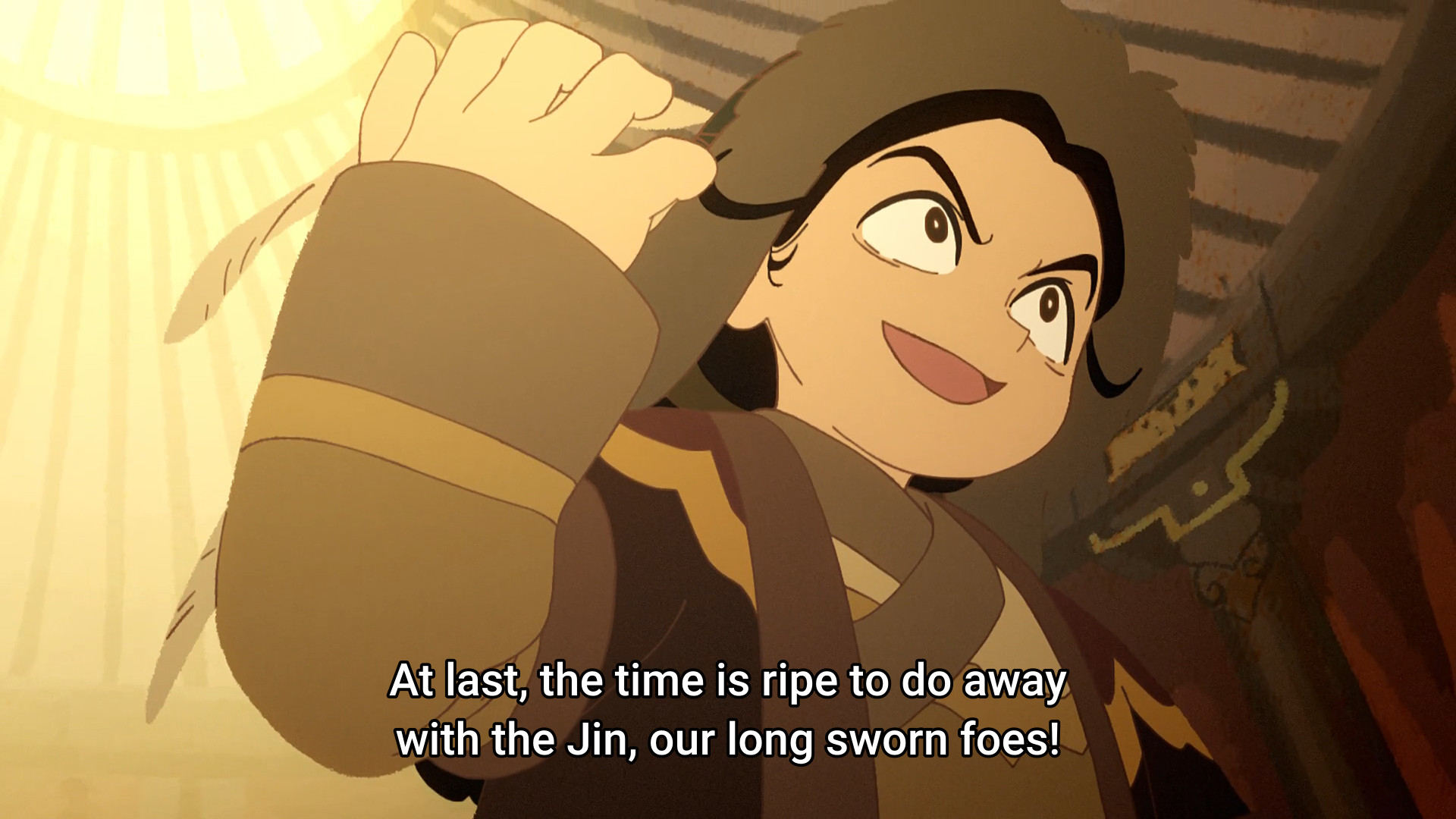
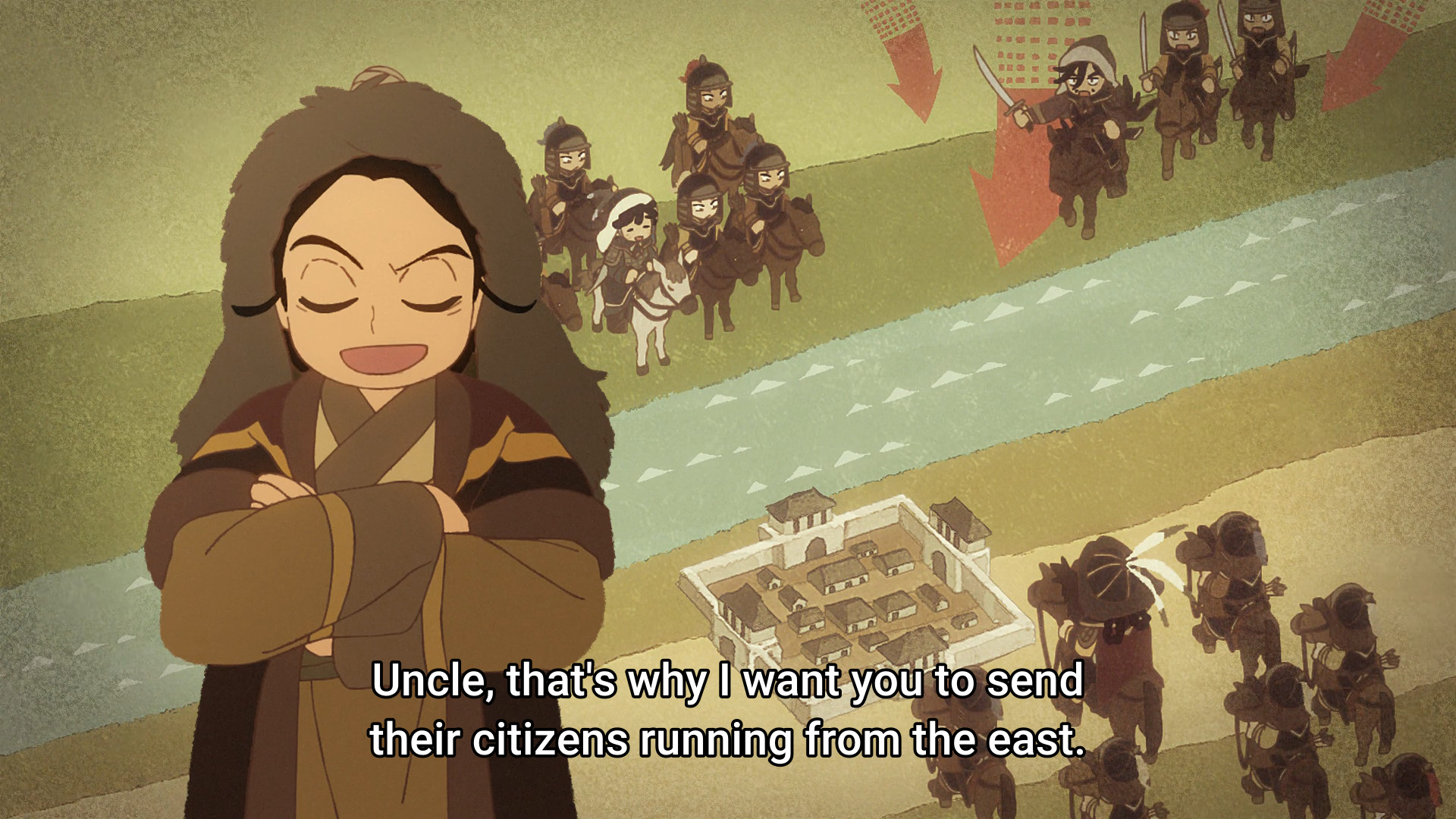
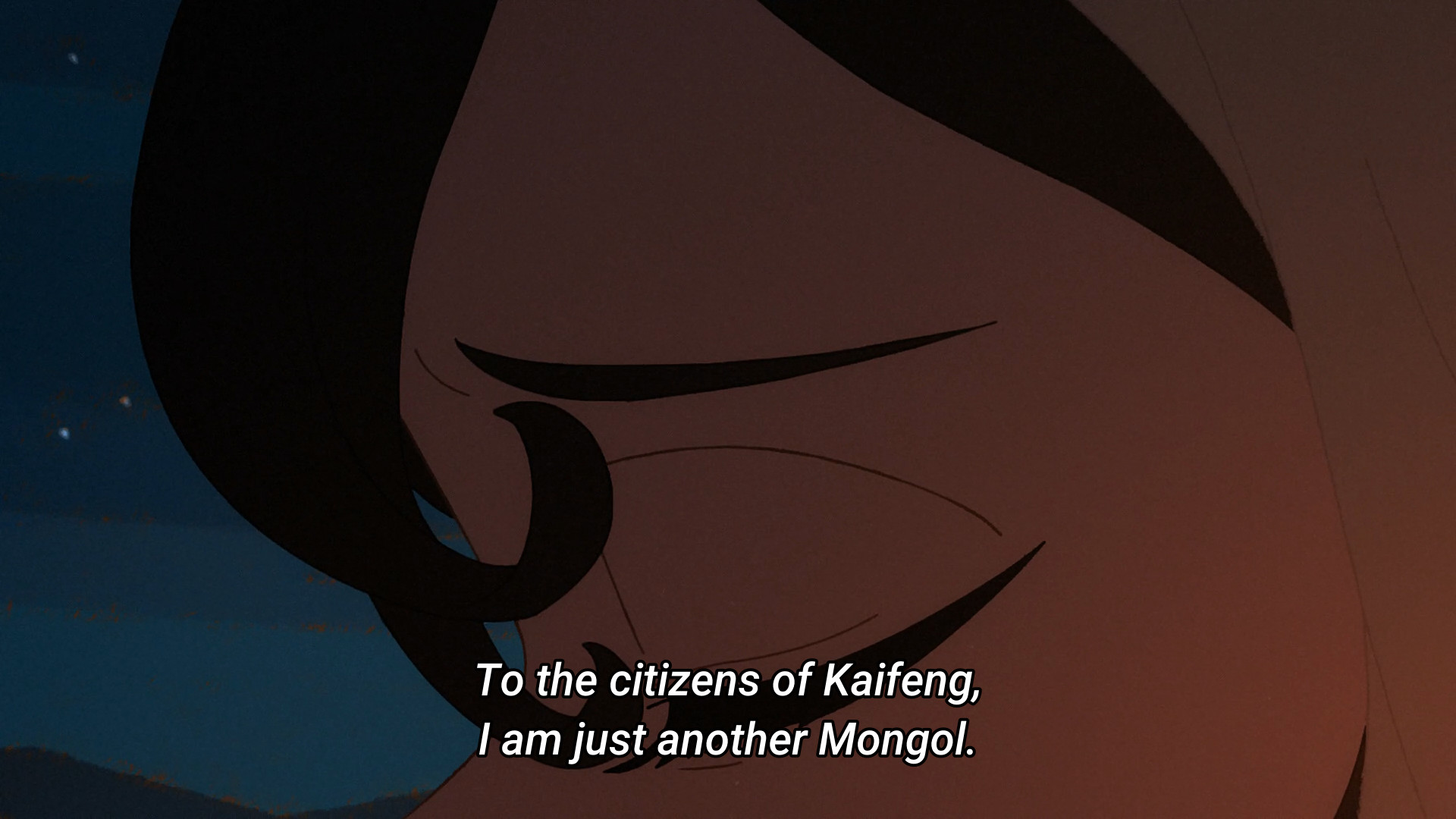
The only problem, however, is that Ogedei is not the most inspiring, commanding leader. He has a quiet, unassuming air about him. He wears a soft countenance; he’s often seen smiling gently with his eyes closed even when addressing matters of great import. Basically, you could envision Ogedei leading a peaceful (if exploitative) empire, but not a warlike one. This is why he loses control of a room full of warmongers. Tolui takes the reins instead. He agrees with Ogedei’s ambitions to build a capital, but it’s not because he understands the proposal. He merely finds it curious. Tolui then quickly captivates the band of warriors with a detailed plan to lay siege to the Jin Dynasty to the West. After all, this is in their blood. They were not born and raised to govern. They are conquerors.
From the sounds of it, Tolui doesn’t have designs on the throne. Even though he commands the largest army, he’s loyal to Ogedei. Nevertheless, Sitara recognizes the threat that he poses, and this is how she intends to drive a divide between the brothers. Historically, it is unclear how Tolui died. Maybe he did inadvertently dig himself an early grave. Maybe he looked like he was getting too big for his britches, so his brothers eliminated him. We may never know. Still, what I find troubling here is Sitara’s moral degradation. In order to sow the seeds of distrust, she needs Tolui’s military campaign against the Jin Empire to succeed. She knows, however, that such a protracted siege will lead to the starvation and eventual death of countless people. Like I asked up top, is avenging her family worth that much? Is self-determination after many long years as a slave justify spilling the blood of millions of people? Sitara tries to assuage her guilt by reasoning that from the outside she is nothing more than a Mongol. She’s not the one drawing blood, but she still bears some personal responsibility. Time will tell if Sitara can silence her conscience entirely.

Every protagonist needs an antagonist, so Sitara and Lady Toregene can’t just scheme and manipulate the brothers unchallenged. Opposite them are two of Ogedei’s other wives: Moge and Boraqchin. Like Sitara, the latter recognizes all too well that everything hangs in the balance, and Tolui’s continual rise will fracture the unity between the brothers. As a result, she hopes Moge can take actions to prevent that. What those steps are, however, remains unclear at the moment. Not only that, Boraqchin looks like she’s on her deathbed. She’s certainly not young and spry like either Sitara or Toregene. Boraqchin should be the one sitting beside Ogedei, helping him rule over his people. Instead, she is confined to her tent. Most of all, our protagonists are driven by hate. That’s probably the strongest motivating factor at play.

Sorghaghtani ends up being the odd woman out. The thing is, she’s a schemer too. She wanted Sitara to monitor Chagatai precisely because Tolui’s rising star might lead to brotherly disharmony. And even though her husband might not be ambitious, she might be. She did lose her secret agent in Sitara, but this might be for the best. If Sorghaghtani can somehow stay out of the fray — if she can keep her hands relatively clean — wouldn’t she be able to pick up the pieces once the dust settles? Sure, her husband might die in the process, but at least the blood won’t be on her hands.
Stray thoughts & observations:
— We see Chagatai make a big show of Ogedei’s magnanimity. He’s trying to help his brother garner respect and consolidate power. Maybe Ogedei should’ve taken greater advantage of this. He seems like a contemplative person, but that can also be seen as weak-willed.

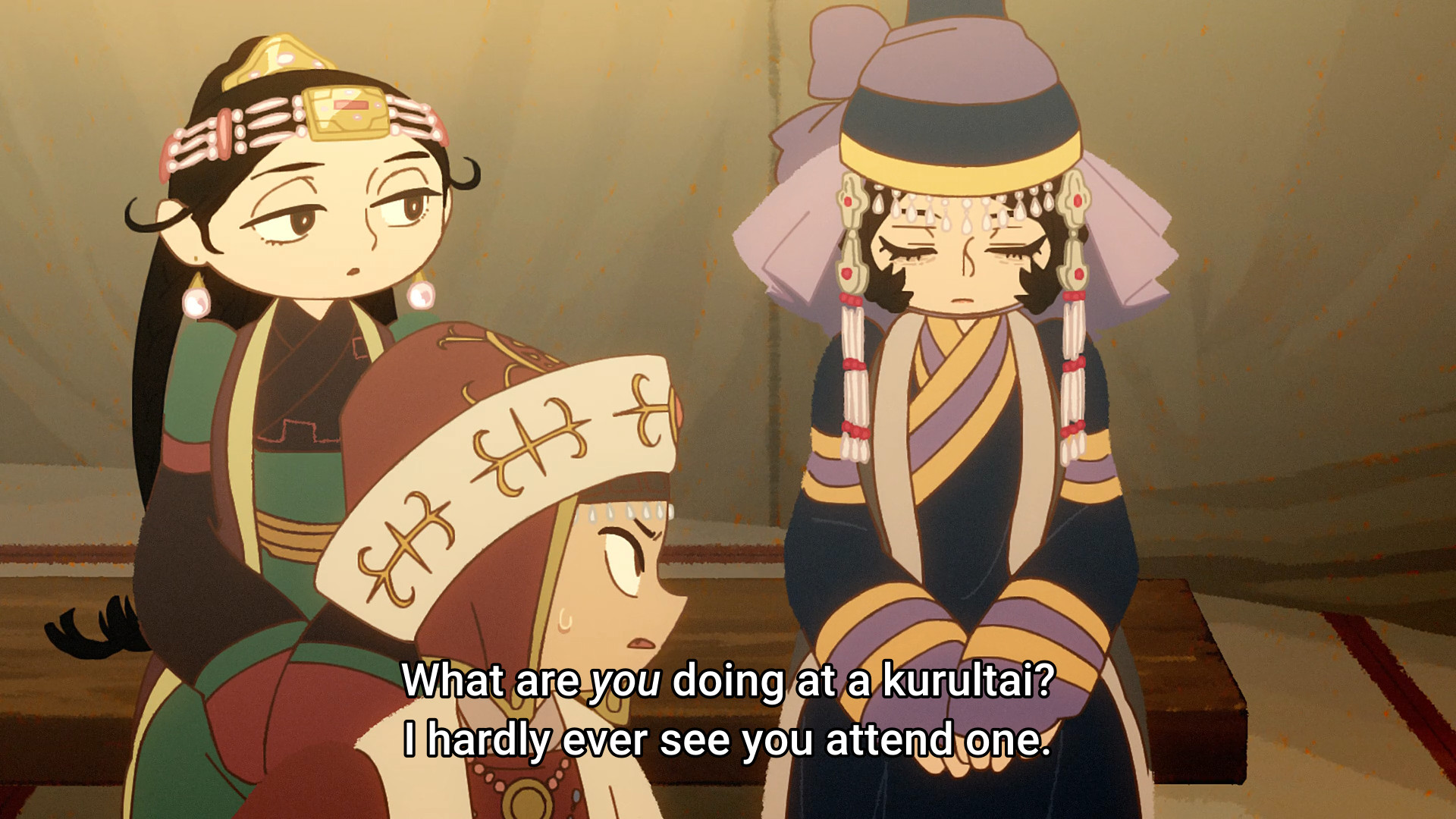
— Toregene rarely ever shows up to any of these political meetings, so her finally attending one probably should’ve raised more than a few eyebrows. Ogedei is far too trusting, though.
— Who does this guy work for, I wonder? He keeps teasing it, but he has yet to reveal his true master.