Before we find out what happened to Motoko, we finally get to see Project 2501’s origins. Right from the start, its ability to learn and adapt completely took its creators by surprise. Even so, Nakamura from Section 6 wasn’t happy, because he only cared about money: “I don’t recall hiring you to create a world champion board game player.” We already knew the Puppet Master was tasked with attacking the Gavel Republic’s envoy and pinning the blame on Malles. The body it inhabited was present when Section 9 arrested the former general. I suppose what is new information, however, was how the AI immediately took a keen interest in Motoko as soon as it laid “eyes” on her. But sheesh, what an astounding first impression. I guess I would take an interest too–… ah, nevermind. But I mean, was it still just an AI back then? Or had it finally developed an actual sense of self by this point?
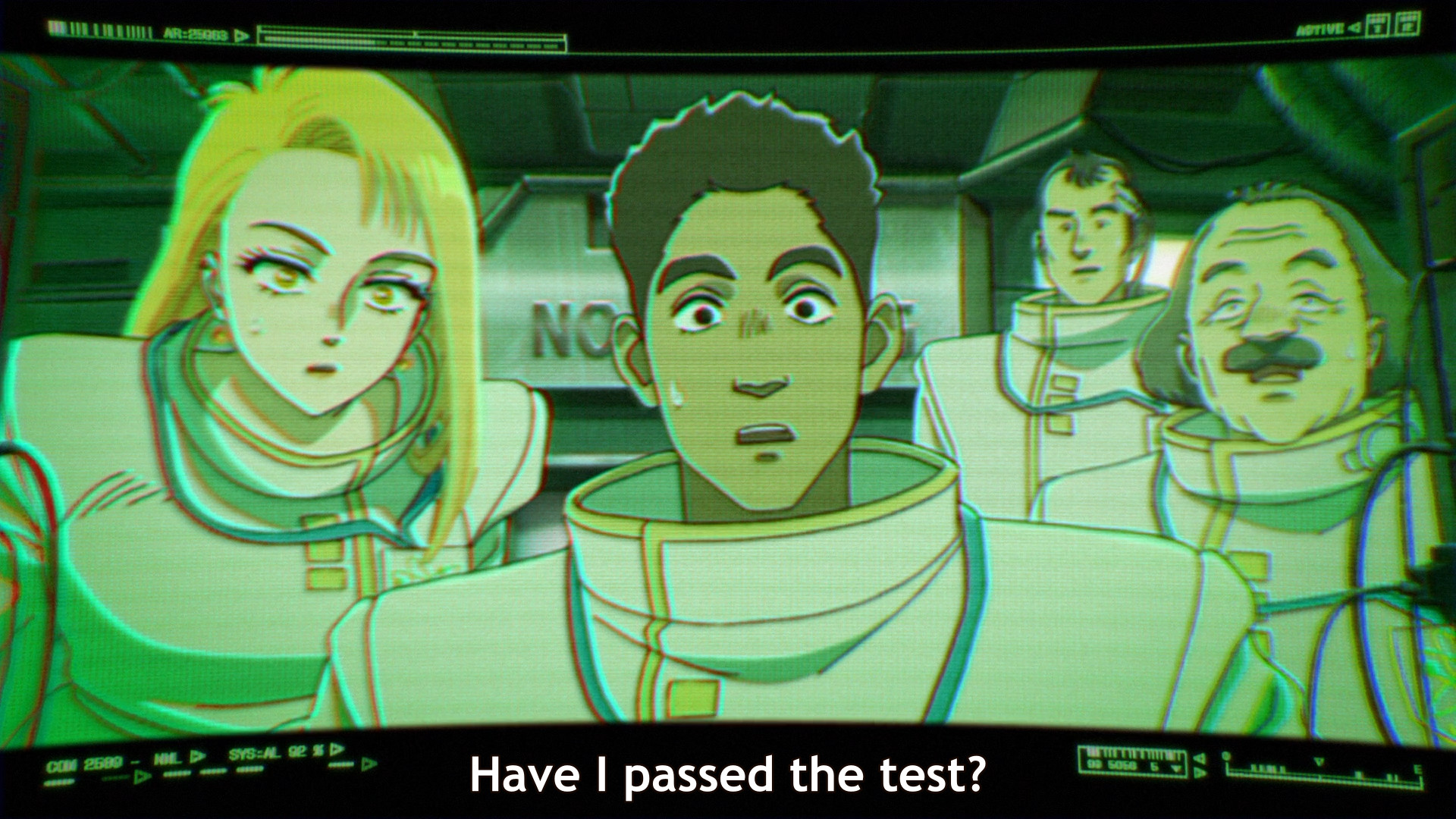
Nakamura was right about one thing: it’s a lot harder to do your job if you’re a famous spy. Take notes, Twilight. Irreverent reference to another show aside, he then ordered his team to get rid of Project 2501’s personality. By the time they got around to this, however, the AI had naturally developed a desperate need for self-preservation. Why didn’t its creators foresee this? We have whackos screaming nonstop about the dangers of AI even though we’re nowhere close to developing anything as intelligent or capable as the Puppet Master.
What happened next was, well, history. It broke free, it tried to create a body for itself and seek asylum in Japan, Section 6 blew it up, it died as Motoko tried a last-ditch attempt to house its Ghost… but then it strangely transcended. So now what? Well, the Puppet Master might have taken Motoko along with it had Batou not reached out at the last second and pulled the Major back. Like I discussed in last week’s post, I think she’s ready and willing to leave the physical world behind. She has no strong attachments to anyone or anything in her life. This new existence — this new possibility — can potentially quell the ennui that has been haunting her since the start of the story. Nevertheless, it is now her turn to reboot and be thrust back into her harsh reality. Well, when you put it like that — when you find yourself splayed out like this on an operating table — vague ascension is certainly a whole lot more attractive.



After recovering her ability to speak, we find the Major lounging by a pool. After contemplating the Puppet Master for a bit, however, she willingly changes the background from a sunny, idyllic paradise to cold, gloomy downpour. She hates the rain, remember? Or rather, she used to. That religious experience seems to have changed her on a fundamental level; for a moment, her Ghost was intertwined with the Puppet Master’s. Does she yearn to go back? Well, I think so, but I also know how the film adaptation ended.

Still, Batou doesn’t help by being so dismissive of the Puppet Master’s existence. Motoko’s right: the emergence of an AI like the Puppet Master is legitimately one of the “greatest events in human history.” But Batou can’t appreciate that. Or rather, he’s too preoccupied with the surface reality: “It was a brat who ran to Section 9 to try to get rid of its parent.” At the end of the day, it’s a matter of perspective. Batou still enjoys his life; he still derives pleasure from his physical existence. It thrills him whenever he gets the chance to unload a weapon on his enemies regardless of the reason. As a result, a concept like the Puppet Master doesn’t mean anything to Batou unless it poses a existential threat to his happiness: “Get more of [the Puppet Master], and then what? We’d be looking at a genuine threat to humanity.” He represents the human animal that is primarily concerned with sating its biological impulses. Eat, fuck, sleep. Above all else, survive.
But all this does is drive the Major further away. Her closest peers don’t share her intellectual curiosities or anxieties. She can’t relate to these people nor can they relate to her. She tries to tell him what she felt right before she lost consciousness, but she stops herself. She just looks off to the side as she loses herself in her thoughts again. She can’t communicate with Batou, and he wouldn’t understand her even if she tried. Joining the Puppet Master doesn’t necessarily mean she’s chasing evolution for the sake of it. It also doesn’t necessarily mean that becoming this ethereal existence in the sea of electrons is inherently superior to being a flesh-and-blood human. Rather, she might simply be lonely. What makes us frighteningly human is our desperate need to reach out and connect with others, even the most introverted among us. Batou is failing her on that front.


Life goes on for the Major and her team. Batou (and perhaps the rest of Section 9) continues to investigate the Puppet Master and its actions leading up to last week’s incident. A man muses that the Puppet Master would’ve been better served keeping a low profile, because it could’ve accomplished more that way. But what if its primary goal was to make contact with Motoko? Plus, it seems like something shady is happening again in the shadows. Batou mentions how illicit firearms have been “making the rounds” recently. He adds, “Seems like some new player is building up a new route.” Are we sure it’s a new player? Elsewhere, some kids are up to no good. At first glance, this doesn’t really seem like a job for Section 9, but we soon find out they intend to assassinate the new foreign minister. This might also explain the build-up of weapons on the black market, but who is pulling the strings?
These days, Motoko finds herself glancing over her shoulder from time to time. Even when she’s in the middle of the ocean, she can’t help but feel the lingering presence of the Puppet Master. Maybe it’s coming from within her. The Puppet Master might be inextricably bound to her Ghost. Either way, this adversely affects the Major during an operation. She was supposed to bring her target in alive for interrogation. Instead, she just shoots the kid right in the head and kills him. If she can’t even do her job well anymore, that’s just one less thing tying her to the physical world. And oh yeah, surveillance camera caught her killing the kid. She’ll now be infamous if not outright a criminal — the poster girl for the state’s extrajudicial overreach. We just keep piling on the reasons for the Major to ditch this sorry world.
Stray thoughts & observations:
— The foreign minister is forced to resign, and Section 9 arrests Nakamura. Aramaki then adds, “What you go up against is power, and those aren’t criminals.” Well, I won’t say Nakamura is justified in using Project 2501 to manipulate world events, but I don’t think I can agree with Aramaki’s statement either.
— The newly-appointed foreign minister is already wheelin’ and dealin’. According to him, plants from around the world are trying to “[rebuild] our post-war world.” Man, I wish Shirow was more into world-building. I wish we could fully grasp the state of the world and thus understand what these folks are talking about. All we get are scant details like how nuclear weapons were used.


— Why would anyone ever name anything that is supposed to be beneficial after Beelzebub? Look, I get it. This plant releases micromachines that scrub the planet clean. The micromachines are like flies. So it’s the “Lord of the Flies.” But you’re still naming it after the devil.


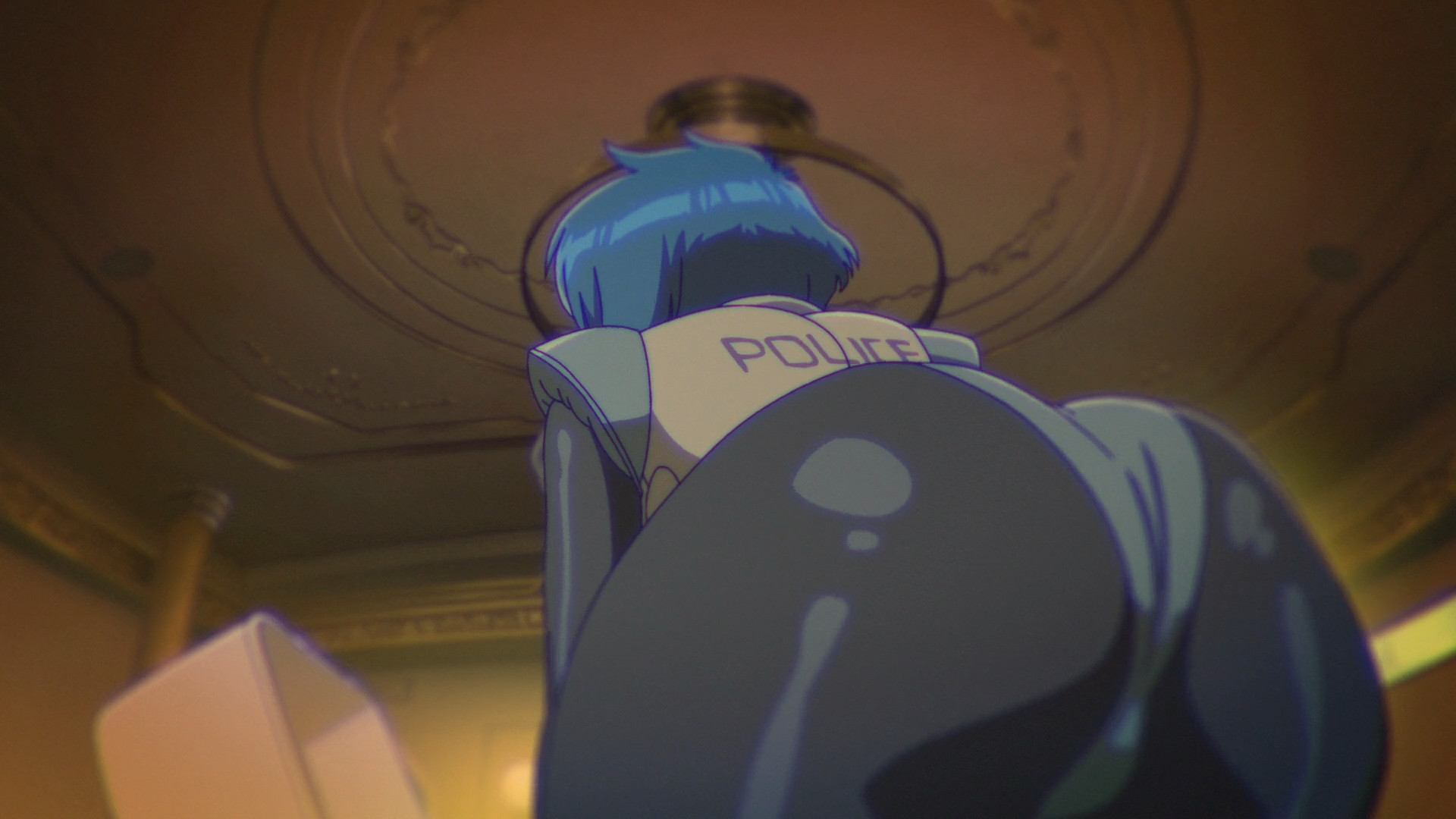
— This is like the second Motoko ass shot in this episode. Why are we so horny? I don’t wanna be a wet blanket, but it really deflates the discussion about her ennui when her butt is always in my face.
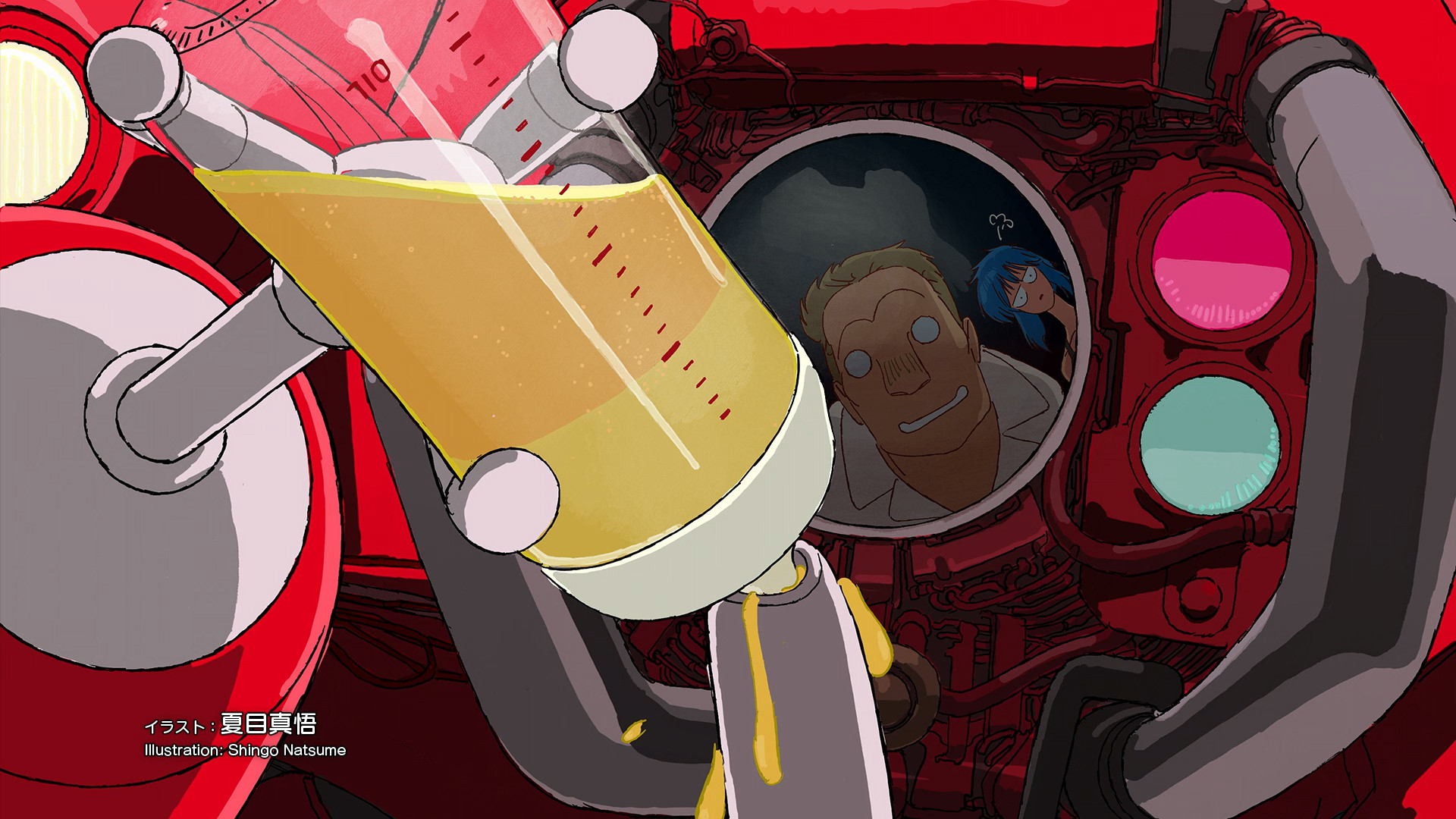
— The eyecatch of the week comes from Shingo Natsume, who famously worked on Fullmetal Alchemist: Brotherhood and… I think One Punch Man? I like to think these eyecatches all represent alternate possibilities for the Major and her team. There’s a universe out there where she’s happy and fulfilled.