
Before the Great Kha’an and his empress, as well as the bewildered men of the court, Sorghaghtani has made her decision: she will not go quietly into the night and disappear from the court. She will stay even if it means endangering herself and her family. Over and over again, these women have to make the difficult decision to keep fighting instead of laying down and surrendering. And it’s a good thing she did, because (big historical spoilers) she would one day ascend the throne and sit where her husband’s murderer sits.
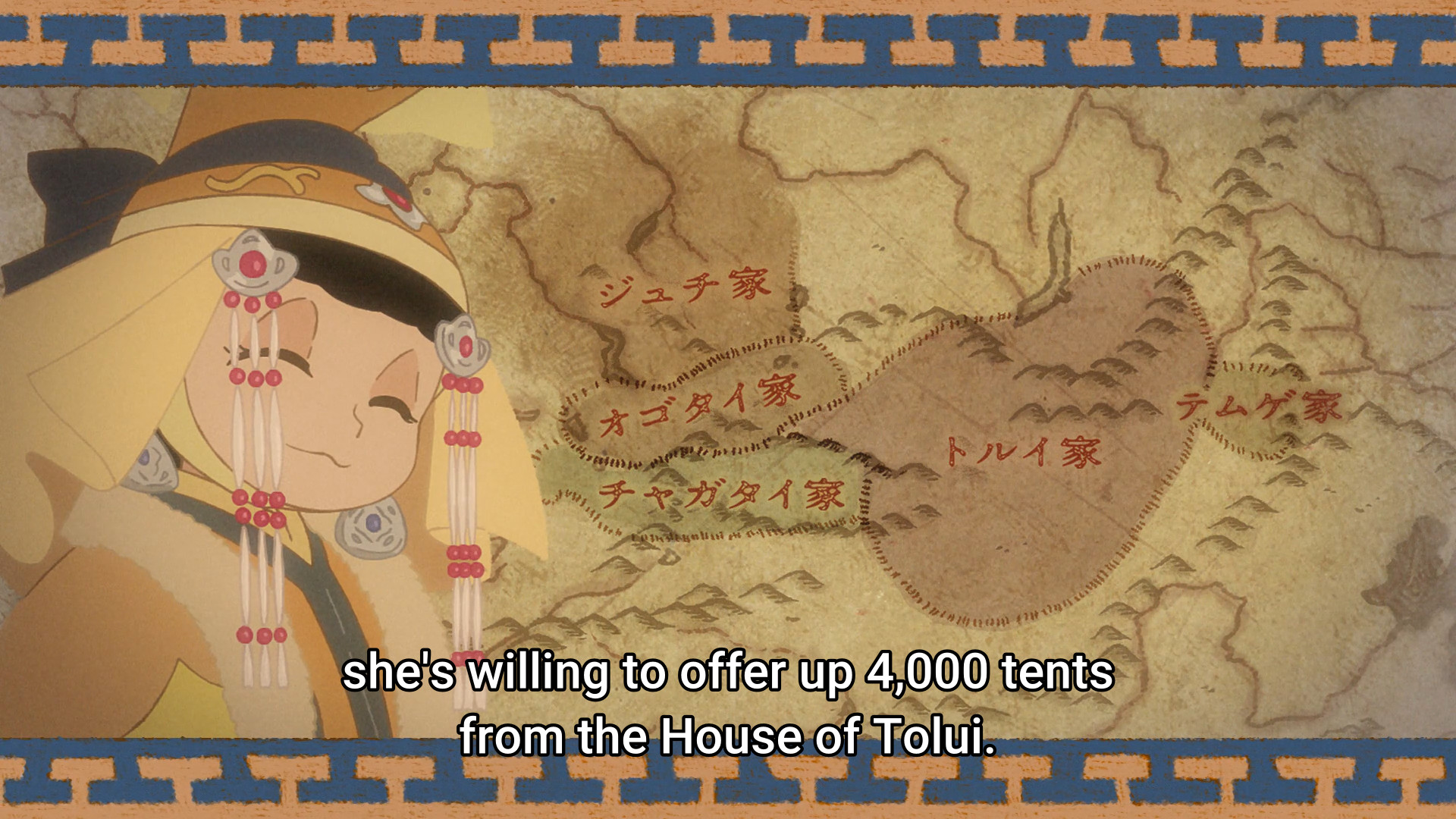
But for now, Boraqchin still insists the princess to accept their offer, but it is more of a demand. The latter deftly argues, however, that they are better off not united. This flies in the face of what Boraqchin has believed all this time — that the Mongols need to be united to survive. She fears that factionalism will chip away at the empire, and this is why she schemed and plotted Tolui’s downfall (though I would argue, as I did last week, that her true motivations are a little more personal). Sorghaghtani, on the other hand, will champion their diversity even if it invites disharmony. House Tolui will not be allowed to fall. And y’know what? Her argument has a good chance of resonating with Ogedei, because he wants to build a capital that brings other cultures to the Mongols. Sorghaghtani still has to concede something, which is all the land and territory that Tolui had acquired through his great (and murderous) deeds. She can’t just turn down the Great Kha’an and walk away freely. But everything she gives up today can easily be reacquired. That’s a little trickier to do with freedom.
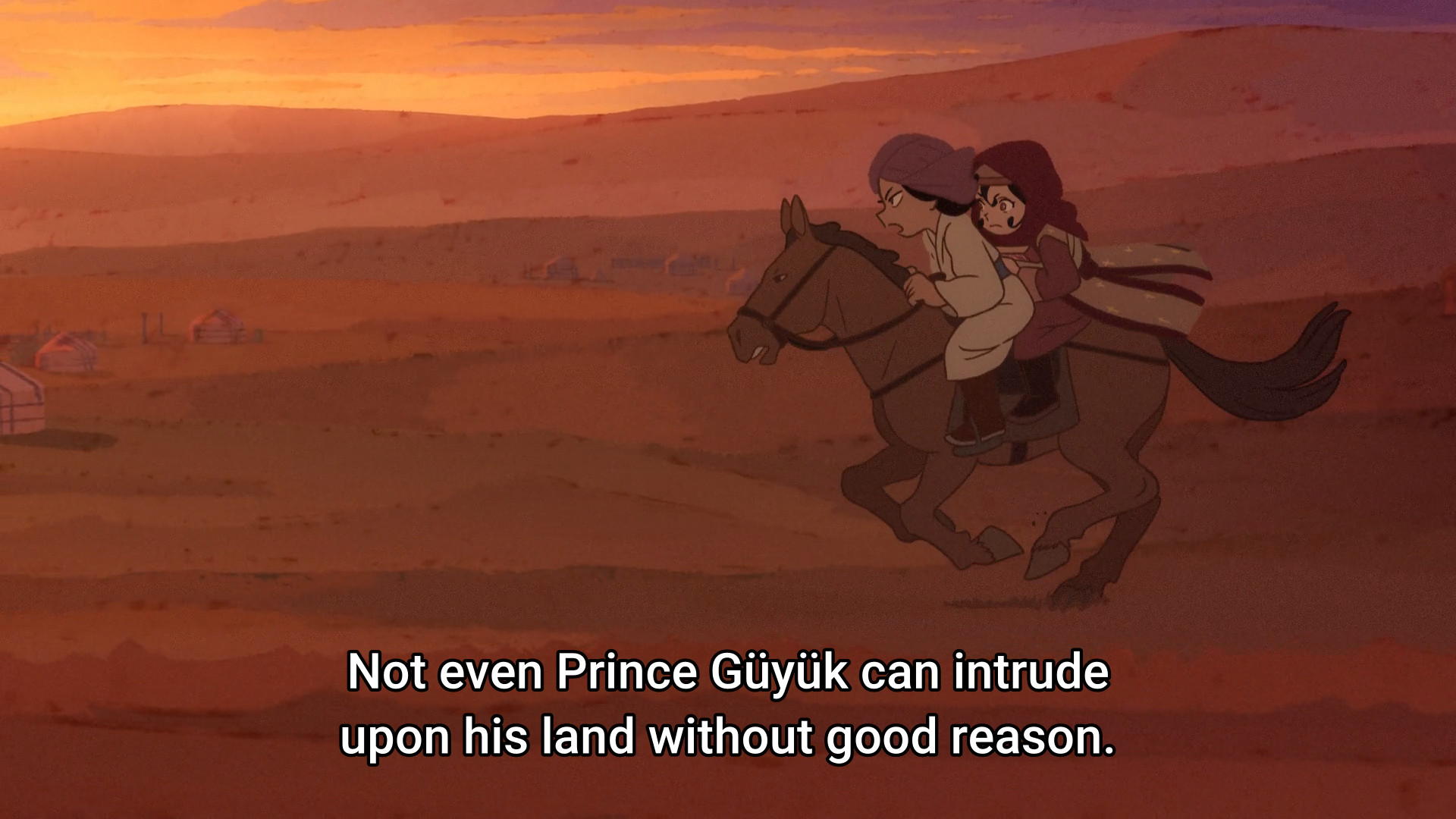
Thanks to Sorghaghtani’s hint, Sitara and her buddy Shira finally realize where Toregene is being held. They quickly rush to liberate her. When Sitara reunites with her kindred soul, we finally learn what had transpired between the latter and Boraqchin. Basically, the empress manipulated Toregene by invoking her memory of Khulun, which is a name we haven’t heard in quite some time. This was the girl who had offered herself up to become Genghis Khan’s wife to spare the Merkit tribe. Boraqchin claimed that Khulun still harbored resentment for the Mongols much like Toregene. As a result, the embittered Naiman woman ended up betraying Sitara because her hatred for Ogedei got the better of her.
Still, you can’t help but wonder if there is even any truth to Boraqchin’s claims. After all, we know relatively little about Khulun after she became one of Genghis Khan’s wives. Hell, I didn’t even know she had become an empress. History only tells us that she accompanied him on his many military campaigns until the day she died. Khulun may very well have been one of those women who accepted assimilation and learned to love her new life beside the great khan. Furthermore, this temptation to assimilate has been the eternal source of tension found in all of these women. This constant push and pull between happiness and exercising one’s own agency — even at the cost of their lives — is the engine that powers this drama.

Naturally, Sitara can’t help but forgive Toregene, because she too feels as though she had betrayed the woman. How? By merely entertaining the thought of “abandoning the past and moving on with [her] life.” It’s tragic, isn’t it? She and Toregene (and perhaps Sorghaghtani as well) can’t help but feel like they must choose to keep fighting and struggling over prioritizing their own happiness. And who can blame them when their loved ones have been torn away from their side? These women are nothing more than war spoils. Sitara is a captured Persian slave, and Toregene only became a consort because the Naiman were utterly dominated. She might have a position of great influence within the Mongol Empire, but she is certainly not free. Revenge is the only way for them to exert any control over their lives.
And now, that tension comes to the forefront again when Ogedei suddenly shows up unannounced to Toregene’s tent. Once more, the woman has a way out. She can leave and live the rest of her days out in her son’s territory, far away from the court and its political games — far away from Boraqchin’s manipulations. Plus, there is at least one thing that brings joy to Toregene’s life, and that is her own son. She absolutely adores him. Well, she is still a mother, after all. But will she do it? Will she betray Sitara once more and give up any shred of agency she has left? Ogedei’s words are telling: “All I want is for you to be happy.” Happiness is confinement. Longevity is stagnation. To live is to betray… in more ways than one.
As Toregene mulls over her decision, Ogedei wishes to speak to Sitara alone. Unfortunately, his jackass retainers insist a Great Kha’an can’t possibly speak to a lowly commoner. As a result, we get a ridiculous scene in which Sitara and Ogedei are practically next to each other, but some dude still has to “run” back and forth between them to relay each side of the conversation. It just goes to show you that true assimilation is an illusion. At the end of the day, Sitara is still an ant beneath Ogedei’s heels. If he so wishes, he could squash her in an instant.
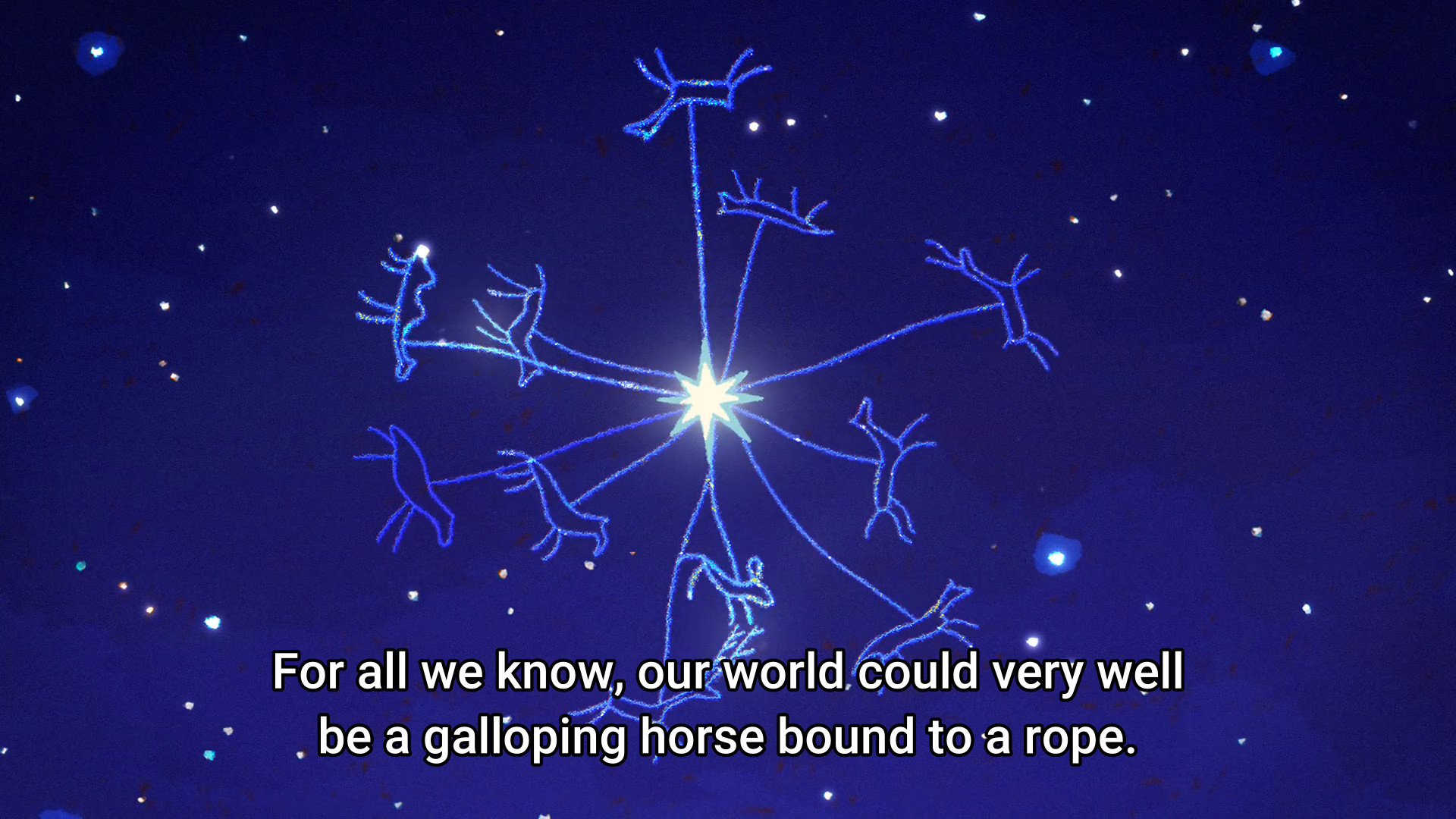
Nevertheless, the two unlikely conversational partners proceed to discuss the stars and the heavens. Specifically, Ogedei asks Sitara why she thinks the stars move across the sky. Unsurprisingly, the girl invokes the idea that we are the center of all existence. The heavens turn for us, which includes all of the celestial bodies. This is what she has been taught. Ogedei, however, proposes a different idea — the more correct idea: our world is one of many worlds tied to a star. He basically thinks we’re orbiting the North Star, but he got the basic gist of it down. Heliocentrism isn’t correct either, but it’s at least more accurate popular alternative at the time. But Sitara completely and utterly rejects the idea: “With all due respect, that is mere superstition… That’s unthinkable. It goes against the very concept of science.” She proceeds to argue ardently in favor of her geocentric view of the universe. What’s important here, however, is not who’s right and who’s wrong. It’s not about astronomy at all! Rather, it’s about the nature of hatred and revenge.


I’ve argued all along that Sitara and other women often have to choose between happiness and the freedom to plot and scheme. Imagine, however, if this conversation had occurred in a vacuum. For this thought experiment, take away all of the history and bad blood between Sitara and the Mongols. If she were simply talking to another curious soul about the heavens, do you think she would be so close-minded? Do you think she would so vehemently oppose Ogedei’s suggestion? I think a young Sitara — one that has yet to lose her innocence — would’ve embraced this debate in good faith. She might have been swayed. Unfortunately, her chosen course has blinded her to the pursuit of knowledge, which is perhaps one of the possibilities awaiting her if she had chosen happiness instead. If Sitara’s only choice was to settle down and have a family, then sure, that doesn’t sound very attractive. But if she could’ve been pursuing knowledge and science instead, her chosen course for revenge now feels closer to a true tragedy.
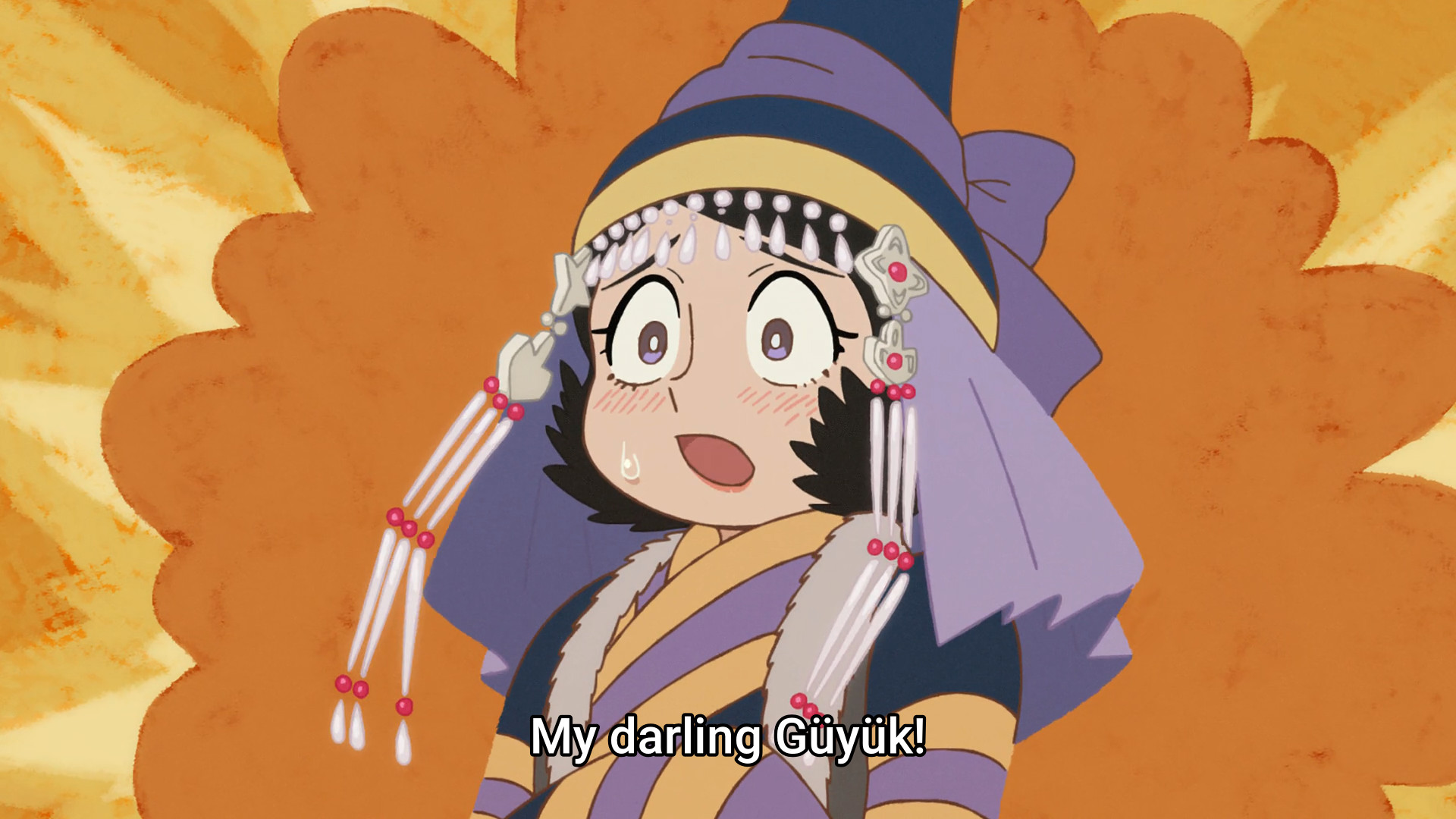
What truly tugs at Ogedei’s heartstrings, however, is Toregene. He doesn’t want her involved in these political games, so even if Sorghaghtani won’t marry Toregene’s son Guyuk, he still wants her to be far removed from the court and its drama. But why is she so important to Ogedei? Why is she his North Star? Why does he allow her to pull him to and fro? After all, he has so many wives, and most of them (presumably) adore him. But instead, he is devoted to a woman who so obviously despises him. He clearly is not a stupid man, so he is aware of the contempt she feels for him. He recognized it from the start (and yet he still slept with — assuming it was even consensual — and made her bear him a child…). So much of this story has unfolded from the perspectives of the “witches” and for good reason. They are the ones who have lost their families and homes. Unfortunately, this has rendered aspects of certain characters like Ogedei somewhat mysterious and inscrutable. Until now, that is.
Finally, we get to pull back the curtains and look deep into Ogedei’s soul. This whole capital business? It’s all for Toregene’s sake. He wants to build a place where women like Toregene and Sitara can be happy. But what does that even mean? Well, like I’ve said in a previous post, conquest doesn’t have to be bloody. You don’t need to control people by literally decimating their population and enslaving them. You can merely become an economic powerhouse and subjugate other cultures through money and influence. If a great capital had existed from the start, then maybe Toregene and Sitara would still be with their families. So Ogedei proposes a wager: if he can build an empire where these women can finally be happy, then he wins. I don’t share Ogedei’s idealism, but people with grand visions need to be somewhat delusional.
Toregene eventually finds her way to Sitara and announces her decision: she will not betray the girl and live the rest of her life out in peace and solitude. She reasons, “Why, doing that would be just what the Great Kha’an wants.” As a result, their alliance is reforged. Still, I want to highlight a moment that came right before Toregene showed up.


After the Great Kha’an had departed, all Sitara could do was let out a primal scream of anguish. That was it. Their exchange was the climax of the season. Sitara then stared up at the heavens as a herder and his goats passed by with indifference. They only noticed her enough to not walk over her. Regardless of the political games in and around the court — regardless of Sitara’s hatred and contempt for the Mongols — life goes on for the vast majority of the people living under the yoke of the Mongol Empire. These people are lucky to even reach the ripe, old age of 40. These petty squabbles ultimately mean nothing in the grand scheme of the universe, whether or not it is helio- or geocentric. And yet, there’s a good chance that slaves and commoners are the ones who stand to lose the most when the impending storm arrives. Sitara had to ignore the plight of the Jin Dynasty earlier in the series (not that she could’ve prevented the Mongol invasion), and now she will likely have to turn a blind eye to the very social and economic class she belongs to. Just like how the herder and his goats can’t see her, she can’t see them. Right now, Sitara and her hate is the center of her universe. Whether she wills it or not, she will pull those unfortunate folks into her storm.
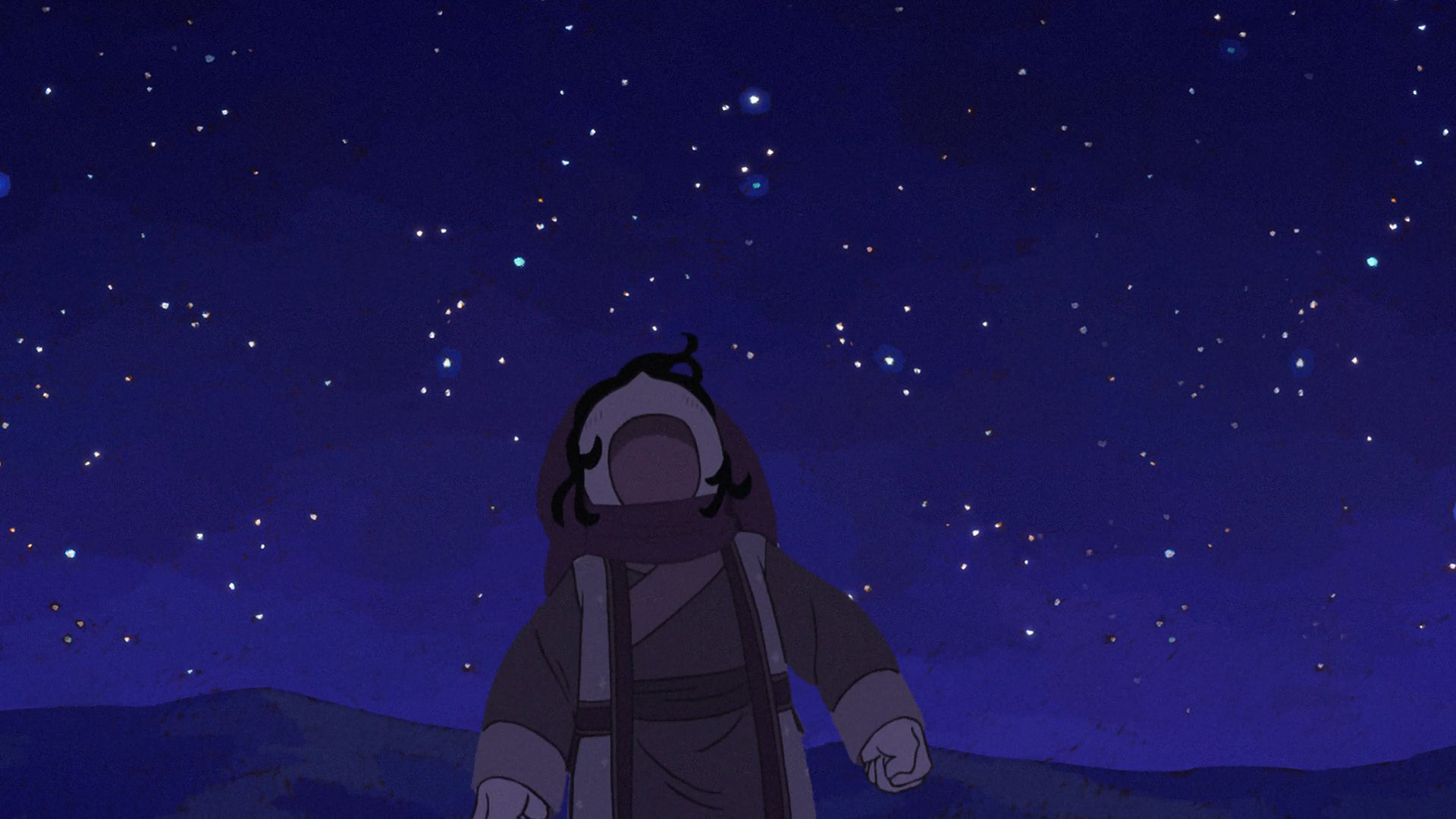
On the one hand, Sitara refuses to remain a slave in bondage. She will rise up and strike back at the people who robbed her of her family. She won’t just be another woman being passed back and forth like an object. On the other hand, this single-minded quest for revenge will cost Sitara both a life that she can devote to knowledge and her own morals. No action is without consequence.
Final thoughts? I dunno, haven’t I said enough? For what it’s worth, out of all the shows I watched this season, I think this is the best anime that summer had to offer. I was initially hesitant to cover this show, because I wasn’t sure I could do a good job. Hopefully, I managed to do it some justice.