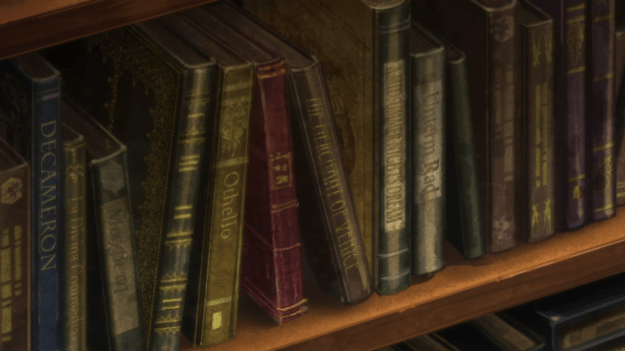
Shakespeare’s many plays sit alongside other literature. I’m amused by how thin The Divine Comedy is — what is this, the Cliff’s Notes version?
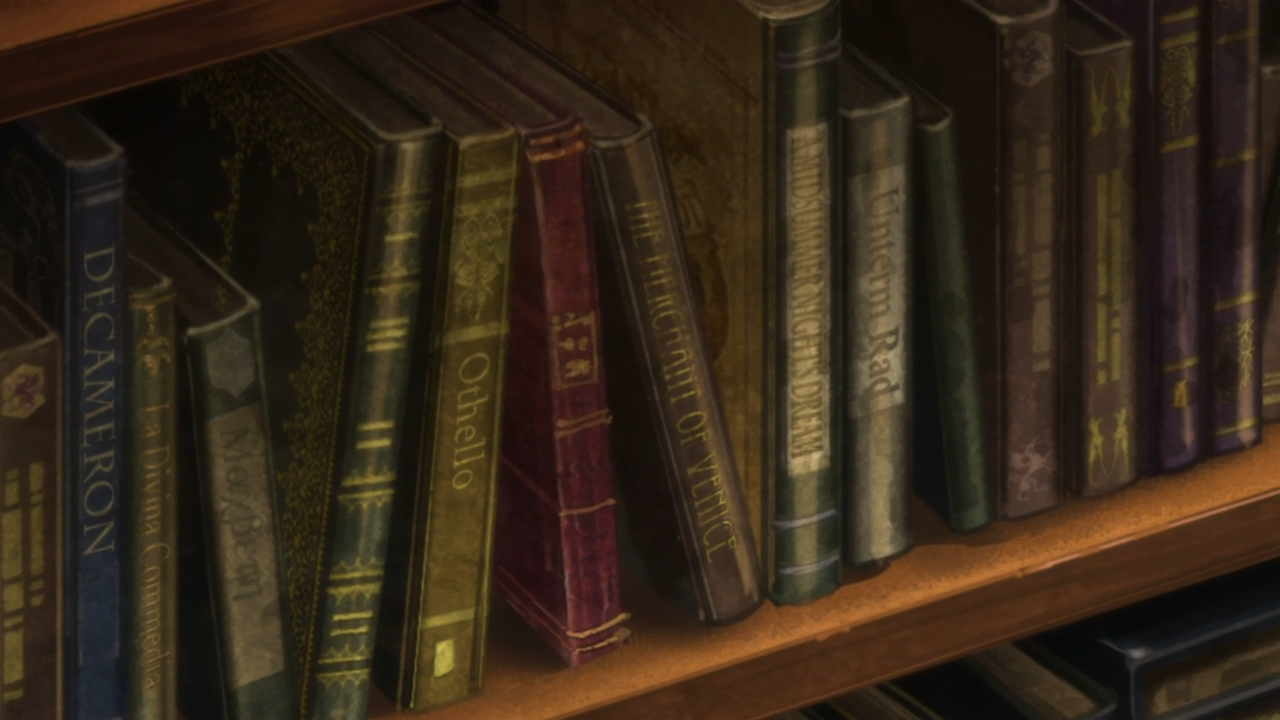
This episode of No.6 begins with a few lines from a famous play:
Lady Macbeth: “Here’s the smell of the blood still; all the perfumes of Arabia will not sweeten this little hand. Oh, oh, oh!”
Doctor: “What a sigh is there! The heart is sorely charg’d.”
What is the significance of this particular quote from Shakespeare’s Macbeth, one of the immortal bard’s many tragedies? In order to answer that question, I think it’ll be illuminating to go back a tiny bit in the play:
Lady Macbeth: “Yet here’s a spot. … Out, damned spot! out, I say!— …who would have thought the old man to have had so much blood in him?”
Earlier in the play, Lady Macbeth had connived with her husband to commit regicide, and now, she is suffering from the guilt of her crime, a guilt she cannot simply cover up with perfume. Furthermore, a spot of blood appears to linger on Lady Macbeth’s hand long after the crime has been committed.
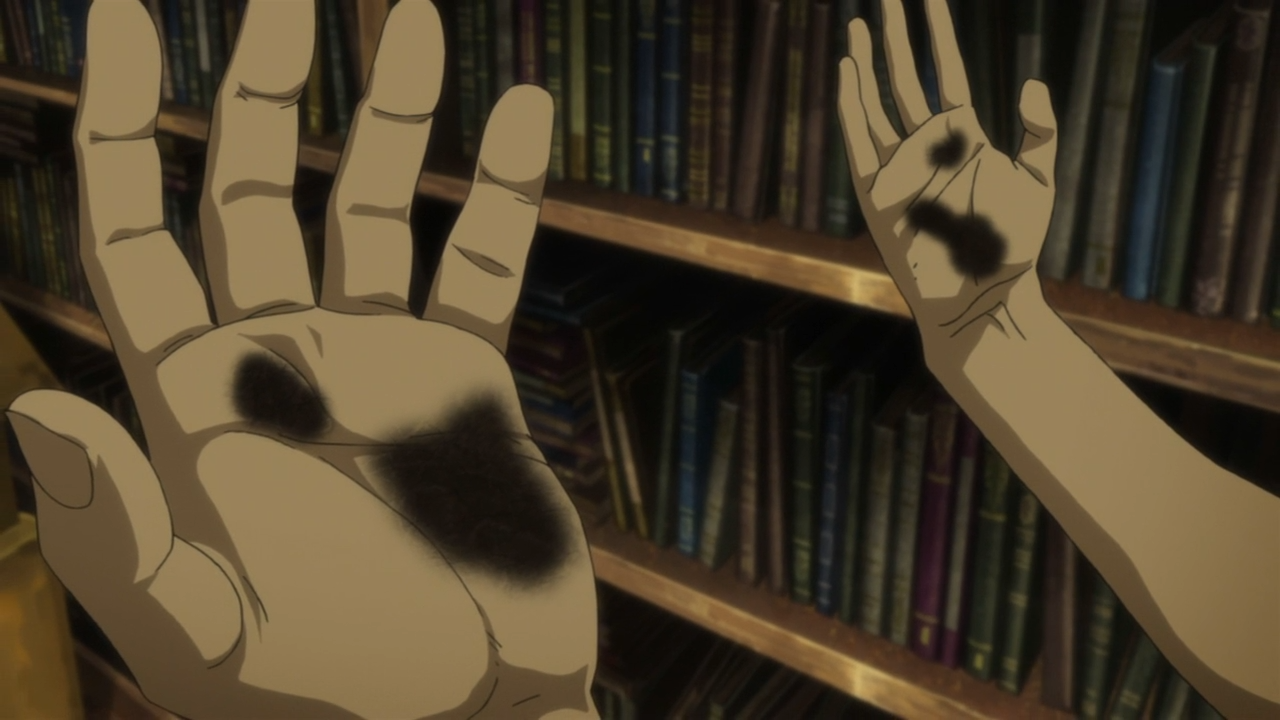
To bring everything back to the anime, black spots would appear all over Shion’s body in this very episode. What, then, is the thematic link between Lady Macbeth and Shion? Is Shion suffering from guilt? There are three possibilities off the top of my head:
- Quite literally, Shion feels guilty for surviving No.6 and the mysterious bee disease when his co-worker Yamase had to die right before Shion’s very eyes. Survivor guilt is a common mental condition.
- Shion might be feeling guilt by association. He had followed No.6’s orders for far too long, and he had failed to see the world for what it truly is. He benefited from the privilege of living in No.6, a privilege that likely came at a great cost. Perhaps now that Shion is on the outside, he can see what a foolish and complacent life he had been living.
- The anime might be foreshadowing Shion’s guilt. He now has good reason to think that a great plague will beset No.6 and its inhabitants. Shion wants to warn No.6, but Nezumi threatens to become Shion’s enemy should he do anything to help the totalitarian city. With his mother still stuck in No.6, it would only be natural for Shion to feel guilty should he do nothing.
I would love to hear any other possible explanation for Shion’s guilt, but whatever his guilt is, it has physically manifested as a red scar on Shion’s (now) pale body.
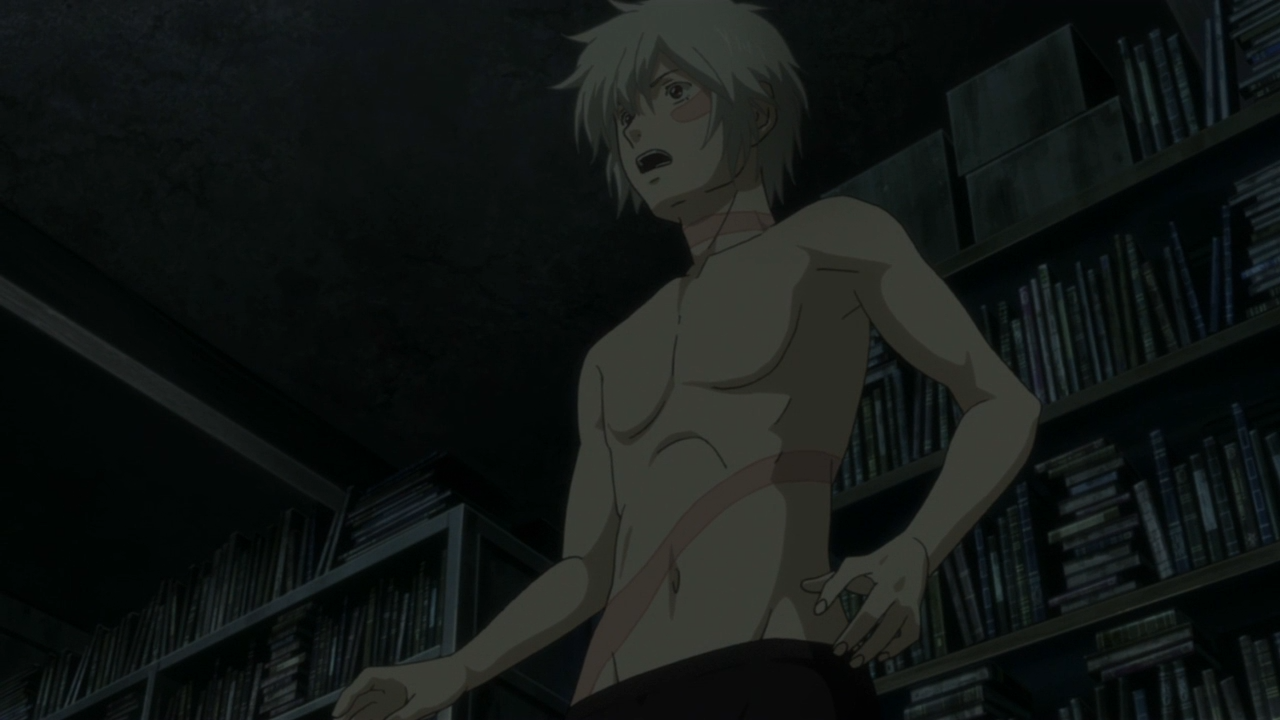
There are two ways to think of Shion’s scar:
- The way the scar coils around Shion’s body resembles a snake. I will suggest, then, that Shion had been living in paradise, but he has since been cast out for harboring Nezumi on that particular night. Adam and Eve were banished from Eden for taking a bite from the forbidden fruit. What, then, is the forbidden fruit in No.6? Knowledge of the outside world? Daring to form to form a genuine human connection with Nezumi that night? The previews for the fourth episode hints that Nezumi’s real name might be Eve. Whether this is true or not (plus, it’s not very subtle), we at least know that the biblical interpretation is coming from out of left field.
- Another way to look at Shion’s scar is to note its color: red. The red color then brings to mind The Scarlet Letter, where Hester Prynne was forced to bear a red letter “A.” Hester’s “A” stood for adultery, so what does Shion’s scar stand for?
In any case, Nezumi saves Shion by excising the bee pupa from Shion’s neck. If Shion’s red scar is a reminder of his guilt, the bee pupa might be a physical manifestation of Shion’s sin. In one sense, the bee pupa might be No.6’s way of crushing dissidents amongst the populace. In another sense, everyone born into No.6 carries a sin within them. Nezumi thinks, however, that the disease is coming from the outside of the city’s walls, but I think this just hasty speculation on his part.
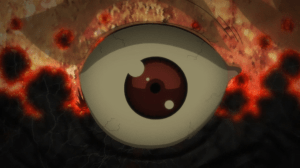

While Shion hallucinates, Nezumi works quickly to remove the bee pupa from his friend’s neck.
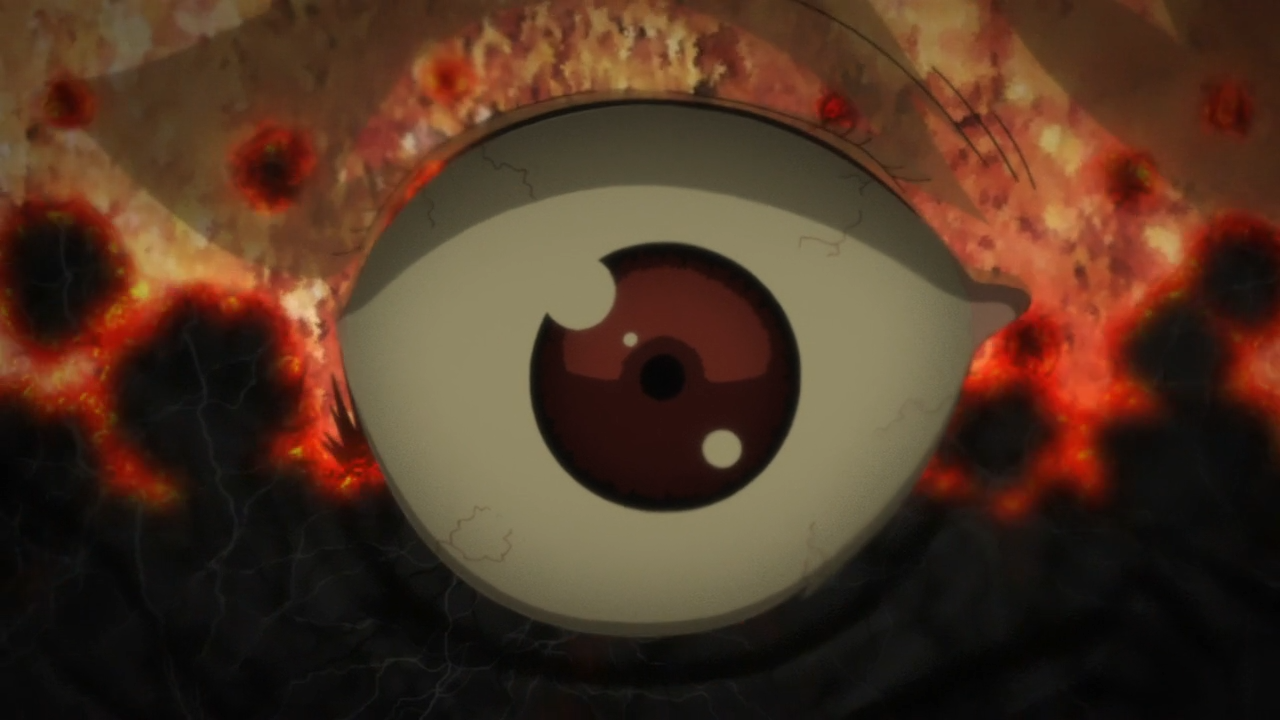

To wrap up the ties between the anime and Macbeth, appearance vs. reality is a key theme in Shakespeare’s play. Lady Macbeth is sleepwalking when she utters the lines quoted above. Likewise, Shion falls into a dream-like state during the most painful moment of the mysterious bee disease. To further the theme of appearance vs. reality, Shion had long suspected that there was something off about No.6 (see: the first episode). Now that he’s crossed over to Nezumi’s “real” world, Shion faces an interesting dichotomy.

Shion remembers his mother and Safu when Nezumi tells him to keep fighting for his life.
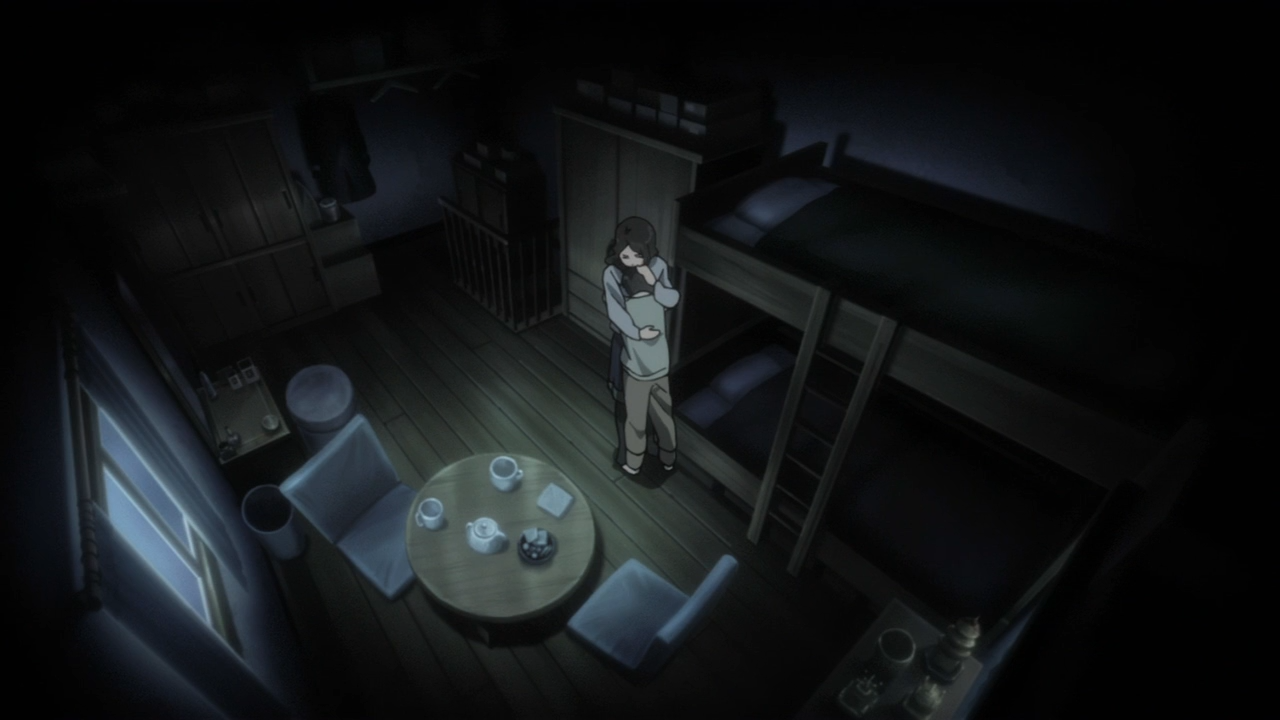

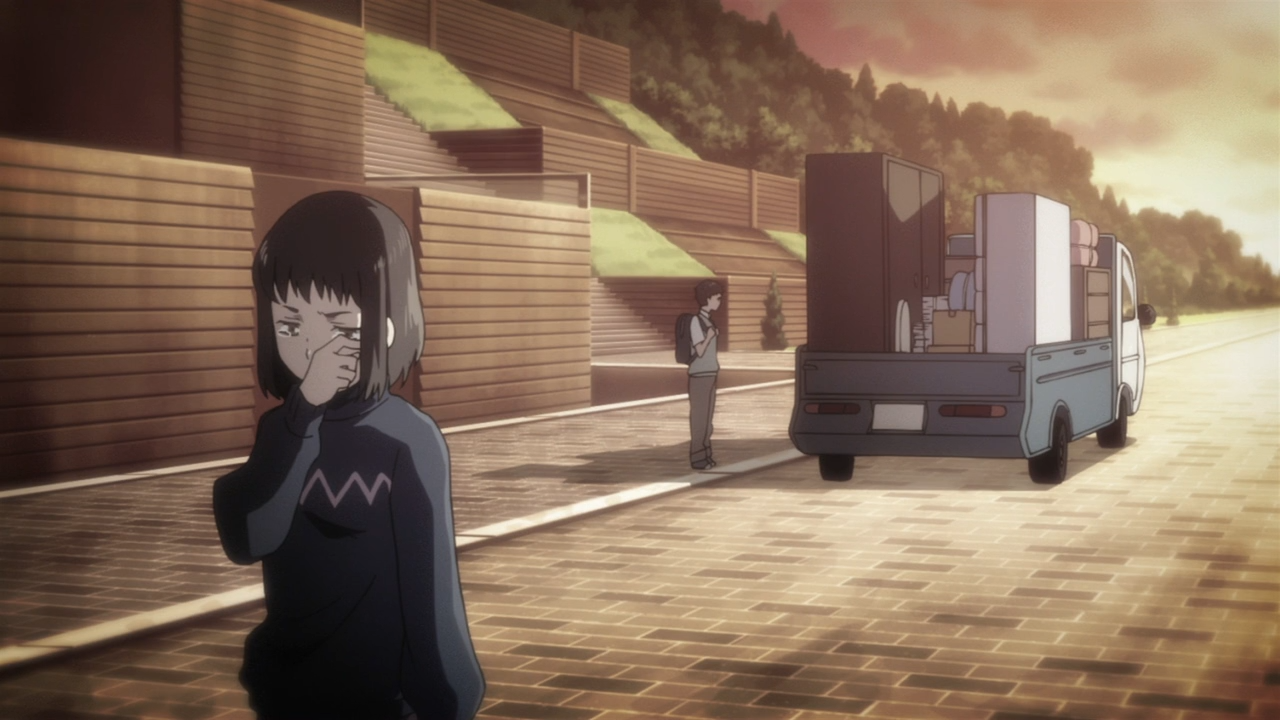
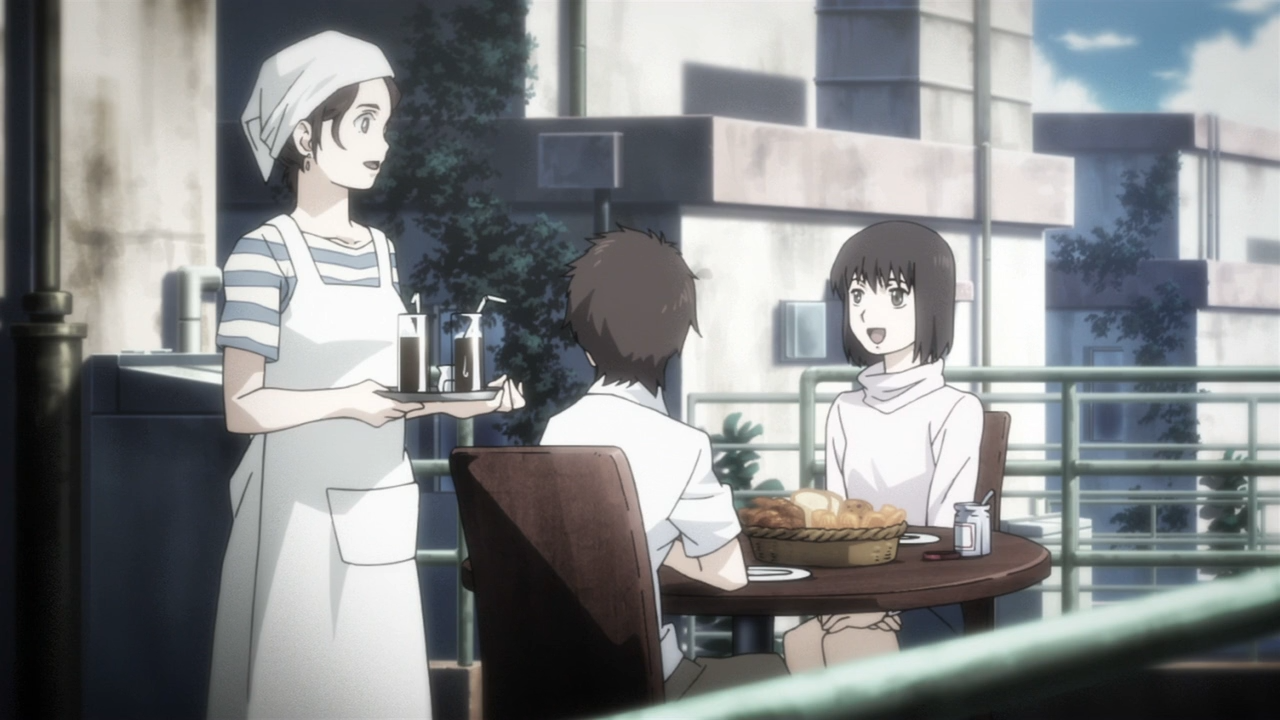
Despite Nezumi’s orders, Shion isn’t quite ready to discard his old life. After all, he still has ties to his mother and Safu. Although No.6 is a false paradise, life on the outside is brutal and harsh. People are huddling in cold, rundown buildings with nothing but dogs to keep them warm through the nights. What we thus see here is thesis and antithesis. No.6 is the thesis, representing Shion’s original conception of life. We know, however, that No.6 is a totalitarian state. Nezumi’s “real” world is the antithesis, i.e. everything that No.6 is not, but it is hard to imagine that everyone, like the sheltered folks of No.6, could survive in the outside world. Nezumi would just let these people die, but this can’t be a satisfactory solution for someone like Shion. Maybe the rest of the anime will thus follow Shion’s quest to save No.6 against itself, and bring the two disparate worlds together, i.e. achieving synthesis.
In referencing “The Happy Prince,” however, the anime might be foreshadowing a depressing conclusion for our “happy prince,” a.k.a. Shion. In Oscar Wilde’s short story, a prince once lived within a castle where unhappiness is forbidden. As a result, the prince came to be known as the Happy Prince. When he died, a statue was erected in the prince’s memory and placed at a high point so that he could look over his city and subjects. For the first time ever, the prince could finally see the city for what it truly is: a miserable, unhappy place where the people toil for survival. With the help of a swallow, the prince begins to give parts of himself, i.e. the gems and gold decorating the statue, away to aid the poor.

Eventually, the prince’s statue is stripped bare and his swallow friend dies from the freezing winter. The mayor soon notices the now-ugly statue and has it torn down and smelted. Of course, God would save the day in the end by having the prince and the swallow ascend to heaven. Nezumi, however, dismisses “The Happy Prince” as “hypocritical,” alleging that the story “knows nothing of true tragedy.” We must naturally ask ourselves, then, if a God will exist to save Shion when he pushes himself to the limit in trying to save No.6?
Stray Observations

• It’s funny to see people who claim to know better nevertheless continue to bring attention to the Shion/Nezumi relationship with “GAAAAAAAY” comments. You guys may say there’s nothing wrong with homosexual depictions in anime, but your comments nevertheless mark the behavior of No.6’s protagonists as different and bizarre. This is essentially “I’m not a bigot, but you people are so flaming!” Am I taking this too seriously? Shrug, I just thought you guys might like to know how others might construe your comments.
• Rats get both a positive and negative portrayal in the West depending on the story. Children’s stories often have cute, helpful rats. At the very least, the diminutive animal isn’t a symbol of evil. In adult stories, however, rats are generally seen as unclean in many respects. In The Departed, Scorsese practically yells at the top of his lungs that rats = corruption.
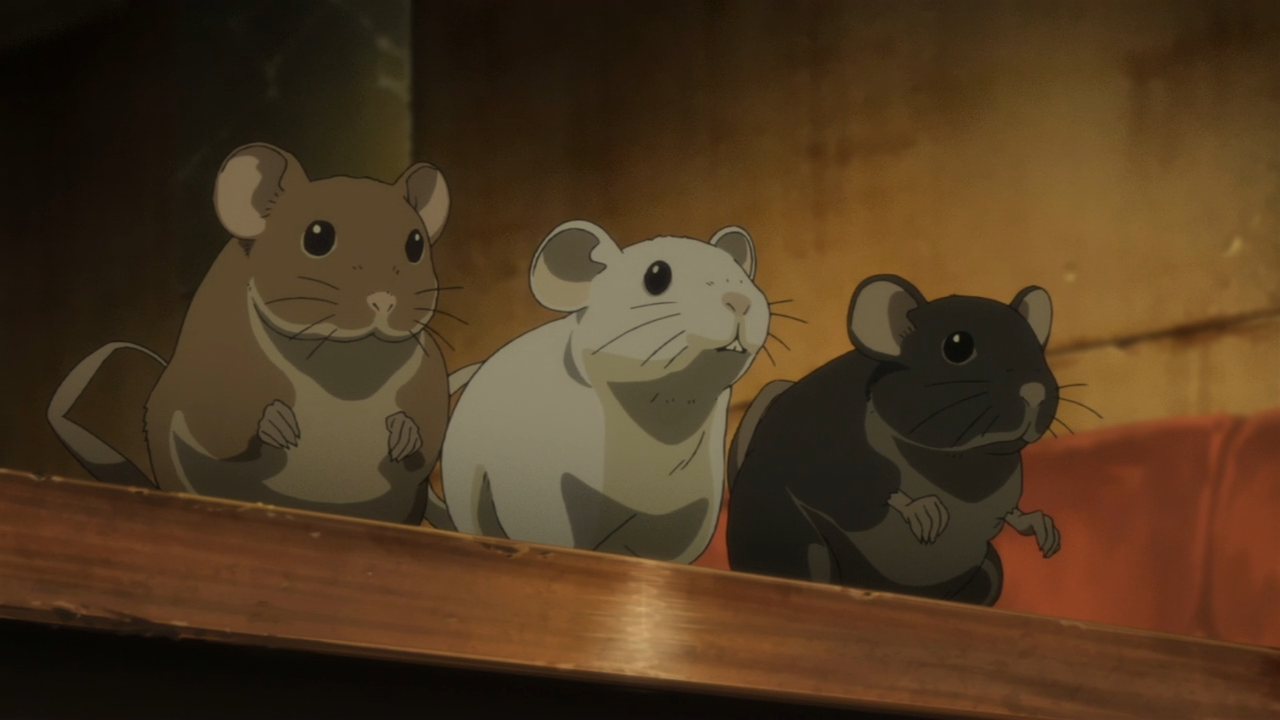
In the East, rats fare better in the image department. In Chinese culture, the rat is part of the Zodiac and anyone born in the “Year of the Rat” is seen as creative and intelligent, but also quick tempered. Hm, sound like someone we know in No.6.
• Dogs now join the anime’s cast of rats and bees. Seeing as how the story loves to cast animals in meaningful roles, I wonder if the dogs will carry any significance.
• In this episode, Nezumi insults Shion for his passivity. The bee symbolism, then, makes even more sense even if it’s a little heavy-headed.
• This week, we see Safu with her grandmother in the Twilight House. The grandmother seems happy there, but she’s still knitting as usual.
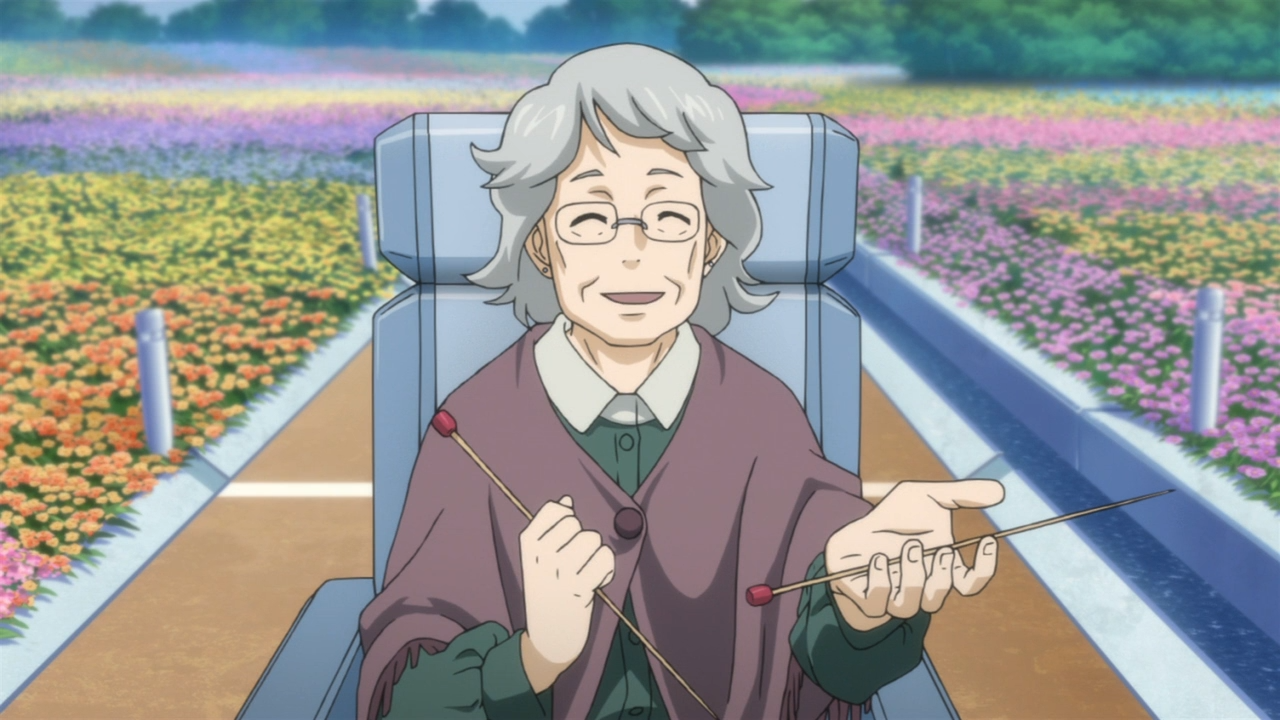

She claims to have made friends, but we only see her surrounded by an endless field of flowers.
• We see the outside world depicted often in warm, earthy tones. In comparison, No.6 is stark and often dominated by cool tones.


The opening scene full of books instantly reminds me of Fahrenheit 451. The fact that No.6 discourages anyone from reading the classics just adds to this effect. For a comedy option, the opening scene also reminds me of the horrible Equilibirum.

I wonder if No.6 would end up a lot like The Happy Prince with Shion as the Prince and Nezumi as the swallow. I’m only saying this because Nezumi refuses to help anyone from No.6 and yet I don’t think it’s impossible for Shion to convince him otherwise. (Or maybe I’m just being as optimistic as Shion?) I just hope it won’t end as sadly.
If the preview isn’t throwing red herrings, Nezumi’s real name is Eve and together with the snake-like mark around Shion’s body, I think it ties in perfectly in regards to Shion taking a bite out of the forbidden fruit. He now becomes more aware of the world around him. He can no longer live in ignorant bliss like he used to in No.6.
t’s funny to see people who claim to know better nevertheless continue to bring attention to the Shion/Nezumi relationship with “GAAAAAAAY” comments.
You’d think by three episodes we’d be past that, I guess not.
Anyway, excellent post on this episode! It’s great to read more on No.6.
We’re too far away from the ending to say whether or not a sad ending is justified, but I wouldn’t mind too much about a sad ending as long as it doesn’t feel manipulative. And oh, I’m sure Nezumi will come around. That’s what friends are for!
Nah, we can’t just enjoy a good story. But when a girl goes nuts and dons a penguin hat and a skimpy outfit in another show, this apparently makes it the best anime ever. I don’t have anything against Mawaru Penguindrum since it’s quite entertaining at the moment, but the hypocrisy is starting to become unbearable.
You pretty much handled Macbeth and Happy Prince. Very well done, don’t have anything to add. Stray observations:
Mixed in with the Dante + Shakespeare there’s this one: http://en.wikipedia.org/wiki/Beneath_the_Wheel (Unterm Rad), which is an interesting choice b/c it’s a lot less “classic” than the rest of the identifiable works on the shelf. Not sure what to make of “MacBeth” being spelled out with Greek letters.
Cute so-obvious-it’s-not foreshadowing at the beginning. Nezumi warns Shion that Shion will
“break” if he won’t forget about his mother, etc., and within the very same scene Shion’s embedded bee pupa starts killing him. Strictly speaking Nezumi meant something else by “breaking”, but nevertheless his prediction came true.
So far the book library actually seems a little more reminiscent of “John the Savage” from Brave New World than Fahrenheit 451, as long as we’re referencing stock works of totalitarian fiction. There’s a nice nuance to the library though: given that even warmth is a scarce commodity in the slums — and the fact those books all sure would burn nicely — we can guess Nezumi really values those books.
Shion’s thoughts of Safu are interesting; one is of her watching his family get moved out of the nice part of town and the other two with her included seem to be things that may not have actually happened (yet). It’s also an interesting touch that he’s also not actually looking @ Safu in any of his thoughts of her, even when he’s sitting at a table getting a meal with her.
I wouldn’t read too much into the scar color, since it’s the same color as the scars on Nezumi’s back.
So far so good with this show.
Eh, in re: the bookshelf, just realized the Decameron is actually an interesting choice if you’re aware of its premise. So the bookshelf reads as “Shakespeare + Dante” == great old classics, the Decameron an interesting additional classic to throw in, and the Hesse novel interestingly modern / relevant.
Still no clue why MacBeth is spelled out in greek letters though.
Yeah, I could sit here and unpack all the literary allusions in this episode, but it would probably add on another thousand words to the post and I would certainly never finish the post in any timely fashion. I may still go back at some point and take a look at the stuff you mentioned. After all, it’s kinda fun to look at what No.6 is trying to do. I certainly feel as though this anime is currently the most ambitious show out there, but it’s still early.
I hadn’t noticed this. But for him to even think of her at such a critical moment, Safu must mean something important to Shion. Just maybe not as a potential lover.
Either way, No.6 follows the tradition of having books as mankind’s last refuge against totalitarian government.
Oh, another thing I forgot to mention. Well, even if Nezumi does have similar-looking scars, that doesn’t mean Nezumi’s scars can’t carry the same significance as Shion’s. We know very little about Nezumi at the moment, however, so I’m not sure if there’s any point to speculating on his potential sins and guilt.
It’s a wonderfully ambitious serious and it’s fun to watch them attempt what they’re going for. Given the execution so far and the presumably solid source material it seems likely to come down to pacing issues.
Seems the novel author is fairly familiar with western literature. Perhaps that crack I made about ep1 resembling the start of Great Expectations was more accurate than I thought it was.
They don’t have to cover all the materials in the books. So long as the adaptation presents a story solid enough to stand on its own, I’ll be satisfied. Any further material can always come in a sequel or not at all. If anything, No.6 can fail ambitiously and it’ll have been worth watching just for the discussions that might entail.
Hello,
I’d like to add something to what you said about Safu. i also believe it’s interesting that Sion doesn’t look directly at her in those memories (except the last one, which we were all witnesses to), however i believe that the one where their (Sion and Safu) both sitting at a table seems to have already happened (i also believe it is the same with the one with the fireworks, although, i do wonder if it has something to do with that one image in the opening sequence, where we see fireworks behind Sion) . I think those two memories/events may have happened during the four years after Sion moved to Lost Town (the woman serving the drinks to Sion and Safu is Sion’s mom, Karan and it looks like their on the balcony of her bakery.)
I agree it’s pretty likely that’s Safu visiting Shion + his mom @ their bakery; it looks right and there’s the giant pile of bread in the center of the table. The problem is the timing: the impression I had in ep2 was that Safu hadn’t come by in years, and when Shion was explaining about the park ranger job, etc., it was as if he was explaining to her for the first time.
It’s not that it couldn’t have happened so much as it’s not obviously something that actually happened yet. Same with the fireworks, which they could’ve seen together as kids or could be Shion dreaming of events that might happen. Perhaps the answers are in the novels?
Ah, i see. Well, when i was watching the exchange i thought Sion was simply retelling his situation to Safu. IMO, he was simply reinstating a fact both already knew (i also believed the staff used this as a tool so that the audience can understand what had happened to Sion after Nezumi left).
But i can also understand your impression of that scene, i guess, it just depends on the viewer.
Your visions theory is a very interesting one, (hope this isn’t spoiler) but i’ve only read up to novel 5 of the series and i haven’t seen anything that indicates that Sion has any kind of precognitive abilities, but really who knows?
Oh, yes! i do believe all answers lie in the novels :)
I think the amusing part of the relationship between Nezumi and Shion is how the anime is trying to be rather coy about it. Granted, this medium in general isn’t known for its overt depictions of romance, but even this level of interaction is uncommon for two male leads. Homosexuality is still considered too ‘different’ for the mainstream and is usually relented to a secondary and mostly humorous role, yielding further displeasure from the audience when it breaks this trend and often resulting in inorganic character development.
Other than that, this show seems to be giving up too much of its subtlety, probably due to its expected short run. All the literary and zoological references are practically dominating the plot and removing a bit of its humanity. Although some things may ultimately be misleading, because I didn’t believe Nezumi’s hasty conclusion about the bees, either (or the excuse for the dogs, but that’s another story).
By the way, remember the grandmother’s past-times were knitting *and* gardening…
The anime would just be as coy had one of the boys been a girl — perhaps even more coy — so I don’t really understand why people are so up-in-arms about the whole thing.
Well, it’s not as if the characters are sitting down and pontificating over Shakespeare or Oscar Wilde. They just randomly mention a few quotes or the name of a story and then the plot continues on in its merry way.
I’d just like to point out that the blood on Lady Macbeth’s hands is itself a reference to Pilate washing his hands of Jesus’ death. So I would attribute Shion’s guilt to the crimes of his indifference and inaction.
A gnostic interpretation of the creation story may fit your explanation of the scar more closely: an arrogant, false god (the city) forbids people to eat the fruit of the tree of knowledge. Nezumi (Eve) is given a bite by the snake (the true god) who then shares some with Shion (Adam).
And is it just me, or do those look a lot more like mice than rats? Mice are often seen as helpful (see: Cinderella). Rats not so much.
The Pilate reference is a good call, but Shion’s guilt can represent multiple things at the same time. I’d hesitate on trying to pinpoint a one, “true” answer as attractive as this might be.
Concerning the gnostic interpretation, it’s plausible, but again, I currently support the idea that some combination of No.6 and the “real” world will represent the ideal outcome for our heroes. I think Nezumi still has a change or two to undergo before he is really a good guy in the narrative.
Regarding the rat vs. mouse distinction, I still think it depends on the culture. I just don’t think rats are seen as negatively in the East.
Mice or rats, no matter, they’re all robotic if I recall. But how did Nezumi gain the knowledge for that kind of technology? Could this be the forbidden fruit of No. 6 which he had stolen? And when I think of rats, I think of laboratory rats, which may also have a connection with Nezumi’s scar. But that’s just speculation.
As for Shion’s guilt, I think it comes from both his actions (deviant behavior which brought about Yamase’s death) and his inaction (upon realizing that “the city was a lie”). Regarding the Jesus Christ reference, if the citizens of No. 6 each carry a sin within them, Shion can relieve them of their sins with the antiserum; offering his blood and (anti)bodies. And this all goes down on the “Holy Day” in spring, same as Good Friday. I’m not saying Shion’s going to get crucified, but I’m guessing he’ll end up as some kind of martyr.
Perhaps the Macbeth reference also relates to Shion’s status as a traitor and the guilt/culpability inhabitants of No.6 might view him as possessing, as opposed to any internal guilt he might be experiencing. This ties into how the black marks on Shion’s hands could label him as a renegade (if you assume that the bee infection is actually a biological weapon used by the authorities to suppress dissidents). After all, the blood spot on Lady Macbeth’s hands isn’t just a symbol of her guilt but also a symbol of her treachery.
At the same time, the fact that the spots on Shion’s hands disappear indicate his ultimate innocence. Rather than being destroyed by the trial he undergoes and his own treachery (as Lady Macbeth was), he emerges as a saviour (now that his blood can be used as an antiserum).
I see what you’re saying, but it’s hard to see where Shion has been actively treacherous. Is he a traitor for ditching No.6? Possibly, but this seems awfully passive and, as a result, doesn’t really match Lady Macbeth’s true culpability. Lady Macbeth plays a larger role in her crime. Shion, at the moment, is just a follower.
Re: the spots’ disappearance, I’m not sure this signifies his ultimate innocence. He does have those red markings on his body. Even if they are not scars, they are a reminder of what he used to be.