
I guess I should’ve saved my post on guilt in Mawaru Penguindrum for this episode’s write-up, huh? Oh well, I’ll just briefly recap the relevant portions of my argument from a week ago.
At one point in the thirteenth episode, Sanetoshi asks, “To put it simply, are people’s future set in stone when they are born, never to be challenged?” Considering this week’s theme of crime and punishment, I’d like to reframe the question: should anyone ever have to atone for his or her parents’ sins? After all, isn’t this how fate figures largely into the Takakura siblings’ lives? They are forever haunted by their parents’ crimes. Shoma thinks that Himari’s death is the result of punishment being bestowed upon them, relating their predicament to Mary and her three little lambs.

Y’know, in Chihayafuru, a recent Fall anime, we see that others will gossip about you if you happen to be poor or speak an uncommon dialect. In other words, if you deviate from the norm — if you are the nail that sticks out, you will be hammered into submission. Imagine, then, how others might react if they found out your parents are responsible for “the most serious attack to occur in Japan since the end of World War II?” Even so, the thought that I can inherit my parents’ — or anybody else’s — guilt is ludicrous. I’m my own person; I should only be held accountable for my own actions.
I wonder, then, if Mawaru Penguindrum‘s attempting to arrive at the same conclusion. On the surface, yes, rebelling against fate entails the brothers saving their sister’s life even though medical science believes she should be dead, but on another level, wouldn’t rebelling against fate also mean throwing off the shackles of guilt?
Little Briar Rose
Anyway, let’s talk fairy tales again, and this time, we’ll have “Sleeping Beauty” take center stage. You’ll notice, however, that I’ve named this section after the Brothers Grimm variant of the tale; I just prefer it.
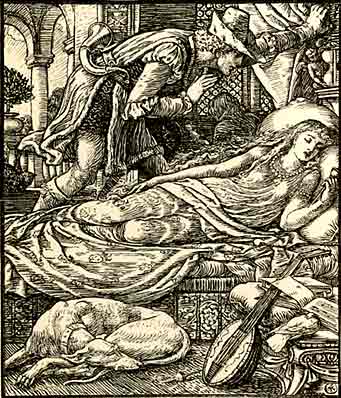
The fairy tale begins with the birth of Briar Rose, a princess-to-be. Strangely enough, the harbinger of good news had come from a frog. No, really! The queen was bathing one day when a frog leapt out of the tub and announced that she would then have a child. Hm, curious isn’t it? Eventually, the queen gave birth to a beautiful baby girl. The king then invited twelve fairies from across the land to commemorate the momentous occasion. He, unfortunately, overlooked the thirteenth fairy. In her fury, she cursed Briar Rose to death should the girl ever be pricked by a spindle. Luckily, another fairy counteracted the curse and reduced the punishment down to just a hundred years of sleep. Either way, it’s a horrible fate.
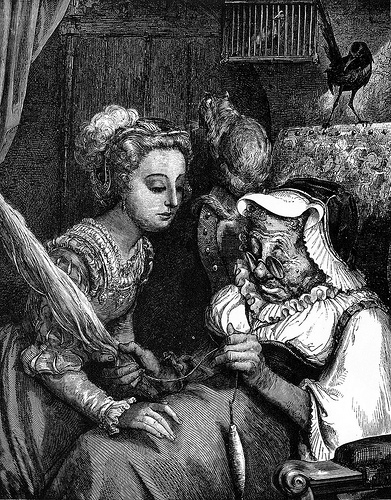
So out of fear for his dear child’s fate, the king ordered all the spindles in the land to be destroyed. One day, however, the king and queen had to leave the kingdom for reasons unknown. Briar Rose took this opportunity to explore the castle, and in a tower, she discovered an old woman spinning thread. The princess wanted to try spinning thread herself (spinning can be seen as a metaphor for dreaming), but as soon as she picked up the spindle, she pricked herself and fell into a deep sleep as fate has decreed. And yadda yadda yadda, a prince showed up, kissed the princess, and everyone lived happily ever after.
There are striking similarities between Briar Rose and Himari. Like Himari, Briar Rose is cursed by her father’s folly, i.e. failing to invite the thirteenth fairy. Like Briar Rose, Himari lives a sheltered life at home. Because of an illness, she has to stop going to school. Hell, she rarely goes out unless, it seems, she is accompanied by her brothers. In a way, you could look at Briar Rose’s curse as an illness with the most serious of symptoms waiting to strike at any moment. But back to Himari, without being able to go to school or go out, how does one ever find true love? And with the king being so protective of Briar Rose, how was she ever to find her prince? More on this later. Like Himari, Briar Rose’s parents disappeared (though they did eventually return), more or less allowing fate to be tragically fulfilled.
Death or deep sleep, what is the qualitative difference anyway? In either case, a prince has to come by and save the day, right? But then Sanetoshi revives Himari by pricking her with a needle and injecting a red liquid. This is clearly a mirrored act, a reversal of Briar Rose being pricked by a spindle and drawing blood. But let’s take a look at that curse a little closer. What is the subtext in pricking oneself and drawing blood? Some have suggested that the curse represents a fear of sexual awakening in little girls, i.e. menstruation. Sex can be calamitous, but perhaps it’s okay if one finds a true love.
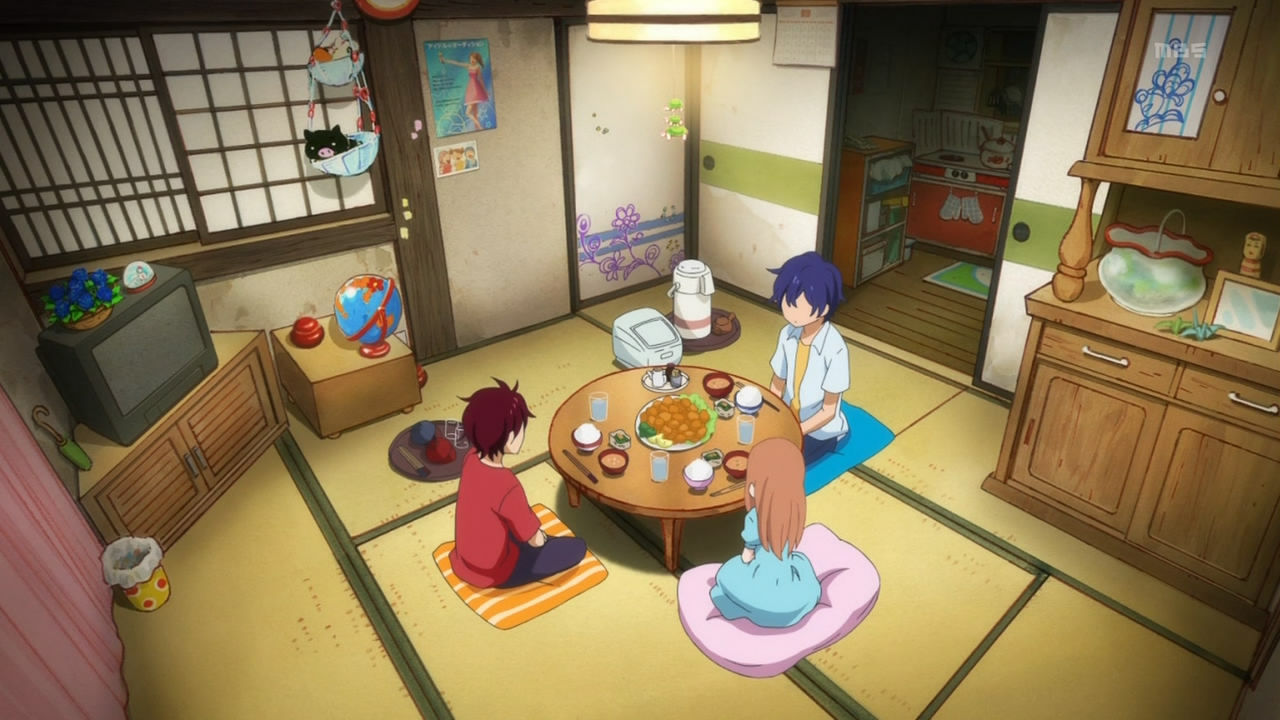
As a result, I’m reminded of how Himari is trapped in her own home and the only people she can ever interact with are her brothers. Here’s a young girl entering into womanhood and she has no friends, male or female! It’s not that she loves only her brothers, but that she can love only her brothers. By most standards, this is unhealthy. Anyway, recall a flashback we see in this week’s episode. The authorities came to the Takakura household and started questioning the brothers about their parents’ whereabouts. Himari poked her head out for just a brief moment, but Kanba immediately snapped at her: “Stay in your room!” Yes, he wanted to protect her, but so did the king, Briar Rose’s father.
And so Himari wandered off on her own one day at the aquarium, away from her brothers’ constant supervision. Like Briar Rose’s brief excursion through the castle, this brief moment of independence leaves Himari “dead.” Physically dead, maybe, but within the narrative, we know that she wasn’t to die yet (if ever). Rather, she was “sleeping,” and we learned from the ninth episode that she was really wandering a great library in an otherworld. And in this otherworld, Himari came to the realization that she needs to find her one and only love.
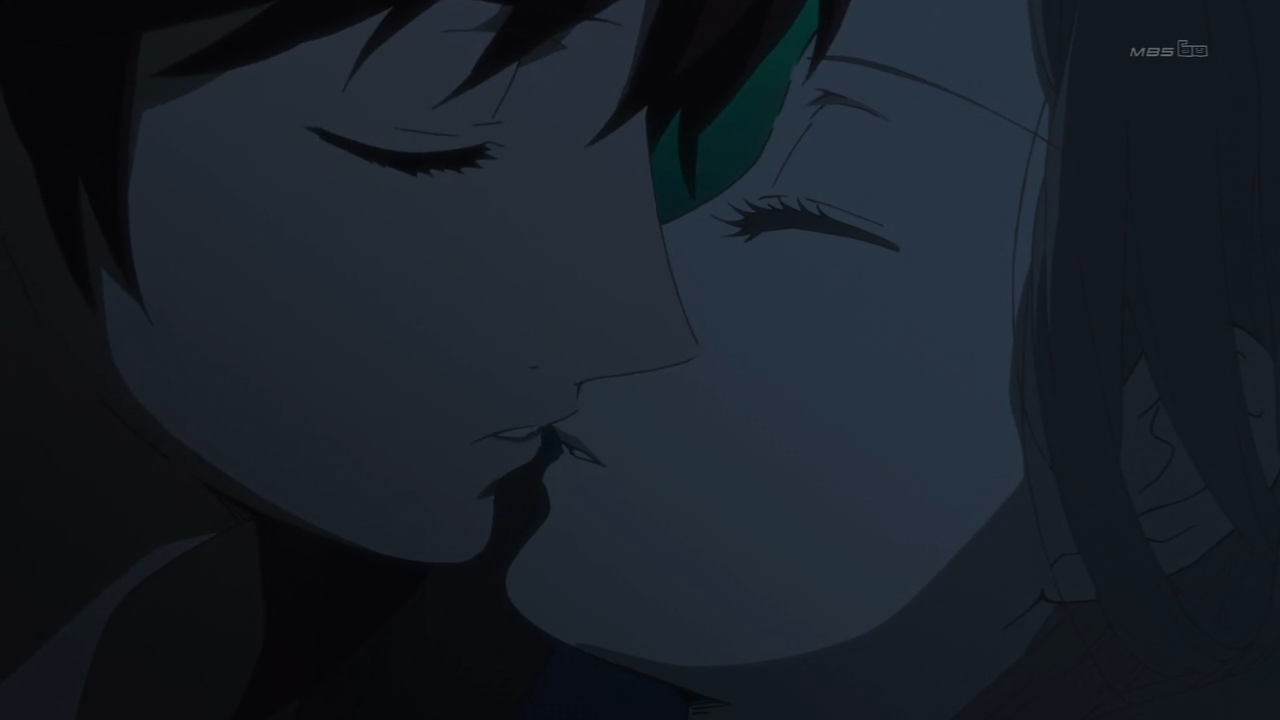
Many have speculated that Kanba is Himari’s true love. Is the quasi-sexual union between Alter-ego Himari and Kanba analogous to the kiss in “Little Briar Rose?” If Momoka is really controlling Himari through the hat, however, who is Kanba really reviving? In “Sun, Moon, and Talia”, an earlier, Italian variant of the fairy tale we’ve been discussing, the princess wasn’t just kissed by a prince. A king — who, I must add, already had a queen of his own — slept with the dozing girl and actually had two kids with her. Yes, she was still asleep when she gave birth! To bring things back to Mawaru Penguindrum, the quasi-sexual union between Kanba and Himari was what allowed her to live at first, but then Sanetoshi’s interference is required the second time Himari collapsed. Who’s really our prince then?
If I could return to Kanba for just a brief second, there is the case to be made that he is Himari’s true love. He is very protective of her; you could even say he has assumed patriarchal authority of the household after their parents disappeared. In other words, Kanba resembles the king in “Little Briar Rose.” In addition to that, he is (as far as we know) also Himari’s brother. Can we reconcile any of these conflicting positions? Of course, I lean toward a possibility that entails a non-incestuous true love for Himari, but I guess we’ll just have to see how the rest of the story unfolds.
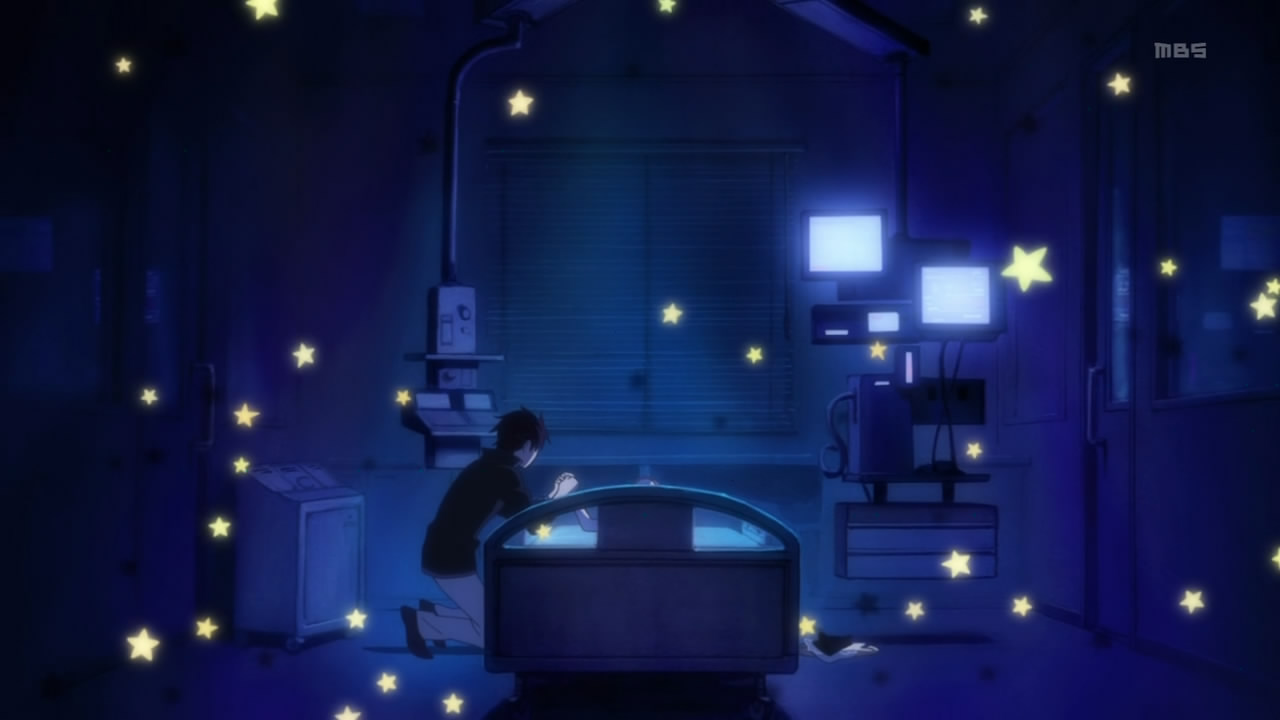
• In the latest episode, we revisit the library annex. There, we see Sanetoshi conversing with Himari’s hat. After a short amount of time, he seemingly releases it back to Himari’s side. So did he really save Himari or was he merely holding her life hostage for a short while? Just some food for thought.
• Despite being the titular character, Briar Rose is a rather passive heroine. First, her father protects her. Then, a prince comes by and saves her. The princess’s only significant action is getting herself pricked. Likewise, Himari is passive and maybe even more than we had previously assumed if Momoka is really the hat she wears.
• Tabuki tells Ringo that “[n]othing in the world is pointless.” In the end, the curse on Briar Rose had happy consequences. Just something to think about.

• How did “Sun, Moon, and Talia” end? Well, the queen found out about the king’s infidelity and tried to eat the two children he had sired with the princess, but the person she sent to get the job done fed her goat meat instead. Hm, kinda like “Snow White.” So the queen invites the princess to the castle instead where she planned to eat the girl. The king, however, finally caught wind of the queen’s scheming and had her thrown into the fire instead. Hm, kinda like “Hansel and Gretel” now. And so the king, a rapist I must add, gets to live happily ever after with his new wife and children. Y’know, with the original Pinocchio also biting the dust, the Italians sure do tell disturbing tales to children.
Everything else
• In the flashback, the siblings minus Shoma are eager to eat without their parents. Shoma, on the other hand, says, “Dinner is family time.” In the present day, Shoma’s penguin can be seen scarfing down food whenever the opportunity presents itself. I wonder if there’s any link here.
• The authorities had rather peculiar voices, especially the female agent. Is this an accurate depiction of what truly happened or a result of an event being filtered through Shoma’s recollection?
• When Sanetoshi was going on and on in his cryptic sort of way, Kanba yells, “Aren’t you a doctor?!” Kanba didn’t really think Sanetoshi was a doctor, did he?
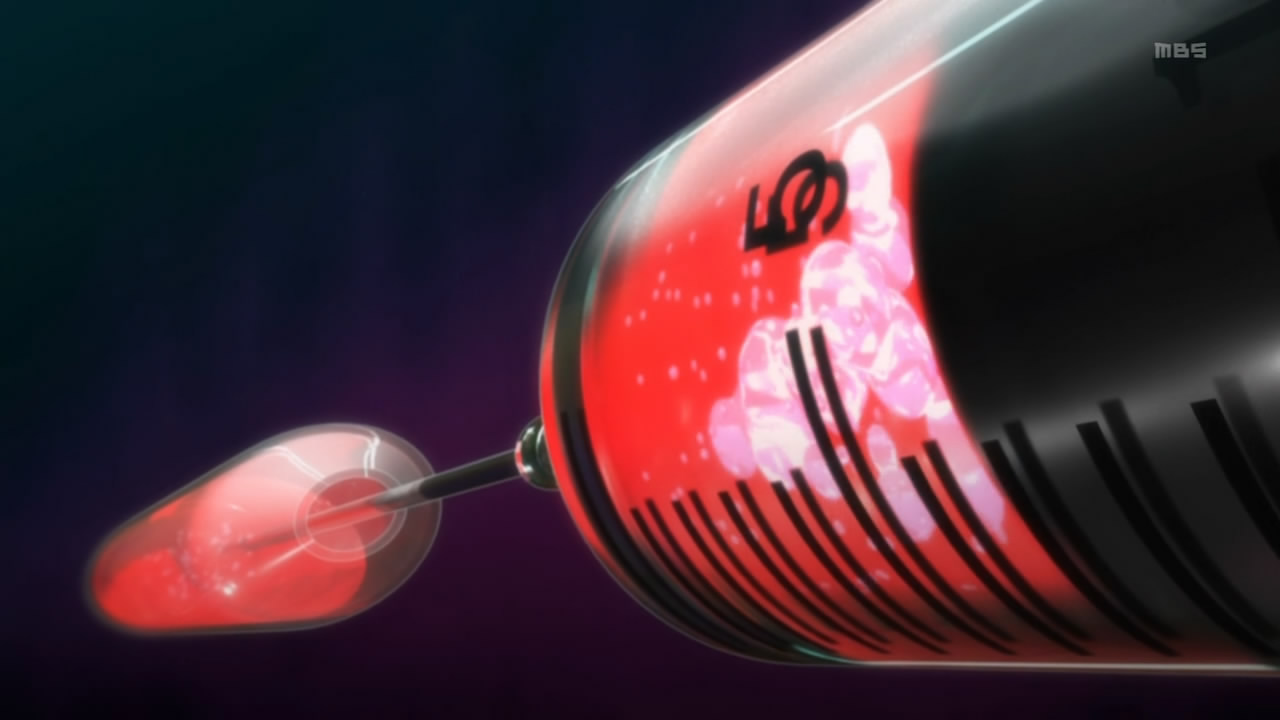
• At one point, we can see Himari’s heart rate go into the negative. That’s impossible, isn’t it? Or is this a clue that Himari wasn’t dead after all, but rather, she was currently in the otherworld? Could the red liquid Sanetoshi had injected been a placebo?
• But y’know, upon closer inspection, the red liquid has bubbles in it. You wouldn’t want to inject air into somebody’s bloodstream, would you? Oh well, there’s probably not enough gas in it to cause air embolism.
• Sanetoshi’s story also begins sixteen auspicious years ago when he supposedly met a girl with eyes like his. Could this have been Momoka? Why would he fall in love with Momoka just because she can see the same things as him? Is this why he desires her diary? In any case, the girl in Sanetoshi’s story, rejected him.
• Sanetoshi also remarks that he heard the voices of many cry out, “Save me!” Did these voices belong to the victims of the subway attack?
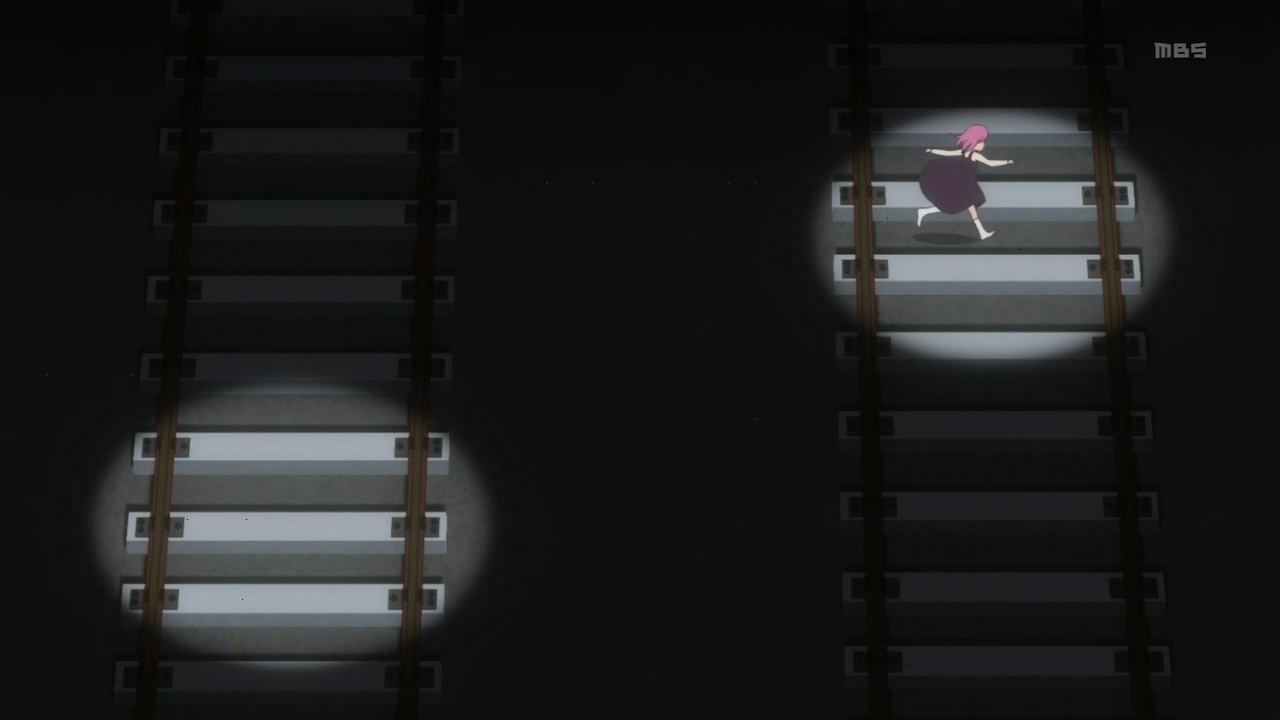
• We see Momoka in the otherworld cross over two parallel train tracks as Sanetoshi ends his story and begins talking about Himari. I wonder if this suggests that Momoka and Himari’s tales may be parallels of one another.
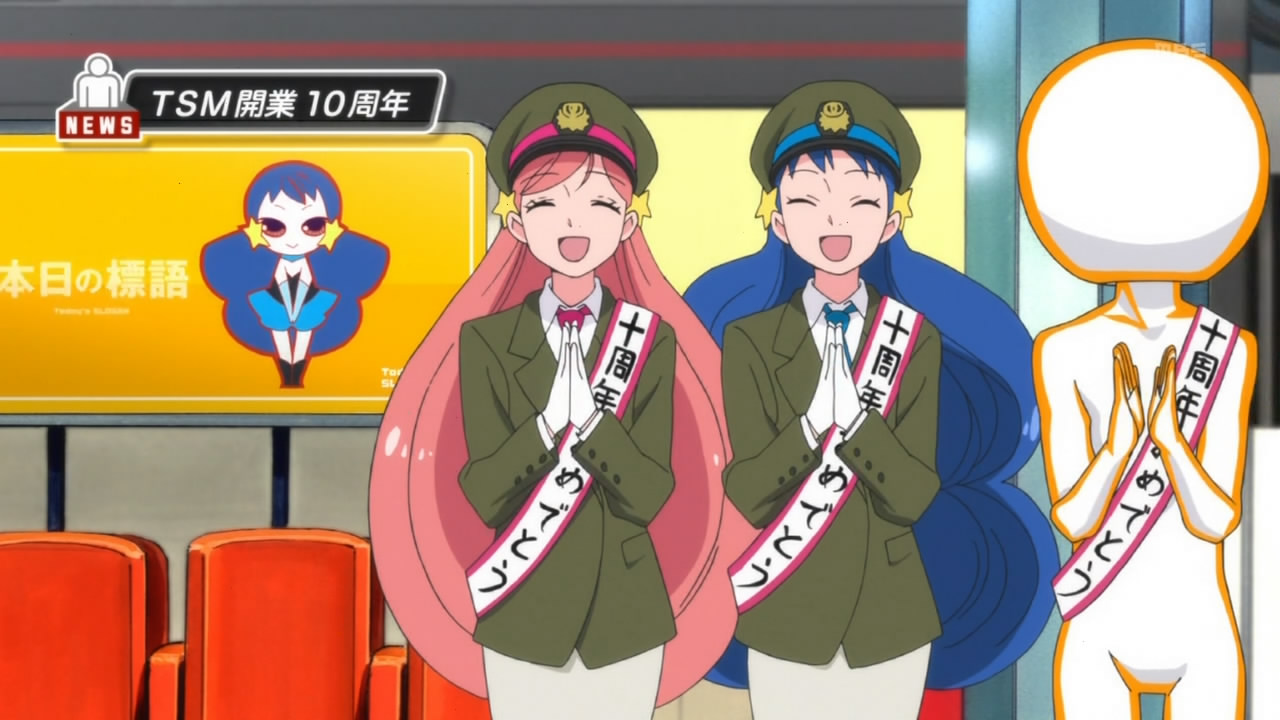
• I’ve associated fate with guilt, but we can also look at fate in a different way. Sanetoshi says to “you two” to find out whether the penguin drum really exists. He also wants to see if fate rules the world. Well, there can only be true love if two people are really fated for one another, right? So in a way, Sanetoshi might be asking if true love exists. And since the man seems to be obsessing over a sixteen year old rejection, whether or not true love exists would be a pretty pertinent question!
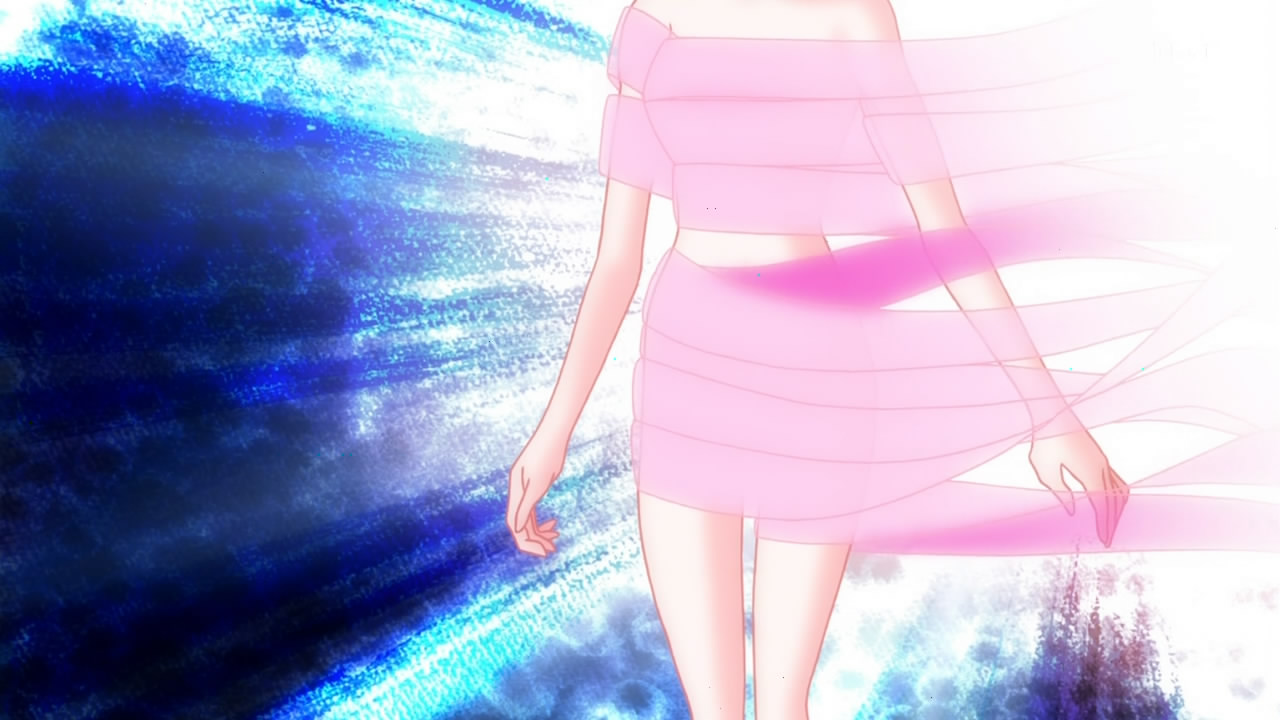
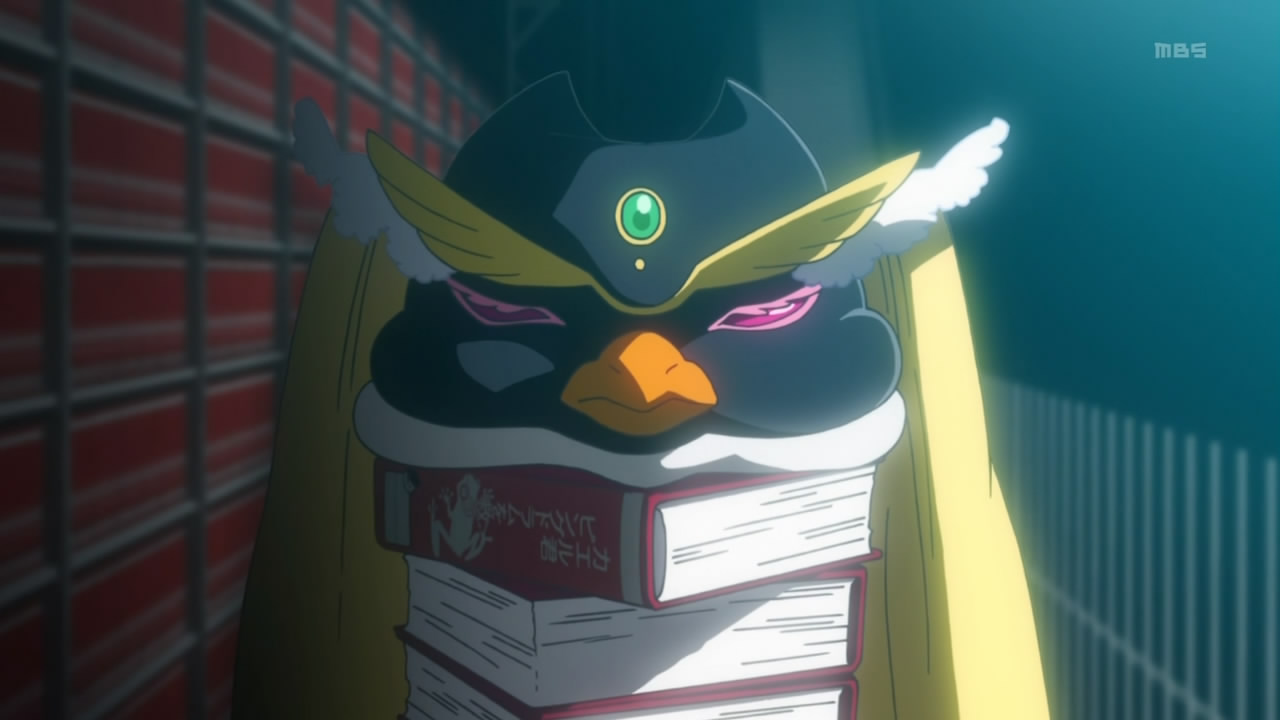
• I quoted “you two” in the bullet point above because I’m not quite sure who Sanetoshi is talking to. At first, I thought he was directing his orders at Himari and possibly Mario since he’s the only other person we know to wear a penguin hat. We later see, however, that Sanetoshi is just talking to a hat on a stack of books, and he tells it to “return to her side,” — presumably Himari’s side. But when the platform falls out from beneath the hat, instead of books, we see a pair of sock-clad feet. These feet clearly belong to Momoka. Sanetoshi follows up with “Farewell, my love.” What about Mario’s hat? If Momoka is Himari’s hat, which presumably explains the line “return to her side,” how do we explain Mario’s hat?
• Why is Mario so important to Masako? Himari is Kanba’s precious little sister so…?
• Ringo says she wish she had never learned about Shoma’s parents. Does she resent him now? Or rather, does she want to resent him but can’t, thus leading to confusing, conflicting feelings? From the way I see it, Ringo brings up the Takakura siblings’ parents to Tabuki as if to ask, “Should I be mad? How did you feel when you found out about them?”
• In the background of the scene between Ringo and Tabuki, we first see one black cat walking on the wall behind the two followed by three more cats. If Mary and her three lambs represent the Takakura father and his children respectively, as many other bloggers have suggested, it would also make sense for those four to resemble black cats to Ringo and Tabuki — black cats being a symbol of bad luck, after all.

• Well, I don’t know how much reliance we can put on the subtitles here, but Ringo uses the word ‘could’ when she says to Tabuki, “I wished I could become my sister….” The conditional ‘could’ implies to me that she no longer thinks becoming Momoka represents a real possibility, but again, I’m interpreting a translation of the real thing, so who knows?
• At the end of the episode, Ringo seems eager to pay a visit to her father and his new family. In the previous scene, she had seemingly confessed her desire to become Momoka to Tabuki, only to be reassured by the guy that he’s glad to have met her. Has Ringo possibly gotten over her Momoka fixation or does she still have darker designs in mind?
• Ringo also reaffirms her love of fate, but this time, she isn’t sitting on a toilet. Instead, she is on a train heading to destinations unknown (eh, probably home). At the same time, she parrots Tabuki’s words that nothing is meaningless. This would lend credence to the idea that she has gotten over Momoka, but hey, who knows? Still, with half the season gone, now would be a good time to focus more on Himari and her brothers.
• The credits end with two hands reaching down toward Triple H, one of them being purple. I don’t know what this means, but I thought I’d include the observation anyway.




I don’t think Momoka reincarnated as Ringo. If I’d have to guess I’d say she’s the penguin hat spirit.
Guess I’m missing something. Not sure why you guys all think Momoka is the hat.Okay, I see it now.I figured it was her because I supposed that the child who rejected Sanetoshi 16 years ago was Momoka and she could “see the same scenery” as him or something to that effect. And when he’s talking to the penguin hat he also says to the penguin hat that it can see the same scenery as him.
I went through the scene frame by frame and I guess the person wearing socks also has the same purple dress as the girl running through the scenes. Even then, however, like Marrow says, who would be Mario’s hat?
Plus, has Kanba been talking to Momoka ever since? The idea that Momoka is the hat and thus Himari’s alter-ego reduces Himari back to a passive character who doesn’t do anything. It also seems to counteract the idea established in the ninth episode that Himari has been actively searching for her true love. Then again, if the hat is Momoka all along, we can look back to the ninth episode and realize that the silhouetted kids exchanging apples wasn’t about Himari and some boy at all but rather Momoka and Tabuki instead.
I thought that Himari’s pinguhat was Momoka, or something. But then, what about Mario’s hat?
Momoka had a secret twin! …Momoko.
The way I see it, Sanetoshi talked to the audience about his story with Momoka, then told the brothers to find the penguindrum. After that he talked to Himari when he returned her hat (don’t remember this part clearly), and said goodbye to Momoka, his love.
On Sanetoshi’s “save me” cry, I think that is the cry from people all over the world who are suffering. The guy seems to have been there for a long time, doesn’t make sense if he could only hear victims of the subway crying.
Ringo probably got over her problem already, she didn’t have any illusion this episode and seemed to be happy for her father.
I dunno, this would kinda imply the brothers saw the otherworld with the library annex too or, at the very least, could hear what’s being said there. One of the person he’s referring has to be Momoka… then the second is an unknown for now. After all, we still don’t know who has the second half the diary so it’s not out of the question that we don’t know all of story’s participants just quite yet.
It would make sense for a horrific event to amplify the cries.
Whoa, these Italian fairy tales are intense. Sleeping with the princess and making babies while she’s still asleep? And I thought the ones you mentioned before were crazy.
The scene with Sanetoshi talking to himself made me think that he was talking to the girl in the library, who was also Momoka (based on the timing of her arrival) and the penguin hat (based on the way the camera lingers). Can’t say for sure though.
Your mention of the two hands in the ending made me think of Tabuki and his fingers. Apparently they were wounded before the attack. I wonder if there is some relation between this and the purple hand.
Guess we’re missing a second person then unless Momoka can control or represent two penguin hats at the same time.
Well, if Momoka lives in the library and can control a penguin hat… Sanetoshi is the only other person who lives in the library, so…
I dunno, Sanetoshi doesn’t strike me as someone to get directly involved. More like the sit in the back and watch things unfold kinda character.
have you seen school days??
Uh, yes. What brings this up?
Pingback: Notes of Mawaru Penguindrum Episode 13 « Organization Anti-Social Geniuses
Since the last episode aired, the puzzle of the two hands may be solved like this: ATTENTION SPOILERS
Simply as that,
The left arm is from Kanba’s corpse, while the right one, burnt, is from Shouma’s.
Just another case of hints hidden in OP/EDs.
Pingback: Notes of Mawaru Penguindrum Episode 13 | Organization Anti-Social Geniuses