
As soon as the episode starts, Rei tells the club that they need to start preparing for the next Comitia. I guess this is how the series will close itself out. First, the girls have to sell more copies than the last time. But more importantly, Ai got a not-so-great review from Rei’s old editor Hana when she looked over the girl’s original manga. What better way to show her progress than by impressing the “final boss?” It’s the sequel, so everything’s gotta be bigger and badder! Even the trip itself has made great strides. Instead of taking a boat, they’ll be boarding a plane. They’ll even arrive early so they can spend two extra days sightseeing in Tokyo. This is all Rei’s idea, too. She might not have the most cuddly personality, but she loves her students to death.
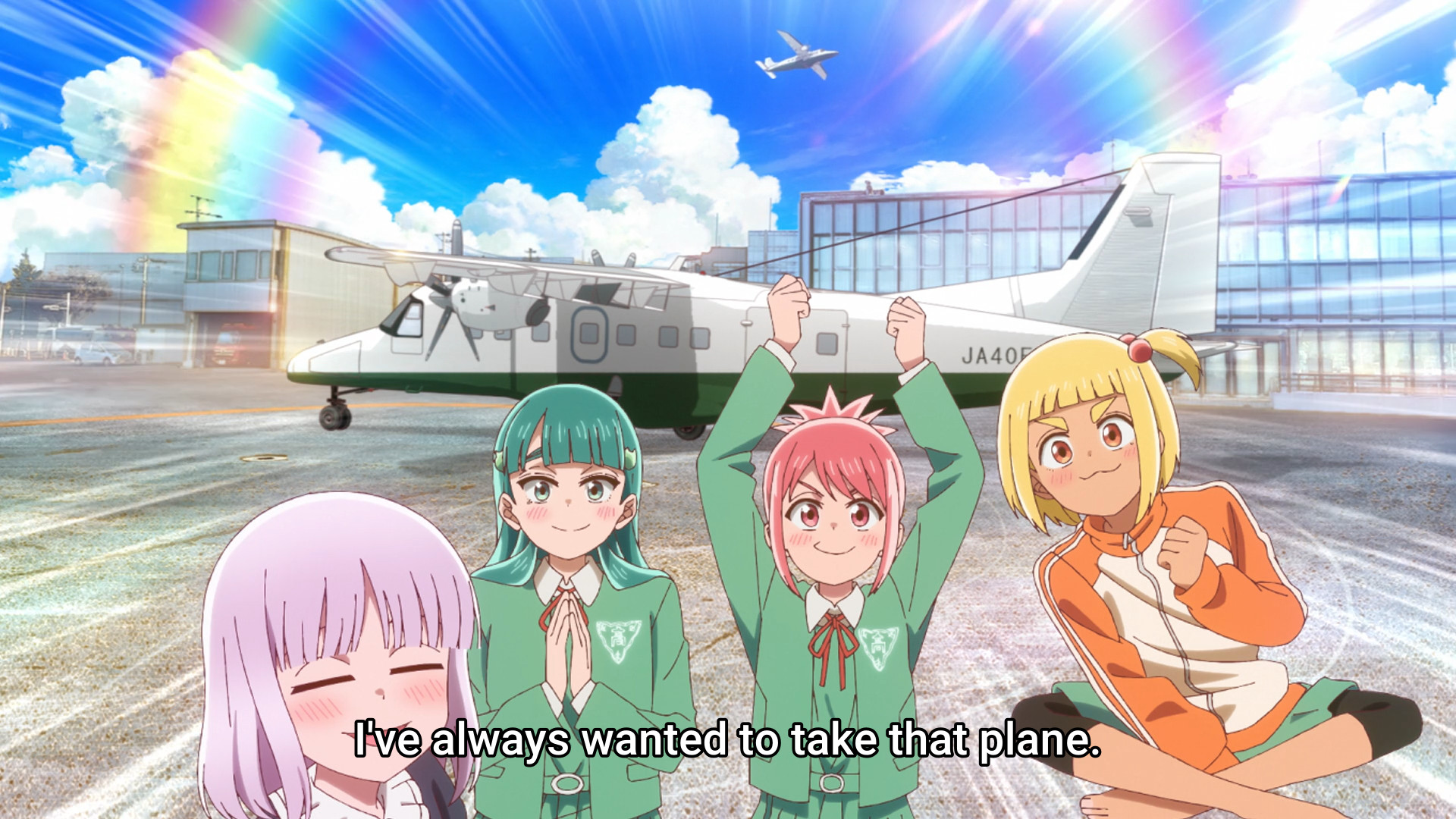
The club could simply put out a collection of their Dark Fuwa comics, and it would probably sell. They already have a few followers online, after all. Still, you gotta create something new for a big event like Comitia. Ai will definitely draw her own manga, but this time, she suggests Kokoro doing the same. Has Kokoro ever tried to draft a story before? I guess this can be a good way for the artist to challenge herself. After all, Ai also needs to improve her terrible drawing skills. They’ll both be putting their weaknesses to the test.
The girls take different approaches to storytelling. Ai immediately starts drawing without any planning. She has no clue where she’s headed, but she’s confident she can work it out during the journey. Like always, her manga arguably has too much going on. Meanwhile, Kokoro takes the opposite approach. She wants her ending to be the most exciting part of the story. As a result, she’ll create it first, then figure out how to get there. You can immediately spot the difference between her manga and AI’s and I’m not referring to just the art. Still, both of their methods are valid as long as you refine, refine, refine. But I shouldn’t talk, because I rarely take my own advice. These posts? I neither plan nor review them (other than correcting minor grammar and spelling errors, of course).
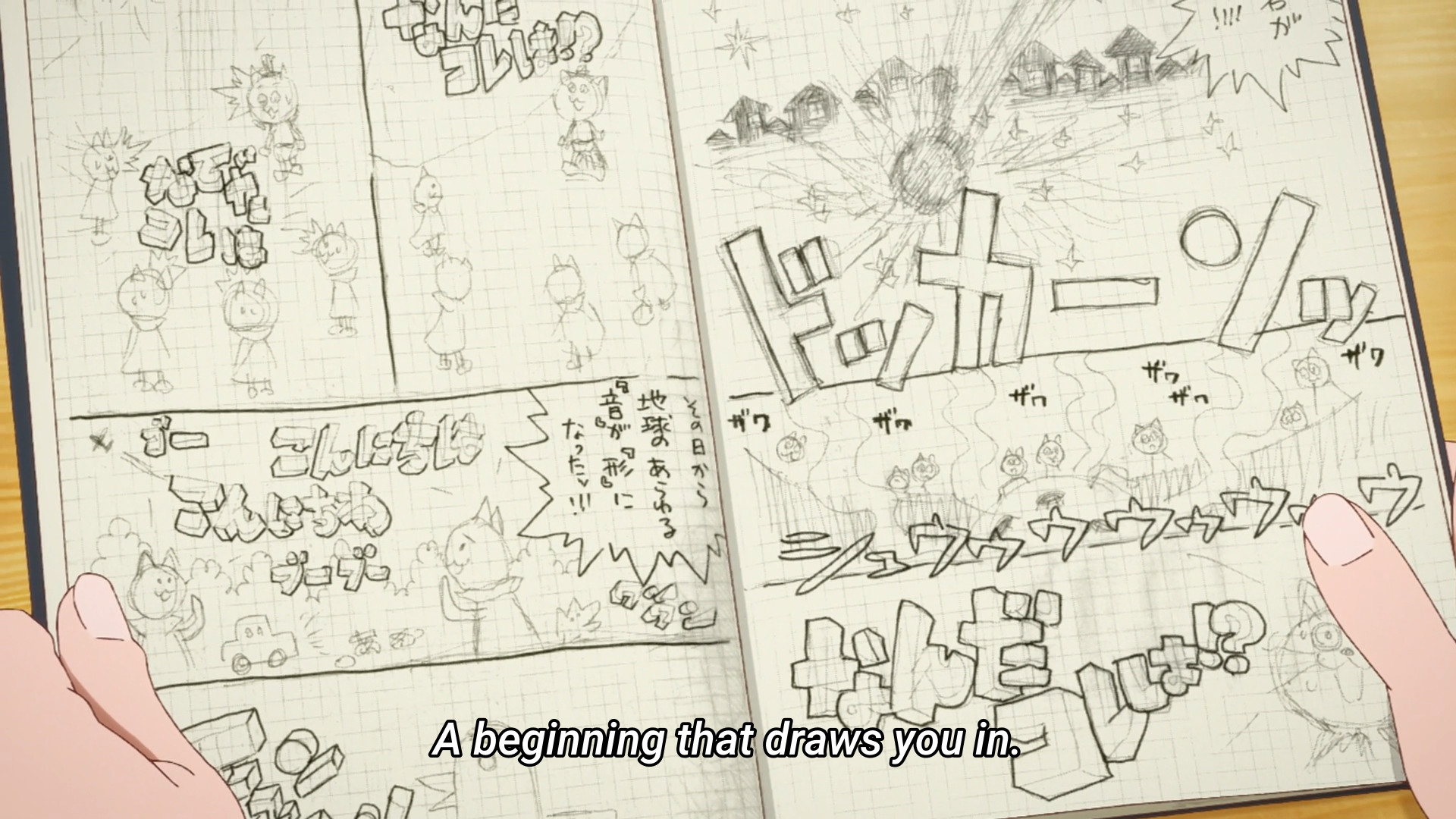
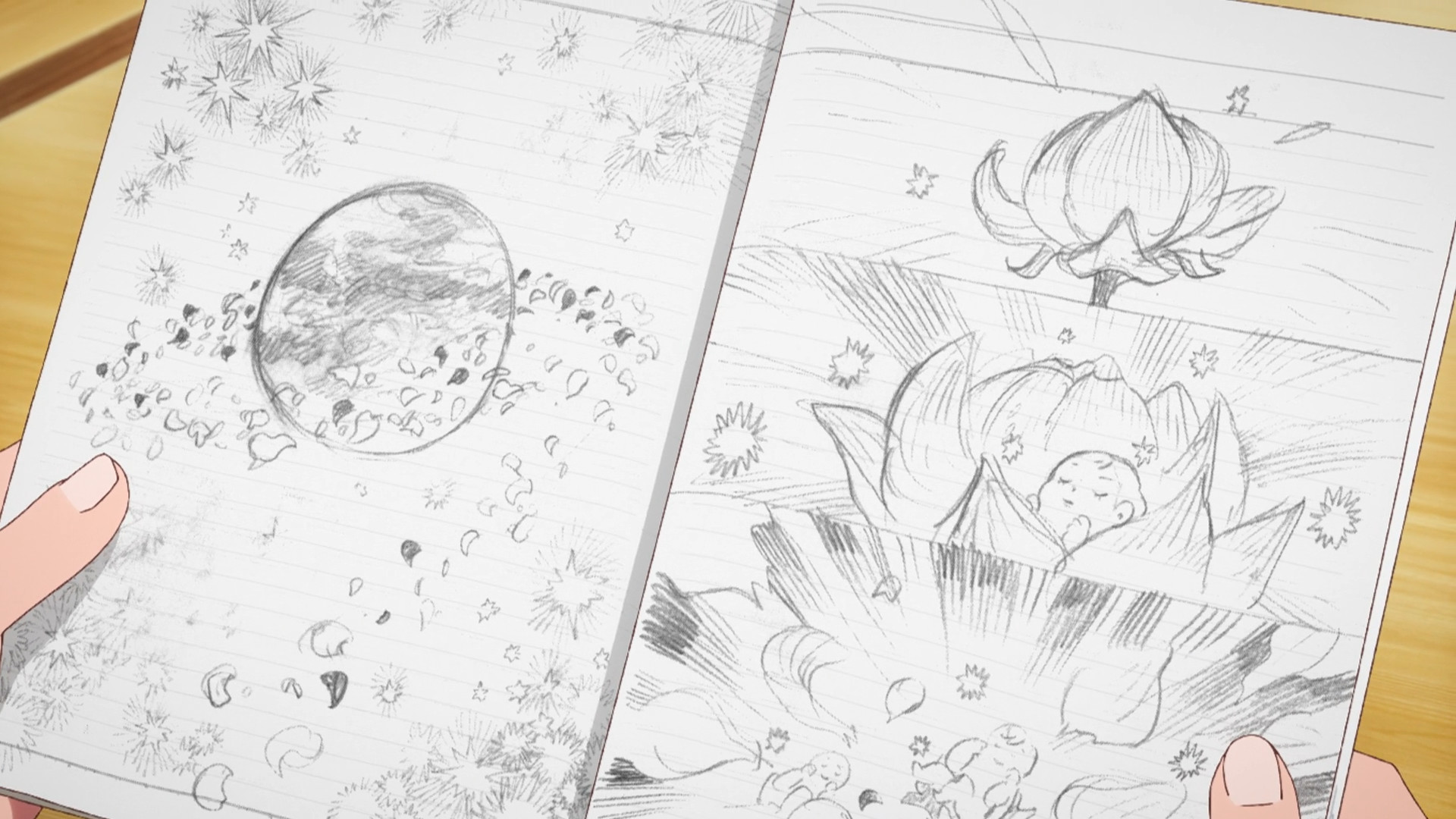
In the end, however, both girls end up having similar doubts about their first drafts. Sachi reads Ai’s new manga and immediately chuckles, “So stupid. It’s all momentum like always. A total mess.” Undeterred, Ai and Kokoro arrive at the same idea: they should review each other’s work to learn from one another. Where is Hikaru, you ask? Just quietly doing her thing on the side, but last week’s character development wasn’t for nothing. Not only is she spending more time with the girls, she even gives them salient advice: combine their work. Take advantage of their polar opposite strengths. Specifically, start with Ai’s kinetic storytelling, then allow Kokoro to tie up the loose ends and thus guide the plot towards a satisfying conclusion. This is kinda like Hegel’s dialectics, i.e., thesis-antithesis-synthesis, but applied to manga creation.
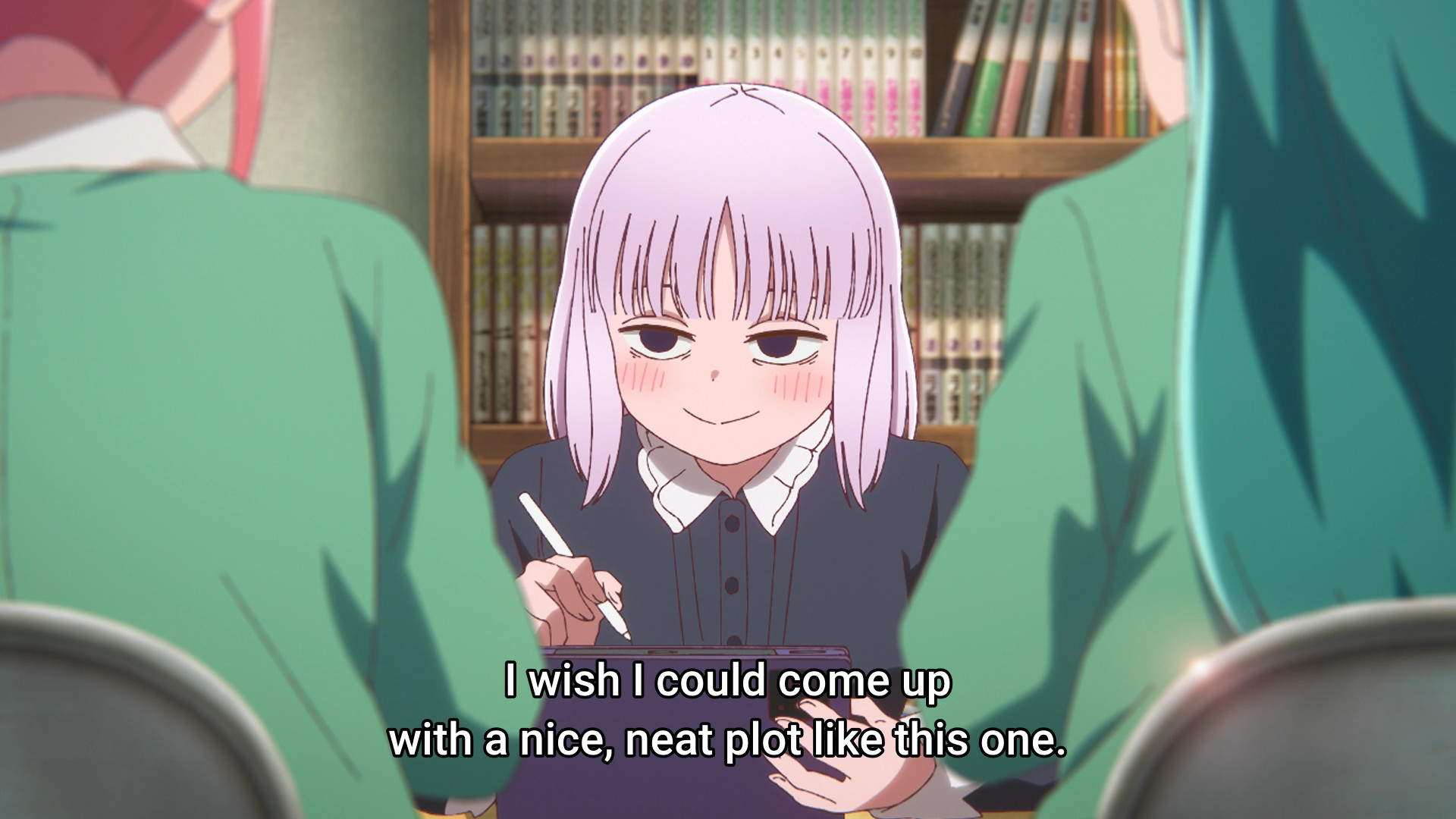

Still, this means the girlies will end up creating just one manga between them. There’s something to be said about having two completely different pieces of art sitting side-by-side, allowing us to appreciate the contrast — even if that contrast is full of flaws. Sure, by combining their efforts, they might achieve balance and overall greater quality, but jank shouldn’t be outright dismissed. For example, an unpolished but ambitious game can still be immensely interesting to experience — far more interesting than any hyper-refined triple-A production that is intended to sell millions of copies. Too often, the latter feels as though it has no vision — no guts to try anything truly daring or ambitious. That’s how you end up with a motorcycle system in which there is no fail state. What’s the point of even creating a game if you are that scared of friction? I think the same thing applies to manga or books. Friction in both the art and the story is not necessarily a bad thing. Some of the best books are full of run-on sentences that might span multiple pages, but it works precisely because it conveys the story that the author wants to tell. Ultimately, my point is that when you refine and collaborate, you have to make sure you don’t go too far in sanding down the edges. You might end up with something bland and safe. But ultimately, if a collab is what makes the girls happy, then so be it. Hell, Ai and Kokoro finally start referring to each other by their first names.
AI still needs to step her game up, because she can’t let Kokoro handle half of the story and all of the art. She can retain her unique artstyle, but it’s still a little too rough. Don’t sand the edges too much, but you can sand a little. But how exactly are they going to blend their wildly disparate artistic abilities? Unfortunately, we don’t get to see them go through the process of doing exactly that, because the second half of the episode cuts immediately to the aforementioned sightseeing trip. Plus, what we get is more of a montage, which… I mean, let’s be real, montages are kind of a cop-out in terms of storytelling.

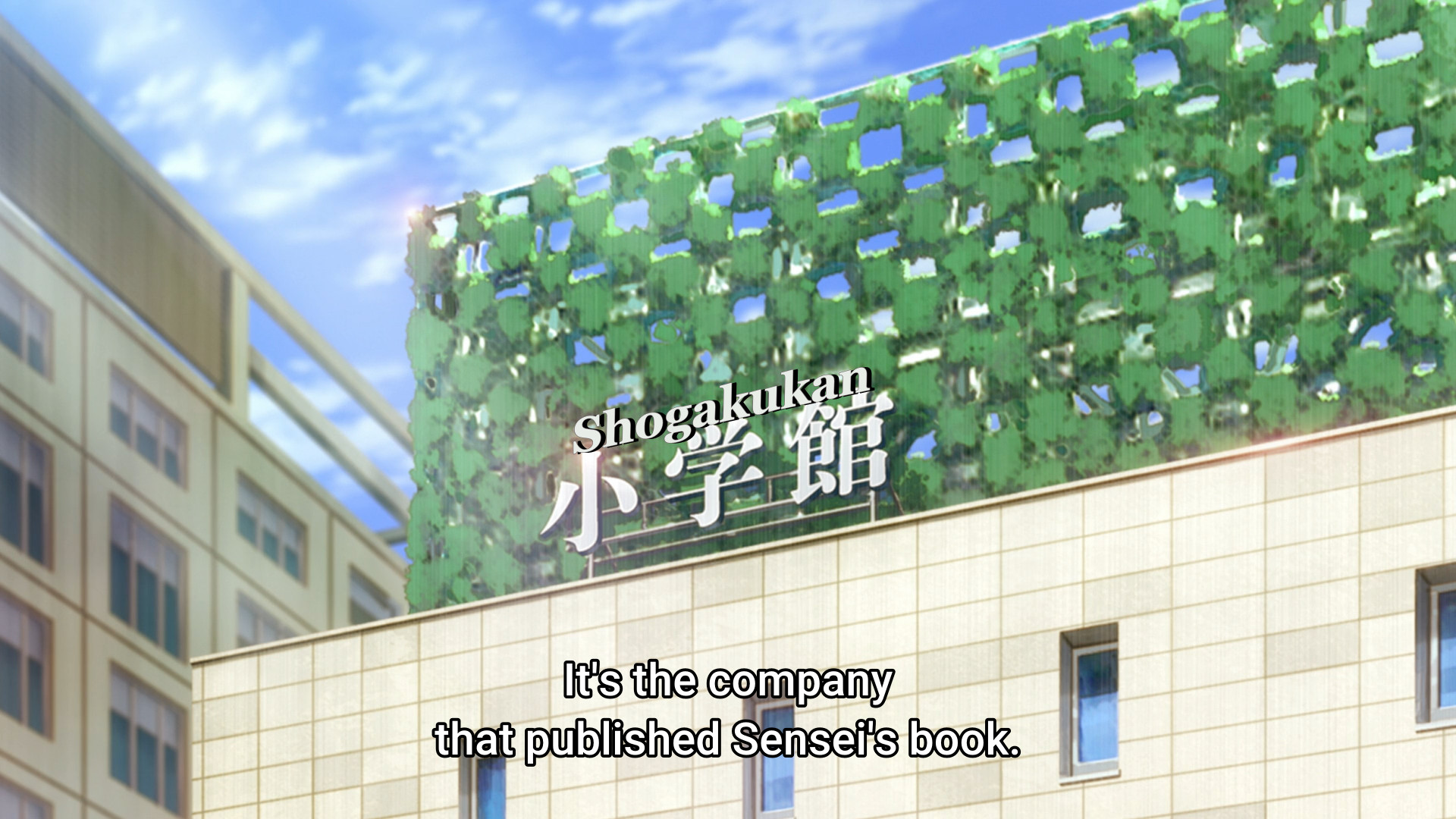
Kokoro stumbles upon a store selling Rei’s manga, so she just has to show it to Ai. On their way there, they come across their teacher’s old company, so you know what that means: it’s time for another patented Rei flashback full of artistic struggles and the self-loathing that comes with it! Specifically, we get to see her attend a company party with her two friends (and assistants) as her guests. Standing among a crowd full of wildly successful mangaka, Rei can’t help but feel pathetic. Like I said, the self-loathing immediately sets in. Girl, hasn’t anyone ever told you that comparison is the thief of joy?

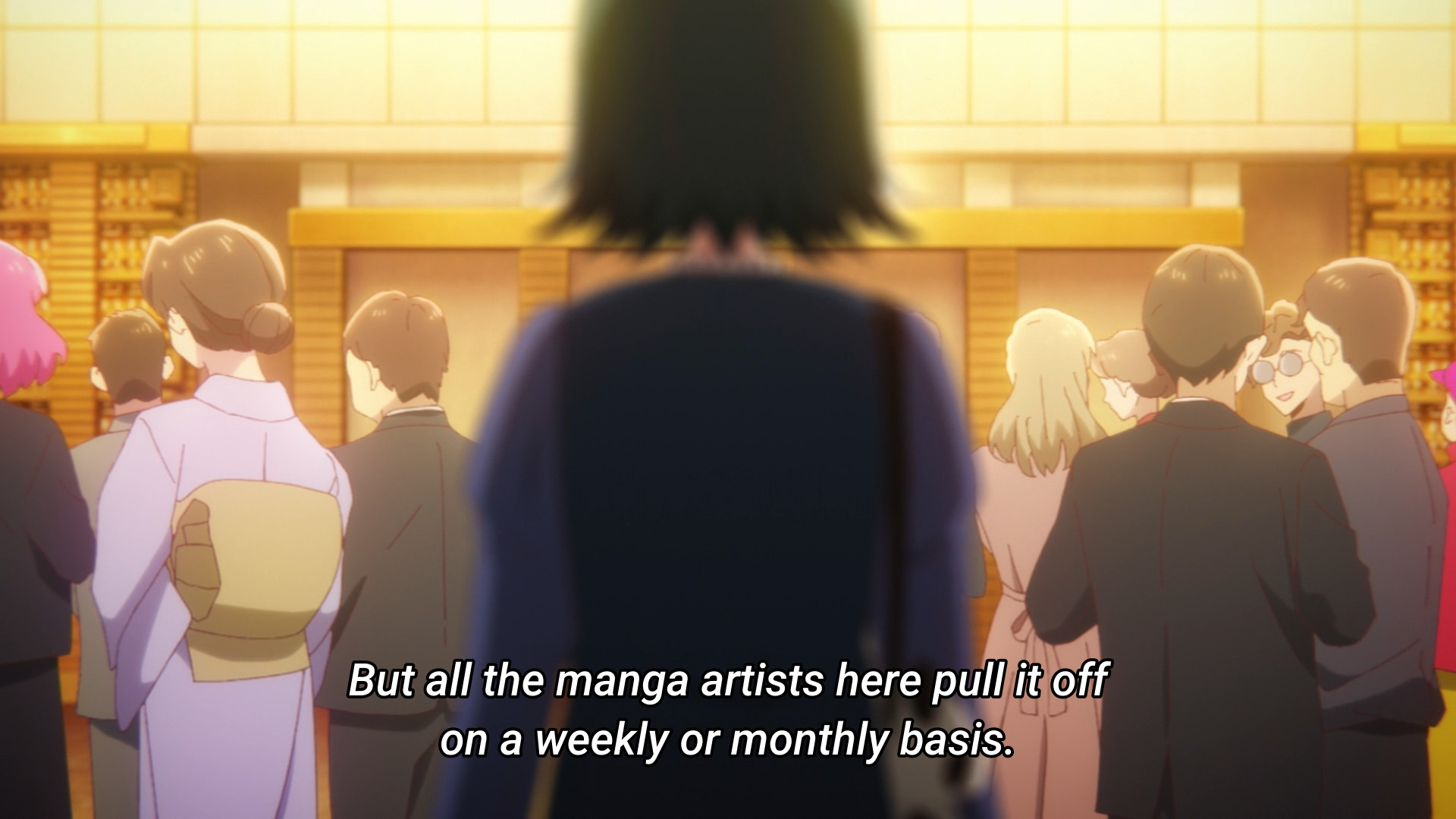

All of a sudden, we get a quasi-religious moment where Rei and her friends must have found and met a very important person in the industry — perhaps even a pioneer in helping manga grow and evolve. But who is it? I wanted to say Osamu Tezuka, because it was the first name that came to my mind… but would he even be alive at this point? No, it can’t be him. He died relatively young at 60 in ’89. Well, there is more than one influential mangaka. I’m just not well versed enough in the subculture to come up with more names. Still, this transcendent moment is what ultimately reignites the magma buried in Rei’s guts. That’s probably why the story doesn’t specifically name the man. He’s a stand-in for whomever you might idolize. You don’t want to pick a specific person just for the reader or viewer to go, “Meh, I don’t care for their work.” But if Rei’s passion came back that night, then where did it go later? After all, she isn’t a mangaka now. She didn’t stick with it. She’s currently a teacher. There’s a rather cruel, insensitive saying that goes, “Those who can’t do, teach.” But maybe the real problem isn’t that Rei can no longer create, but rather that she’s letting her fans down regardless of how few of them she has left.

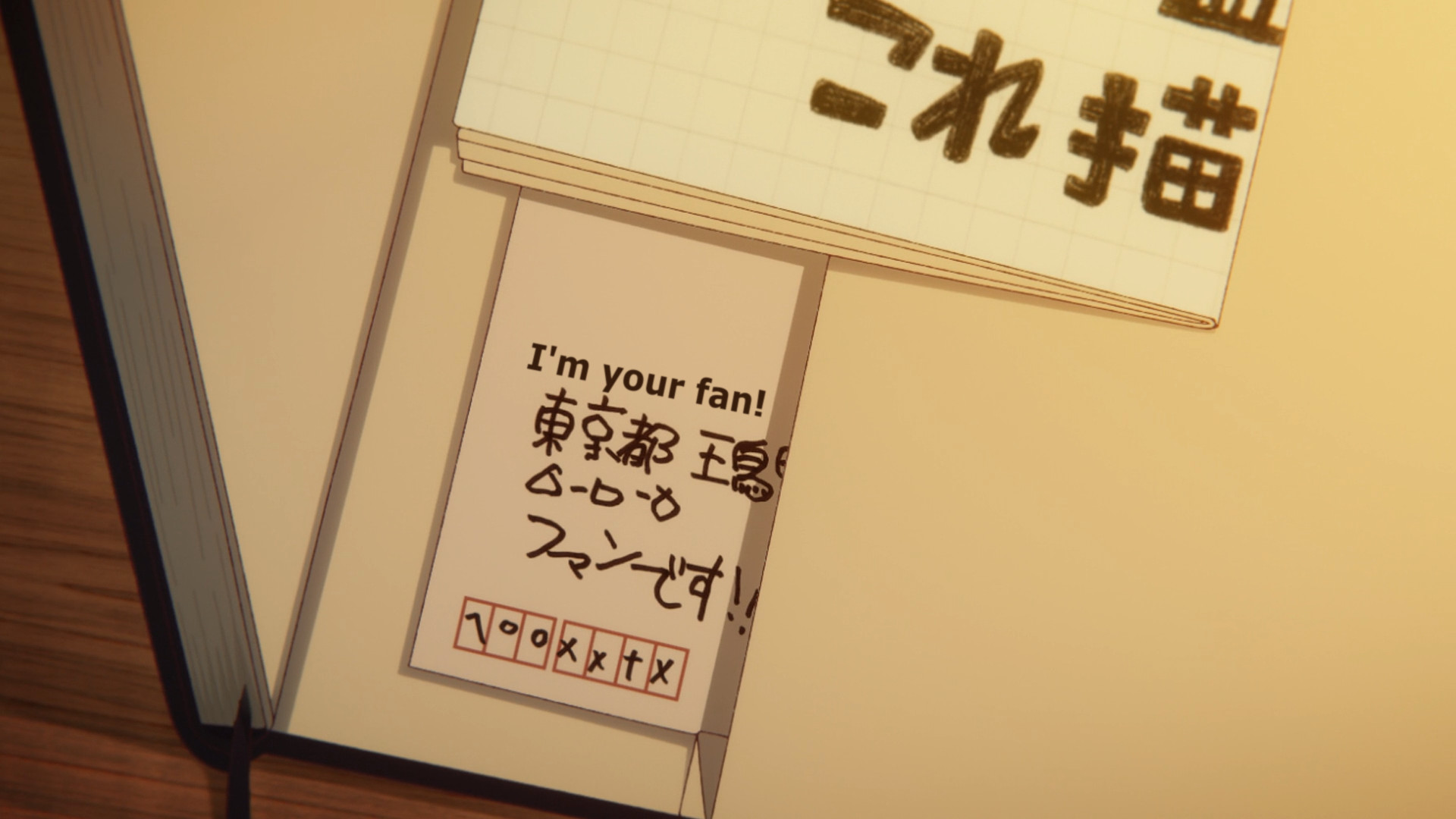
With Kokoro and Sachi to man their booth, Ai has time and energy to spare. As a result, she lends Hikaru a hand, which results in her getting firsthand experience of what it’s like to be both wildly popular and commercially successful. Damn, you could at least stack the bills up neatly. Hikaru just throws it all in a trash bag. Still, the booth was only open for a short hour. They had to stop sales because Hikaru literally ran out of books to sell. In the process, Ai picked up quite a few business cards from interested publishers. But why would Hikaru want to get herself legally tangled up when she’s already this successful? Well, seeing your comic serialized in a popular publication has that snazzy official feeling. Hikaru, however, marches to the beat of her own drum, and I think she’s already emotionally fulfilled with what she’s managed to accomplish on her own.


It’s funny because Rei lived and died (not literally) on her desperate need to get serialized. By the time she got there, she was so battered and bruised from the climb that she lost her passion (and apparently, briefly regained it). Hikaru seems to have inherited a bit of her mother’s need to be the best of the best, but she still doesn’t yearn for that kind of validation. She gets all she needs from likes and engagement online. The people who line up at her booth before Comitia officially opens are just physical proof of that. On the other hand, approval from industry professionals doesn’t seem to matter one whit for Hikaru. It’s fascinating, and it’s a good hint at where we are headed. With the internet, people can just go independent and self-publish their own work. What companies offer is the ability to get your name out there and market your work. You might never get noticed on your own, because you’re at the mercy of the various social media algorithms. But Hikaru certainly doesn’t have that problem.

When Ai returns to the other two, she discovers that they’ve also sold out of everything. Apparently, all Hikaru had to do was put out the word on social media; she’s big enough to manipulate the algorithm. This is the power of true influencers. Still, there is one small problem: Ai has no clue if they would’ve been successful on their own. As a result, she feels as if she has no choice but to confront her fears and let Rei’s old editor Hana take a look at hers and Kokoro’s collaboration manga. I guess this will serve as the climax to the series when we return to it next week.
Stray thoughts & observations:
— Of all the places Ai wants to visit in Tokyo, it’s bookstores. Granted, her island is probably really small, but how often do you get to spend time in a big city? You gotta take advantage of that to explore new things and put yourself outside of your comfort zone.
— Rei previously complimented Ai on her use of sound effects, so that’s what she wants to hone in on for her next manga. I think this is a good way to appreciate one of manga’s many innovations. It might seem simple now, but comic sound effects weren’t always so varied. It’d just be like “BAM” or “POW.” Manga artists came along, however, and started adding texture to every scene with creative uses of sound effects. They also became a crucial storytelling element. “ZAAAA,” the text for heavy rain in hiragana, might blanket a child the same way the actual sound might in real life.
— I think Ai’s art has gotten better…? It still has a long way to go before it comes close to what Kokoro can put out. Having said that, manga is more than just the quality of the drawings. Some of the best stories look kinda ghastly on paper. I like Mob Psycho 100 as a whole, but the art is terrible.
— Is Rei exhibiting a bit of jealousy when she sees how well Ai and Kokoro complement each other? Or is she lamenting the fact being a lone wolf has cost her so much time and energy? Well, Hana’s right there. I think she’s been playing the long game, waiting to see if Rei ever gets a clue.
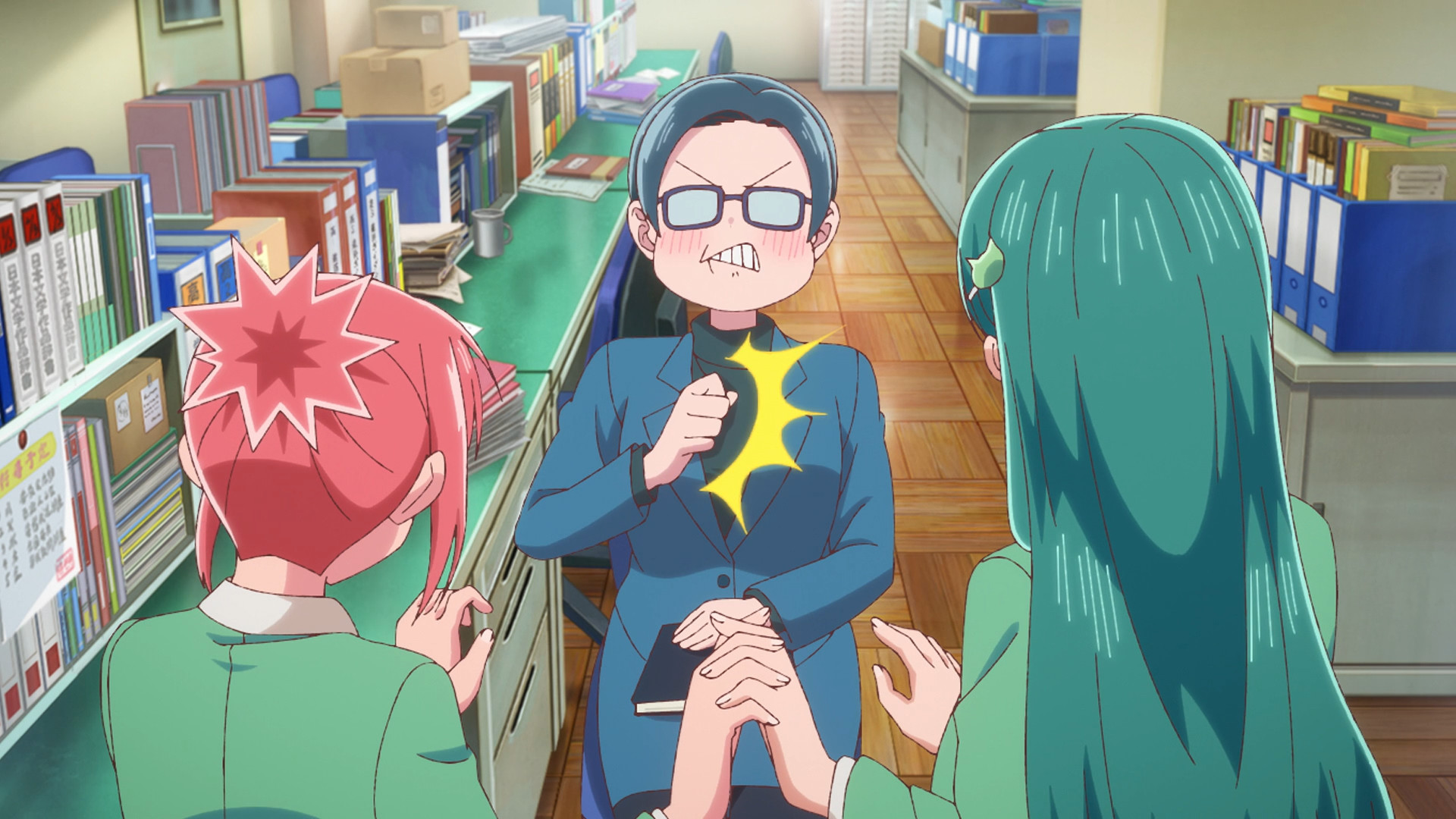

— Going into this show, I honestly thought Pokota would play a larger role. He’s barely in the story, though. And this time, as he watches Ai walk off joyfully with her friends, there seems to be a melancholic tinge to his words: “Maybe… it’s about time.” She was a lonely kid growing up, right? Back then, she needed manga and subsequently Pokota. Things are different now.
— Wow, is there really a book-themed hotel in Tokyo? They’ve got something for everyone, it seems. Instead of shitty pay-per-view, I’d love to have a mini-library to read through the next time I book an extended stay in a hotel…

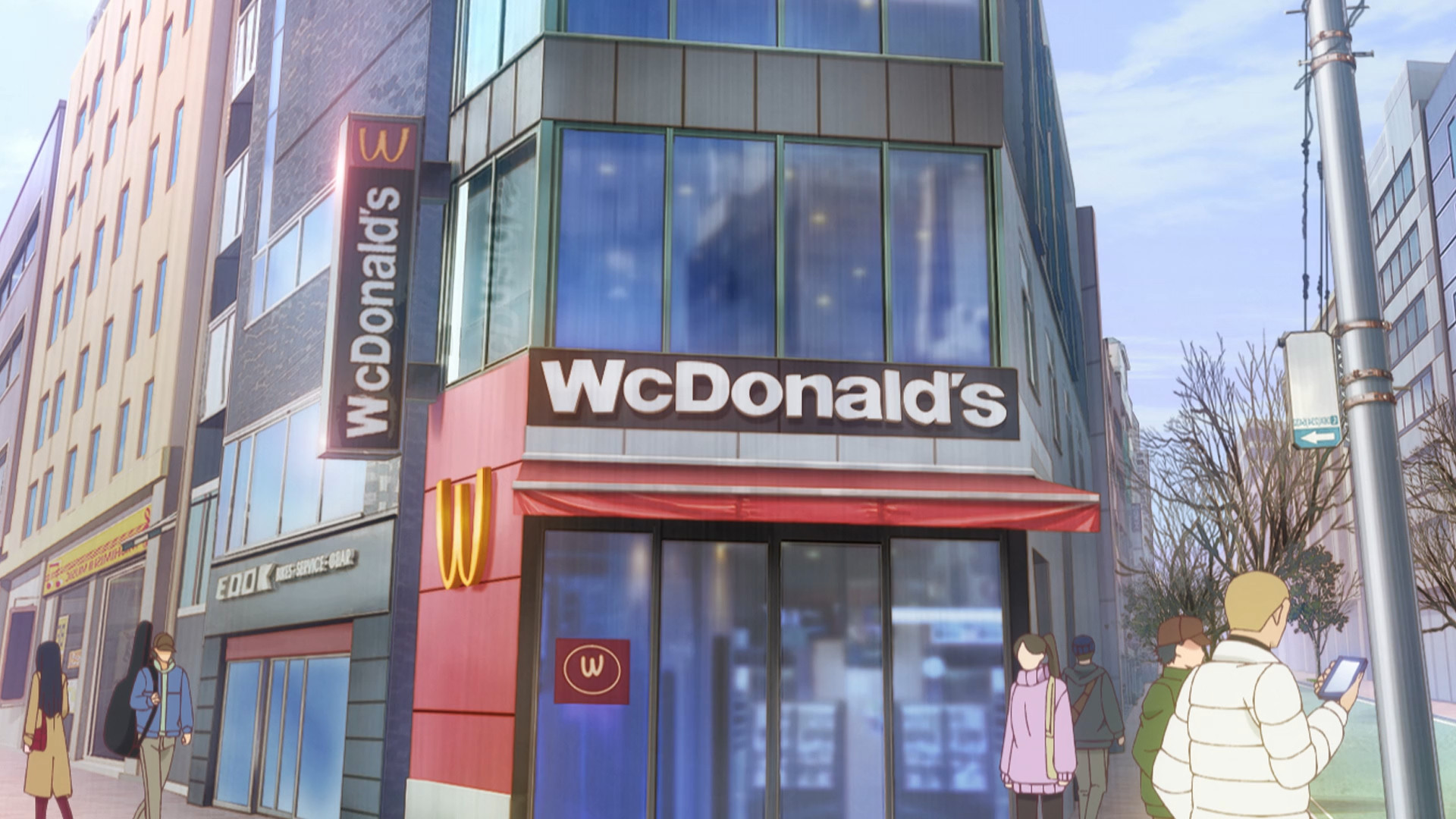
— Isn’t it funny how WcDonalds is such a ubiquitous parody of the fast food chain? Everyone does it. Even anime does it! And you literally have to read it out in your mind as WackDonalds, right? I know I do.
— Hebichika is so funny. When Rei greets her, she immediately asks, “Who might you be?” But a split second later, she realizes she’s talking to Rei. Her rude ass opening question is basically a reflex. She can’t help herself.
— Damn, that is expensive. Rei’s manga might not be super popular, but at least it’s kind of a collector’s item?

— It looks like the club is selling their past works too. Makes sense, I guess.