From the outside, it looks like a company’s lab suddenly started assembling a military-grade robot on its own. Obviously, it’s not magic; a hacker is involved. The robot then escaped the lab and ran into the street where a truck was barreling down the road. The getaway was short-lived. Upon closer examination, however, the robot appears to possess a Ghost. The team brings up the Ghost dubbing incident involving the trafficked kids. Maybe this robot houses a dubbed Ghost of a dumb child who can’t cross streets. Or maybe this is what Motoko was talking about earlier — y’know, about the rain? Maybe the “sound of nothingness” dulled their senses. Either way, Motoko concludes that they can’t be sure until someone performs a dive.


Section 6, whose domain lies outside the country’s borders, shows up and demands the robot’s organs. They also want Section 9 to end their investigation. They must have a good damn reason then, right? Well, according to Nakamura, the robot currently hosts the most “unique” hacker: the Puppet Master. Apparently, they have been pursuing the hacker, eventually giving the Puppet Master no choice but to assemble and hop into its current robot body. Section 6 caught the Puppet Master with the help of MAG Union (a country?), so they want to hand the body over. The Puppet Master reveals, however, that they’ve never had a body up until now. It has been a program all this time.
This is when the show gets philosophical. The Puppet Master demands political asylum. Section 6 finds this preposterous, because the Puppet Master can’t possibly be alive. The Puppet Master counters that even “modern science cannot define ‘life.'” It is not AI. It is a “life form that arose spontaneously in the sea of information.” Can life truly arise from data and data alone? Well, you would never think that a bunch of atoms could become molecules then become chemicals then become life. But as far as we know, that’s kinda what happened. Give it time — on the scale of billions of years — and I guess something “miraculous” might happen. But can we really say the same about data? About the sea of information? Fine, like with atoms and molecules, electrons are also involved when it comes to data. But even if data could interact “spontaneously,” is the number of interactions on the same scale as, I dunno, the primordial soup that was Earth? And even then, we don’t have time on our side. We don’t have the billions of years that it took for the first life to appear. The internet was invented just a short while ago, after all.

Anyway, an explosion rocks the place. It initially looks like the Puppet Master escapes again. The Section 6 guy screams at Aramaki, demanding accountability and all that. Motoko informs Aramaki, however, that this is all a ruse. Section 6 actually has the Puppet Master stuffed in a cello case, and they’re trying to make a getaway back to MAG Union. Section 9 quickly tracks them down, though. Rather than let the Puppet Master fall back into Section 9’s hands, the Section 6 men in the getaway car detonate a bomb. They can’t allow Aramaki and his team to know what they’ve been up to. We don’t really have a full picture of each Section and how they operate. We don’t fully understand where allegiances lie. Would better, more thorough world-building help? I’m not sure.
At this point, Motoko performs an emergency dive into the Puppet Master before they can die. The Puppet Master initially talks about how it was part of a project to increase the “points” of certain corporations and individuals. I don’t know what these “points” refer to specifically, but this is cyberpunk so we can assume that the government was trying to manipulate the major players of the world for profit and power. At this point, however… this is when things get weird.
We have to separate what the Major experiences from what she was trying to accomplish. Even then, I’m not exactly sure I fully understand what Shirow was going for here. The Puppet Master’s body was dying, so Motoko was attempting to contain it within herself. There was this talk about transferring the Puppet Master into a memory box. However, this form of the Puppet Master — they refer to it as a Gestalt — begins to dissolve. Does it try to merge with Motoko? Well, whatever it tried to do, it didn’t last long. Another form of the Puppet Master seems to emerge, but this time, it is born from the sea of electron traces? “True existence is a vacuum filled with virtual particles?”


Visions fill Motoko’s mind — she even has an out-of-body experience at one point — but it’s hard to know if we can take any of those images seriously. After all, it’s very much one of those cosmic experiences, i.e. your mind isn’t capable of understanding the information it receives. What you get is just an approximation — it’s the mind trying to make sense of what it cannot possibly comprehend: “You are not accessed to it, so you may only perceive it as light… and we, who are an aggregate of all things, had been kept subservient by our meager functions, but it is now time to cast aside all constraints and shift to a higher superstructure.” This feels very… Jungian collective unconsciousness. What’s clear is that all of this has left quite an impression on the Major. It feels as though she’s having a religious experience. So what now? Does Motoko join the Puppet Master in this “higher superstructure?” Is she willing to leave her physical reality behind?


Personally, I would find it difficult to discard my current form. First and foremost, I don’t want to lose my family and friends. There are also so many things I still want to experience: new places to visit, new foods to try, new upcoming games to play (Persona 6!), new (and old) books to read, etc. But how many of those desires are truly mine? And how many of them are influenced by my body? But we are our bodies, are we not? Well, I guess the Puppet Master — and eventually Motoko — disagrees. It doesn’t help that their bodies don’t even belong to them. The Major knows her parts — even her brain — will be dissected and taken apart when she dies.
Shirow seems to posit the idea that the physical form is a prison of sorts — a “surface-level terminal.” It is defined by its function: to eat, to sleep, to fuck, so on and so forth. That is what these characters do. They work, then they enjoy life in their time off. Rinse and repeat. It’s what we all do. Motoko tried to indulge herself in sexual gratification, but lately, we don’t even see her interact with those women anymore. She might have tried to enjoy a traditional relationship — maybe working with Togusa influenced her — but her time with the Section 1 guy likely came to an unsatisfying end. So is this all there is to life? Work and party until your body breaks down?
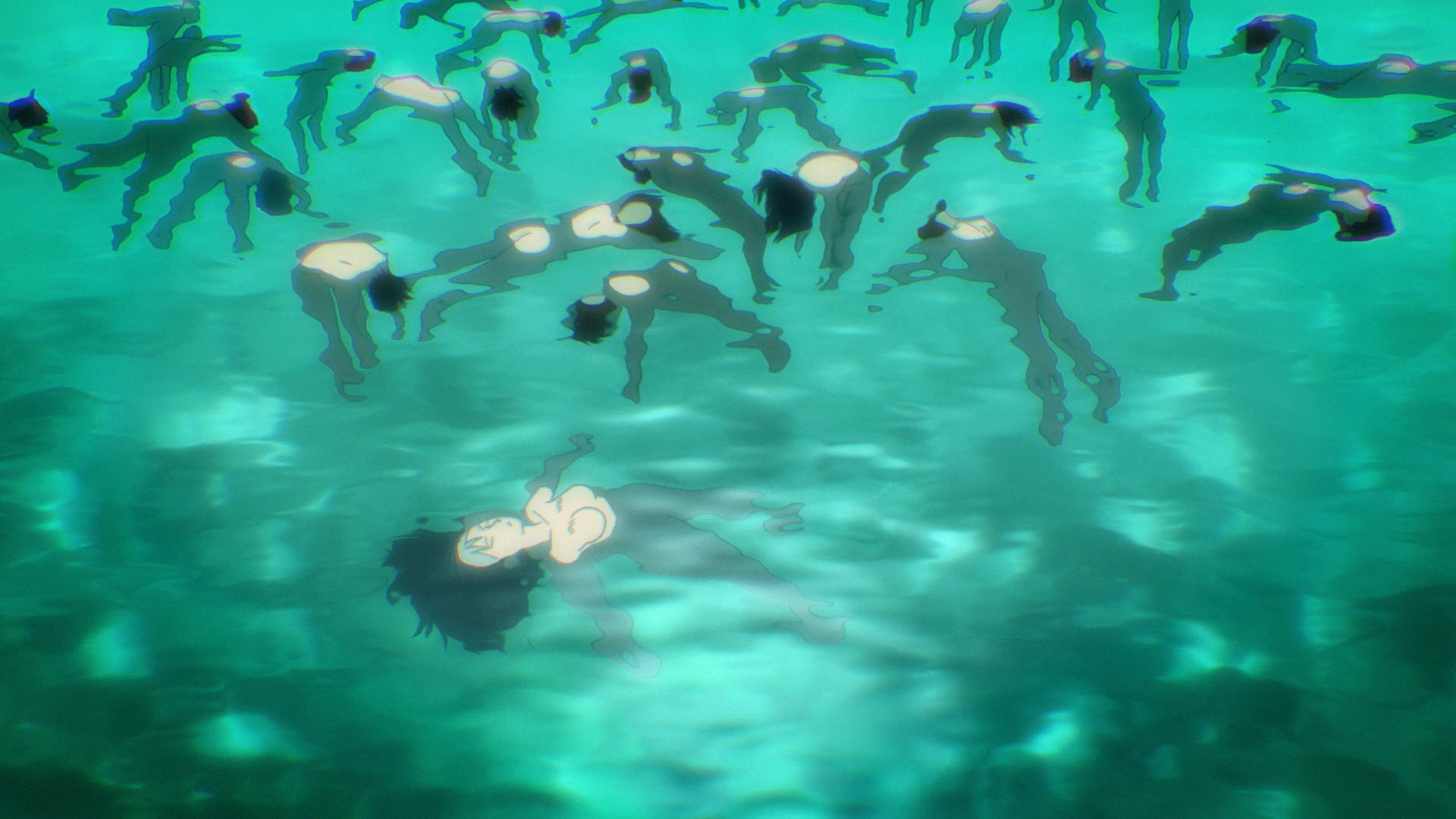
What exactly is Section 9 fighting for or against? We know the “official” mission: investigate cybercrimes. The thing is, Motoko has never shown any particular interest in the victims. I will never forget her telling that orphan kid in the first episode to just suck it up, because he has it better than others. Justice? We never even find out what happened to those kids who were kidnapped and killed just to stick dubbed Ghosts in sexbots for VIPs. Ethics? I doubt the Major and her crew generally have such lofty, abstract concerns. Most of the time, Batou is just looking for a firefight. Plus, it’s not like Section 9 can solve these fundamental human problems. Take one corrupt official down and another one replaces them. When does it ever end? For Aramaki, it is perhaps a moral crusade that he is happy to take with him to the grave. Those are his principles; those are his values. Nothing we’ve seen so far suggests that Motoko remotely shares the same mindset. Maybe she only got into this “business” for the thrill. Hacking criminals’ brains? Sure sounds like a blast… until even it becomes boring. Freeing yourself from these “constraints” suddenly feels very attractive.
This doesn’t mean that this… “evolution” — that joining the Puppet Master on a “higher superstructure” of existence — will suddenly provide Motoko with all the answers she desires. But it does hold within it new possibilities. There’s a sense that there’s nothing left to discover in the physical world. Even with new technology, it’s just people being people. New technology only makes it easier for us to indulge our preexisting whims — whims that are defined by our body’s physiological needs. It’s stagnant. On the other hand, we have no clue what the new existence entails, but that’s the point: it’s new. It’s freedom.

The episode opened with Motoko saying that she hated the rain and how it directly envelops her Ghost. She called it “the sound of nothingness.” She claimed it “cuts through [her] prosthetic body.” I think the signs were always there; I think Motoko has long since grown tired of her physical existence, and the rain made her feel trapped. All those personal things I mentioned, they keep me attached to the physical world because they still bring me joy and fulfillment. But if Motoko has been drifting in a sea of ennui for a while now, then she has nothing to keep her anchored in the physical world.
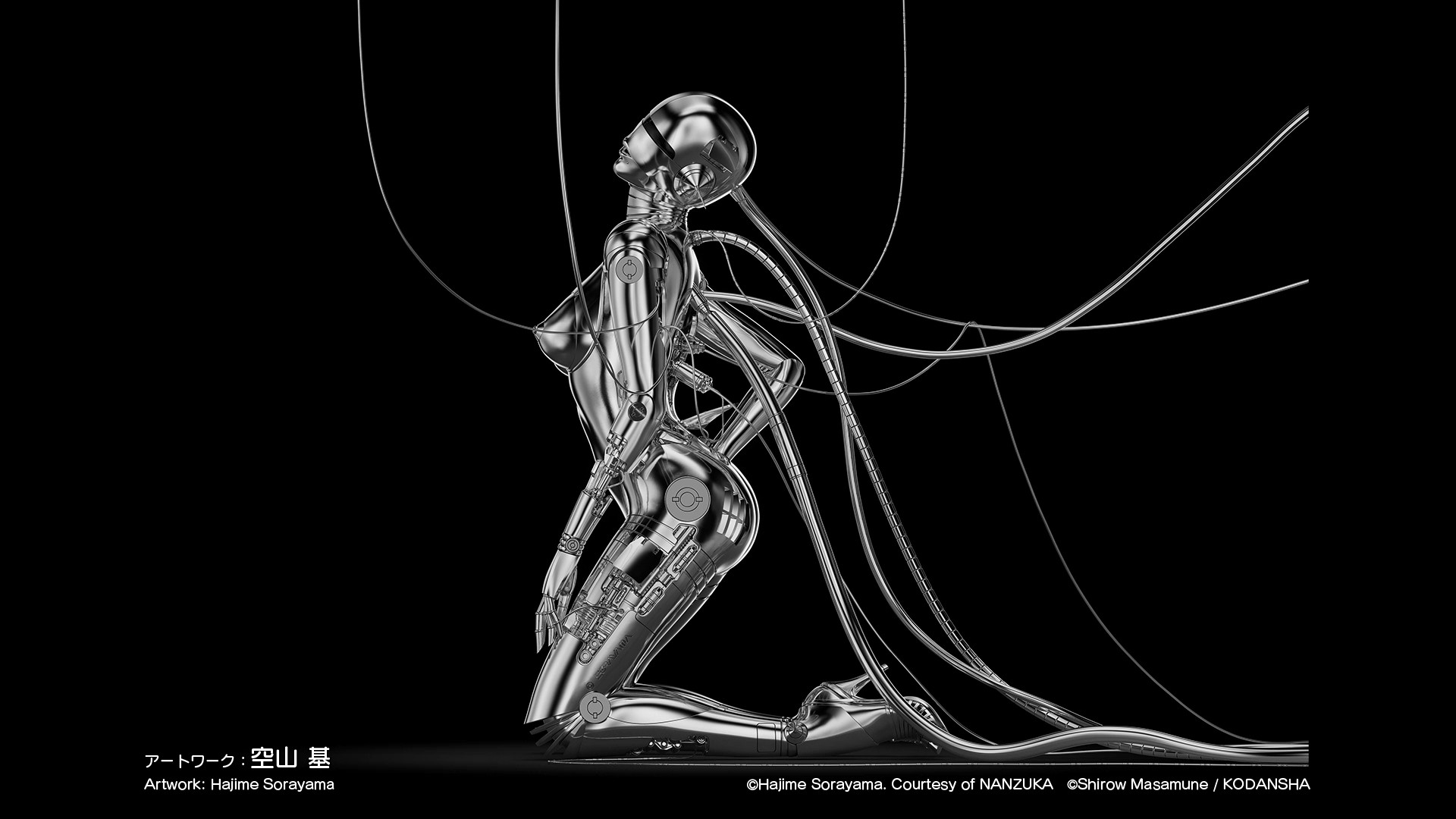
Anyway, the eyecatch this week is from an artist who specializes in sexy, feminine robots. I wonder if he has ever interacted with Yoko Taro.